
I’ve written about why Wall Street is punishing Netflix and James Murdoch’s revenge tour. I write The Media Mix and am working on a biography of Rupert Murdoch to be published by Hachette’s Grand Central.
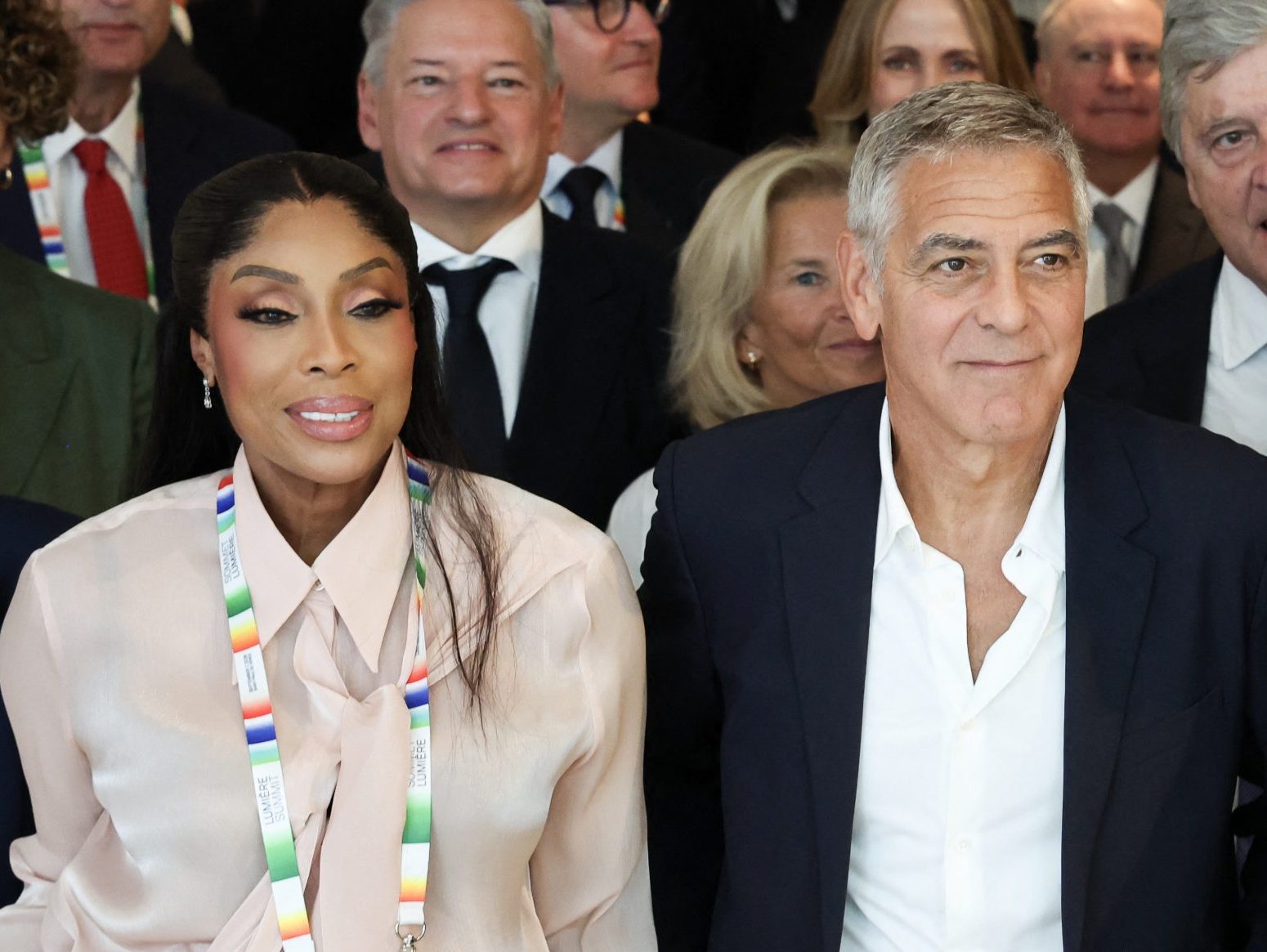
“I’m just here to listen, really,” George Clooney tells me. I’m speaking to the iconic star and director at Monday’s Lumière Festival in St.-Paul-de-Vence, France, where he and other top industry names are being hosted by French President Emmanuel Macron and South Korean President Lee Jae-myung.

The summit has brought together global artists, producers, Hollywood executives and political and cultural leaders to consider how to preserve culture amid the rapid transformation of filmmaking, alongside a $1 billion initiative to support independent film. While discussions here ranged from new talent pipelines to the impact of President Donald Trump‘s tariffs, AI was the central theme. And while Clooney is indeed listening, he also has plenty to say about the tech, having also spoken out about it last week at the Venice Film Festival.
“I had a really interesting dinner with President Macron, talking about the emergence of AI as it’s becoming a revolution in our industry,” he tells me. “I’m more worried about below-the-line jobs, quite honestly, which is going to be a real concern.”
In my exclusive Q&A with Clooney, he spoke about which entertainment jobs are most at risk from AI, the challenge of putting guardrails around technology that is already here and his concerns about who controls the information people consume.
President Macron spoke about the impacts of AI on entertainment roles, including dubbing. What did you make of his comments on protecting jobs in the industry?
Well, I was with (French film composer) Alexander Desplat two nights ago, and scoring is going to be, you know — somebody goes online and says, “Give me an Alexander Desplat score that won’t get me sued,” and it’s not Alexander Desplat, but it’s good enough for some low-budget television show for sure.
So there’s a there’s an awful lot of things that are going to make it very difficult for the people who’ve been doing this for a long time to make a living.
Having said that, I’m always an optimist about things, and I do enjoy seeing filmmaking from places that we don’t get a chance to see. We’re executive producing this film called Furies, and it just premiered at Venice. It takes place in Beirut and shot for under a million bucks. And what’s beautiful about it is you get to see a world that most of the world doesn’t get to see, and that’s what you’re seeing here. A lot of filmmakers are saying, “Well, you should come come to Nigeria and see the kind of work we’re doing.” And I think it’s important because what Tom (Rothman, Sony Pictures CEO) was talking about is really true. People respond not just to their own country or their own language, or a movie like Parasite would never been a hit. It comes down to telling really good stories, and it’s also fun to see it in worlds that we don’t see very often.

Do you think that we should fear the big tech platforms? What do you make of Macron’s comments that we need to stop and have a conversation about what’s going on here and where attention is, and the value of human-created film and books and authors?
Well, it’s a good idea to have a think about it. It’s also very difficult to stop it, right? It’s going. The train has left the station, and so the questions are going to be: How do you incorporate it? And are there versions where you can say, this you can’t do? We’re all way behind the eight ball. We should have been ahead of this, but it happened really quickly, and it’s happening very quickly.
Are your kids on social media? Do you worry about their attention?
We’re not on social media, our kids aren’t on social media. But that’s that’s for self-preservation quite honestly, I don’t really want to read what people say about me in their bathrobes. But look, there’s there’s a lot of good that comes out of technology, some of these big tech companies are doing really interesting stuff. But I worry less about the entertainment industry, although I worry about the entertainment industry and below-the-lines in particular — I’m worried about how we’re informing ourselves. Most of the ways that we get information are owned by the richest people in the world. That’s a problem.
Its hard to decide where to look when you are constantly bombarded at you.
And they’re scared of an administration that will send the FCC after them. We just saw a movie that was canceled at Amazon because they were afraid it would it would make Sam Altman unhappy. It got picked up, it’ll get seen, but that’s that’s a dangerous step once we start censoring before we put it out.

Comments
Only Ankler All Access subscribers can comment
Already a subscriber?