

I’ve written about James Murdoch’s revenge tour , deep-pocketed Gulf investors backing Paramount’s bid for Warner Bros. Discovery and why Wall Street has soured on the deal. I also write The Media Mix and am working on a biography of Rupert Murdoch to be published by Hachette’s Grand Central.
While Netflix co-founder Reed Hastings is busy fixing up Utah’s struggling Powder Mountain ski resort, his two successors, co-CEOs Ted Sarandos and Greg Peters, are managing a much steeper descent.
LightShed Partners’ Rich Greenfield used to document the tribulations of cable TV on social media with the hashtag #goodluckbundle. Recently, he says, he’s been receiving texts with a different one: #goodluckstreaming. “It feels like peak bearishness,” he told CNBC last month, though he did not share the sentiment. In reference to Netflix, he said, “Investors have no patience for this company and they’re just puking it.”
He told The Ankler in an email that investor sentiment “is some of the worst I’ve seen in years.” Netflix has generated few recent hits, and he describes the streamer’s offerings as “underwhelming this year.” Greenfield thinks the fundamentals could be worse, but investors no longer believe.“The company can continue to compound double digit revenue growth,” he wrote, “but investors have given up hope and fear growth will continue to slow.” Wall Street, he says, sees the stock as just another legacy media company losing to YouTube.

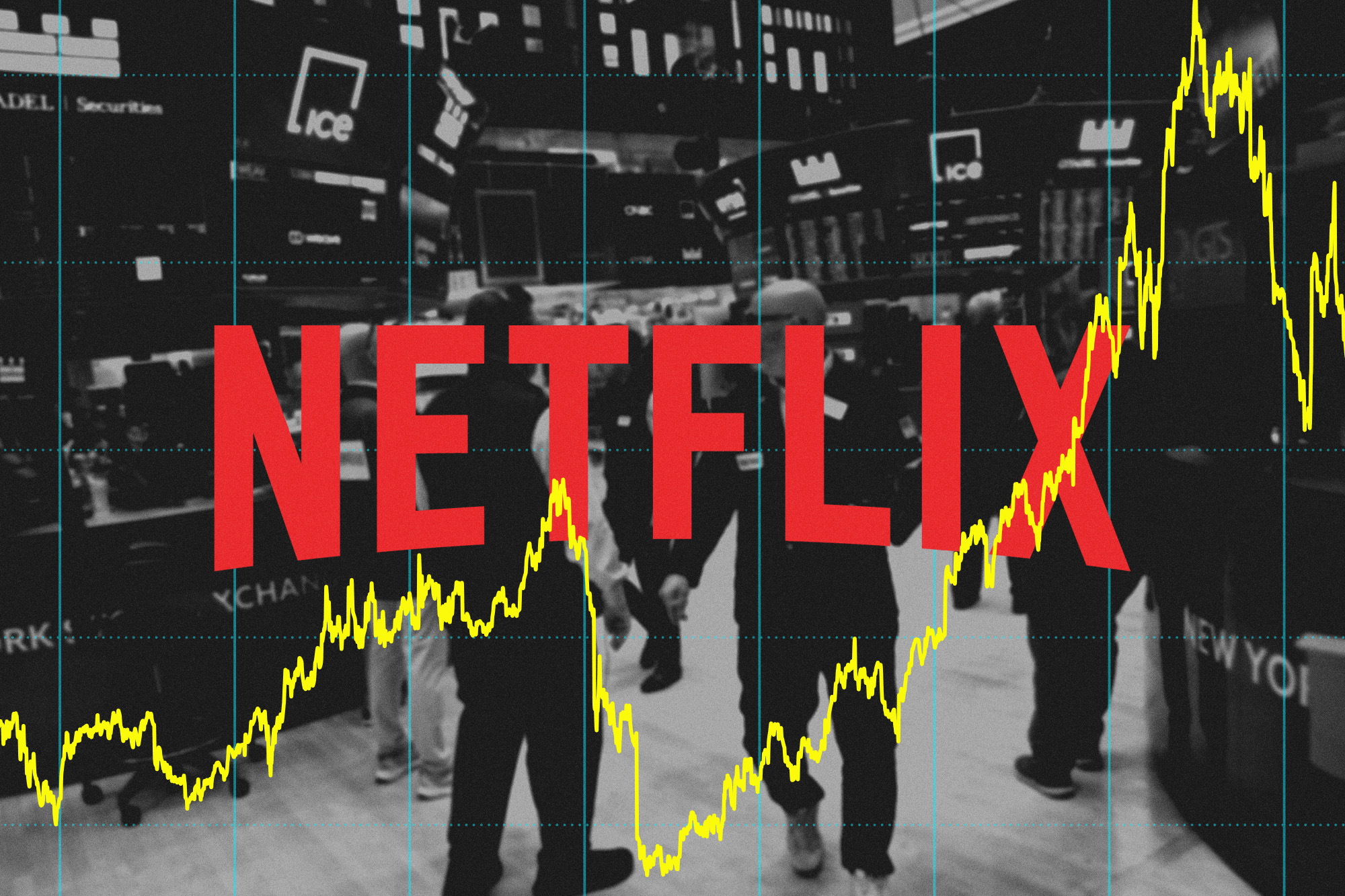
Investors bailed out of Netflix stock in mid-July, when its second-quarter earnings report and weak third-quarter guidance sent the stock spiraling down 8 percent in after-hours trading. The stock ended last week up a bit, at $79.59 a share and edged up above $80 Monday — but it’s still a far cry from its 52-week high of $126.71, and it remains down 40 percent from its all-time high of $133.91, set in June of last year. Netflix also narrowed its 2026 revenue forecast to a range between $51 billion and $51.4 billion, versus its earlier $50.7 billion to $51.7 billion, and forecast an 11.7 percent increase in third-quarter revenue — the smallest year-over-year increase for any quarter since 2023, according to the Wall Street Journal.
Meanwhile Netflix has been reducing the amount of data it’s giving Wall Street to work with. It stopped sharing quarterly subscriber counts last year, and said it will now deliver “What We Watched” reports annually, instead of twice a year.
Your feedback helps us make The Ankler better
Complete our audience survey for a chance to win a $500 AMEX gift card

Netflix declined to comment and pointed me to its latest shareholder letter.
Netflix’s 325 million subscribers have made it the unquestioned winner of the streaming wars; its only meaningful streaming competitor is YouTube, which retains the biggest share of U.S. streaming viewership.

And therein lies Netflix’s new problem: It won.
On Wall Street, a new narrative is taking hold. Netflix is no longer valued as a high-growth tech stock but is instead being recast as a “value stock” or even worse, a “legacy stock.” It’s a startling demotion for a company that spent a decade as a tech investor darling — bundled into the famously outperforming FAANG grouping with Amazon and Alphabet while the rest of big media was torn to shreds, and once dismissed by Jeff Bewkes, then CEO of HBO parent Time Warner, as the “Albanian army,” a reference to its small size.
Now the question isn’t whether Netflix can win streaming. It’s where its next meaningful wave of growth comes from.
Below, I break down:
- What Netflix would actually have to do to convince investors it can start growing like a tech company again
- Why giving Wall Street less data has left even sympathetic analysts unable to build the bull case
- The unexpected advantage Disney has over Netflix
- What changes for producers and agents once Netflix is priced as mature rather than growing
- Why ad revenue projected to double to $3 billion still isn’t enough to change the story
- What Netflix’s $82.7 billion Warner bid gave away about what it’s still missing
- Why Bill Ackman, who lost $400 million dumping Netflix in 2022, came back for three million shares
Don’t stop here
Get the rest of this story — and the scoops and intelligence Hollywood reads first.
Already a subscriber?

Comments
Only Ankler All Access subscribers can comment
Already a subscriber?