
J. Holtham is a co-EP level writer/producer who worked on Marvel’s Cloak & Dagger and Jessica Jones, as well as Supergirl, the final two seasons of The Handmaid’s Tale, and comics for Marvel, IDW, Oni Press and Image. He also writes and produces plays in NYC and L.A.
I don’t think there’s a writer, actor, director or producer working in Hollywood today who isn’t deeply concerned about Paramount Skydance’s bid for Warner Bros., the behemoth poised to swallow the town whole. The WGA and a dozen attorneys general across the country, led by California’s Rob Bonta, have filed lawsuits seeking to block the sale. The courts handed that ragtag bunch (if you can call a group of accomplished public servants “ragtag”) a major win, potentially delaying the merger for nearly a year. Now everything is up in the air. The deal may fall through. The AGs may lose. An Armageddon-style meteor may strike Hollywood and Highland. Who the hell knows?
But an idea has been forming in my mind, one that’s, admittedly, pretty out there — possibly in “just crazy enough to work” territory. Or possibly in “get off the internet, old man” territory. I’ll let you decide once you hear my semi-modest proposal.


The Semi-Modest Proposal
Let Hollywood save Hollywood. And what I mean is this: George Clooney should buy Warner Bros. Out there, I know, but let me paint the scene. One of Hollywood’s most recognizable, most beloved, most trusted actor/producers swoops in to pull a beloved studio out of the tech-money furnace. He’s got a long, award-winning track record as a producer, he has a long history of success with the studio, he even named his production company, Smokehouse, after a steakhouse across the street from the lot. It’s Return of the King, with fewer hobbits and more panache. It’s the Hollywood ending to beat all Hollywood endings.

Okay, maybe not George Clooney. Or not George Clooney alone. Team up with, say, Tom Hanks. Or Ryan Reynolds. Tom Cruise, Jennifer Lopez, even get Oprah in on the deal. A consortium of A-list, bankable stars. If Reynolds and Rob Mac could do it with a Welsh football squad — the frontmen to private equity money behind them — it should be possible with one movie studio.
It wouldn’t be the first time that Hollywood stars have banded together to take control of their future. Charlie Chaplin, Mary Pickford, Douglas Fairbanks and D.W. Griffith bet on themselves to make United Artists. Let’s bet on ourselves. Or, rather, let’s let George Clooney bet on us.
Yes, About the Money
I can hear the skepticism already. And I am prepared for it. Paramount Skydance is prepared to pay $111 billion for Warner Bros., most of that coming from one of the richest people on the planet, Larry Ellison. That’s a whole lot of money. Even with three decades of ER residuals and a healthy chunk of change from Casamigos, Clooney can’t have that much. Which is right. He can’t.
But then again, neither does Larry Ellison. As the New York Times recently detailed, Ellison and the tech giant he founded, Oracle, are leveraged to the eyeballs, and much of the money going into Warner Bros. is borrowed against AI investments that plenty of people think are a bubble — an outcome that feels more possible every time a town chases a data center out of its zip code. There’s already speculation that even if Paramount-WBD closes, it’ll have to start selling off pieces to service the debt. I haven’t checked Kalshi lately, but this merger working isn’t a solid bet.
And it gets better: When the dust settles, the Ellisons won’t own all that much of the company they’re assembling. The financing for a deal this size means the merged studio comes into the world already spoken for — by lenders, by outside investors, by a meaningful share of Gulf money. (An April FCC filing said that about 49.5 percent of the new company’s equity would be held by “aggregate indirect foreign ownership.”) David Ellison is fronting a consortium. He just recruited different kinds of partners than the one I’m proposing.
Clooney would not need to know how to operate every corner of Warner Bros. himself, any more than Ellison does. Any buyer would need experienced executives, lenders and outside investors. The difference is who sets the cultural mandate, whose judgment and values guide the enterprise and whose reputation holds the line.
So why should Ellison be considered a more natural frontman for leveraged capital than a coalition led by the actual artists who made the studio valuable? Clooney alone has been part of the studio’s Ocean’s trilogy, Syriana, Michael Clayton and, as a producer, best picture winner Argo.

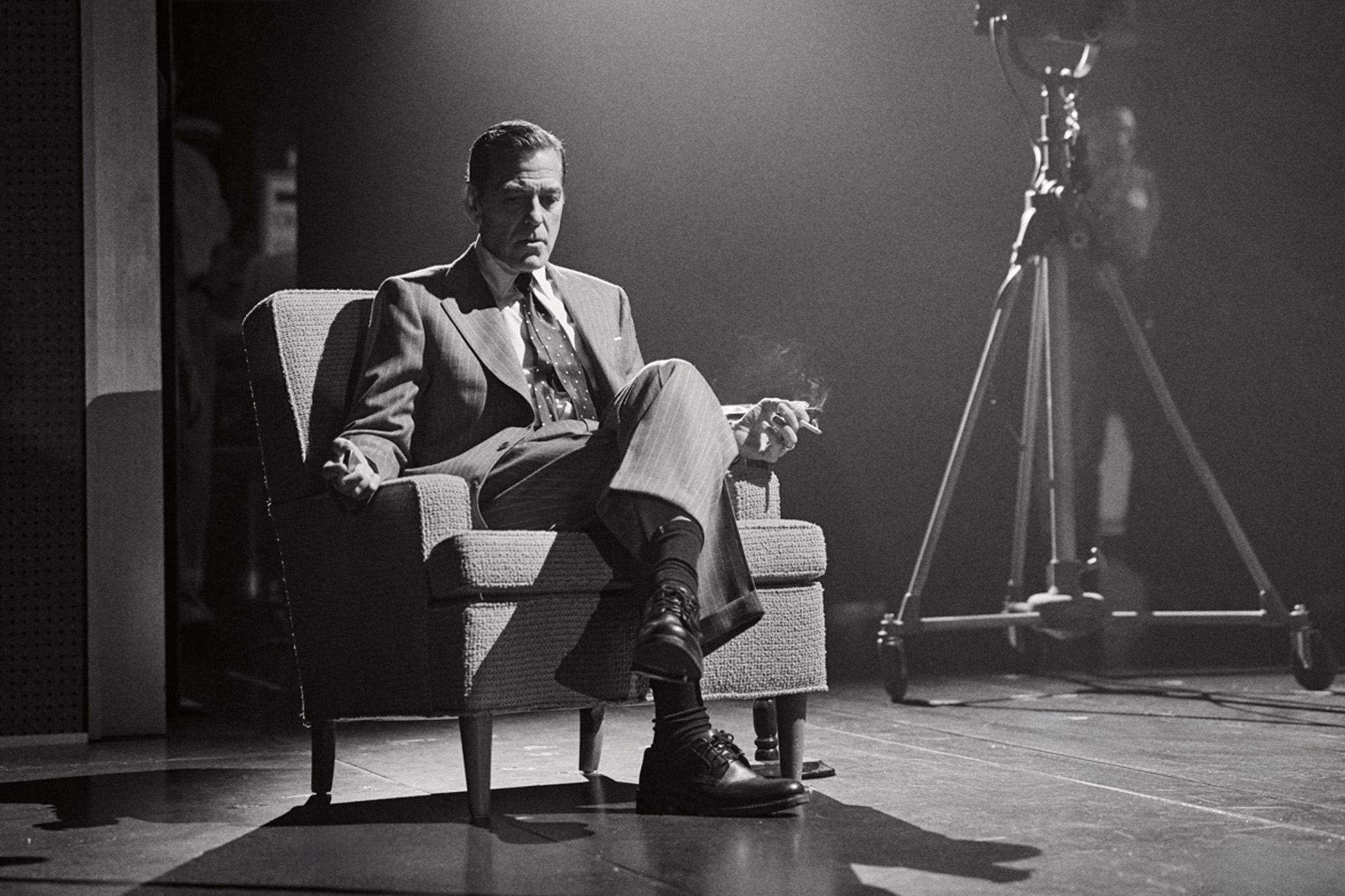
On the news question — the one that takes up most of Ellison’s op-ed — Clooney got there first. He co-wrote and directed Good Night, and Good Luck in 2005, a movie about CBS’ Edward R. Murrow standing up to Joseph McCarthy. And yes, Warner Bros. put it in theaters. Last year Clooney played Murrow himself on Broadway, and CNN aired the penultimate performance live — the first time that’s ever been done with a Broadway play. It pulled more than 7.3 million viewers worldwide and gave CNN its biggest cable day of the year outside a presidential address. Ellison invokes Murrow in his op-ed as a founding principle. Clooney has spent 20 years and two productions making the case in public — and he did it via Warner Bros. and CNN.
It’s in the blood, too: His father, Nick Clooney, anchored local news across four decades, starting in 1958 at a CBS affiliate in Lexington, Ky. The elder Clooney eulogized Walter Cronkite — another CBS News legend — during a 2009 memorial service at Avery Fisher Hall, alongside then-President Barack Obama, Bill Clinton and Tom Brokaw.
Now imagine a world where George Clooney, Tom Hanks and Ryan Reynolds hit the streets, looking for loans, particularly in this era when $1 trillion of private equity “dry powder” is about to flood the market. Would you say no? Would any reasonable person say no? Really? One good lunch at The Ivy, one round of drinks at the Palm, a good steak dinner at the Smoke House, and it’s gotta be close. Have Julia Roberts just happen to drop by the table and I’m betting that checks will be flying by the end of the meal.
A rep for Clooney didn’t respond to requests for comment.
What Would They Actually Do With It?
But, I hear your skepticism asking: What is the business model that makes this profitable?
To be fair, David Ellison has an answer to that, and he put it in the New York Times just yesterday. He’s nearly doubled Paramount’s theatrical slate, greenlit 40 new or returning series, raised content spending by $1.5 billion. Going forward, he’s committed in writing to 30 theatrical films and 170 television series a year, backed by more than $30 billion in annual content investment.
But those promises come from a man who will own a fraction of the company producing the movies and shows. Commitments survive exactly as long as the people holding the debt let them. Ask anyone who worked at Warner Bros. under AT&T how that goes.
My answer to the business-model question fits on a cocktail napkin: making movies. Good movies. Movies and TV shows that people love. Making things not just to fill boxes on a balance sheet, but out of love for the medium, love for the art. Artists and creatives have a rep for being bad with money, but, in my experience, it’s mostly because they want to give the audience the very best. They want to spare no expense, as they say, to make the audience happy, to make giving up your hard-earned money and time a joy, not an obligation.
Plus, imagine this: a real-life version of Apple’s The Studio. Cameras following the world’s biggest movie stars as they try to resurrect the world’s most beloved studio. The cameos, the plot twists, the insider peek. How is Love Island going to compete with that?
Look, I know this is pie in the sky. The sums involved here are beyond comprehension. But impossible problems require impossible solutions. A major studio in the hands of the people who helped build it could spark a wave of optimism and hope across the entire industry. What else do we do here except dream big?
So, George, the idea is out there. The ball’s in your court. Let’s see what we can imagine.