

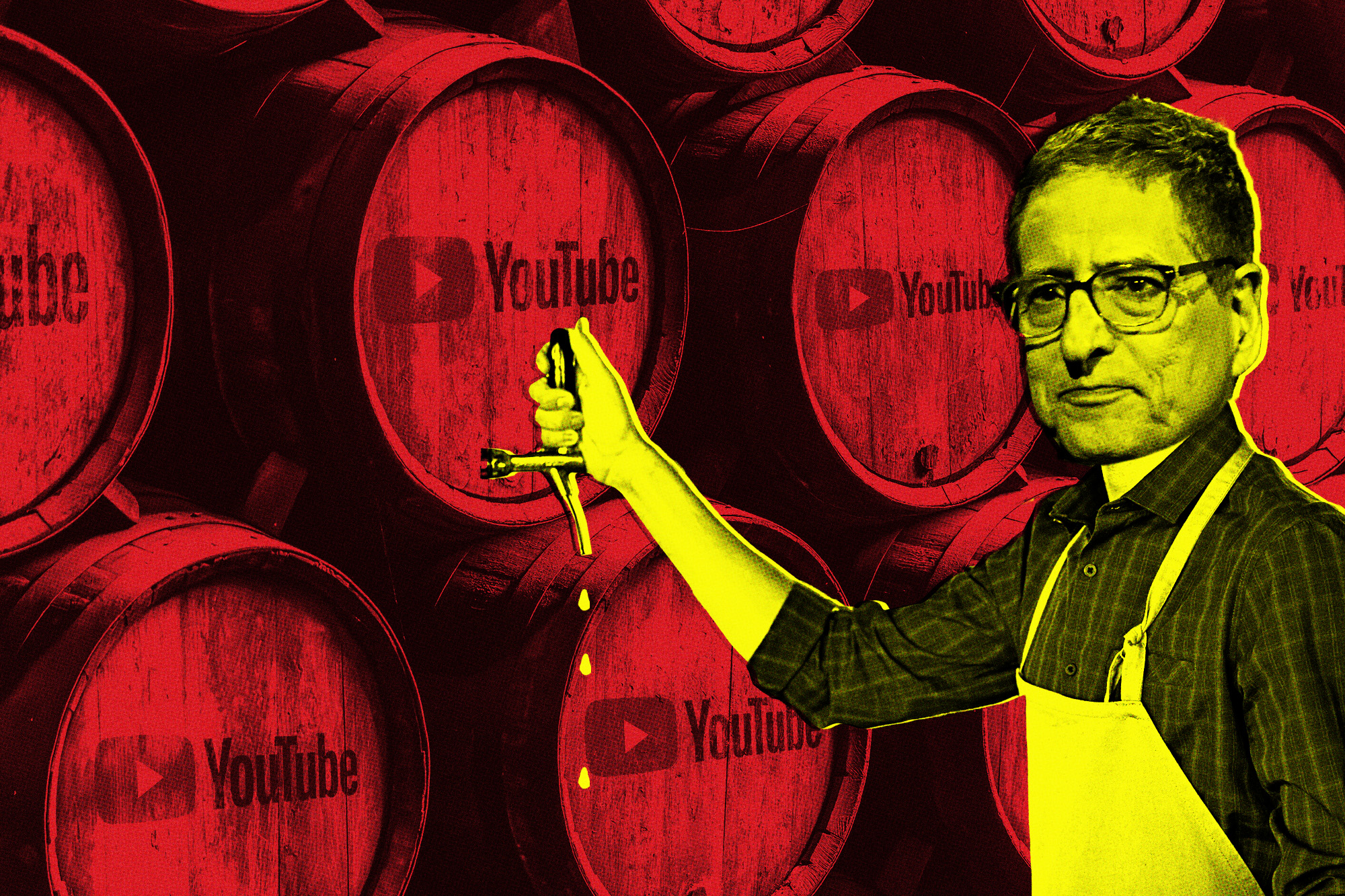
Something incredible happened here over the past few months.
Right here in Hollywood in 2026, the industry discovered this little site.
It’s called YouTube.
And the powers that be realized it was something they might want to pay attention to.
A mere 21 years after the site was launched.

Of course, Hollywood has only two settings: head in the ground, and “THIS IS EVERYTHING!” So it’s exciting when the switch suddenly flips.
Far and wide, industry vets are proclaiming that there’s talent in them thar hills — and, even better, there are devoted followings that will go anywhere for an influencer and do it for cheap! What could be better?

Heralding a “tectonic shift” following the success of Markiplier’s Iron Lung ($51 million worldwide), Kane Parsons’ Backrooms ($302 million worldwide, the most ever for an A24 movie) and Curry Barker’s breakout smash Obsession ($337 million worldwide on a reported budget of $750,000), the story cites the platform as a font of talent that Hollywood will need to take seriously.
Or there is this week’s New York Times op-ed by no less than Sony’s Tom Rothman — the dean of studio chiefs, our studio chief president pro tempore — who declares, YouTube is here to give us a “jolt of creativity.”
He concludes:
I’m sure that every major studio is busy this week scouring the YouTube pipeline, looking for the next big sensation. (We certainly are.) The democratization of the means of production will allow many new voices to be heard. The trick for major studios is to find the very best new talents, assist them but also learn from them. ’Twas ever thus.
‘Twas ever thus indeed.
Except for the past 20 years, when the gates of studio creativity have, by and large, been barred at gunpoint to any stream of new talent. And the attitude towards young audiences has been, “Let them eat collabs.”
But now, after three giant hits in quick succession, the idea occurs, maybe we should let a couple of these wacky upstarts in! Particularly if they work cheap and bring with them built-in audiences who can guarantee you a $40 million opening with zero marketing expense. If they can guarantee that, then sure, why not let one or two of them in… I mean, not to turn Sony’s Spider-Man franchise over to them or anything. But a low-to-mid-budget horror film, why not?
By the way, Tom rightly brings up comparisons to the film revolutions of the ’70s and ’90s as an example of the kind of renewal the studios need, which is absolutely apt and true.
But let’s remember that part of that renewal was giving the young upstarts not just some genre corner to play in (although that, too, is important) – but the crown jewels. The biggest films that the studios made. Francis Ford Coppola was 32 when The Godfather was released. Steven Spielberg was 28 for Jaws. George Lucas 33 for Star Wars. At 38, William Friedkin was the old man of the bunch when he made The Exorcist.
Now, Friedkin would be considered a kid. This year, the directors of some of the biggest (non-animated) tentpoles include Spielberg – the same Spielberg – who was 79 at the time of Disclosure Day; The Odyssey’s Christopher Nolan, 55; Thomas Kail, 49, director of the upcoming Moana live-action remake; Craig Gillespie, 58, of Supergirl; Sir Ridley Scott, 88, back to direct Disney and Fox’s upcoming post-apocalyptic adventure, The Dog Stars; Phil Lord and Chris Miller, the Project Hail Mary boys, are 50; Avengers filmmakers Joe and Anthony Russo are, respectively, 54 and 56. Of them all, the director of the next Spider-Man film, Destin Daniel Cretton, is the baby of the group at 47.
So if the studios are thinking about opening the doors to new talent from the wild world of the internet, I would say – oh really?
But apparently, the world is all changing.
Don’t stop here
Get the rest of this story — and the scoops and intelligence Hollywood reads first.
Already a subscriber?