

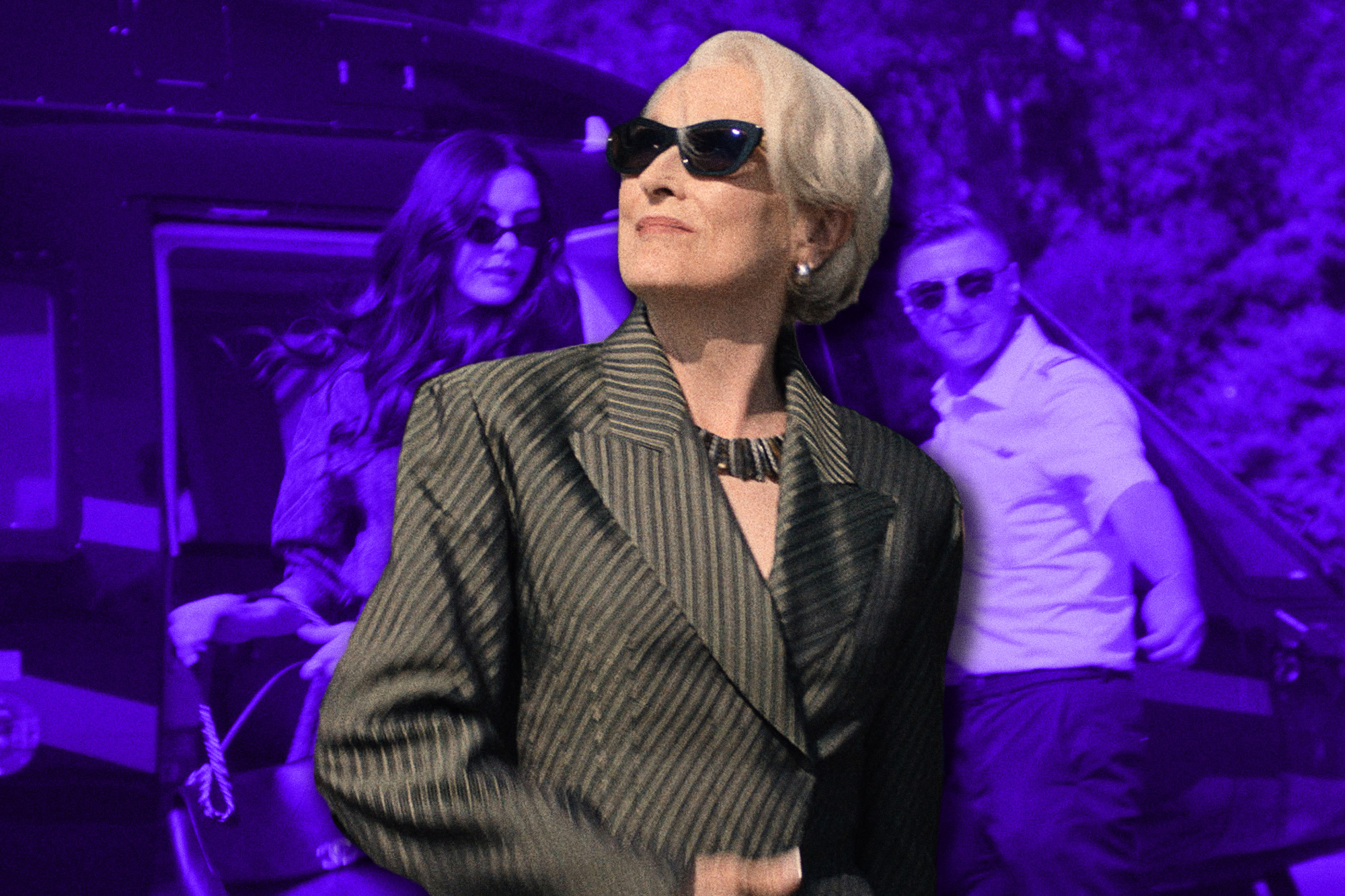
There’s never been a better time to be old.
Americans are living longer than ever; the average citizen born in 2024 is expected to reach 79.
The culture is aging right alongside them. On screen this spring, two of the biggest winners were 70-something women: Miranda Priestly in The Devil Wears Prada 2 and Deborah Vance on Hacks. Last week, 79-year-old Steven Spielberg topped the box office with Disclosure Day, the biggest opening for an original film in his career (not adjusted for inflation); at 81, Lorne Michaels shows no sign of loosening his grip on Saturday Night Live.
Even the cartoons are elderly: Woody, voiced by 69-year-old Tom Hanks, is now so old in the latest Toy Story that he’s got a bald spot — in a movie expected to clear $1 billion.
Eighty is the new 70.
And the new 60.
And the new 50.
And the new 40.
Which sounds like progress, and in part it is. But progress and entrenchment have started to wear the same face — and Hollywood’s gotten very good at shooting it so you can’t tell which you’re looking at.
The real-world version is starker than anything onscreen. Donald Trump turned 80 on Sunday; at the end of his term, he’ll be the oldest president in American history — beating the record Joe Biden set at 82 in 2025. Twenty-four members of Congress are over 80, and more than half will run for reelection this fall.
Rupert Murdoch, 95, spent two years in a Nevada courtroom rewriting a trust he’d once called irrevocable so power would pass to Lachlan and no one else — the literal Succession, the patriarch refusing to share it even with some of his own children. Larry Ellison, 81, personally backstopped David’s takeover of Paramount — and, pending, Warner Bros. — with a guarantee north of $43 billion. The fathers aren’t stepping aside so much as choosing who inherits the empire.
It’s not a fantasy that culture has become a gerontocracy — a society organized under leaders substantially older than the population they lead.
“There’s this longstanding thing called the demographic pyramid, where basically at the oldest level there are the fewest people, and in the womb there are the most; that’s been upset,” says Samuel Moyn, a Yale law and history professor who recently published Gerontocracy in America: How the Old Are Hoarding Power and Wealth — and What to Do About It. “It’s still the case that people die, but much later, and the older cohorts survive much longer.” The pyramid, he says, is “more like a rectangle — and now we have the bottom kind of eroding, so it’s almost like the pyramid is being reversed.”
Devil In the Details

Start with the money, because that’s where it’s least deniable. Over the past 26 years, households headed by adults over 65 have seen their median net worth climb 42 percent. Over the same period, older workers’ wages rose by 60 percent relative to younger workers. And according to the Federal Reserve, the share of U.S. household wealth held by people over 70 grew from 18.9 percent in Q3 1989 to 32.2 percent by the end of last year — while the share held by 40- to 54-year-olds did almost exactly the reverse, sliding from 32 percent to 19.8.
The screen has been telling the same story.
Don’t stop here
Get the rest of this story — and the scoops and intelligence Hollywood reads first.
Already a subscriber?