

I cover audience and moviegoing trends. I wrote about CinemaCon’s quiet wars, broke down how fandom is upending Hollywood and went inside PostTrak to find out why movies flop. Email me at matthew@theankler.com
The two major horror movies coming to theaters this month share a lot in common — the biggest being how they were discovered.
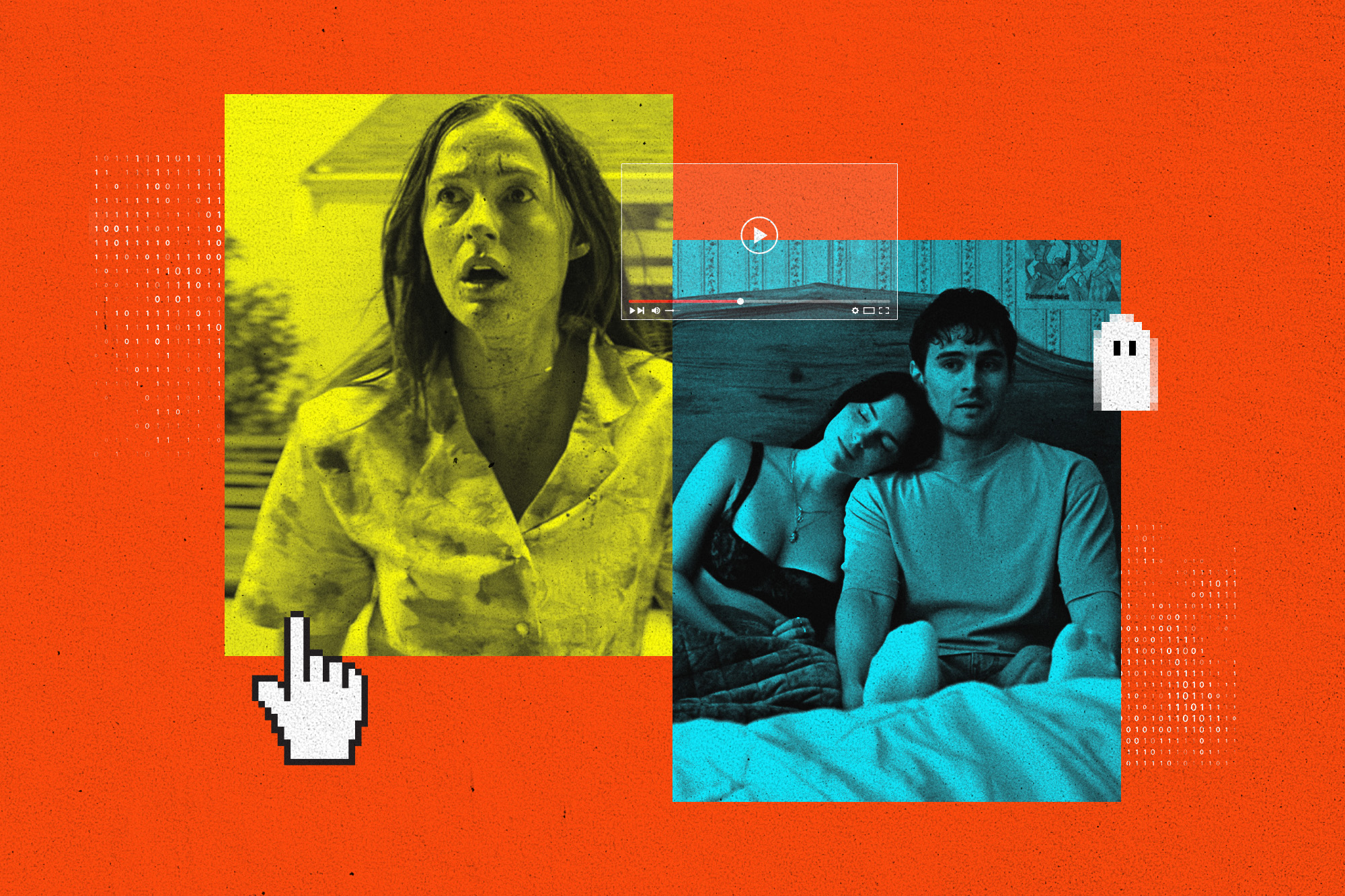
A24’s Backrooms, which traces its origins to a 2019 4chan image of a creepy yellow-carpeted office space, quickly became a sprawling internet mythology of fan fiction, memes and video games. But the biggest breakout was Kane Parsons’ nine-minute “found-footage” horror short, which has racked up 77 million views since he posted it on YouTube four years ago, when he was only 16. New York-based horror producer Chris White discovered the film after his son — the same age as Parsons — insisted that he watch it.
“He’s like, ‘Dad, you’ve got to see this kid’s short. It’s really good,’” White remembers. The producer then contacted Parsons, who was game to let White pitch the project around Hollywood.
White brought the project to Michael Clear and James Wan at Atomic Monster, and the duo was immediately receptive to Parsons’ work. A similar process played out at 21 Laps, where then-creative executive Lucas Ford discovered Parsons’ initial short film and brought it to his higher-ups. The two production companies joined forces to develop it, also partnering with Chernin Entertainment and A24, and the film — starring Oscar nominees Chiwetel Ejiofor and Renate Reinsve — is set to bow on May 29. At age 20, Parsons is the youngest director in A24’s history.
Two weeks earlier, on May 15, Focus Features will release Curry Barker’s Obsession, a horror flick about a guy whose wish for his crush to fall in love with him goes very wrong. Focus’ president of production and acquisitions, Kiska Higgs, had heard buzz about the project, made for under $1 million, heading into the 2025 Toronto International Film Festival. It fully came onto Focus’ radar when the college-aged son of distribution head Lisa Bunnell told his mom he loved Milk & Serial, Barker’s 62-minute YouTube horror film, which he made in 2024 for $800.
Clearly, we are now in the “mom/dad, check this shit out” era of horror greenlights.
Today I break down:
- Why horror became Hollywood’s easiest way in for Gen Z creators
- The YouTube metrics that matter more than film school credentials
- How Kane Parsons telling producers “I don’t really watch movies” became a selling point, not a red flag
- How Backrooms could become A24’s next franchise universe
- What Jason Blum told me about YouTubers making more of an impact than streaming-movie directors
Raised on YouTube
Horror directors were already younger, as a cohort, than those in any other genre. Now they’re getting even younger. Barker is 26; on the TV side, Something Very Bad Is Going to Happen showrunner Haley Z. Boston was just 27 when she had the idea for the show and 29 when Netflix gave it the greenlight.
Horror has also — not coincidentally — opened itself up to online-native filmmakers in a way no other genre has quite done. “They attack the process completely differently,” says Blum, whose Blumhouse was the production company behind Obsession and who has a stake in Backrooms after merging with Atomic Monster in January 2024.
The young creatives of the horror genre, Blum says, come in with a vast range of skills: writing, directing, costumes, makeup, production design and dealing with distributors, networks and financiers. They are also “much, much more concerned about audience.” Part of that is because they often come with built-in fans, like Markiplier, a.k.a. Mark Fischbach, whose film Iron Lung grossed $51 million against a $3 million budget. Backrooms appears to be on track for a similar performance. Its trailer attracted more views in its first 24 hours and first seven days than any other A24 preview.
The YouTube ecosystem, Blum says, gives filmmakers the opportunity to “make it on Tuesday, on Wednesday it’s online, and on Thursday you have every possible metric.”
“They’re so dialed in to how the audience is digesting what they’re making,” he adds. It’s that audience connection that separates this class of filmmaker from any before — and what makes horror specifically the premier genre for emerging talent.
How Horror Grew Up
Horror, Blum points out, has transitioned through distinct eras. Looking back at the early and mid ’00s, the genre was defined by a “very bloody” phase, spearheaded by films like Saw. Then the pendulum swung toward a more supernatural style, focused on tension, ghosts and jump scares, as in 2007’s Paranormal Activity (the sleeper hit that put Blum on the map) and 2013’s The Conjuring. Over the years, there have also been some horror comedy (Happy Death Day, Zombieland) and booms in remakes, reboots and sequels to beloved horror titles.
Now, the industry is embracing a new phase: auteur, director-driven horror. There is hardly a name-brand commercial filmmaker under 50 who hasn’t at least dabbled in the genre, whether it’s Jordan Peele (Get Out), Zach Cregger (Weapons) or Ryan Coogler (Sinners).
Thus far, Greta Gerwig is the only notable exception.
“Horror, for better or for worse, is much more accepted and mainstream as a form of storytelling” than it used to be, Blum explains.
Blumhouse is currently working with 10 young directors on their first or second movies. “Twenty years ago, there’s no way those people would have been directing horror movies,” Blum says.
While studying filmmaking at Northwestern, Boston felt compelled to hide her love for horror. “At the time, I was kind of like, oh, I love horror, but that’s not a serious genre and I want to be serious,” she says. Since then, the genre has afforded her the chance to create and run a show before the age of 30.
On the franchise front, A24 enlisted Barker for its upcoming Texas Chainsaw Massacre revamp. Lionsgate has tapped Dylan Clark, a 25-year-old YouTube horror filmmaker, to direct its Blair Witch Project reboot. Clark’s viral short Portrait of God is being adapted into a feature at Universal by producers Sam Raimi and Jordan Peele.
Cheapest Ticket Into Hollywood
What makes horror such a uniquely viable entry point for these younger filmmakers boils down to a couple of factors. “You can make a really great horror film on a very limited or contained budget,” Emily Gotto, SVP of acquisitions & productions at Shudder, says. “You are relying on the genre and the quality of storytelling rather than needing to access top-tier cast, which is also great from a debut filmmaking point of view. And you can find a very dedicated audience.”
It is also an inherently theatrical genre, even at a low budget. Boston, who wishes her series could have been experienced with an audience, thinks horror offers a safer way for young people to seek an adrenaline rush than it did for earlier generations.
“I remember reading about how young people aren’t binge drinking,” she says. “They’re more aware of their health, and they’re not having sex. I wonder if there’s a thrill to the horror genre that… I mean, I was like that in high school. I was a ‘good girl.’ Maybe that’s what I liked about it.”
The Director Who Doesn’t Watch Movies
In the simplest terms possible, the idea behind Backrooms is the horror of “liminality,” which in recent years has been one of the genre’s more popular niches. Liminal horror explores transitional, in-between places that feel unsettling: devoid of people or context. Think of the perennially abandoned hallways in Lumon Industries on Severance. It’s at once very specific and esoteric and very relatable, in part because it’s so evocative of Covid-era loneliness. In Backrooms, the movie, Ejiofor finds himself in an endless warren of creepy rooms and halls after passing through a hidden door at his workplace. Scary encounters and creepy noises follow.
With the production companies attached, the project went out to studios. New Line was heavily in the running, per sources familiar with the process, before A24 and Chernin Entertainment landed it as co-financiers. Chernin then brought Longlegs director Osgood Perkins and his producing partner Chris Ferguson on board, both of whom serve as producers. Perkins was around for every day of shooting, acting as a sort of “friend on set” for Kane as he navigated his first feature.
It wasn’t the only support Parsons needed.
His parents sat with him during every early Zoom meeting with the producers. Parsons was so internet-native that he sometimes jarred his new collaborators.
“One of the first things Kane said to us when we met was, ‘Oh, I don’t really watch movies,’” recalls North Road Films president Kori Adelson, who served as a producer on Backrooms. “And all of us were like, ‘What?!’”
“The internet has filled the space in my life where Hollywood would be,” Parsons said in a March 2024 interview. He’s now the director of a $10 million Hollywood film starring two Oscar-nominated actors.
(Representatives for Parsons didn’t make the director available for an interview.)
“We all were obviously wondering how this was going to go,” Adelson recalls. The first conversation between the young director and Reinsve eased the producers’ jitters. “We got a call two hours later saying she thinks he’s an absolute genius,” Adelson says. “The same thing happened with Chiwetel.”
For Parsons, there’s a bigger dream than the big screen. “If the movie is a big enough success, the goal is to do a nine-episode limited series,” he said earlier. Adelson says the producers have his back on that: “As long as Kane is willing to tell Backrooms stories, we will be his partners.”
Tearing Up the Playbook
Barker started in comedy, much like Peele and Cregger. The Obsession filmmaker was one half of “That’s a Bad Idea,” an internet sketch comedy duo with Barker’s friend Cooper Tomlinson, who plays a supporting role in Obsession. In August 2024, Barker released Milk & Serial, his horror debut, which racked up over 2 million views.
“Creators, online creators, YouTubers, to me, have almost more of a cultural impact than streaming movies,” Blum muses.
And coming up through that online pipeline creates a different sort of director. “He seems to operate without dogma but also has a really set sense of what he wants to do and why,” Focus’ Higgs says. “The act of frequent content creation and immediate audience feedback is really — it has to shape you.” (Focus also picked up the rights to Barker’s next feature, Anything But Ghosts, which stars Aaron Paul and Bryce Dallas Howard and just wrapped production.)
It’s not just online creators, though. Boston had spent only limited time on a set, as an assistant for a couple of weeks, before acting as showrunner on her Netflix series. As a result, she would often propose unconventional ideas — simply because she didn’t know anything about the conventional ideas.
Netflix execs pushed back against a scene involving a severed toe, expressing concern that it wasn’t grounded enough. Instead of conceding or arguing her case, Boston and fellow writer Kate Trefry got prominent matching tattoos of a severed toe. “Well, I guess we have to keep it,” the Netflix exec said.
Boston is now working on a horror feature and hopes to break into the genre’s boys’ club. “I still feel like there’s this kind of energy of, ‘Oh, this dude is a chiller, so we gave him a big franchise movie,’” she says. “And it’s like, ‘Okay, what do I have to do?’”
The “mom/dad, check this out” era won’t last. The kids surfacing horror’s next hit will, before long, be the ones greenlighting it — and directing it, and starring in it. Presumably, Hollywood’s gatekeeping class is about to get a lot younger (one would hope, at least). Horror is just the leading edge.
As one source close to the Backrooms production says, pointing to the YouTube videos’ massive popularity: “The proof is in the pudding.”