


I wrote about Hollywood’s creator Gold Rush after the success of Backrooms and Obesssion, and I’ve followed every beat of Casey Wasserman’s move to sell his agency, analyzed the Cannes market, and written about the tax incentive showdowns both globally and between U.S. states.
Even before Toy Story 5 scored a franchise-best opening weekend with $312 million at the worldwide box office, dealmakers across Hollywood were feeling optimistic about this year’s theatrical prospects. In fact, since last summer, I’ve noticed fears about the future of the big screen experience consistently fading.
Sure, “it’s still a challenged business,” a top talent lawyer tells me, but — and there always seems to be a “but” to such statements these days — “Project Hail Mary’s a great example of an original film doing really well. Michael, obviously. Then you have these low-budget films that are doing extraordinarily well. Everyone’s a little encouraged.”
As exciting as the box office momentum is, industry contraction has put downward pressure on budgets. Because above-the-line fees are often big line items, many conversations I’ve had with dealmakers inevitably turn to things like “why not just channel Jason Blum and his Blumhouse model of keeping budgets modest by paying scale with backend, and a big upside in success?” For his part, Blum told me back in 2024 that he thought studios would be “thrilled” to do that, but that talent and their reps hesitate because of the risk and delayed payday.
And a few years of lackluster theatrical returns certainly didn’t encourage anyone who was already wary of rolling the dice. That same lawyer explained that movies with budgets of $80 to $125 million have to make $400 to $500 million at the box office to generate meaningful profits, and in recent years many blockbusters that might have historically broken a billion were instead topping at $750 or $800 million worldwide.
“In a post-Covid world, not many movies were generating [the] kind of box office” to yield meaningful profit participation, he says. “The last several months, last year, of theatrical performance has been encouraging that people can go back to making movies that generate backend profits.”
This year’s box office is up nearly 15 percent from 2025 — which had four films top $1 billion, the most since 2019 — and that’s with new Spider-Man, Avengers and Dune installments and Christopher Nolan’s The Odyssey still to come. (As Sean McNulty has followed closely in The Wakeup, grosses are on track currently to match the summer of 2019, when North American theaters raked in more than $4 billion.)
And, of course, there were low-budget hits like Obsession, which has already made more than 400x its $750,000 budget. Relevant to today’s theme, that film has sparked debates in the industry and online about who should profit in a movie’s success after its art director lamented her $300 per day rate in an Instagram post (though the question raised by Obsession is more about “flipping,” or unionizing, productions).

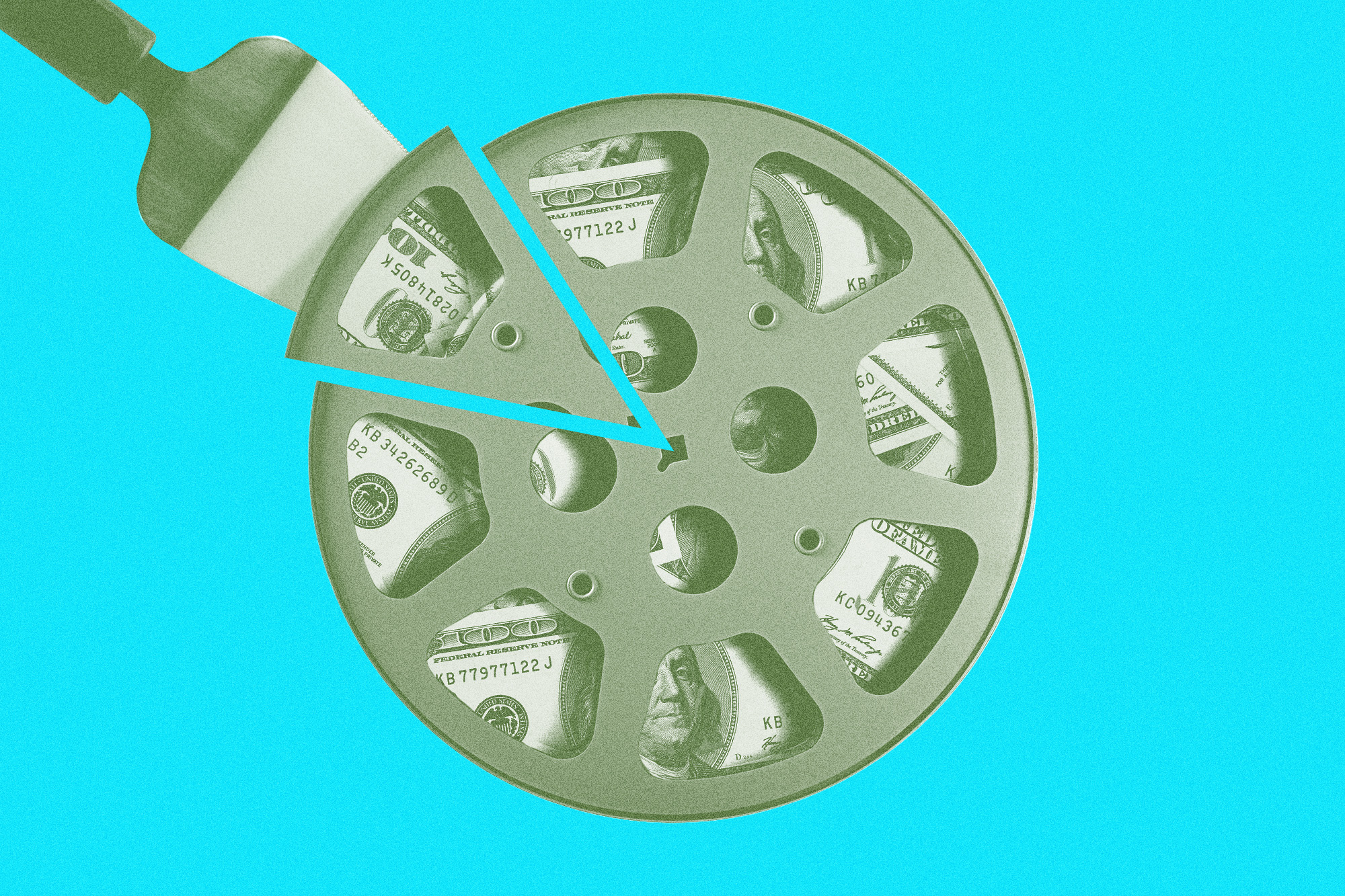
So, with box office the healthiest it’s been in years, I’ll dig into the state of performance-based pay today. I talk to dealmakers on the front lines of talent negotiations about who can negotiate a piece of theatrical profits, the emerging streaming bonus models and how these talent-centric concepts might work for below-the-line workers too.
Consider this your playbook for performance-based pay, including:
- The five ways talent can get paid on a movie today
- Who still gets Hollywood’s near-mythical first-dollar gross deals
- Why definitions matter more than points in the profit-sharing “waterfall”
- Why the Blumhouse-style tradeoff — lower upfront pay, more backend — still hasn’t taken over
- The hidden studio fees that make profits vanish, and how Disney and Universal break from the crowd
- How Netflix, Amazon and Apple are replacing buyouts with performance-based streaming bonuses — and who’s seen as offering the best and worst deal
- How box office bonuses play out for talent, and why this structure is “resisted” by indie studios
- What Ben Affleck and Matt Damon’s Artists Equity model could mean for below-the-line upside
Don’t stop here
Get the rest of this story — and the scoops and intelligence Hollywood reads first.
Already a subscriber?