

When Barack and Michelle Obama’s production company needed to find an audience for its latest documentary, it didn’t turn to Netflix, its longtime streaming partner. It turned to a 21-year-old YouTube superstar with 62 million subscribers.
That would be IShowSpeed, the wildly popular streamer who helped promote The Eyes of Ghana, an acclaimed documentary from two-time Oscar winner Ben Proudfoot about a 93-year-old cameraman who chronicled Ghana’s independence movement.
It’s an unlikely marriage of prestige filmmaking and internet celebrity. But with documentary buyers retreating and traditional distribution models breaking down, could it also be a glimpse of Hollywood’s future?
Today, I talk to Proudfoot and Ethan Lewis, Higher Ground’s head of nonfiction, about their strategy, why they decided to go it alone, how they enlisted one of YouTube’s biggest stars and whether their experiment offers a new playbook for documentary filmmakers struggling to get their movies seen.
But first, two quick things. Keep an eye out for me in L.A. this week, and stay tuned for Thursday’s newsletter with a dispatch from many different FYC events (reminder: invite me to yours if you haven’t yet!). I’ll be in town for many Q&As and screenings as well as Sunday’s Governors Awards, and I’m currently accepting predictions about which of the honorary Oscar winners — Glenn Close, Ridley Scott, animator Floyd Norman or producing duo Christine Vachon and Pamela Koffler — are likeliest to get political.
Second, a big congratulations to Michael Urie, tapped to host an awards show you may or may not have known existed: the International Emmy Awards.
Scheduled for Nov. 23 in New York City, the show honoring television produced entirely outside of the United States — but somehow not Heated Rivalry — has made an excellent choice in host, given both Urie’s Broadway experience and his background starring in the one-man show Buyer & Cellar (once memorably performed live from his apartment in the early days of Covid lockdowns). Urie is such a natural fit as a host that I can’t believe it hasn’t happened before, and I sincerely hope this is the first of many gigs to come.
Now, onto The Eyes of Ghana and why its release could be just as significant for doc filmmakers as the success of You Can See Everything.
Long Road, Good Speed
When I saw the world premiere of The Eyes of Ghana at the Toronto International Film Festival in the fall of 2025, I had every reason to believe something big was afoot. The Obamas, the film’s executive producers, recorded a special video introduction, and producer Nana Adwoa Frimpong, the Canadian daughter of Ghanaian immigrants, paid a moving tribute to her parents, who sat in the audience.
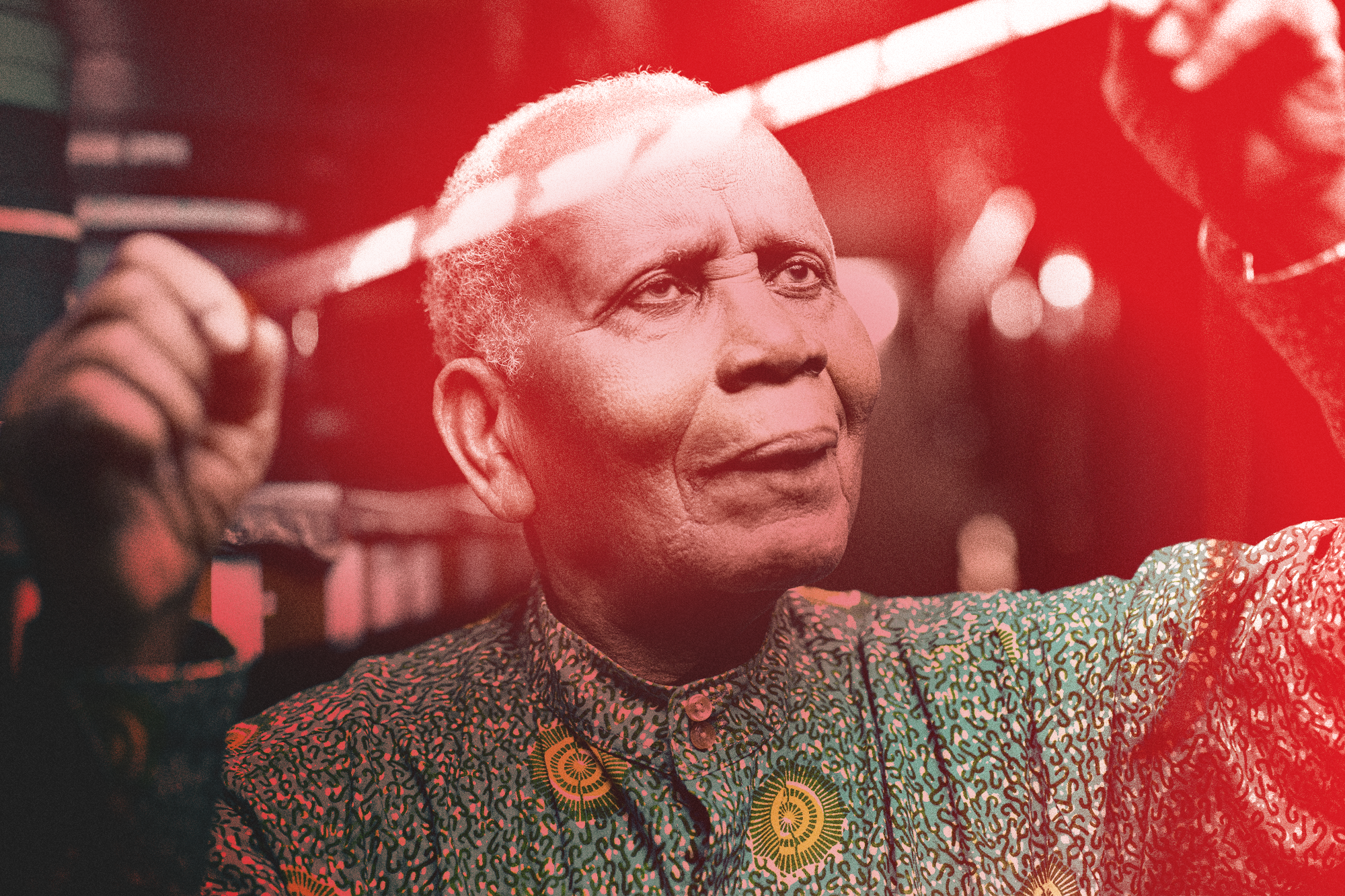
The Eyes of Ghana centers on 93-year-old Chris Hesse, the official cameraman for revolutionary Ghanaian president Kwame Nkrumah in the 1960s. Featuring Hesse’s footage gorgeously restored from the original negatives, The Eyes of Ghana is a moving crowdpleaser — scenes filmed at a restored movie palace in Accra would fit into any “magic of the movies” Oscars montage — but also a thoughtful exploration of complicated modern history.
As I wrote at the time, “There’s no distributor for the title yet, but with the best documentary feature race still very much in flux, I’d be shocked if there wasn’t a deal soon that will put Proudfoot right back in the mix.” The obvious contender seemed to be Netflix, which had a first-look deal with the Obamas’ Higher Ground production company and had distributed acclaimed Higher Ground productions like American Symphony and Rustin.
But that never happened: Netflix wound up with The Perfect Neighbor in the best documentary feature Oscar race last year, and when Netflix and Higher Ground announced the end of their partnership in the spring, The Eyes of Ghana remained without a home.
As it turns out, the filmmakers and Higher Ground were busy building a home for themselves. On Oct. 28, The Eyes of Ghana opened in 112 North American theaters for a one-night-only engagement, and it is still being booked worldwide, with a heavy concentration in Ghana and other African countries. The release was promoted through familiar indie-film methods, but also with a bold partnership with influencer IShowSpeed (real name: Darren Jason Watkins Jr.), who joined as a producer and debuted the trailer just two weeks before release with a livestream on his YouTube channel.
It’s pretty wild to see a very traditionally made documentary, with a sweeping score from Proudfoot’s frequent collaborator Kris Bowers and gorgeous cinematography, sharing the screen with a constant stream of comments and Speed pausing to say things like, “I’m the producer, chat!” But it’s also a pretty brilliant harnessing of the modern attention economy, putting the film directly in front of Speed’s subscribers.
Proudfoot says he was inspired to partner with Speed after the streamer posted his 30-day tour of Africa as a feature-length video on his page in February. ”He was given Ghanaian citizenship, he was given a Ghanaian name, and he comes from Ghanaian ancestry,” Proudfoot tells me. “Something clicked in my mind when I saw that, and not just the Ghanaian connection. He has a similar impulse and mission to us as documentary filmmakers: to show people the world, open their eyes to new experiences, and share your point of view. It just made total sense to us that this would be a possible partnership.”
This was all before the release of films like Markiplier’s Iron Lung, Curry Barker’s Obsession and Kane Parsons’ Backrooms got the entire industry worked up about how YouTube views can translate to moviegoing audiences. Proudfoot says those hits only proved to him that they were on the right track with The Eyes of Ghana. “This summer you had a Spielberg movie, you had Star Wars, and the movies that made the headlines and made the box office news were YouTube creators,” Proudfoot continues. “So that’s very exciting.”
Eyes Have It
Nobody seems to expect The Eyes of Ghana to make Backrooms money, to be clear. (Box office figures for the release are not available.) Proudfoot says the main goal is to make it widely available to as many people as possible and to avoid paywalls, which suggests a future outside a streaming partner or even traditional VOD; he hints that it’s worth keeping an eye on IShowSpeed’s page to see what comes next.
But in a time of massive uncertainty for the documentary field, where even the breakout success of You Can See Everything isn’t enough to shore up an entire industry, the gutsy self-release strategy for The Eyes of Ghana feels like a plausible model for helping other documentaries get seen. Even Higher Ground, with its high-profile founders and partnerships with established media giants like Audible and HBO, sees the potential of a more self-driven future.
“The business is changing so fast and evolving,” says Ethan Lewis, Higher Ground’s head of nonfiction. “You can either be scared of it or you can — to use a cheesy analogy here — you have to be like water. If you’re passionate enough and you care enough, you’re going to find another way to get through. I think that’s where we are, not just in documentary but industry-wide.”
Proudfoot, who has two Oscars for the short documentaries Queen of Basketball and The Last Repair Shop and has a new short documentary The Buffalo Miracle coming to HBO this month, is accustomed to tracking down audiences by any means necessary. “As a short documentary filmmaker who came up releasing my films on Vimeo, I’m no stranger to getting a random email saying, ‘We want to screen your movie,’” Proudfoot tells me. “That’s the world that I come from, and I like it. I like having a personal relationship with somebody who wants to put it up in Angola or Sierra Leone, and I love joining a virtual Q&A. That is independent filmmaking at its core — it’s never really out of your hands.”
In conversations I’ve been having with experienced indie film producers and distributors in recent weeks, there seems to be some real anecdotal evidence that it’s worth going it alone — if you’re not going to get a double-digit offer at Sundance from A24 like The Invite or a splashy Netflix pickup during Cannes like La Bola Negra, why not try something new yourself?
One of the year’s highest-profile self-releases is Wildwood from Laika Studios, which partnered with Fathom Events for the theatrical release but has handled its marketing and awards campaign entirely on its own. (Wildwood has made $40 million in North America so far, and its filmmaking team has pounded the FYC circuit with more events to come this week.) Though they’ve since added Neon as a co-distributor, NAZA filmmakers Yuval Abraham and Rachel Szor initially self-distributed via the film’s producers, The Guardian newspaper, and European sales agent MK2. Their previous film No Other Land won the best documentary feature Oscar in 2025 despite having no U.S. distribution; though some smaller distributors were reportedly in talks with the filmmakers, they decided a release they could control was their best option, not to mention a good marketing tool.
The Eyes of Ghana appears to be in a similar situation — Lewis clarifies that “it wasn’t that there was zero interest in the film” following the TIFF premiere last year — and according to one distribution executive I spoke with, there can often be few incentives for smaller films to go with an established distributor.
“No one is confident anymore about what is theatrical, and if the juice is worth the squeeze,” the executive tells me. Giving up control of your film to a company that might be juggling multiple other priorities, the executive continues, filmmakers have to wonder, “Are they just going to push the movie through the pipes?”
With its 93-year-old central character and commitment to telling a forgotten chapter of African history, The Eyes of Ghana lacks the usual grabby elements that help documentaries succeed these days — what Proudfoot calls “someone famous or infamous,” or a connection to familiar pop culture. He seems to see that as a personal challenge.
“I think it’s a common cycle in business, where the most profitable and the most attractive — from a business perspective — projects become the focus of the industry,” he says. “It leaves room for people who have a lot of energy and initiative and passion like we do to innovate and try things that have never been tried before.”



Comments
Only Ankler All Access subscribers can comment
Already a subscriber?