
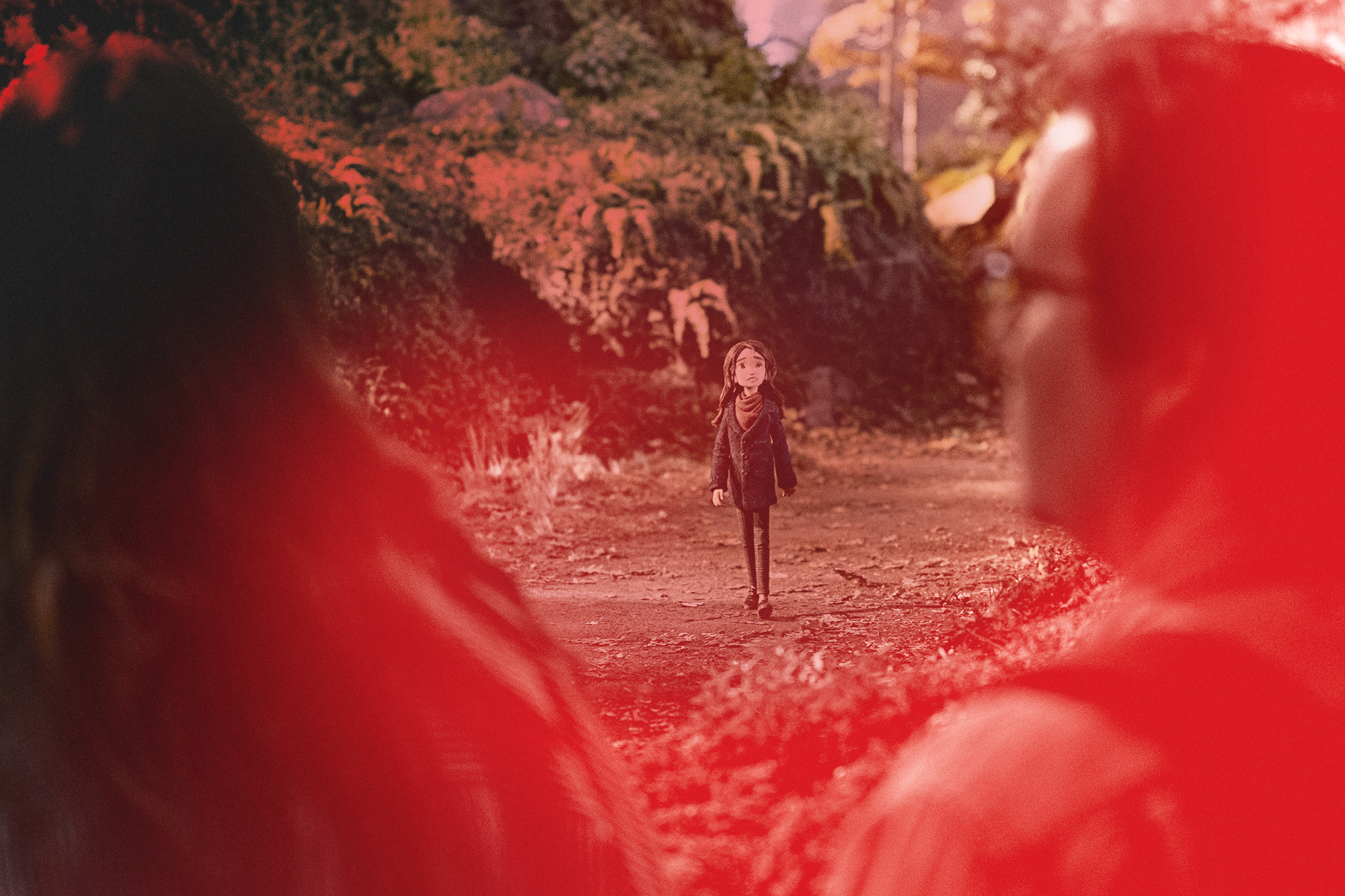
Laika has been nominated for five best animated feature Oscars. It has lost every single one.
For nearly two decades, the Portland, Oregon-based stop-motion animation studio, backed by Nike billionaire Phil Knight and run by his son Travis Knight, has produced some of Hollywood’s most painstakingly crafted movies — only to watch Disney or Pixar take home the trophy every time.
But this year, the winds have shifted. Disney has lost four consecutive Oscar races; Pixar hasn’t won in the category since 2021. The Academy’s increasingly international membership has embraced everything from The Boy and the Heron to Flow. And Laika has mounted its biggest gamble yet: Wildwood, a PG-13 fantasy that took more than five years, more than 1,000 workers and a reported $100 million-plus to produce. It could finally win them that Oscar.

Directed by Travis Knight, Wildwood is the first film Laika is essentially self-releasing, partnering with Fathom Events to get into theaters and handling marketing entirely on its own. That included pop-up events at the Telluride and Toronto International Film Festivals, a world premiere at the London Film Festival and a $12 million opening weekend on just 1,400 screens — particularly notable for an animated movie with a PG-13 rating, even with that nine-figure budget.
But its team isn’t leaving its Oscar chances entirely to the movie itself. The studio has been flying awards voters and journalists to Portland to witness the extraordinary labor behind its films — a campaign designed to make the craftsmanship impossible to ignore. The puppets, sets, microscopically detailed props and shockingly lifelike faces are all handmade by people — many of them the same ones who worked on the studio’s first movie, 2009’s Coraline.
Laika’s longest and most expensive feature, Wildwood, blends traditional stop-motion animation and CGI in a way that expands the company’s already impressive worldbuilding. It’s a bold move for a studio that has staked its identity so fully on physically produced animation, but bold moves are becoming a necessity for Laika, not just an artistic choice.
And if you’ve ever wondered what $100 million worth of stop-motion animation looks like up close, Laika is happy to show you.
I was among those Laika hosted on tours of its suburban Portland studio throughout the fall — bringing my two elementary-aged sons to the Pacific Northwest to check everything out (disclosure: Laika both flew us out and put us up in a lovely Portland hotel).
And even knowing that Laika wanted us to be dazzled, we were.
Wild Times

Apparently, the team built 728 miniature trees for more than 132 practical sets in Wildwood; I would have guessed thousands, having marveled at what looked like perfectly realistic miniature trees that, up close, revealed themselves to be held up by chicken wire and C-stands.
Much of Wildwood takes place in a mysterious forest, where Portland teenager Prue (voiced by Peyton Elizabeth Lee) and her friend Curtis (Jacob Tremblay) travel to rescue her toddler brother, whom a menacing murder of crows has kidnapped. The forest’s gnarled tree trunks and hanging boulders, visible above, are a marvel, as are the lampposts and faux-concrete curbs that bring Laika’s miniature Portland to life. In an early sequence of the film, shown to press at the start of our visit, Prue bicycles past Portland landmarks like Powell’s Books and the bubbler water fountains, all of which were downright miraculous to see recreated in person a few moments later.

Adapted from the 2011 novel by Portland-based musician Colin Meloy of The Decemberists (the band contributes an original song to the movie), Wildwood feels deeply rooted in Laika’s hometown despite the fantastical direction the story goes. But even 48 hours in Portland made it clear how much Laika has turned the city into a stop-motion animation hub over the past two decades. At breakfast at the hotel before our set visit, I spotted Guillermo del Toro, apparently in town to check on production of his new stop-motion animated film The Buried Giant, animated by Portland-based stop-motion studio ShadowMachine. Later that day, while I was visiting an extremely cool indoor putt-putt course, the clerk on duty excitedly told me they’d also spotted del Toro around town, adding that they know many stop-motion animators who have worked at ShadowMachine, Laika, or both.
Back at Laika headquarters, I was watching some of those animation nerds living the dream. Though production was technically finished, key crew members were stationed around the building to show off their work. Keith McQueen, Laika’s head of model making, showed us around the enormous governor’s mansion set, filled with bundles of paper the size of my thumbnail covered in tiny writing, and even an Easter egg for Coraline fans that my son spotted, much to McQueen’s delight.

Brad Schiff, Laika’s head of animation who has worked on every Laika film, gave a tour of the enormous golden eagle puppet, The General, voiced by Angela Bassett in the film. Seeing The General in action in Wildwood shows how meticulous physical details — every individual feather and posable claw has been touched by humans — combine with CGI landscapes to make the film feel both intimate and expansive. You can see a bit of The General in motion in this clip below:
But, as ever, nothing really compares to seeing it up close.

The Race Ahead
My Laika tour included a few other awards journalists and many Golden Globe voters, who have been sharing their dispatches from the set, sounding like pilgrims who have just returned from the promised land. That’s exactly what Laika was hoping for by inviting us, of course, but it’s also hard to avoid. You really can’t help but be astonished by the effort that goes into these sets, and the sheer number of them — while we were on our way to seeing one dazzling set, we’d often pass by two others that weren’t even part of the tour.
Laika is working hard to make sure as many people as possible get that kind of up-close access. At the Toronto International Film Festival in early September, weeks before the film was even complete, I attended a jam-packed cocktail reception where Wildwood concept art, puppets, and props were all on display. A similar exhibition made its way to London for the world premiere.
This full-court press surely helped Wildwood notch a fairly strong opening weekend, though it will likely struggle to match the $75 million Coraline, distributed by Focus Features, made at its original release. Knight told The Hollywood Reporter that they partnered with Fathom partly because more traditional studios wanted to emphasize streaming, so any continued box office receipts for Wildwood will help prove that less traditional, more adult-focused animation can build a theatrical audience.
But the real test, at least from my perspective, is whether Wildwood can win an Oscar for best animated feature — a result that has eluded all five of Laika’s previous movies.
But things have been changing lately, as noted above — and even stop-motion animation has gotten its shine, with del Toro’s Pinocchio winning in 2023. Toy Story 5 is a formidable contender this year — with no less than Taylor Swift out there stumping for it and $1.1 billion in ticket sales. But this new, ever-shifting international Academy tends to favor underdogs — and even though Wildwood is no indie, it is making a great case for having the underdog spirit.
Still, even scrappier competition is on the horizon — like IFC’s gorgeous black-and-white graphic novel adaptation Tangles, and reigning champ Netflix, with the memoiristic In Waves and the animated noir Ray Gunn from former Pixar staple Brad Bird. Pixar even has its own springtime hit, Hoppers, to campaign, while Disney has Hexed coming, too. Sony Pictures Classics — no stranger to Oscar campaigning — picked up the French film Iron Boy at Cannes (the studio’s co-president, Tom Bernard, told me he basically ran out of the Cannes screening to pick it up because he was so impressed).
Right now most of our Ankler Pundits have Wildwood out front, and though I don’t know how many have seen The General’s feathers up close as I have, I imagine they’re impressed for the same reasons I am. Laika has made their movies their own way for nearly two decades, with stubborn, extraordinary patience. They were friction-maxxing long before anyone else. How can you not be persuaded that their moment has come?



Comments
Only Ankler All Access subscribers can comment
Already a subscriber?