
Before I get into today’s newsletter, where I cover the movie everyone is talking about, let me envy those of you attending the AFI Festival in L.A. this week.
From festival hits I adore like Everytime and Josephine to one-off spectacles like Phil Lord and Christopher Miller presenting 2001: A Space Odyssey to the premiere of Peter Berg’s World War II drama Mosquito Bowl, there’s a lot of great stuff happening that I insist you tell me all about.
But I’ll be busy too! And if you’re on the East Coast, come find me in person at the Montclair Film Festival on Sunday, where my colleague Christopher Rosen and I will be sitting down with Sony Pictures Classics co-chief Tom Bernard to talk about this banner year of moviegoing, what it means for indie film and the Oscar race, and how to keep it going. Get your tickets now and see you there!
Now, let’s get to Everything.
What we’re seeing in public is nothing short of a phenomenon. You Can See Everything has an unrivaled mix of critical acclaim and box-office power, with a sterling 97 Metacritic score and the biggest opening weekend for a documentary in more than 20 years. The documentary from Nathan Fielder and Lance Oppenheim follows Elizabeth Holmes in the days before she began her prison sentence in 2023 and branches in many directions from there — and it’s likely to become A24’s biggest hit in what’s been a year full of them.
What’s happening behind closed doors may be even more fascinating.
My fellow Oscar pundits have been speculating for weeks about whether a semisecret participant in the film — we’ll get into more detail later, I promise — could score a basically unprecedented acting nomination for a documentary. But the pricklier discussion is about the documentary itself, which could be snubbed in the best documentary category even while landing an equally unprecedented best picture nomination.
“I had a conversation with an Academy Award-winning documentarian who said they think this may be in the conversation for the greatest documentary of all time,” one documentary branch voter tells me. “I also had conversations with very well-established colleagues, and I would describe their response as being incredibly jealous and not very favorable — way more than anything we’re seeing in the public discourse.”
To understand why the biggest documentary of the year might have to sit out the Oscars category that honors the film’s genre, you have to understand the Academy’s documentary branch and its fraught, self-flagellating history. The documentary branch voter I spoke to puts it bluntly: “If there is a populist film that we perceive is going to win the Oscar, it doesn’t get nominated.”


Today, pundits weigh in on how they see You Can See Everything fitting into the Oscar race, including many categories beyond best picture and best documentary — and I also talk to documentary-world insiders who think everyone is getting way ahead of themselves.
Yes, expect some spoilers ahead.
The Documentary Dilemma
So why would a movie this popular — the most-talked-about and financially successful documentary since 2004’s Fahrenheit 9/11 — not be among the five films nominated for best documentary?
Just ask the filmmakers behind recent, popular documentaries like American Symphony, Will & Harper, Won’t You Be My Neighbor and Good Night Oppy, all of which entered the Oscar race on a wave of critical and audience acclaim but were left out of the nominations in favor of smaller, more challenging or less celebrity-driven options.
Like every other branch of the Academy, documentarians can influence only the nominations; all Academy members vote for the final winner, and they can tend to favor populist-leaning winners like 2013’s 20 Feet From Stardom or 2018’s Free Solo.
Keeping more audience-friendly options out of the nominees entirely has allowed challenging, extremely deserving recent winners like No Other Land and 20 Days in Mariupol to win. But as documentaries struggle to make a profit or even find distribution, the documentary portion of the Oscar broadcast has become pretty obscure, even for plugged-in viewers.
I suspect that You Can See Everything is not only too big to be ignored, but that its specific craft — the way it engages with long-standing debates in the documentary world about the nature of truth and the objectivity of filmmakers — will allow documentary branch voters to engage with it as much more than just a film driven by Holmes’ and Fielder’s celebrity. Right now, 76 percent of our Ankler Pundits predict You Can See Everything will make it into the documentary lineup.
“I don’t see the doc branch balking at this title,” writes Tyler Coates of Filmmaker Magazine. “If anything, it avoids all of the trappings of the subject-produced vanity project that they have wholly rejected in recent years — the film really grapples with that style of documentary and the ethics of compensating its subject in a way that no doc like it has really done. Lance Oppenheim’s credit as co-director definitely elevates it beyond Nathan Fielder’s television work, and it doesn’t feel like TV — it really does feel like a feature meant for theaters.”
The documentary branch member backs Tyler up: “I cannot believe that this film is getting everybody to talk about issues that we in the documentary community have been talking about since we were in our cribs. I love what this film does by raising questions — who’s being truthful, whose story it is. In that context, it’s as honest as I would want a nonfiction film to be.”
Then again, that’s just one documentarian; another doc world insider I spoke to called You Can See Everything a “nothingburger” compared to other contenders like Musk and Naza.
“They can be such a finicky bunch, and if they see a film dominating the circuit it can turn them off,” writes Erik Anderson of Awards Watch. “It will likely be the frontrunner for critics wins leading up to Oscar nomination voting, so we’ll all have to have our ears on the ground as to what individual branch members feel about its style and structure.”
“It’s a confrontation of the form at a time in America when truth is under attack,” adds journalist Jada Yuan, who has covered awards season for years at outlets like Vulture and The Washington Post. “The documentary branch is one of purists on a mission to protect the idea of what a documentary is. There’s no way they nominate something that calls the entire genre into question.”
Whether or not documentarians embrace You Can See Everything specifically, its success could be a huge boon for the doc world — and for indie film in general. “For the documentary field, it’s a net positive to have such a buzzy title in the world,” says Thom Powers, friend of The Ankler, founder of Pure Nonfiction and longtime documentary programmer. “My wish is that it will excite audiences and distributors alike to go searching for more.”
“This is the single greatest weekend for our community, because this is a documentary about documentary,” adds the doc branch member. “It’s a masterfully crafted nonfiction film.”
Making History
Here’s the scenario several pundits have speculated about in recent weeks — including Chris on this week’s podcast: You Can See Everything is a shocking omission from the documentary shortlist announced on Dec. 15. That snub gives the film a fresh new wave of attention just in time for the start of Oscar nomination voting on Jan. 11, empowering voters outside the documentary branch to support it by putting it on their best picture lineup. Then, when Oscar nominations are announced on Jan. 21, You Can See Everything makes history as the first documentary ever to make the lineup.
Put bluntly, it’s the Argo situation, where Ben Affleck’s snub in the best director category directly led to the film’s best picture triumph in 2013.
“A snub by the documentary branch feels pretty likely, which could even help You Can See Everything’s chances of breaking into the other categories if that becomes the narrative,” writes Dane McDonald of the Supporting Actresses podcast. “Here’s the documentary that the stuffy old documentarians aren’t cool enough for!”
So how likely is that historic best picture nomination? Right now it feels inevitable, with You Can See Everything as the movie everyone can’t stop talking about, and yet another indie hit in a year that’s been so thrillingly full of them (59 percent of Ankler Pundits have it landing a nomination).
“There inevitably are always titles in best picture that feel unexpected or ignored elsewhere — and it’s enough of a cultural moment that it would be hard to ignore in that category,” writes Maureen Lee Lenker of FilmWeek.
Next Best Picture’s Matt Neglia points out that the preferential ballot, in which voters rank the films in order of preference for nominations, could be a huge boon for a movie sparking so much passionate discussion: “The film has captured the zeitgeist and has ignited passion within people as their No.1 favorite film of the year,” Matt writes. “When we’re discussing best picture, it’s all about those No. 1 votes.”
The documentary branch member urges caution, though, about what happens when documentaries are considered by the Academy at large — after all, every branch has a best picture vote. The member is especially skeptical of predictions that You Can See Everything could break through in other Oscar categories, including something that once seemed unthinkable: an acting nomination for a documentary.
Stop! The Spoiler
It’s time to truly spoil You Can See Everything with what’s been an open secret for me since the film’s Telluride premiere, but still elicited gasps in my theater.
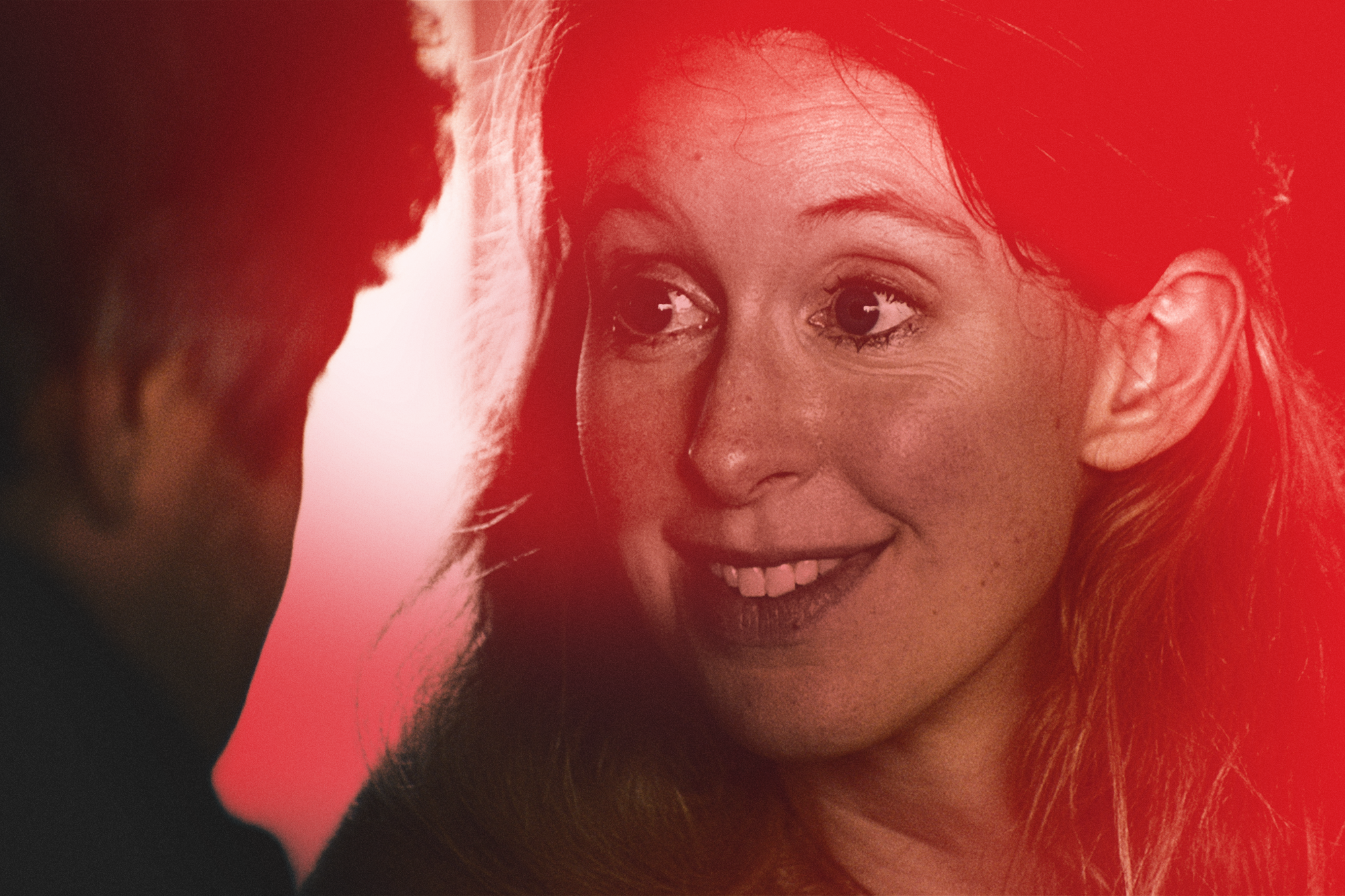
Amanda Seyfried is in this movie, initially as a sounding board for Fielder to show the footage he’s captured of Holmes, but eventually recruited to step back into the character she played to Emmy-winning success on The Dropout. Seyfried is a marvel both as Holmes and as herself — or, at least, this documentary’s version of herself — especially when she spars with Holmes’ increasingly dodgy partner, Billy Evans.
After keeping her role secret this long, Seyfried is now doing press that acknowledges her as a dark-horse Oscar contender, and she could presumably take part in upcoming Q&As alongside Fielder and Oppenheim. But can she actually get a nomination?
As of this writing, only Maureen, Dane, Chris and Vulture’s Joe Reid have added her to their supporting-actress predictions. “She’s the most universally beloved part of what sure seems to be the most universally beloved movie of the year,” says Joe. “She is absolutely performing in the movie, both as Elizabeth Holmes and as herself. Why shouldn’t this happen?”
As Dane points out, the acting branch has a recent precedent for venturing beyond its comfort zone. “This is the same Academy that looks likely to nominate Obsession for at least best actress,” he says, of the film’s star Inde Navarrette. “They seem to be broadening their horizon in a post-Amy Madigan Aunt Gladys Weapons world.”
Ryan McQuade of Awards Watch is going even further: “I think You Can See Everything not only has a great chance at getting into the best picture lineup, but I can see it getting into best director, best supporting actress, best editing, best cinematography, best sound, best score and, yes, best documentary feature.”
I’m told there are still open questions about how many of those categories will actually consider You Can See Everything eligible, but A24 expects that to be settled in the coming weeks.
Beyond Seyfried’s performance, the trick is that documentaries are not made in the same way as any other film, and most Academy voters in other branches haven’t worked in documentary; it’s challenging to imagine cinematographers or editors comparing their work on narrative films to what’s on screen in You Can See Everything.
“I’m not sure the directors branch would recognize the flex,” says the documentary branch voter, calling pundits particularly crazy for predicting Oppenheim and Fielder as best director nominees.
But this is what happens every Oscar season: Something seems nuts and unprecedented until the right movie finally makes it happen. You Can See Everything won’t be quite as white-hot by January, when nomination voting starts, but it will be one of the year’s major Hollywood stories. That brings up one final question: How far can it go, especially with an increasingly global Academy membership?
Tyler puts it plainly, and I’ll give him the last word: “Will the international voters care about this? Is the Elizabeth Holmes story merely another scammer that Americans are obsessed with, or does Fielder’s documentary raise larger questions about the nature of truth and persona that makes it more than just an American story?”


Comments
Only Ankler All Access subscribers can comment
Already a subscriber?