
Emmy nominations voting closes next week, so you know what that means: I’ve got one last conversation with an Emmy contender. But first, I wanted to indulge in some pure punditry, given this week’s season finale for what I think is one of the most genuinely thrilling shows in this year’s race.
Now that Widow’s Bay has wrapped up its exceptionally funny and scary first season, with a finale that tied off a few mysteries and teased a whole lot more, we’ve pretty much seen everything that this year’s Emmy contenders have to offer. As a reminder, Emmy eligibility ended on May 31, and most shows aired their entire seasons before that deadline to give voters time to catch up. According to Television Academy eligibility rules, at least six episodes are required to have premiered before the May 31 deadline for a comedy or drama series that straddles the voting period; seven of the 10 Widow’s Bay episodes debuted before June, making them and the series itself a contender. The remaining three episodes, including the finale, are eligible for the Emmys next year as “single ‘orphaned’ episodes in certain individual achievement categories.”
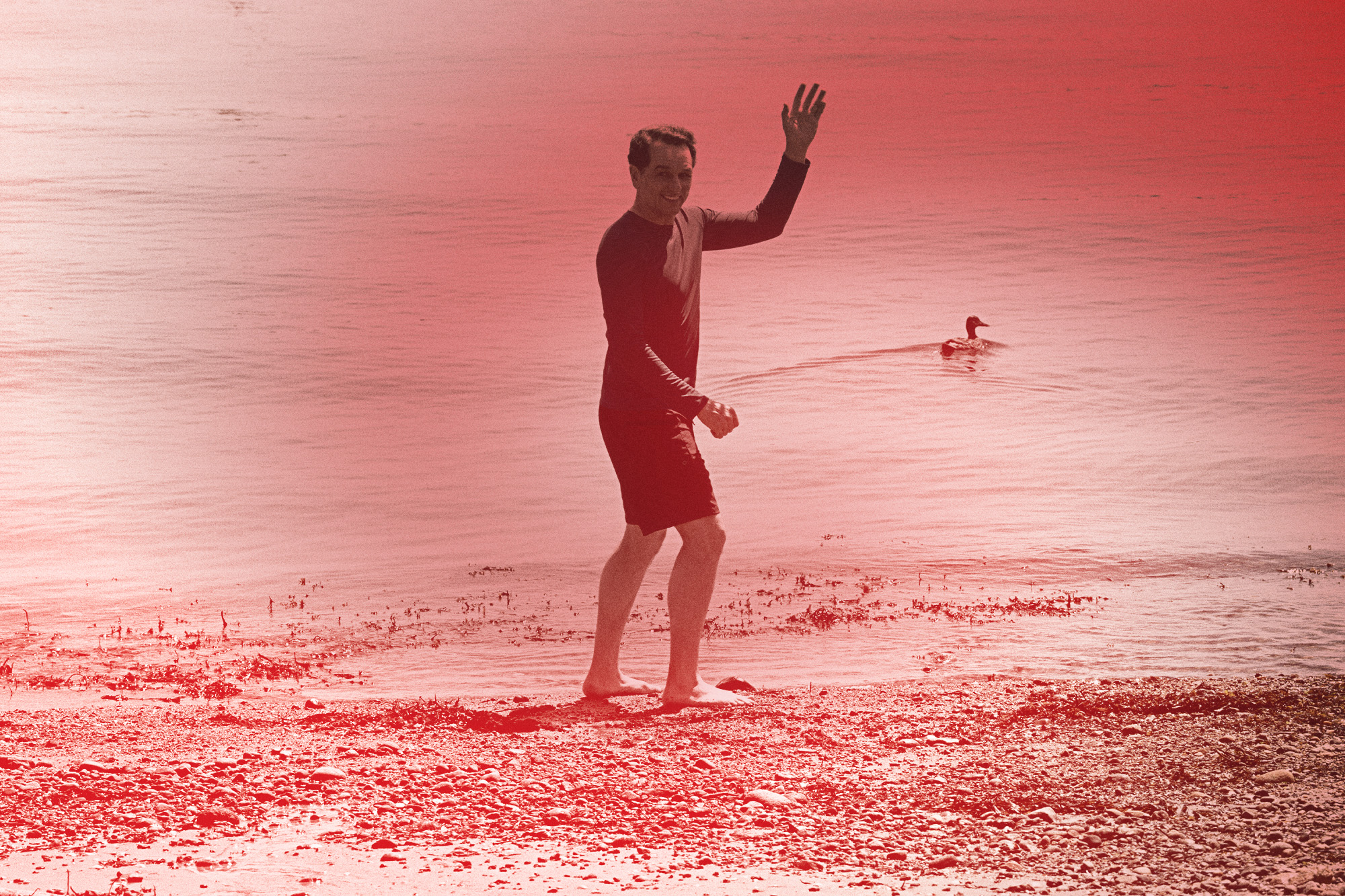
Anyway! Rules aside, I’m not the only person who noticed Widow’s Bay picking up steam in the crucial final weeks before Emmy voting opened, and I think it’s now worth properly asking: Just how much can Widow’s Bay and its Emmy-winning star, Matthew Rhys, shake up the comedy race?
For the most part, that field is still very much dominated by Hacks, which wrapped up its fifth and final season on a perfect grace note last month. Though I indulged in some speculation a few months ago that The Comeback’s Lisa Kudrow might give Jean Smart a challenge, I feel pretty certain Smart will go five-for-five in winning Emmys for playing Deborah Vance. Hannah Einbinder, who had to wait until the show’s fourth season to win a supporting actress award for what’s truly a co-lead, probably deserves another trophy, too — as do the show’s trio of creators Lucia Aniello, Jen Statsky and Paul W. Downs, who share two writing awards as well as the show’s best comedy win in 2024. Downs also plays the beleaguered manager Jimmy and, with Meg Stalter, one half of TV’s most wonderfully chaotic duo; he’s never won an acting award — and was somehow snubbed altogether last year — and voters may very well seize their last opportunity to reward him.


Which brings me back to Widow’s Bay and the one category where Hacks is very conspicuously not competing: lead actor in a comedy series. The first step is for Rhys to get nominated, in a field that includes a previous two-time winner (Jeremy Allen White for The Bear), multiple previous acting nominees (Adam Brody for Nobody Wants This, Steve Martin and Martin Short for Only Murders in the Building, Steve Carell for Rooster) and a generally assumed frontrunner in Jason Segel for Shrinking. As both a co-creator and star of the Apple TV series, Segel would be an easy way to reward a show that’s clearly growing in Emmy affection, more than tripling its nomination total from its first season (two) to its second (seven).
There are once again only five slots for nominees in all of the lead acting categories this year, but the competition isn’t quite as stiff here as elsewhere. Both Only Murders in the Building and Nobody Wants This are fairly low on buzz compared to previous seasons, and though it would be wild for a two-time winner to miss out, the spot for White is certainly not guaranteed. Other new contenders include Carell for Rooster (which, like Shrinking, has Bill Lawrence backing it) and Ethan Hawke, who could ride the momentum of his recent Oscar nomination to a nod for the acclaimed FX series The Lowdown. I’m also rooting for Tracy Morgan of my beloved The Fall and Rise of Reggie Dinkins, and would love to see a surprise nod for Yahya Abdul-Mateen II of the genuinely great Marvel series Wonder Man — given his 2020 win for Watchmen, we know he’s on the voters’ radar!
In short, there’s a lot of room for surprise in this particular category, and I’m going to make the bold prediction that only Segel and Rhys have guaranteed spots in that list of five. So why do I feel so confident that the star of a new, genuinely strange show can beat out a TV comedy veteran who’s led a hit show for three seasons?
It certainly helps that Rhys is already an Emmy winner for The Americans, the FX series that was perennially overlooked by the Emmys before finally winning trophies for Rhys and for writing in its final season. Widow’s Bay has seemingly created a mini-revival for The Americans, at least on my social media feeds, and renewed awe at the show that sparked a real-life love story between Rhys and his co-star Keri Russell, who will almost certainly be an Emmy nominee again this year for The Diplomat. Look at Rhys’ overwhelming joy when Russell won the Actor Award back in January and tell me you’re not rooting for those two:
There’s also a fairly strong tradition at the Emmys of rewarding actors in this category for a show’s first season — and specifically for not awarding someone who’s been nominated previously but didn’t win. Seth Rogen (The Studio), White, Jason Sudeikis (Ted Lasso), Bill Hader (Barry), Donald Glover (Atlanta) and Jeffrey Tambor (Transparent) all won this category for their show’s first seasons. Only the phenomenon of the final season of Schitt’s Creek breaks that decade-long streak, with a win for Eugene Levy. Other than Levy, the last person to win this category for a show they’d been previously nominated for was Jim Parsons, who lost to 30 Rock’s Alec Baldwin on his first nomination for The Big Bang Theory but then won four Emmys for the show. I don’t think you need me to tell you that was a very different time in the world of TV comedy.
Of course, Rhys himself can tell you that it doesn’t always happen that way — he was nominated twice in the drama category for The Americans before finally winning. The warm reception for Shrinking’s third season, and the recent announcement that a fourth is on the way, make Segel a very strong competitor here, as does the fact that Shrinking — a sharply funny but also sentimental ensemble show — is far more accessible to a wider audience than Widow’s Bay. But passion picks have been good bets at the Emmys lately, and Widow’s Bay has a lot of it. Now we just have to see if enough Emmy voters noticed.
Candy Man

Colin Hanks never thought he was going to make a documentary revealing some unseen dark side of John Candy — and, thank goodness, that’s not what he found when he started making John Candy: I Like Me.
“That was not something I wanted to spend three years of my life exploring,” Hanks tells me in a recent Zoom call. “There was something really engaging to me about being able to present John’s story and say, look, this is just how relatable he was.”
That doesn’t mean that I Like Me, released on Prime Video and eligible for the Emmy for outstanding documentary or nonfiction special, lacks for dramatic stakes. Starting at Candy’s 1994 funeral before rewinding to take in his entire life, I Like Me carries the sense of a ticking clock — something Candy, who died at 43, felt in real life, too — as revealed in the film’s extensive, incredibly intimate interviews.
“We knew that there were certain tenets of his childhood that greatly affected him throughout his entire life, like losing his father on his fifth birthday,” Hanks explains. “In my conversations with Chris Candy and Jennifer Candy, John’s children, they were very adamant about his mental health. Talking about stress and anxiety, combined with the trauma he experienced at a young age— I felt that that was an incredibly relatable, incredibly dramatic story that we could really sort of hang our film on.”
The version of Candy that the public remembers, of course, doesn’t give away any of that. Breaking out with SCTV in the 1970s, alongside fellow future comedy greats like Catherine O’Hara, Martin Short, Eugene Levy and Bill Murray, Candy created unforgettable, larger-than-life characters – from the overwhelmed Wally World employee at the end of National Lampoon’s Vacation to the titular Uncle Buck. Hanks describes that group of SCTV veterans as “the valedictorians of their era,” and unusually tight-knit for comedians, as represented by how many people did interviews for the documentary to sing Candy’s praises. “They were all so supportive and so connected to each other that everyone’s success was everyone’s success,” he says. “And John, I found really personified that to a large degree.”
I Like Me had its world premiere in Candy’s hometown at the Toronto International Film Festival last fall, but it feels even more poignant to watch it today, six months after O’Hara’s death. Her moving eulogy for Candy is one of the film’s final high notes; as Hanks puts it, “Losing Catherine was a gut punch, and I think it adds a certain amount of importance to the film. I’m so glad we were able to capture her.”
The sadness that is inevitably part of I Like Me is well-balanced, though, by the incredible archival footage dug up by Hanks and his team, from early SCTV sketches to Candy on the sidelines for the Canadian Football League team he owned in the ’80s. Hanks credits the “archival ninjas” — that’s literally the company’s name — for everything they found, but also says the clips helped the film reveal itself to him, particularly in the old interviews where Candy is asked downright rude questions about his weight and appearance.
“In my brain, I remember him as this larger-than-life, very fun, very outgoing, very gregarious person,” says Hanks, who was 7 years old when his father, Tom Hanks, starred opposite Candy in 1984’s Splash. “And he was that for sure. But there was also a component that I saw that I was kind of taken aback by how uncomfortable he was [in those interviews]. The more and more we assembled, the more and more that just became evident that that was going to be a big theme of what we were going to explore.”
The film’s title, I Like Me, is taken from what might be the most famous scene in the most famous movie in Candy’s filmography: the speech in Planes, Trains and Automobiles in which his character defends himself to Steve Martin. It’s not exactly a deep cut, but when I ask Hanks which Candy movie he wants more people to see, it’s the one he still comes back to.
Hanks says they referred to 1987’s Planes, Trains, and Automobiles as “Peak Candy” in the editing room — an apex role in his legendary career. But despite the movie’s universal acclaim — there’s a reason it’s a perennial holiday staple — Candy’s work in the John Hughes film is often overlooked.
“Even just particularly in that scene, I don’t think there’s another actor on the planet that can perform the scene the way that John did,” he says. “I hope people can look at John as both a performer and an actor, because there’s real skill there. It looks so effortless, and it looks so easy because you just see John Candy, but really it’s John bringing a part of himself to each and every role.”