

Scenes from the Lobby: Why Movies Flop — The Audience Already Knows
Inside the exit-polling machine that captures what fans actually think: ‘Every movie, if made for the right price, should make money’


I cover audience and moviegoing trends. I looked at the lost movie palaces of L.A., the coming IP that Gen Z will make or break and the struggle for films to stay memorable in the streaming era. Email me at matthew@theankler.com

Amazon MGM spent $75 million acquiring and marketing Melania, the Brett Ratner documentary about the First Lady. Reviewers hated it — the film currently has an 11 percent critics score on Rotten Tomatoes — and it was widely viewed as a naked attempt by Jeff Bezos to curry favor with the Trump administration. It grossed $16.4 million in the U.S. and Canada. Though that’s a healthy sum for a documentary, the pricey vanity project was still deemed a flop.
But there was one group of people who loved Melania: the handful who actually paid to see it in theaters.
Audience members surveyed by PostTrak, which polls moviegoers as they leave theaters, gave Melania 5 out of 5 stars, with an unheard-of 89 percent saying they would definitely recommend it.
“It was incredible, because I was reading the information coming in from PostTrak, and I was like, wait a second — for the people who wanted to go and see it, they love the movie,” says Aaron Feuer, VP of the movie group at Screen Engine/ASI, the research and data analytics firm that co-owns PostTrak with Comscore. Melania’s audience was older (72 percent were 55 and over) and left happy. The social media outlook online — which powerfully shapes sentiment about movies, especially among younger audiences — and the in-theater reception might as well have been about two entirely different films.
This gap is what PostTrak — the film industry’s standard currency for box office exit polling — exists to measure and explore. In an era when social sentiment, Rotten Tomatoes and algorithmic discourse shape how we talk about movies before most people have even had the chance to see them, PostTrak makes an old-fashioned argument: The only signal that matters is the person walking out of the theater.

“We’re saying, don’t listen to that noise,” says Kevin Goetz, the founder of Screen Engine/ASI and the architect of PostTrak. “Listen to the people who are actually showing up — or not.”
But even Goetz acknowledges a limit to what data can do. PostTrak can tell studios who showed up, what they thought and why — but it can’t force anyone to act on it. In an industry still driven as much by instinct, politics, relationships and precedent, evidence is often available. Whether Hollywood chooses to follow it is another question.

How It Works

This disconnect comes at a precarious moment for the theatrical business. Despite a handful of breakout hits, including last weekend’s Project Hail Mary, box office remains well below pre-pandemic levels, and studios are still struggling to get audiences to show up consistently. Domestic box office for 2025 was barely up over the year before, and the future of theatrical is now a central fault line in Hollywood’s biggest strategic debates — from streaming-first models to David Ellison’s improbable promise of 30 movies a year in theaters under Paramount-Warner.
The question of who is actually going to the movies — and what will get them there — is now existential.
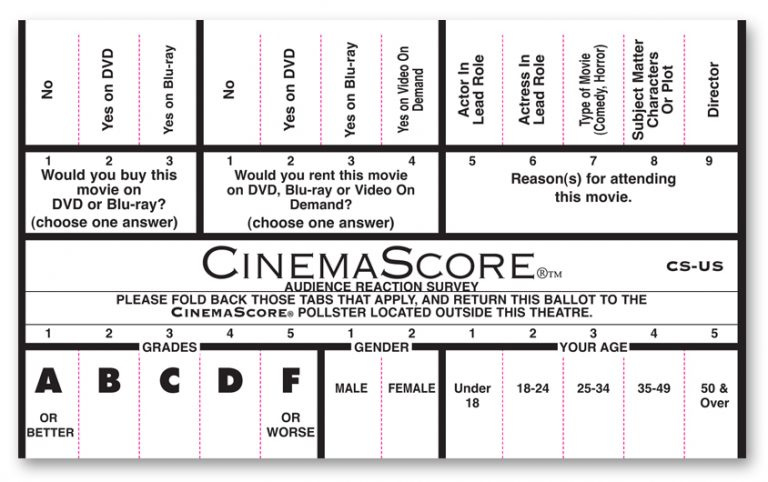
That’s what PostTrak is built to answer. Created in 2013, the company surveys audiences entering and leaving movie theaters. Its chief rival, CinemaScore, has been tabulating audience ratings on an A+ to F scale since 1978. Since CinemaScore began almost 50 years ago, its method has remained the same, handing out physical cards at a handful of locations. PostTrak, on the other hand, conducts 17- to 20-question surveys that go beyond an A+ to F metric.
Anytime you see demographic data from a film’s opening weekend — the percentage of attendees who were white, Latino, Asian or Black, the male/female split, the share over/under 35 — it’s likely coming from PostTrak. Each major studio pays in the mid-six-figure range annually for access to all the data, and many indie studios also subscribe at lower rates.
The operation collects data at 21 theaters across the U.S., selected to reflect demographics of the general population and align with what Goetz calls the “regular audience” (i.e., not art-house, not heavy media consumers, just out for a movie). Two PostTrak theaters are in Southern California — one in Anaheim, another in Long Beach — and others are in Chicago, Dallas and Phoenix. PostTrak occasionally will swap out a theater to stay aligned with census data. (One studio executive who uses PostTrak bemoans that there are no Canadian theaters, given that they count toward the North American box office total.)

The on-the-ground work is conducted by Entertainment Works, a research company that specializes in amassing audience data. Eworks, as it’s commonly called, deploys freelance workers to each theater in six- to 10-hour shifts.
PostTrak’s post-film survey takes less than five minutes to fill out and includes about 20 standard questions, including:
How would they rate the film
Whether the viewer would recommend it
And what specifically brought them to the theater
But what studios are really paying for are the “tack-ons” — questions they tailor to each film. These can include whether audiences have seen previous movies in a franchise, what they thought of specific characters, what trailers they remember seeing, and what would stoke their interest in a future release.
“The smart studios are asking more questions,” says Tim Hardy, co-founder of Eworks.
A second longtime studio exec emphasizes that tack-ons are “usually very picture-specific” and especially valuable for gauging how viewers responded to various marketing hooks.
“You want to see if the marketing choices resonated,” this person adds. “Did those motivate someone to see this film?”
Typically, PostTrak collects 800 responses across three or four survey sessions (usually Thursday night, Friday night, Saturday afternoon and evening). For larger family films or what Hardy calls “hybrid” films (think superheroes), the target rises to 1,200. In a film’s second week, those targets drop by half. Studios collect this data for every movie they release and can also track other studios’ film performances (PostTrak operates as a catch-all source for everyone).

In the Field
On a recent Thursday evening at the Regal Edwards Long Beach, six Eworks emissaries, clad in head-to-toe black, are circulating the lobby with stacks of tablets as patrons file in for Emerald Fennell’s Wuthering Heights — it’s opening night, Feb. 12. Mostly, these survey ninjas are gig workers on a three-night-a-week rotation.
Outside the 140-seat IMAX theater, a team member hands a tablet to moviegoers, who spend about a minute answering demographic questions. They’ll be asked to complete the survey on their way out. Hardy notes that PostTrak has great success hiring film school grads and liberal arts majors because these “artistic” and “people-oriented” workers find it naturally easy to strike up conversations with exiting audiences. On a given survey day, six workers making approximately $120 apiece for the evening tabulate around 80 people.

Wuthering Heights will emerge from this opening weekend with a 51 percent definite recommendation rating on PostTrak. Critics will be divided on the film, with some dismissing it as “sexy fan fiction” of Emily Brontë’s classic novel and others praising it as “cinematic and ambitious.” The audience: 53 percent were 18-34 for the weekend; 76 percent were women on opening night.
“When you walk out of that movie, and I say, ‘Hey, we’d just like to know what you think of the movie,’ and I hand you a tablet, you’re not getting the people that are running home to Rotten Tomatoes,” Hardy says — by which he means extremely online movie lovers with often intentionally provocative points of view.
“It’s hard to beat,” Hardy adds of the response from a theatergoer in the lobby. Once you’re out the door, the PostTrak pros say, you’re someplace else. You’ve exited the experience.
A third veteran studio executive I spoke with says that PostTrak is “very good at audience specifics,” such as “women under 30 loved it, but guys over 40 hated it.”
“That’s where we use it,” they say.
To gauge whether a movie will have legs, though, this executive relies more heavily on Rotten Tomatoes user ratings. “I think people are all on the same page on this,” the exec tells me. “CinemaScore is a joke, PostTrak is directional and they know they have a hit or a miss based on the audience score of Rotten Tomatoes.”
The Wizard Behind the Curtain
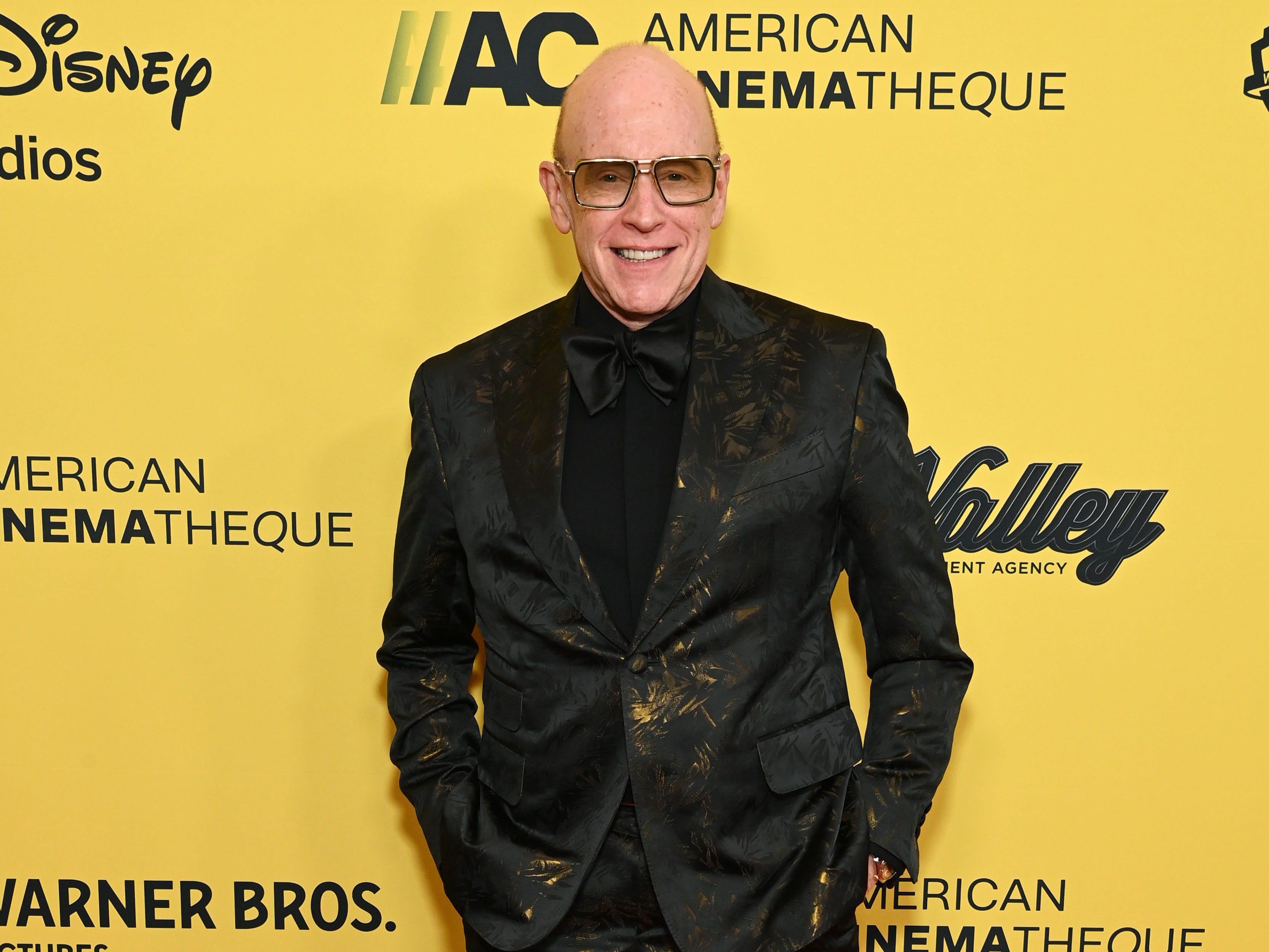
Goetz, a 40-year veteran of the film polling business, talks to me over Zoom from his spacious home library in Beverly Hills. He believes he has the answers to just about every question plaguing Hollywood: what makes a film a hit or a flop, and the bar a movie needs to clear for consumers to leave their homes. He’s written two books — Audience-ology: How Moviegoers Shape the Films We Love (2021) and How to Score in Hollywood (2025).
After founding Screen Engine in 2010 to conduct studio test screenings and build audience awareness for new films, he came up with the idea for PostTrak. “If I could get the U.S. population to match with these theaters,” he recalls thinking, “I could then deduce where the moviegoing population was over-indexing and by whom — ethnically, racially, gender and age.”
His central catchphrase: “Every movie, if made and marketed for the right price, should make money.”
It’s a bold claim in a landscape where the factors behind success are harder to read than ever. Goetz believes the single biggest mistake the industry makes is using poor “comps,” or previous comparable titles, when trying to predict a future film’s financial performance. Oftentimes, he says, studios choose comps that have “nothing to do with” the film’s actual audience — and are frequently selected by business affairs execs trying to mitigate financial risk. For example, in the rom-com space, he says studios are “fooling” themselves if they’re comping, say, to the 2023 Glen Powell-Sydney Sweeney romantic comedy Anyone But You — a box office outlier given its broad success ($88 million in North America and over $220 million worldwide).
Another recent example: Searchlight’s Ready or Not 2: Here I Come, just out this past weekend. The first studio exec, who works at a different major studio, wonders whether marketers properly comped the sequel to its 2019 original — since, in his opinion, it was predictable that it would appeal to a similar demo as Project Hail Mary. “It’s not that you can't counter-program against something as big as Project Hail Mary. You absolutely can,” the first exec says. “But you can't counter-program against it when you have, in essence, the same audience.” Ready or Not 2 finished slightly below expectations, in fourth place at $9.1 million.
PostTrak can show studios exactly who their audience is and how they’re responding — often in real time. But changing course is another matter. Data doesn’t always win the argument, and the business increasingly writes off movies that underperform opening weekend without trying to course-correct.
More often than not, PostTrak data is valuable for hyper-targeting a narrow niche that loved the film during its opening weekend. If a movie over-indexes with men over 35, a studio can shift ad spending to ESPN. If a franchise film underperforms with younger audiences, marketing can pivot accordingly.
But as the third exec puts it, “The days of spending millions and millions of dollars post-opening to keep movies going are done.”
Who’s Listening
The executives who oversee PostTrak say they receive limited information on specific second-weekend marketing decisions informed by their data. When I press Goetz on whether he has any clear examples, he says no, but he knows “PostTrak is used a lot in the second weekend,” and that’s all he can glean from the studios he works with.
Hardy notes that studios have largely become more savvy about the benefits of tack-on questions (he calls them “tacks”). As PostTrak adapts to the modern theatrical landscape — for example, by including a standard question about whether moviegoers would be interested in a sequel — studios have narrowed down which data points can help them make future decisions.
“At the end of the day, we’re tracking real people — actual moviegoers — and bringing that insight forward,” Feuer says. “We’re partners in the process, providing an important tool for the studio.”
Goetz, for one, is skeptical of overly optimistic industry narratives regarding the future of moviegoing, such as the widely held idea that Gen Z will return in droves and save the box office. “There’s never been a bigger gap than there is today,” he says, between the “haves and have-nots.” Yes, younger generations are showing up to the theater, he concedes, but only for “elevated” or “experiential” films (like Wuthering Heights and Project Hail Mary) that give them a definitive reason to leave their homes.
To successfully navigate this challenging future, studios must change how they approach budgets. Goetz says. At least, he attests, that’s what the data says.
In other words, PostTrak can tell studios exactly what audiences think. It just can’t make them care.