

‘Mario’ and the New Fandom Flywheel Upending Hollywood
A $372M opening reveals the new power structure: Fans build, amplify and ultimately decide what wins

I cover audience and moviegoing trends. I went inside PostTrak to find out why movies flop, looked at the lost movie palaces of L.A. and the coming IP that Gen Z will make or break. Email me at matthew@theankler.com

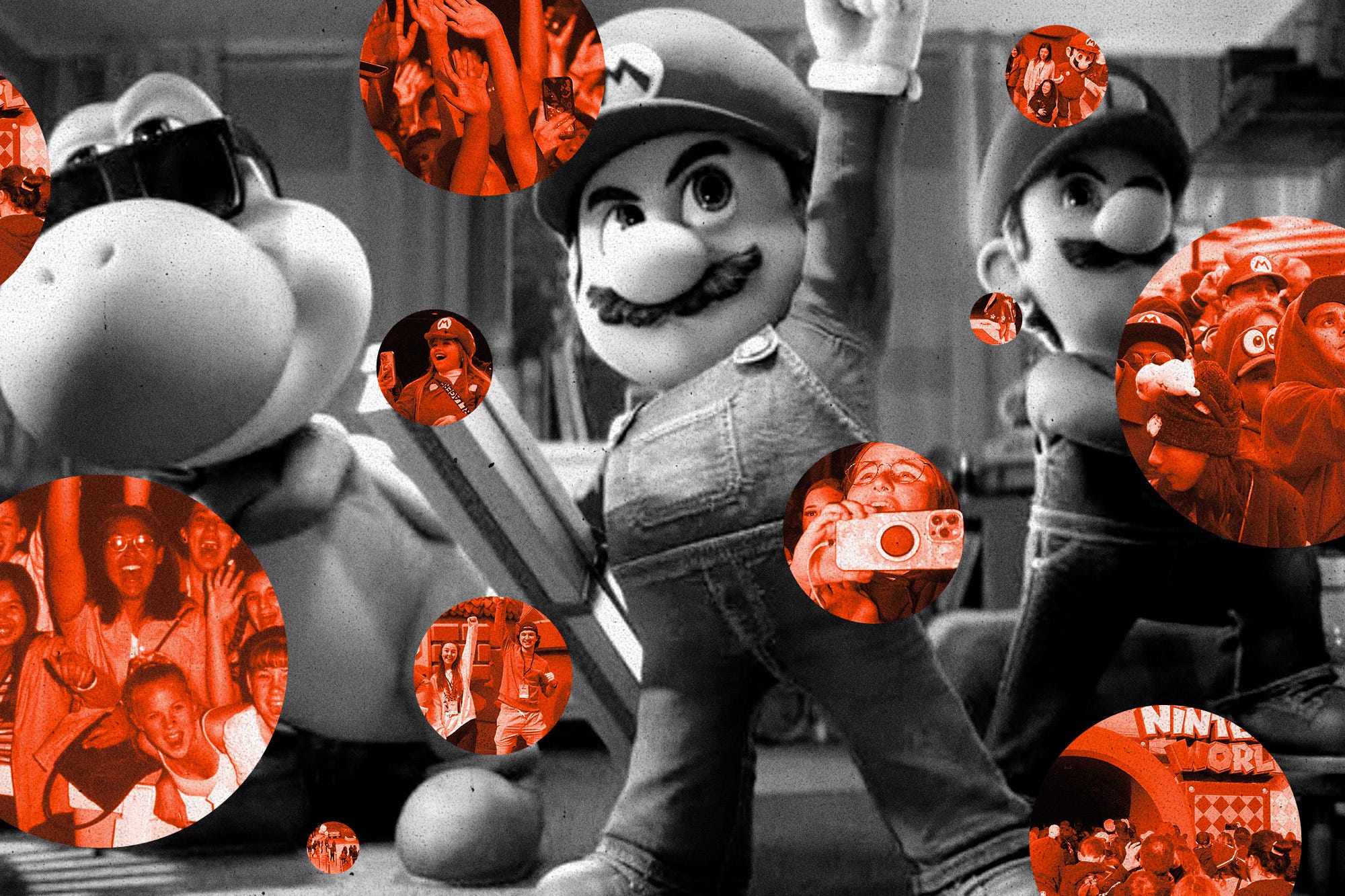
To understand why The Super Mario Galaxy Movie grossed $372.5 million worldwide during its five-day opening — the biggest tally for a title this year so far — start thinking like a fan.
“So many incredible moments that called back to my favorite moments of playing Mario from when I was a kid, all the way to my adulthood,” wrote one user on Rotten Tomatoes, where the blockbuster has an 89 percent rating from the site’s “Popcornmeter,” which tracks fan sentiment. (Critically, Super Mario Galaxy is rotten with a 42 percent score.)
“Every action scene and every sequence feels like a dream come true for Nintendo fans,” wrote another.
It’s not new to suggest media viewership has fragmented to the point where, excluding Taylor Swift and the NFL, monoculture no longer exists. But what has grown in its place is a collection of fanbases that build around properties, big and small, whose members feel they own the IP just as much as studios do — if not more. In this landscape, passionate communities — superfans who maintain extensive lore wikis (see Game of Thrones hub Wiki of Westeros), generate content around existing shows (check out one of the thousands of fanfic stories about The Pitt) and rabidly discuss it all online (the Marvel Studios subreddit receives more than 1 million visitors weekly) — act as the spark that lights the wider cultural fire.
On one recent tentpole action sequel, a prominent marketing executive associated with the film tells me, the biggest decisions revolved around how to handle easter egg character reveals.
“During testing,” he says, “they found that people would stand up and start cheering if they were fans of the original movie.” Enticing, then satisfying, that base became the campaign’s focal point.
In other words, the tail now wags the dog.
There are more ways than ever to go deeper on a property — from lore breakdowns to endless archives of clips and analysis. Even for any sitcom that’s had at least five seasons on air — think Malcolm in the Middle, Modern Family — there are online rabbit holes. Two-thirds of Gen Zs spend more time with fan-created content than with the official titles, according to a December 2025 Ogilvy Consulting study.
The barrier between creator and audience hasn’t just blurred. It’s disappeared.
Across platforms, fans aren’t just engaging with IP — they’re extending it, remixing it and, in many cases, outperforming the official versions studios control.
Roblox granted users the ability to create IP-based games with the rights holders’ approval. A user-generated game called Ink Game, based on Netflix’s Squid Game, has been played over 2.9 billion times. On social media, fans of specific films and TV shows create clip channels. And in the merchandising space, fans design their own apparel and goods based on existing titles — often with more skill and success than the studios’ own teams (more on that below).
USC professor Henry Jenkins has a name for this shift. Forget “appointment television.” Now it’s “engagement television,” where the audience never really leaves — and fandom becomes the most important part of the audience.
So how do you compete in a world where fans hold the power?
Today I’ll tell you what winning in this new system actually looks like:
How a fan with 2 million Instagram followers became one of Hollywood’s most valuable marketing assets
The fan platform that’s become one of the most valuable intelligence operations in entertainment
The question nobody in Hollywood has answered yet: How much IP do you hand over before you lose the plot entirely?
The fan who designed his own Scream 7 poster — and ended up getting paid for it by Paramount
Why the PR person handling fan relations on a recent Disney tentpole was all wrong
Why Disney licensing its characters to OpenAI was the most important signal in fandom this year