


I’m deputy editor at The Ankler and co-host of the Prestige Junkie podcast. My special Art & Crafts series this week celebrates the talented, Emmy-nominated artisans behind top shows — including casting and cinematography.
Of the 86 Emmy nominations that HBO Max’s Hacks received during its five-season run, none seemed as unlikely as the comedy’s nomination this year for a 21-second song sung entirely in Spanish.
“I certainly wasn’t expecting it,” says composer Carlos Rafael Rivera about his bid in the best music and lyrics category for “Mis Figuritas.”
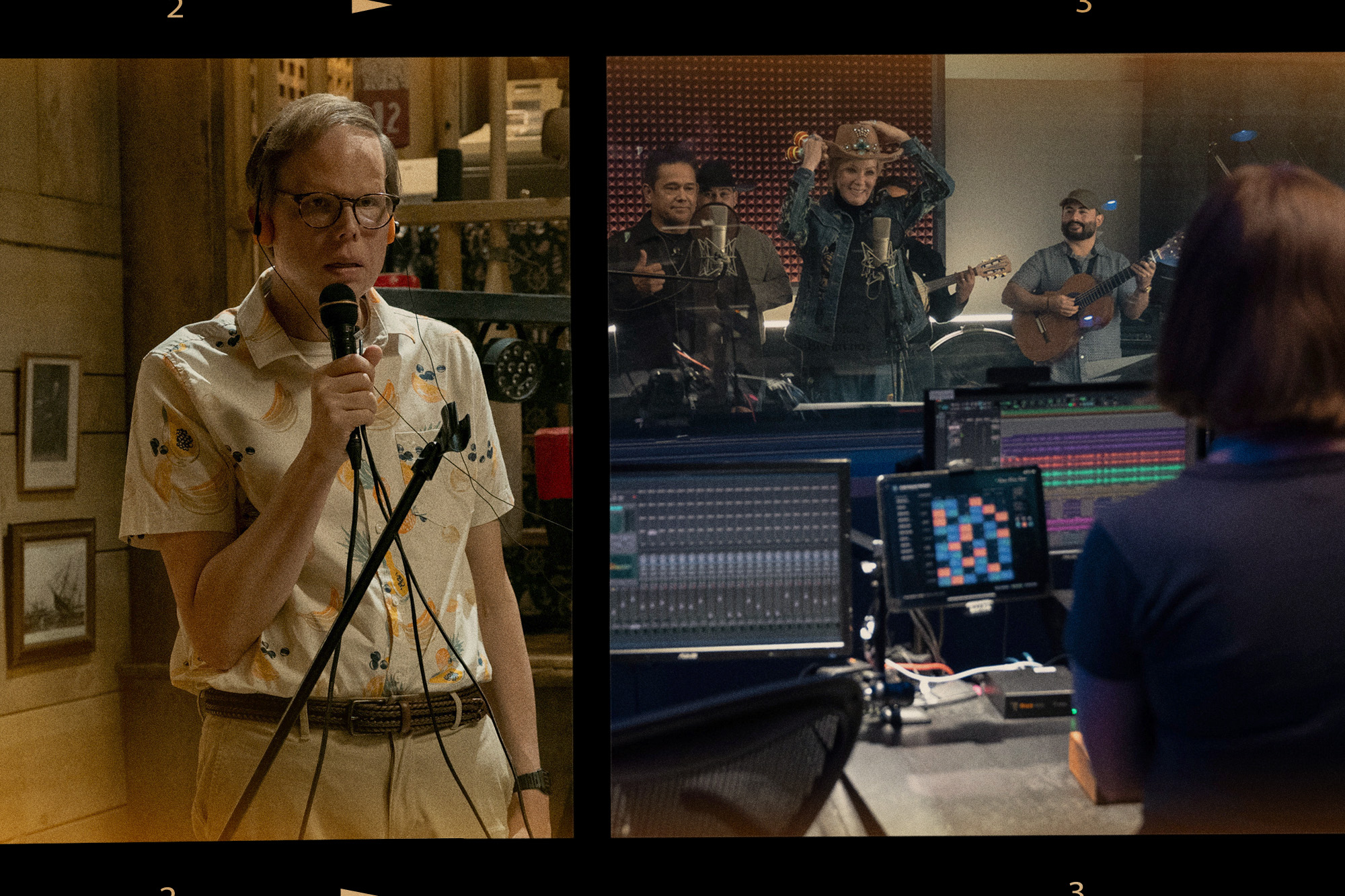
Featuring music and lyrics by Hacks’ longtime composers Rivera and David Stal (Stal began receiving credit alongside Rivera after season one), “Mis Figuritas” is, in many ways, a perfect Hacks joke — deeply funny but played completely straight. During the premiere episode of season five, comedian Deborah Vance (Jean Smart) hatches a plan to secure her legacy by trying to EGOT (win an Emmy, Grammy, Oscar and Tony). Her choice to sneak in a victory at the Grammy Awards comes from a recommendation by McKinsey: “Apparently it is an incredibly weak year for one Grammy category — regional Mexican album, including Tejano,” Deborah says to an exasperated Ava (Hannah Einbinder), her longtime collaborator, before stepping into the recording booth to feature on “Mis Figuritas.”
“The idea was to get something that would actually fit the category correctly, and that was the one thing that we wanted to get right,” says Rivera, who is of Cuban and Guatemalan descent. “It had to be funny, but the song itself is taken very seriously.”
Rivera says while “Mis Figuritas” is not in the style of Tejano music (“it’s more like a contemporary mariachi”), the song would still qualify for the very real Grammy category. He even reached out to a childhood friend, the Grammy-winning producer Sebastian Krys, after the song was written to ensure they had done something “authentic and legitimate.” (It was Krys who connected Rivera and Stal with Áureo Baqueiro, the track’s studio producer and a six-time Latin Grammy winner.) Even the lyrics have a bespoke touch. Deborah, who collects porcelain salt shakers, sings about “my little figurines — the ones only I can cherish”; Rivera based that detail not just on Deborah’s hobby, but his own mother, who collected Lladró figurines.
Rivera and Stal have worked together for years, ever since Rivera needed an assist while composing the music for Godless (the first of Rivera’s three Emmy wins as a composer). After Rivera received solo credit for the Hacks score on season one, he pushed to get Stal a co-credit for season two and beyond.
“Carlos and I are a unit,” Stal says. “We’re a team that presents things together — and we accept our successes together and our defeats together.” While Stal worked closely with Rivera on the melody for “Mis Figuritas,” he says he let Rivera lead the way because of his connection to the material. “I certainly wasn’t going to impose too much whiteness on it.”
Still, despite all the work that went into the 21-second song, both Rivera and Stal credit Smart with getting them the Emmy nomination (their first and only recognition for the show’s music; Stal is also a nominee this year for sound mixing).
“We’re talking to you because of her,” Rivera says.
“We are proud of the song, of course, but everything coalesced in the scene to make it something that we could be really proud of,” adds Stal.
Party Rock

Music supervisor Toko Nagata knew early on that Widow’s Bay was really good.
“As soon as I read like the first three scripts, I was bought in. I loved the characters. I was like, ‘What’s up with Patricia? What’s gonna happen with this? What’s real? What’s not?’” the first-time Emmy nominee says.
It’s a phenomenon fans of the show probably experienced as well. After debuting in the spring with little buzz amid a wave of new shows and returning contenders, Apple’s horror-comedy — about a New England island town and the cursed secrets its residents try desperately to avoid — became one of the true breakout stories of the television season. The show, from creator Katie Dippold, tripled its premiere-week viewership by the time it finished, and landed 19 Emmy nominations — including best comedy, plus recognition for Nagata in the music supervision category for the episode “Beach Reads.”
“It’s all very surreal and exciting,” says Nagata, a longtime music supervisor in film (Didi, Joy Ride) and television (Tuca & Bertie, Awkwafina Is Nora from Queens).
Then there are the memes. Countless memes, many showing the rubber-faced antics of Emmy nominee Matthew Rhys, who stars as the Widow’s Bay mayor, or fellow nominee Kate O’Flynn as his deadpan assistant, Patricia, dancing to Corona’s 1994 hit “The Rhythm of the Night” in Nagata’s nominated episode.
In “Beach Reads,” Patricia hosts an event she calls Sunset Cocktails for the island’s residents and tourists — complete with a playlist of what she considers party songs. In keeping with the whole vibe of Widow’s Bay, however, it goes wrong in horrifying ways with Patricia unwittingly entrancing her guests by reading from a cursed grimoire. But before all that happens, it was up to Nagata to find the right music for Patricia’s “dream moment.”
“That one was very much all hands on deck,” she says, citing the episode’s director, Samuel Donovan, as well as Dippold and series director and executive producer Hiro Murai as key collaborators. “We tried so many directions, different songs. We were truly like Patricia, figuring out all the songs we knew. The script was also really helpful — it said, ‘the party is at a 14.’ So it became trying to figure out what that song is to get the party there.”
Nagata says the key to picking “The Rhythm of the Night” was considering the full context of the world. Not just the song that would get Patricia to dance like she’s the star of the show, but music that she might have had access to while growing up on an island that is a step removed from the outside world.
“I had so many questions about the island,” she says, including the number of ferries that came through daily and the town’s internet speed. “I think all of this stuff affects how people consume music.”
That’s why, prior to “Beach Reads,” the music skewed away from modern pop. “We wanted to do something that’s based in New England history — sea shanties and folk stuff, nothing synth-based because it’s artificial. Everything should sound natural and accepted by fishermen and all the residents.”
But for Patricia, “we strayed outside of the normal tone of the show,” Nagata notes. She felt “The Rhythm of the Night” would be a song that any millennial like Patricia would have known growing up, even if she was on a haunted island.
Still, before landing on the Corona dance hall hit, Nagata says they went through countless other options — many that wound up on Apple’s officially released playlist for the episode.
“It was all completely different directions,” Nagata says. “We thought, ‘Is that something she listened to in high school? Or is it from this era?’ We really tried every era. But in the end, I think that is what Patricia would do.”