

I’m deputy editor at The Ankler and co-host of the Prestige Junkie podcast. My special Art & Crafts series this week celebrates the talented artisans behind Emmy’s top contenders, including cinematographers, composers, casting directors and editors.
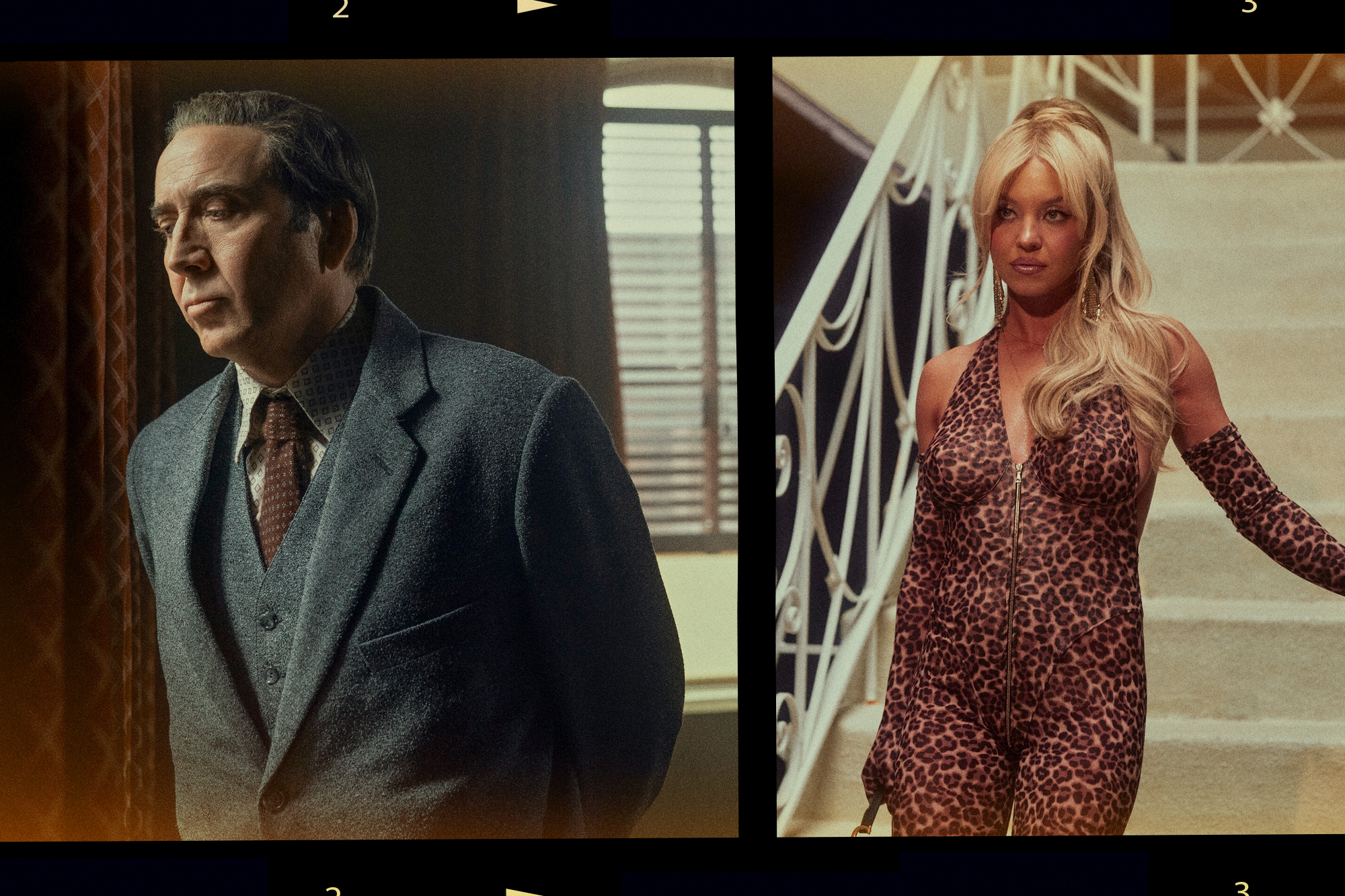
When production designer Warren Alan Young was hired for Prime Video’s Spider-Noir — a 1930s-set film noir spin on Spider-Man starring Nicolas Cage as a variant of the famed web-slinger — little did he realize that he was actually signing up for two versions of the same show. There was the black-and-white take pitched to Young during development, and then a colorized version of the material that became part of his brief before the cameras rolled.
“It was definitely a challenge,” says Young of pulling double duty. “We wanted the color version to be as impactful as the black-and-white version — still set in the idea of film noir, but without turning into Dick Tracy,” Warren Beatty’s 1990 comic adaptation with its distinct, oversaturated color palette.
“I remember when we did our first day of test shooting, we had a couple of sets up and the colors looked really, really vibrant — loud, almost shockingly fluorescent,” Young says. “I tried to get the word out to all the studio folks and everyone else that they’re going to walk in and see this thing that won’t look like the finished product.”
Young credits the entire crafts team — including cinematographer Darran Tiernan and colorist Pankaj Bajpai, both of whom made sure the actors’ skin tones stayed true to life in either version — with landing the plane on both versions of the series.
“It was a lot of work, but it was also a lot of fun,” Young says. “It was a lot of great discoveries. Someone asked me one day, ‘Do you feel like you wasted a lot of time?’ No, because it gave us so much more understanding of the environments that we’re trying to create.”
Based on the comic of the same name and created for television by Oren Uziel, Spider-Noir has its origins in the Sony Spider-Verse animated movies produced by Phil Lord and Christopher Miller (who are executive producers on the new show). Cage voiced the Spider-Noir variant of Peter Parker in the animated Spider-Man: Into the Spider-Verse, and from there, the idea sprang for what is now the Prime Video series. (Cage isn’t playing Peter Parker on Spider-Noir but rather a detective named Ben Reilly.)
“The idea was to design the era in which Ben would exist,” Young says of the show’s many sets and environments — including Ben’s office (inspired by The Maltese Falcon) and an underground lab where a mad scientist experiments on former soldiers like Ben who have become genetically enhanced. “We looked at, sadly, what the Nazis did. Because this is where a lot of that’s coming from,” says Young.
“If you look at the Spider-Man movies, it’s pretty much the same thing,” he adds of the overall approach. “You have the characters existing in their everyday world, trying to as much as possible until they’re dragged into being the hero or the anti-hero — depending on where you are in the story. So we really tried to honor the original ideas of Spider-Man and ground the series in those ideas.”
California Dreaming
Production designer François Audouy was born in France, but grew up in Southern California. So when he first heard about Sam Levinson’s ideas for season three of Euphoria — including how the series would use the iconography of the American West in a modern fashion — his interest was immediately piqued.
“Sam talked about California the way an outsider sees it through old movies — through an idea of what it could be, not literally or with a strict realism,” Audouy says. “There’s this idea of California that lives in our heads as an audience — sun-bleached, wide-screen, a landscape full of promise. It’s really a place for 100 years that’s an escape where you can reinvent yourself, and you can create your own future.”
For the characters on Euphoria, that juxtaposition between the Hollywood fantasy and cold reality was stark in season three. Once an explicit coming-of-age drama about high schoolers grappling with drug addiction, sexual abuse and their own identity, Euphoria became a full-blown crime epic in its third season with a shocking body count to match the genre. Jumping five years into the future, the new episodes picked up with Rue (Emmy winner Zendaya) stuck between two violent criminals — Alamo (Adewale Akinnuoye-Agbaje), a strip club owner and human trafficker, and Laurie (Martha Kelly), a former school teacher turned drug dealer.
“We live in perverse times — such strange, upside-down times,” Audouy says of the tonal shifts. “So I thought that was a really neat opportunity to sort of capture the zeitgeist that we’re going through right now.”

It’s clear Euphoria is on a different path from the first moments of the season, which opens as Rue drives toward the U.S. border from Mexico with a package of narcotics. But rather than cross the border legally, Rue — thanks to some help from an anonymous figure on the U.S. side — attempts to drive her Jeep Cherokee over the border wall using an impromptu ramp.
At the top, the car gets stuck.
“It was a wonderful Buster Keaton-esque set piece that gave Zendaya an opportunity to really do some physical performance, stuff that I thought was really fun to watch,” Audouy says of the scene.
Originally, Rue was going to cross at the Rio Grande. But during a research trip to the Drug Enforcement Agency in Downtown L.A., Audouy spotted a photo in the hallway of a Jeep stuck in the very position Rue finds herself in on the show.
“Sam was like, ‘Oh my God, that looks like such a stupid situation.’ Like, he couldn’t believe that someone was stupid enough to try it, and he rewrote the scene based on that photograph,” Audouy says.
Rather than use CGI to create the moment, Audouy built a 150-foot border wall, up to 30 feet high, on location in the Mojave Desert.
“We really did things like that that were closer to the whole Old Hollywood approach of the 1950s, ’60s and ’70s,” he says, “where you would really use all of the assets that Southern California provides when shooting a movie. You would go to where the best visuals were.”
Audouy and the Euphoria crew shot the Zendaya scene near Edwards Air Force Base, a desolate location that allowed them to replicate the vast, empty expanse along much of the U.S.-Mexico border. “It was really magical.”