

I’m deputy editor at The Ankler and co-host of the Prestige Junkie podcast. My special Art & Crafts series this week celebrates the talented artisans behind Emmy’s top contenders, including cinematographers, composers and casting directors.
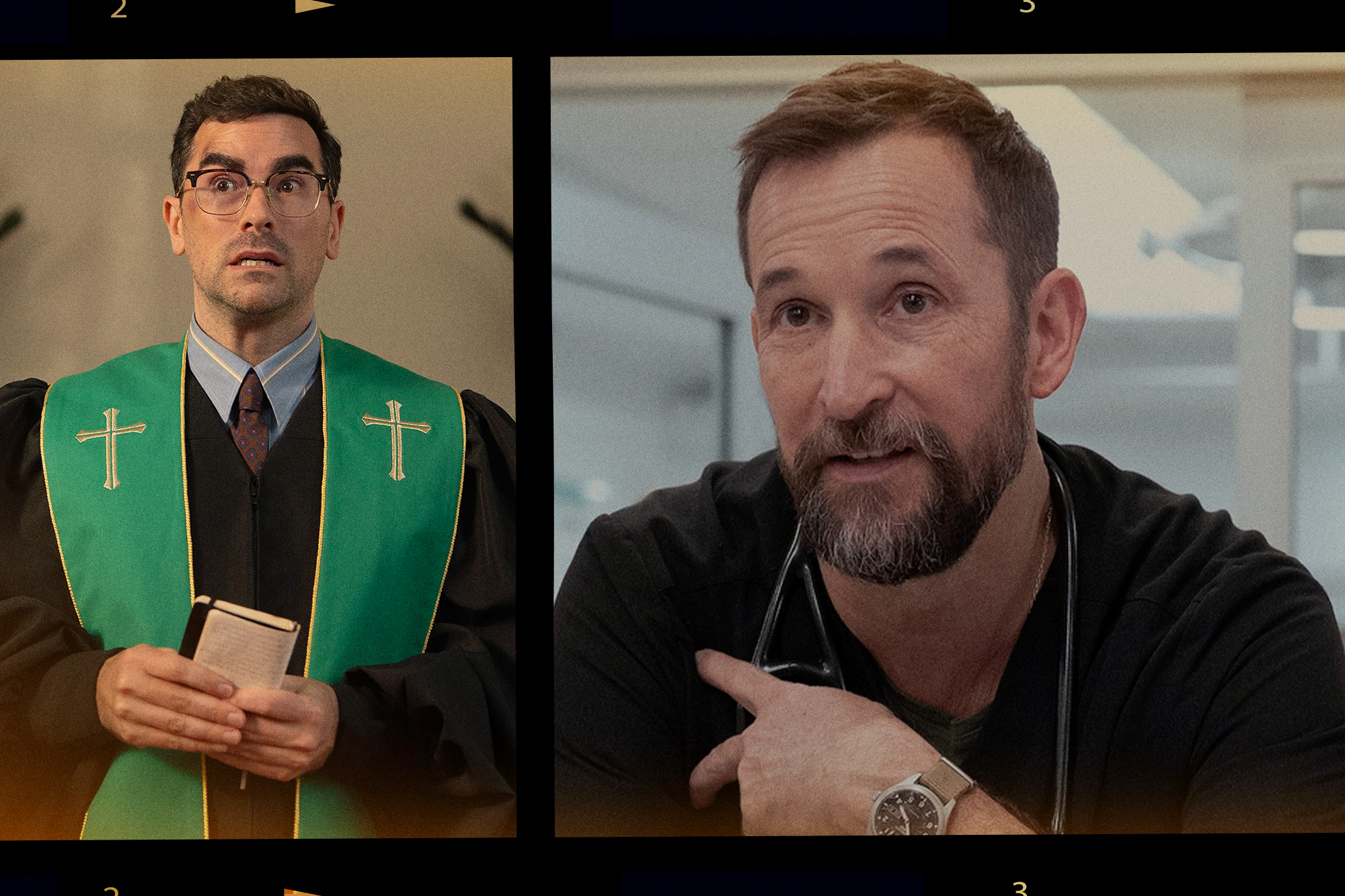
No television series captured the zeitgeist more firmly last year than HBO Max’s The Pitt. The medical drama turned its cast of working actors like Patrick Ball and Katherine LaNasa into household names, minted new stars in Supriya Ganesh, Isa Briones and Gerran Howell and pushed longtime TV lead Noah Wyle to another level of success — including his first-ever Emmy win.
But when it came time for its encore season, The Pitt crew did something radical. Rather than rest on their laurels — not to mention the goodwill Wyle accumulated playing Dr. Robby, the senior emergency attending physician at the Pittsburgh hospital where the series is set — the show’s creative team got comfortable allowing its main character to be, in the words of editor Mark Strand, a “dick.”
“We actually found that more interesting, because what that does is it allows you to have more empathy with him,” Strand says. “Robby is not black and white. It’s not, ‘Oh, he’s a dick. I’m out on him.’ It’s, ‘I like this guy, but wait, he’s being a dick. How do I square that circle? Oh, he must be troubled.’”
Wyle’s portrayal of Robby in season two drew the ire of an extremely online portion of the fanbase — especially for how Robby treated Ganesh’s Dr. Mohan, a fan-favorite character who won’t appear in season three. But for Strand — an ACE Eddie Award winner for The Pitt season one, who is still looking for his first taste of Emmy recognition — the conflict around Robby was foundational to the show itself.
“As an audience, I think the more you care about someone, the deeper the connection you have with those characters,” he says. In editing multiple episodes in season two — including the season finale, which ends with Robby holding an abandoned baby and coming to terms with his own feelings of loss and abandonment after being left as a child by his mother — Strand says they constantly calibrated how far to push Robby’s behavior.
“A character can do almost anything — as long as you find a way to frame it and land it so you can have complex feelings on the road,” he says. “I understand that sometimes it’s challenging for a full episode, but Noah — specifically as a performer — is very comfortable going there. I think he comes with a certain stature that you’re willing to take that journey with him. He is a safe conductor.”
Season one of The Pitt built to a unifying event: a deadly mass shooting at a music festival that took up multiple episodes in the hospital E.R. and gave the R. Scott Gemmill-created show its reputation for fast-paced intensity and action. The twist of season two, Strand says, is how it eschewed that kind of connective story device in favor of a “quieter” set of episodes that leaned closer to traditional medical shows of the past.
“It’s actually the other elements of editing that really are pushed forward — building performance and character beats, and making sure specificity of story, both the medical story and our character stories, are dug out,” he says. “How do we maintain those elements to be even more specific than they were in season one?”
Another difference between seasons one and two is that the team behind The Pitt got really good at making episodes of The Pitt, from the acting to the physical choreography and camera movement. The crew is so smooth, in fact, that Strand says they consciously tried to maintain the raggedness and grit of the show’s initial episodes.
“What is great about The Pitt is its imperfections,” he says. “So while it feels connected and seamless and in real-time, some of that jaggedness is crucial. But I can’t overstate the amount that having some of the best performers on television working in your scenes, having the best camera operators getting those scenes, and some of the great scripts of the year in our episodes — they’re doing so much work, and we’re all just pulling in the right direction.”
Big Choices
When Dan Levy was mounting the crew for Netflix’s crime comedy Big Mistakes, his first series since the Emmy-winning Schitt’s Creek, he aimed high.
“Dan had sort of given the directive (to producers) that he was very interested in some of the people involved in Succession,” editor Bill Henry says. Henry won an Emmy for co-editing the season two finale of the HBO drama, and edited multiple episodes in the show’s final season — including “Connor’s Wedding,” where main character Logan Roy was shockingly killed off. After he connected with Levy, Henry got to work on the pilot.
“Dan was very interested in the loose, verité-style that Succession used as its visual language,” Henry says. But what the editor soon realized was that there’s a difference between wanting to replicate the vibe of Succession and doing Succession. “Jesse Armstrong (the Succession creator) was very cool with sort of letting jokes get thrown away, oftentimes off-camera. I initially followed that approach with that first scene in Big Mistakes,” he says. “But for Dan, it was just too thrown away. I had to recalibrate how I was approaching the cutting to accommodate the more frantic nature of what Dan was going for.”
Co-created by Levy and Rachel Sennott, Big Mistakes stars Levy and Taylor Ortega as New Jersey siblings who become ensnared in a violent criminal conspiracy that runs them afoul of the mafia. The show, which earned largely favorable reviews and won Laurie Metcalf a Gotham TV Award on Monday, was renewed earlier this year for a second season.
“Dan is a very clear mind in terms of what he had intended for the show in terms of its look, its cutting style, the tonality of it, all of it,” Henry says. “He wanted the show to just have a constant forward momentum and to have transitions that felt abrupt.”
Henry edited four episodes in the eight-episode first season, including the first two, which set the show’s tone and pace — think Anora by way of Schitt’s Creek for a sense of the vibe. (“My first two episodes were just such a rocket ship,” Henry says when asked about the pacing.)
Henry has worked with several top showrunners, including Armstrong, Julian Fellowes (on The Gilded Age), Josh Safran (on Quantico) and Alena Smith (on Dickinson). He describes his collaboration with Levy as a “pleasure” because of how specific the showrunner was with his vision.
“He had done so much preparation work during the writing and during the development with the other actors about what the show was going to be,” Henry says. “Dan is just a dream, because he is so clear about what he wants.”