
Subscribe on Apple Podcasts
This just in: Oscar thriller! As this newsletter was being prepped for publication, the Academy announced the welcome — and overdue — news that a category for stunt design will be added for the 100th ceremony in 2028. I’ll have more on this decision in Monday’s newsletter, and how it could be a victory for Oscar diehards, Tom Cruise, industry rabble-rousers, and ratings obsessives alike.
But first! Last weekend I heard what might be the sweetest sound you can get in a movie theater: an audience’s involuntary gasp, followed by laughter of sheer, awed delight.
It’s something they’re probably used to over at the Sphere, the Las Vegas attraction that opened in 2023 and has hosted blockbuster performances from the likes of U2 and The Eagles. But it’s also the home of one of the most technically innovative movies made in the past decade, Darren Aronofsky’s Postcard from Earth, which uses Sphere’s enormous, immersive screen to showcase dazzling images of nature paired with a frame story about humanity’s potential to undo the damage we’ve caused to the planet.
There are times, including that gasp-inducing moment early on, when Postcard from Earth feels more like a thrill ride than cinema, making the audience involuntarily duck as an elephant stomps through the frame or feel actual wind blowing in their faces while being shown a mountain vista. But it’s the story that truly anchors the experience, as the film’s executive producer Jane Rosenthal knows well. (She is also a producer on the next big film spectacle hitting the venue, The Wizard of Oz at Sphere, premiering Aug. 28.)
“So many times when you have good stories, you feel them. What is it like to now walk into that experience? That’s what the Sphere gives you,” she says. “We are just at the tip of what we can do in there.”
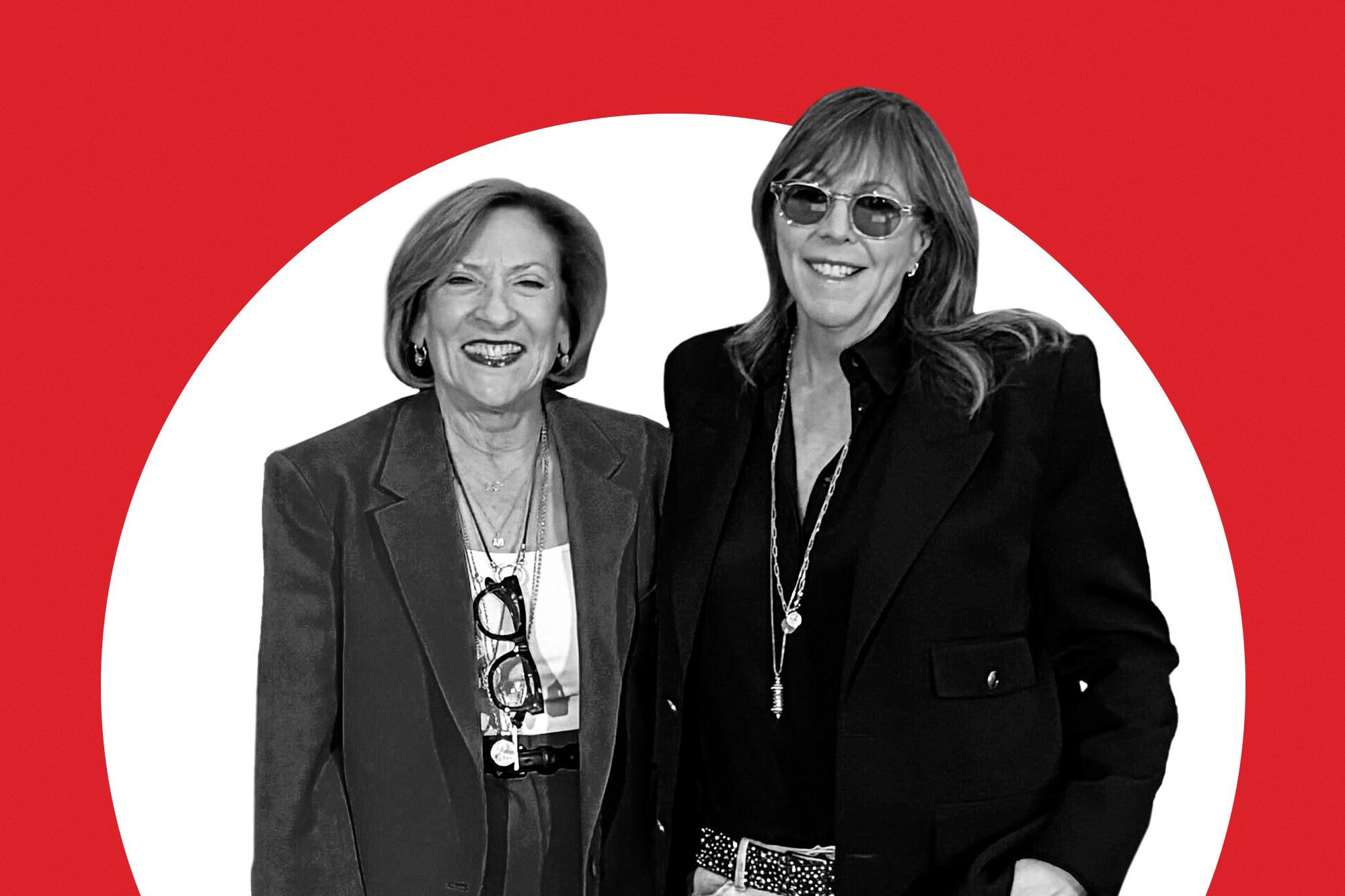
I spoke to Rosenthal, who is also the co-founder of the annual Tribeca Festival and CEO of Tribeca Enterprises, just a few blocks away from Sphere last Sunday, joined onstage at NAB Show by award-winning producer and director Lesli Linka Glatter, who’s been president of the Directors Guild of America since 2021. In addition to talking Sphere, storytelling and technology, Rosenthal revealed the news that the HBO documentary Billy Joel: And So It Goes will open this year’s Tribeca Festival on June 4, putting the festival’s spotlight on a real New York City hometown hero.
Rosenthal and Glatter have been friends since both were first starting their Hollywood careers — they attended the Oscars together in 1985, when Glatter was nominated for her short film Tales of Meeting and Parting. They’ve seen the industry evolve to embrace so many new formats, from the birth of prestige TV to the current AI boom, and they both remain confident that there’s a pretty simple key to success on screens big and small — or even no screens at all.
“Story is everything,” says Glatter, whose latest project is the Netflix limited series Zero Day. “It doesn’t matter how you shoot it, if you don’t have a good story, it doesn’t matter what you do.”
I spent a wonderful, whirlwind 48 hours in Las Vegas, meeting up with a lot of the Ankler team as well as our partners at NAB on our first-ever Business of Entertainment slate we programmed at the confab, a series of lively conversations about everything from the creator economy to the new rules for unscripted TV to WWE. After our panel conversation on Sunday afternoon, Rosenthal and Glatter co-hosted, along with Janice Min, NAB’s Karen Chupka and Jody Gerson, an intimate dinner at Hakkasan that felt very Vegas — the flower tunnel entrance was pure spectacle — but also very Hollywood. With the ongoing tariff news but also Minecraft’s banner weekend, it was the perfect evening for some cautious optimism about how storytelling can sustain us in complicated times.
As Jason Isaacs told me in our conversation on Tuesday’s podcast, being on The White Lotus — or just obsessing over it, like the rest of us — has been an excellent distraction from the more distressing news IRL. Storytelling isn’t just about escapism, of course, even in the distraction-filled paradise of Las Vegas. But with spring TV as good as it’s ever been, and a very intriguing Cannes lineup to pore over, it’s clear that we’re all seeking stories right now — and that Hollywood, despite all the changes surrounding it, is still the place to find them.
I’ll be diving back into the details of the Emmy race next week with a look at how the incredible riches of this TV season will make for some very tough decisions. But for today, I’m sharing my conversation with Rosenthal and Glatter — from what they learned in the sometimes brutally sexist world of ’90s television to where they think we’re headed with the new technologies promising (and threatening) to reshape the industry all over again. Read the highlights here, and check out our full conversation on a special episode of the Prestige Junkie podcast here.

Katey Rich: You’re both here because you’ve been working in this industry and telling stories for a long time, but you’re also here because you’ve been friends for a long time. Could you tell us how you met, and where you were in your respective careers?
Lesli Linka Glatter: I had just moved to L.A. from Tokyo. I had spent 11 years overseas when I was a modern dancer and choreographer, so a whole other career. And Jane, you were one of the first people I met in the industry. You were in TV then?
Jane Rosenthal: At CBS Television Network at Studio City, and I was doing television movies back in the day when if a network was in second or third place, they would keep throwing on television movies. So in the five years that I was doing television movies there, I did 70 television movies.I was an executive and I was 23, 24 years old, the only woman at the time, and they wanted some fresh ideas.
KR: I feel like this is going to come up a lot, being the only woman in a room and saying, “I’m just going to push forward.”
LLG: I did my first short film, which was everything I was told not to do if I wanted a job in Hollywood, because it was three-quarters with subtitles, had flashbacks. a period piece set in World War II and had one Caucasian character in it.
KR: But that movie turned out pretty well and got an Oscar nomination.
LLG: Yes, it did. And didn’t we go to the Academy Awards together when I was nominated?
JR: Yes, we did. I loved that.
LLG: We pull up to the red carpet and everyone is there waiting for their favorite movie star to come out. And I’m feeling good about myself. I mean, I’m nominated for an Academy Award for my first film! I step out on the carpet and there’s a wave of people and they say, “It’s nobody! It’s nobody.” It’s like, never take yourself too seriously or you’ll hear that chorus.
KR: Do you remember a moment early in your career where you knew there were certain rules for storytelling, and you decided to ignore them and go your own way?
JR: I was at CBS and bought a book called The Burning Bed. I was fascinated with the story, that it was a justifiable homicide. It was really the story of domestic abuse. My boss at the time, who had worked with Tracy and Hepburn and John Wayne and had made all of these traditional Hollywood films, looked at me and said, “Janie, nobody cares about a man who beats up his wife.” And I remember thinking, “Okay, I’m going to figure out how I’m going to get this thing done.” It ended up getting made by Brandon Tartikoff, who at the time was at NBC. And that’s kind of when I knew the rules of programming had to change. But I think the fact that I was even in the room was change itself at the time.
LLG: My first job as a director in television was Twin Peaks. It was about rule-breaking. It was not following the normal conventions of storytelling, though it did tell a really good story and was very honest to that. Because as far as I’m concerned, and I think I’m speaking for Jane, story is everything. It doesn’t matter how you shoot it, if you don’t have a good story, it doesn’t matter what you do.
JR: Well, the name of this panel is “Technology and the Future of Storytelling.” You can have all the technology in the world, but if you can’t tell a good story, forget it. And there’s some extraordinary technology that is coming out, and AI is really game-changing, but you have to be able to tell a story and you have to be the creator. This is creating a world for a new kind of creator to come into our industry.
KR: Jane at this year’s Tribeca Festival you’re introducing the Storytelling Summit, which is tackling a problem that I’m sure you’ve encountered as well, Lesli: the lack of a pipeline for new filmmakers. This idea that even though everyone’s got a camera in their pocket now, figuring out how to get those stories out in the world feels challenging in a lot of ways. Can you address this?
JR: Our Storytellers Summit is welcome to anybody. Whether you’re a filmmaker or an AI creator or a music video director, you can come to this. It’s really trying to bring people together with people who are distributors and can really help get your work out there. There clearly is a problem right now within distribution in terms of independent film. There are some platforms out there that show independent films, which is great, but there are amazing creators and amazing people from all different communities that are telling stories that we don’t get to see every day on Netflix or Amazon.
LLG: It’s really important that we keep the prominence of the theatrical feature film. As much as it’s great to get your stories out there, whatever way you can, theatrical feature films, we can’t lose that. That’s a different kind of experience.
KR: Lesli, with your work as the president of the Directors Guild, I’m sure the idea of taking down boundaries for new storytellers and making room for more people is a big part of your work as well.
LLG: The Directors Guild, we’re a labor union and we represent 19,800 members — we represent theatrical feature films and TV directors and news directors and sports directors and reality directors. So it’s a big gamut. And then we also represent unit production managers and first assistant directors. When I started off, there were so few women directing, but I came out of dance, so I never saw that as a problem. But then when I started looking around, I’m like, you know what? I’m working all the time, knock on [wood], and I need to be part of the solution. So I started mentoring women and people of color years and years and years ago because listen, there’s not just one seat at the table for us. There is room to tell all kinds of stories.

Comments
Only Ankler All Access subscribers can comment
Already a subscriber?