

David Eckstein guest-wrote this special Series Business feature. He previously wrote about building a post-Hollywood career and has written for The Daily Beast, Wired, ESPN, Sports Illustrated, Uproxx and other outlets.
Samsung is about to let viewers decide how loudly their fake fireplace crackles.
It sounds like an almost comically minor innovation. It’s also a glimpse of a surprisingly large new television business.
The company exclusively reveals to The Ankler that, in the coming months, it plans to launch Fireside Interactive, a channel that lets users build their own relaxation environment. Using a remote, viewers can choose the setting (cozy cabin, beach cottage, urban high-rise), time of day, weather, accompanying music and, yes, the crackle’s volume.
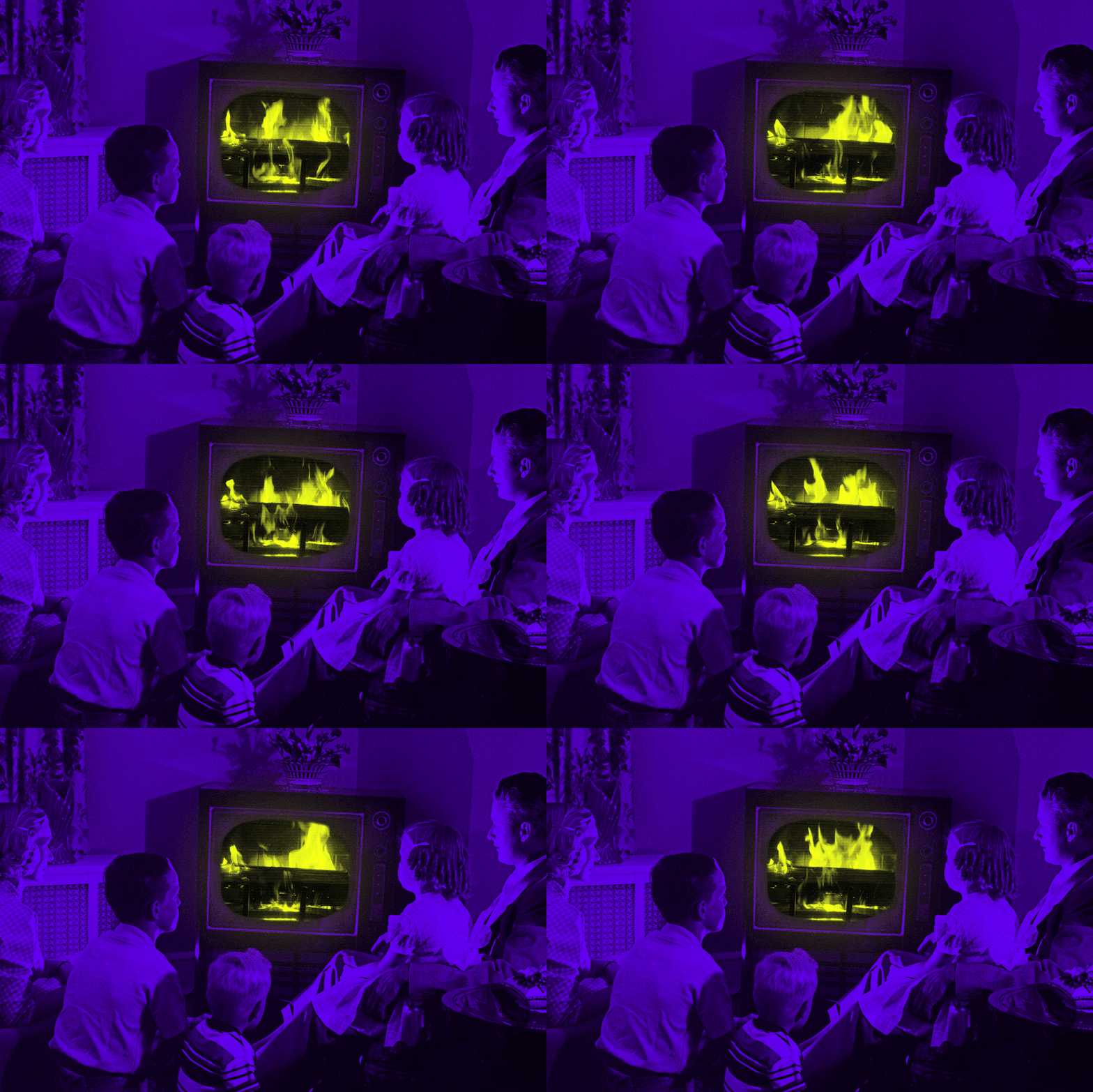
WPIX turned New York TVs into video fireplaces on December 24, 1966, with The Yule Log, a three-hour broadcast that ran annually until 1990, when station management canceled it because it didn’t generate any ad revenue. The station brought it back in 2001, amid a surge in demand that followed the 9/11 attacks; general manager Betty Ellen Berlino said at the time that the city needed “comfort-food television.”
Decades later, so-called ambient programming is a moneymaker for free ad-supported streaming TV (FAST), big streamers and content creators of all sizes.

Ambient programming, be it a beachfront sunset, a rustic cabin living room or a futuristic cityscape, is surging in popularity as TVs become always-on devices. By one estimate, ambient programming is a $4 billion-plus global market, more than double what it was just seven years ago. This rapid expansion is thanks to the near universality of smart TVs, content availability and consumer demand. Market Intelo predicts market value to nearly triple to $12 billion by 2034.
It skips narrative and traditional viewer engagement entirely — the soundtracks, whether music, natural or imagined, range from unobtrusive to bland, and the programs are barely memorable. Ambient is appealing because it doesn’t do much of anything, with the exception of creating a mood and giving the mind a place to calm down.
The surprising part isn’t that people will leave a fireplace on for hours. It’s how many different ways companies have figured out how to make money from it. As it turns out, the less closely viewers watch, the more valuable that passivity may become. Some ambient channels already carry more ad minutes per hour than the ad-supported tiers of Netflix and Amazon — and marketers think relaxed viewers may actually be more receptive to what they’re selling. In a stagnant TV ad market, that’s getting attention.
Don’t stop here
Get the rest of this story — and the scoops and intelligence Hollywood reads first.
Already a subscriber?

Comments
Only Ankler All Access subscribers can comment
Already a subscriber?