
Art & Crafts is our podcast series that goes behind the scenes with the artisans who create the film and TV we love. This conversation is sponsored by Universal. Subscribe on Apple Podcasts.

Wicked: For Good ends on a bittersweet note, with its main characters, Elphaba (Cynthia Erivo) and Glinda (Ariana Grande), having been changed, well, for good.
The same was true for the talented artisans behind the scenes.
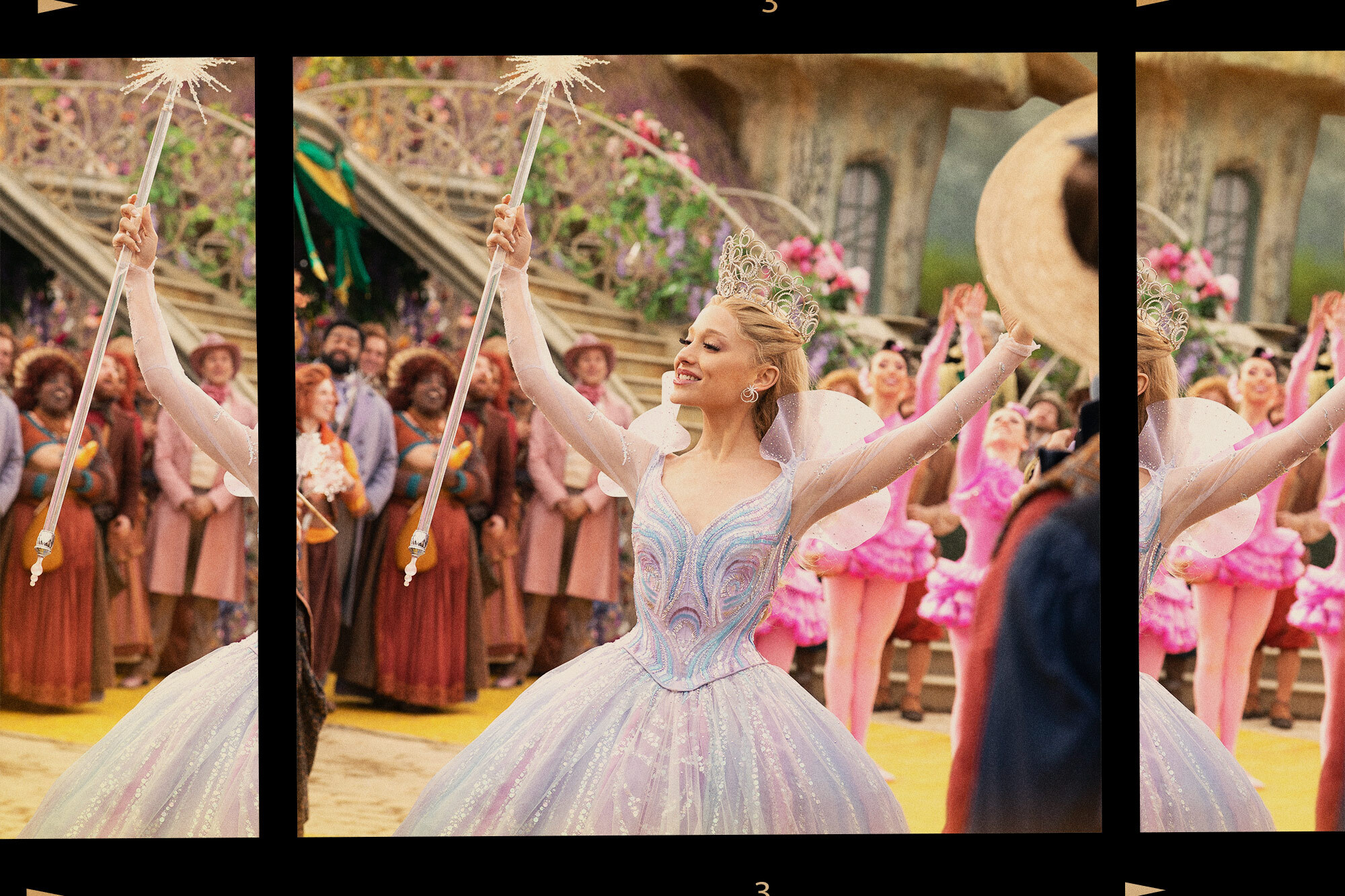
“I’m heartbroken for this period to be done,” Wicked and Wicked: For Good costume designer Paul Tazewell, who made history last year as the first-ever Black man to win an Oscar for costuming, tells Ankler Media deputy editor Christopher Rosen on the latest episode of the Art & Crafts podcast. “Anytime that I see that family that created both Wicked films, it fills me with warmth. That process was, yes, indeed, really challenging. But the experience was also beautiful — and to walk away from this movie and still feel the same way is indeed just as rare. I’ll always honor my time with Wicked.”
Based on the hit Broadway musical from Stephen Schwartz and Winnie Holzman and directed by Jon M. Chu, Wicked: For Good is the culmination of the Wicked journey, following 2024’s hit Wicked: Part One. That movie earned 10 Oscar nominations last year, including one for best picture, with wins for Tazewell’s costumes and production designer Nathan Crowley.
This year, Wicked: For Good has the opportunity to expand its nomination footprint, not just because the movie features two new songs by Schwartz (both of which made the Oscars shortlist in the category), but also because of its casting department. The Academy added a new casting category for this year’s ceremony, meaning industry veteran Bernard Telsey, who cast the original Broadway musical and worked on the Wicked films with Tiffany Little Canfield, is finally eligible for long-deserved recognition for his vital work.
“It’s pretty chilling, and it’s so exciting, because it just makes me think of all the casting directors who were ahead of me, who paved the way for this profession and who really gave it a name,” says Telsey, whose credits include 2005’s Rent, 2014’s Into the Woods and 2018’s Mary Poppins Returns.
For the Wicked films, Telsey says they auditioned several actresses to play Elphaba and Glinda, as the roles required multiple talents: not just singing and comedic timing, but an ability to show vulnerability and convey great pathos. Both Erivo and Grande, Oscar nominees last year, auditioned several times, Telsey says, specifically to ensure they’d each be able to handle the material in both films.
“With Ariana, it was really about exploring in her auditions the second half of the movie, because we all know she’s an incredible singer and she’s incredibly funny, but what about all the depth and all the other stuff?” Telsey says. “But immediately when they both came in, they just showed you that they had that vulnerability and they had that heart, and more importantly, they listened to each other.”
Wicked: For Good is yet another technical achievement, with hand-crafted sets, countless costumes and hair and makeup work that ranges from subtle — like how the areas around Glinda’s eyes were darkened to convey that time had passed in between films — to eye-popping. In keeping with the story, which is a prequel to the events depicted in The Wizard of Oz, Wicked: For Good includes two shocking character transformations: Boq (Ethan Slater) becomes the Tin Man, and Fiyero (Jonathan Bailey) turns into the Scarecrow. Hair and makeup department head Frances Hannon, an Oscar winner for The Grand Budapest Hotel and a nominee last year for Wicked, credits Chu for giving her and the entire production room to flex their creative muscles.
“What Jon created is something that’s timeless, and I think that was really very important, right from our first collaborations,” she says. “We wanted it to last another 100 years, hopefully, and for people to watch it and not be removed from it. And I think that Jon has really achieved that.”
Chu also “wanted to be able to touch it,” Tazewell adds. “I think that makes a huge difference, especially at this time, when we’re talking a lot about AI and we’re creating epic films digitally. This was completely tactile. I think that it makes a difference in the performances, in how it looks, in how we developed ideas, because it’s human-made. That’s really its signature style, and I think that’s its superpower.”

Comments
Only Ankler All Access subscribers can comment
Already a subscriber?