

I’m deputy editor at The Ankler and co-host of the Prestige Junkie podcast. My special Art & Crafts series this week celebrates the talented, Emmy-nominated artisans behind top shows — including casting, cinematography, music and editing.
At the end of Stranger Things season four, the show’s longtime set decorator, Jess Royal, made a plea to creators Matt and Ross Duffer: Don’t go too deep into the Upside Down for season five.
“I know the fans love the sci-fi elements, but it is visually dark — and so all the fun sets I get to do that are a little bit more like pop culture ’80s seemed to be going by the wayside,” Royal says.
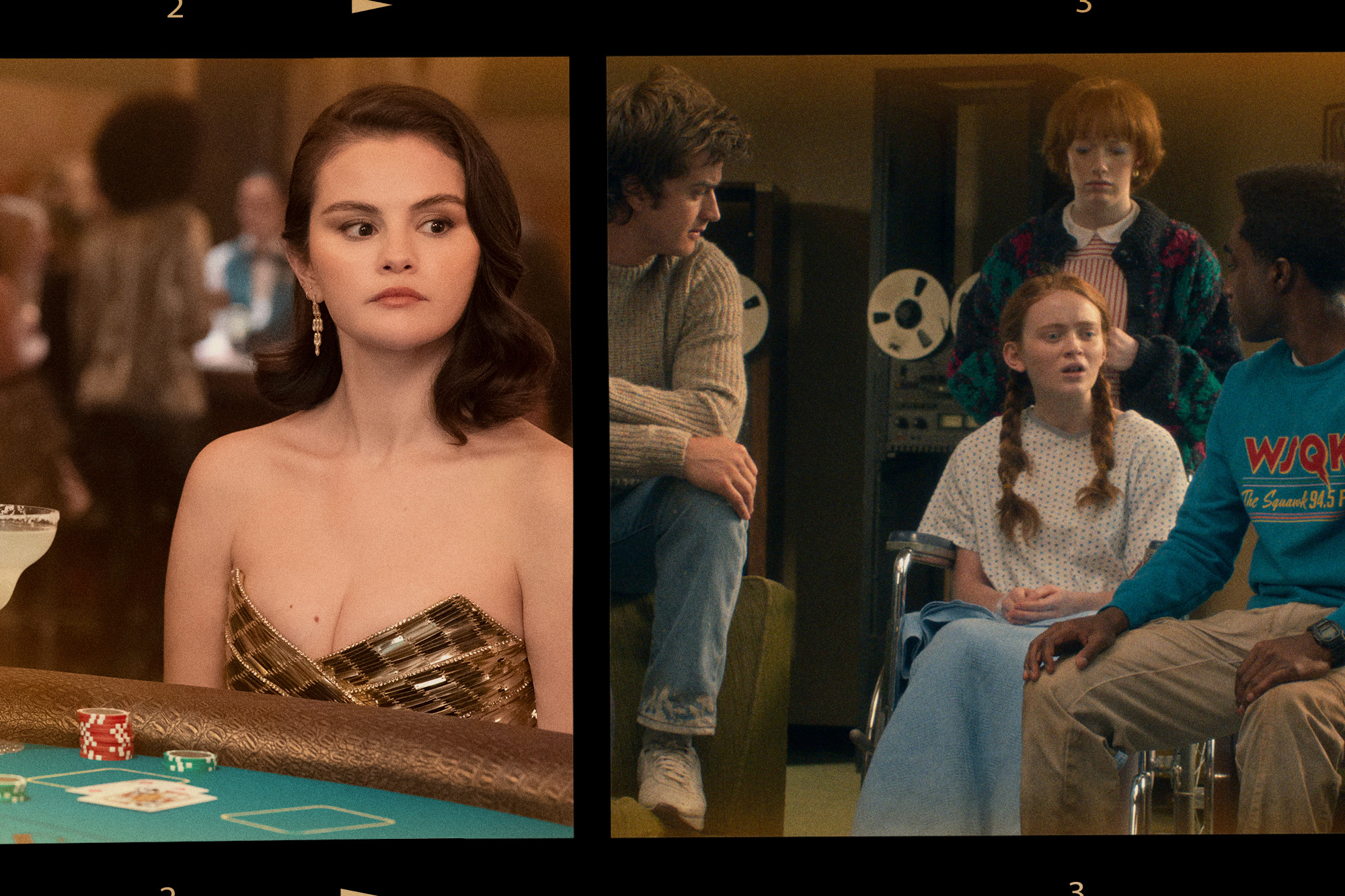
Fortunately, the final season of the show was so large, there was room for everything: Royal and production designer Chris Trujillo built an entire ’80s radio station, a haunted dream house out of the 1950s and, yes, even countless locations inside the Upside Down — including recreating the show’s fictional location of Hawkins, Ind., for the nether region.
“It was just building, building, building,” she says, of the work that went into the final season — which, because of the writers’ and actors’ strikes, took months to prepare and complete. Several of the show’s characters — including Millie Bobby Brown’s Eleven — spend large amounts of time in the Upside Down during the final season, tangling not just with creatures like the Demogorgons, but military personnel who had been living there for some time. “It was cool to send stuff into the Upside Down and age it when it’s been there for longer — just the gnarliness that you get on the billboards and stuff to make it feel as authentic as possible,” Royal adds.
Authenticity was Royal’s brand across the Netflix show’s blockbuster run. A three-time nominee in the production design category with Trujillo, she relished recreating the show’s 1980s period detail — even if the viewer never even noticed her work. For instance, in season three — for which the Stranger Things production design was inexplicably snubbed — Royal and Trujillo recreated an entire 1980s mall inside a mostly vacant mall in the Atlanta area. Royal remembers dressing each store — like Claire’s and Sam Goody — all the way to the back cash registers. “You could literally walk in and buy stuff in any store,” she says.
For the final season, even despite the Upside Down, there was still one key 1980s relic that Royal and Trujillo got to rebuild: a period-perfect local radio station.

“It was based on a radio station from North Carolina that the Duffers grew up near, and so they would drive by it and see it,” she says. Royal sent crews to the now-defunct station to document the inside and also take old equipment where applicable.
“It’s always good to be grounded in something real,” she says, noting how in recreating the space for the Stranger Things characters, she added more places for the large cast to hang out onscreen. “It was a favorite set for all of us — maybe even on the whole show, but definitely of this season.”

Royal’s eye for period detail went beyond NAB cartridges; for the 1950s dreamscape where the show’s main villain, Henry Creel (Jamie Campbell Bower), lives, Royal even found an Atomic Age board game called Uranium Rush.
“It’s a real game,” she says. “There was a whole boom in America in the 1950s of people looking for uranium on their own detectors — even though it’s toxic and has radiation.”
Royal says she found out about the game while doing research on Reddit and eventually sourced a version on eBay. “That was destroyed,” she says. “But we took all the parts and recreated everything — reprinted and manufactured the whole game with the hopes that somehow they would see it in the show.”
Fortunately, a couple of extras played it in the background of a scene — she calls it an Easter egg for eagle-eyed fans to find on rewatch. “It’s just fun.”
Casino Royale
Patrick Howe is used to awards recognition, but that doesn’t make it any less special. The Only Murders in the Building production designer is a two-time Emmy Award winner for the Hulu comedy and now a four-time nominee thanks to his nomination this year.
“I don’t take it for granted, and I try to do my best work each year — and it becomes harder and harder for a show to maintain interest and freshness,” he says, giving credit to co-creator and showrunner John Hoffman for finding new ways to keep audiences guessing.
But for the fifth season of Only Murders — again a best comedy series nominee (its fifth consecutive series bid) — Howe was given one of his most complex assignments yet in expanding the scope of the Arconia, the New York City apartment complex that gives the show its title. This go-around, the show’s resident amateur sleuths, Charles (Steve Martin), Oliver (best comedy actor nominee Martin Short) and Mabel (Selena Gomez), attempt to solve the mystery of who killed the building’s doorman, Lester (Teddy Coluca), and find themselves embroiled in a mafia conspiracy involving billionaire tech lords and a secret, illegal casino under the building’s courtyard.
In his conversations with Hoffman, the showrunner told Howe to imagine that the courtyard area was used as horse stables when it was first built in the early 1900s. “He had me at ‘secret’ and ‘underground’ and ‘under the courtyard’ — particularly because he was tagging it to a place that the audience knew,” Howe says of the building’s courtyard, present in the earlier seasons. “That was something that people could specifically imagine.”

In creating the underground casino good enough for billionaires (played by guest stars Renée Zellweger, Christoph Waltz and Logan Lerman) and the mafia, Howe says he used his imagination but with some limits. “It can often be a liability if you make up too much, because everything in real life is based on things in real life — and so best not to veer from that too much if you want things to look real and be plausible.”
Howe researched large underground spaces from the era when the Arconia was built for inspiration, looking at Grand Central Station and several other large limestone buildings from the time. “That was a valid hook, and I thought it was a type of architectural vocabulary where I could convey an underground space,” he says.
Howe celebrated the Emmy nomination while working on the next season of Only Murders — this one shifts the story to London, moving away from the Arconia for the first time.
“I keep practicing and keep trying because it’s definitely sort of a moving target,” he says about his work on the show. “It’s a delicate balancing act because the writers need to tell the story they want to tell, and you’ve got to be able to fulfill what they come up with. You don’t ever want to say, ‘No, that can’t be done,’ or, ‘No, that’s not affordable.’ You always kind of come up with a way.”