

I cover TV from L.A. I reported on who might buy distressed cable assets, what’s expected from Cindy Holland in her upcoming role at “New Paramount” and scooped Neil Druckmann’s exit from HBO’s The Last of Us. Email me at lesley.goldberg@theankler.com

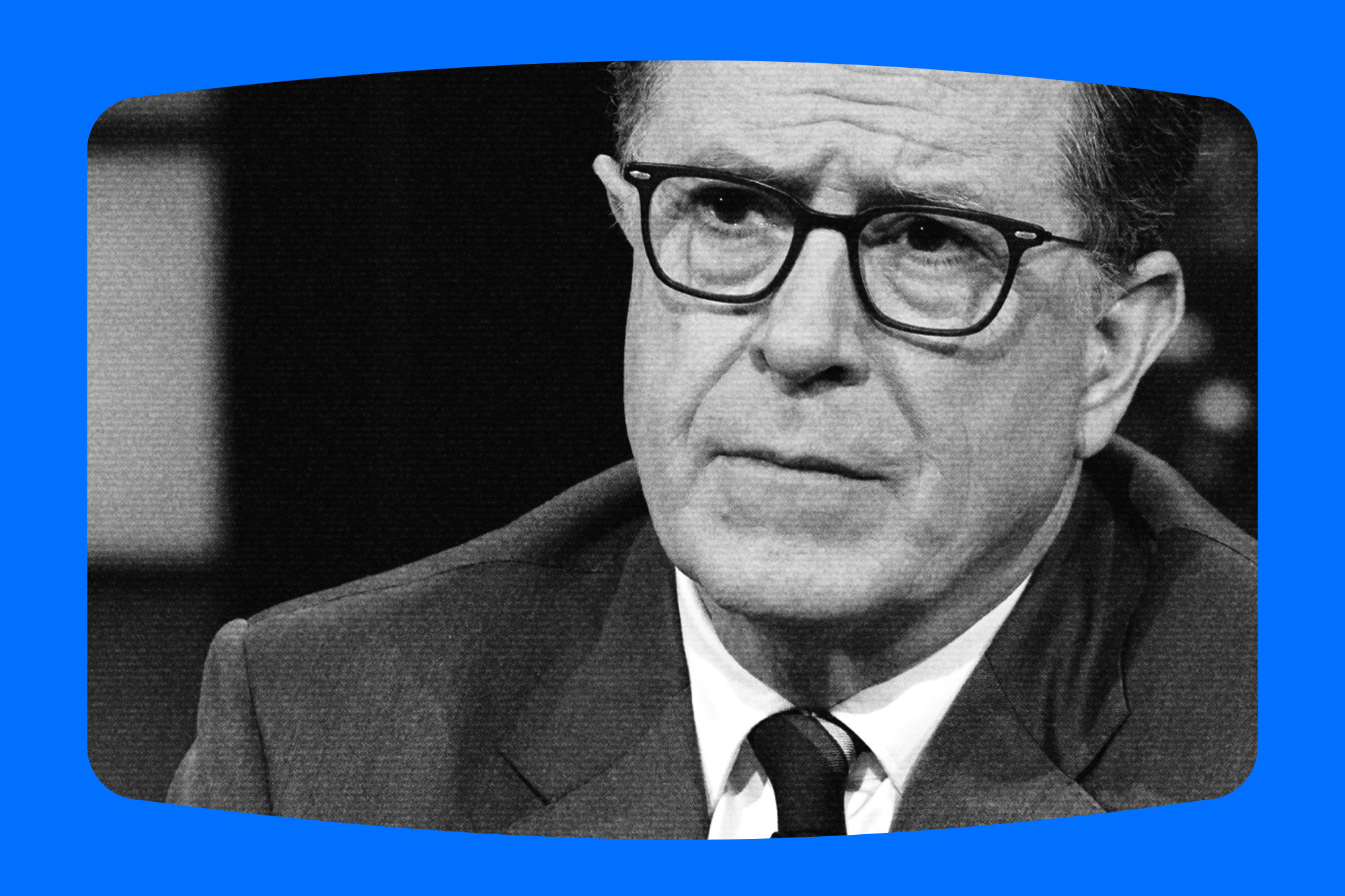
On June 27, just a few days before Paramount would announce its $16 million 60 Minutes settlement with President Trump, James Dixon received a call from CBS executives informing the prominent talent manager that the network was walking away from his client Stephen Colbert’s The Late Show. Dixon knew the news more than two weeks before his client, I’ve learned.
The franchise, which started in 1993 with David Letterman behind the desk, will soon go the way of other late-night offerings including CBS’ own After Midnight and The Late Late Show With James Corden as well as NBC’s Last Call With Carson Daly and its replacement, A Little Late With Lilly Singh. The genre’s footprint continues shrink amid a depressed ad market that saw the losses on Colbert’s show, which is No. 1 in late night with an average of 2.4 million viewers, grow to around $40 million last year. (Late Show costs $100 million annually to produce, per a source.)
Colbert, though, would not learn the news of his show’s demise until he returned from vacation. It was after Colbert taped the Wednesday, July 16 episode, I’m told, that Dixon informed him of CBS’ decision. The following day, Colbert stunned the TV industry and announced the cancellation at the top of the show.
The timing of the cancellation news break — it came three days after a post-vacation Colbert blasted Paramount’s settlement with Trump as “a big fat bribe” — has created terrible optics for the media conglomerate as it awaits formal approval of its merger with Skydance. Nevertheless, multiple sources say the shocking decision to retire the Late Show brand was truly driven by financials as the late-night space has continued to face declining ad revenue and dwindling linear viewers. What’s more, while Colbert may have been the highest-rated of what remains of the broadcast late-night talkers, The Late Show’s digital footprint — and its corresponding ad revenue — is far less than shows fronted by ABC’s Jimmy Kimmel and NBC’s Jimmy Fallon.
Sources tell me it is standard procedure for network executives to communicate news about Late Show through Dixon (who did not respond to multiple requests for comment). The manager — who also reps Jon Stewart and Kimmel — also received a call a year ago from CBS executives informing him of impending budget cuts to Late Show, sources say. These same sources say five staffers were laid off a year ago as additional “nips and tucks” were made across the show, and Colbert, who’s paid $15 million a year, is said to have helped come up with unique ways to reduce its budget. At the time, insiders were optimistic that the advertising market would turn around.
That turnaround never came. Instead, CBS quietly made the decision that Colbert and The Late Show will sign off for good in May 2026. Today, I’ve got the unreported backstory behind that call — and what it means for Colbert, CBS, and the future of late night. You’ll learn:
New details of what insiders say is behind the surprise timing of CBS’ decision to end the show
The inside players: Who knew, who didn’t, and how the decision was kept under wraps
“Horrible” optics: Why proximity to the Trump settlement didn’t matter
The unexpected way Skydance’s David Ellison and Cindy Holland factored into the calculus and timing
The sensitive steps around telling Colbert, his staff and the world
Where else CBS is cutting back, from Tracker to The Talk, and what’s next
The quiet deal behind Byron Allen’s Comics Unleashed, which took the 12:30 a.m. slot on CBS
How YouTube and digital spinoffs help keep Fallon and Kimmel on broadcast (for now)
The backup plans CBS didn’t pursue — including pay cuts, replacements, and a Paramount+ pivot

Why Now and Who Knew
Many have questioned why CBS wouldn’t have announced such a move months ago, in order to capitalize on a final season during the advertising upfronts. It’s a big reason that industry observers — including my colleague Richard Rushfield, who as always has very strong feelings on the matter — presume that despite company claims otherwise, the decision was in part a capitulation to Trump given Colbert’s vocal anti-MAGA politics. But this moment had its own logic, sources say — CBS would need to close new deals this month with The Late Show’s estimated 200 staffers, versus simple renewals, as their contracts would no longer run through the summer of 2026 but rather break with tradition and be truncated to run only through May. Colbert’s own current three-year deal was set to end in August 2026.
Insiders stress CBS had been having discussions about canceling The Late Show for months before making the fateful call to Dixon on June 27, mere days before the Trump settlement news was announced. Executives involved with the Late Show decision included CBS CEO George Cheeks (who cut his teeth in late night at NBC), CBS Studios topper David Stapf and CBS president Amy Reisenbach.

As improbable as it may seem, given news of both Paramount’s settlement with Trump and his claims of a Skydance pre-close side deal to run PSAs for his benefit, sources stress this decision to ax The Late Show was made without the knowledge of Skydance CEO David Ellison and his consultant, Cindy Holland, as CBS execs feared the incoming regime would not allow Colbert to remain on the air, unchecked, through next May. (I wrote two weeks ago about the hopes for Holland’s coming leadership at “New Paramount,” once Skydance’s acquisition of the company is approved.) “[They] didn’t want Skydance to come in and say, ‘Get rid of it now’; they wanted to give him a proper send-off,” says a source familiar with the discussions to end Late Show next May.
Reps for Paramount/CBS declined to comment. Reps for Skydance also declined to comment.
“They knew the optics would be horrible no matter what,” the same source familiar with the situation adds. “Once Trump became president [again] and his rhetoric against news media began, they knew if Late Show went away, there would be those allegations of acquiescing to Trump. But the truth was they couldn’t afford to do the show at its current level.”
Sources contend that Dixon wanted to tell Colbert in person and waited until after the July 16 episode so he could pay a visit to his longtime client. Colbert believed it was in the best interest of his staffers and viewers to share the news of the show’s impending demise before it leaked elsewhere. The next morning, CBS briefed Skydance leaders that Colbert would be announcing the news during his July 17 taping.
“Let’s see if Colbert makes it to May,” one exec at a competitor network suggested. “He has zero shits to give at this point; he can just do and say what he wants. What are they going to do, fire him?!”
Lagging Rivals on YouTube
CBS has looked for ways to cut costs across all dayparts of its schedule. In primetime, the network continues to reduce the number of series regulars on scripted shows and recently parted ways with two main cast members on Tracker, the most-watched entertainment series on primetime (and a co-production with Disney). Last year, CBS canceled The Talk after a 14-year run and replaced the talker with Beyond the Gates, the NAACP-produced soap opera. Beyond the Gates costs significantly less to produce than The Talk, performs better on streaming platforms — as all serialized soaps do (see the move of Days of Our Lives from NBC to Peacock) — and comes with a built-in sponsor in Procter & Gamble, which makes the sudser less reliant on traditional ad revenue. Byron Allen’s Comics Unleashed, which took over for After Midnight on CBS, is a “time buy,” meaning Allen pays Paramount to air the show in the 12:35 a.m. slot and the network and Allen each get a cut of the ad revenue.
Further complicating matters for Colbert is that Late Show has less than 10 million subscribers on YouTube, the smallest footprint among his time slot competitors, with digital ad dollars lagging behind the likes of Kimmel (who has 20.7M subs on the platform) and Fallon (32.7M subs). Both hosts, along with Seth Meyers, who airs at 12:30 a.m. on NBC, embraced the new ways people consume their shows faster than CBS did. “Jimmy and Seth both have transitioned into the digital age in a more seamless way; anything that NBC does on YouTube is monetized through the ad sales team and Jimmy’s huge digital footprint is monetized,” says one former network insider, pointing to both NBC hosts and their ability to generate unscripted spinoffs based on segments from their respective programs (as Kimmel does at ABC). Still, while ad revenue from YouTube has helped to offset some of the losses in the linear space, it doesn’t make up for the downturn that came after audiences shifted to streaming and other platforms. “The fact of the matter is we make a lot more money from putting the show on television than we do from putting it online,” Kimmel told Recode’s Peter Kafka a decade ago.
Cheeks, who once oversaw late night at NBC before co-running the network and ultimately moving to Paramount in early 2020, conceded that the late-night space was a challenging one last May when the Taylor Tomlinson-hosted After Midnight ended. “The daypart is challenging from an ad sales perspective. I love our hand, we have the No. 1 person at 11:30 p.m. for the last nine years (Colbert), and we still do believe in the daypart, but it is a challenge,” he said earlier this year, referencing a New York Times story that questioned if the late-night space was taking its last “gasp” with Netflix’s John Mulaney entry Everybody’s Live. (Netflix’s most recent viewership report — where Mulaney’s show is ranked around 1,500 among all programs — illustrates the uphill battle to get topical late-night programs to work on streaming.)
‘Simple Economics’
As to what replaces The Late Show, multiple sources say it’s too soon to know. Had CBS made the Colbert cut earlier this year, the network could have touted his upcoming 11th and final season last May during its upfront meetings with Madison Avenue ad buyers — but the decision was yet to be finalized at the time, sources say.
“Anything you put on that costs more than what the ads generate is not viable. It’s simple economics,” says another network executive. “Other companies have the same issue but say, ‘The show is a loss leader; maybe my theme park money can cover that.’ There’s a tolerance level every company has to look at for where they aren’t making money: ‘How much can we lose here because it’s good for branding?’ Late night shows allow you to promote your own shows. You can make arguments about why you should have a loss leader, but that is clearly not late night anymore. This easily could have happened a year ago.”
Before lowering the ax, multiple sources say CBS had no discussions about Colbert taking a pay cut or about replacing the well-paid host with a newcomer. “Stephen is irreplaceable; there was no, ‘Who are we going to get that’s better [conversation],’” a second source familiar with the decision tells me. A move to Paramount+ also was off the table as that would have wiped out a sizable chunk of the show’s ad revenue and because the show is not a driver on the platform the way serialized programs like NCIS are.
With Colbert and The Late Show signing off for good next May, that leaves broadcast with only Fallon and Meyers on NBC and Kimmel at ABC. Both NBC hosts’ deals run through 2028 (which would be the 15th season for both), with Kimmel’s up next year (he’s on season 23). Kimmel, for his part, has been vocal that his time in late night may be coming to an end, telling the Los Angeles Times in February 2024 that he thought his current deal would be his “final contract.” More recently, the ABC stalwart expressed concern about the future of late night in general. “I don’t know if there will be any late-night television shows on network TV in 10 years. Maybe there’ll be one, but there won’t be a lot of them,” he said on the Politickin’ podcast last August. “The fact that people are easily able to watch your monologue online the next day, it really cancels out the need to watch it when it’s on the air, and once people stop watching it when it’s on the air, networks are going to stop paying for it to be made.” Sources say Disney, which declined to comment for this story, will do everything to try and keep Kimmel on the air at 11:30 p.m.
On cable, all eyes now turn to Jon Stewart, whose deal with Paramount-backed The Daily Show on Comedy Central is up at year’s end. “Unfortunately, we haven’t heard anything from them,” Stewart said last week on his The Weekly Show with Jon Stewart podcast. “They haven’t called me and said, ‘Don’t get too comfortable in that office, Stewart.’ But let me tell you something, I’ve been kicked out of shittier establishments than that. We’ll land on our feet.”
Counting the Late-Night Hours
Will there be another domino to fall as the end of Peak TV continues to reshape the landscape? Executives with business in the linear space say late-night shows are important to affiliates, which kick some of the billions in retransmission fees they earn from cable providers like Comcast back to the networks for programming. NBC, for example, toyed in 2022 under NBCUniversal’s then-CEO, Jeff Shell, with the idea of handing over the 10 p.m. hour currently occupied by scripted dramas to affiliates. The cost-cutting move, which was nixed months after the news leaked, would have meant more money for local affiliate stations.
“Having read articles when the Skydance deal was first announced about Jeff Shell and NBC, I’m definitely nervous about 10 p.m. and protecting that,” a Paramount source told me earlier this month.
Still, others don’t believe there’s much left to trim that hasn’t already been pinched by budget cuts and layoffs.
“This feels like an extension of cable networks being wound down,” another broadcast exec tells me (Claire Atkinson and I reported last week on the decline of those cable assets and who might snap them up now). “Those were all viable recently. Each year, you hope the ad market bounces back. But then something bad happens every year — Covid, tariffs — and these companies can batten down the hatches and think, ‘Maybe Colbert can lose $20 million instead of $40 million with an ad market bounceback,’ and maybe that’s a pain threshold they can withstand. But the ad market didn’t bounce back.”

Comments
Only Ankler All Access subscribers can comment
Already a subscriber?