


I wrote about what Britain’s YouTube trap means for Hollywood, Saturday Night Live UK surviving the skeptics, and, with Ashley Cullins and Katey Rich, the Cannes Film Festival and market. Email me at manori@theankler.com
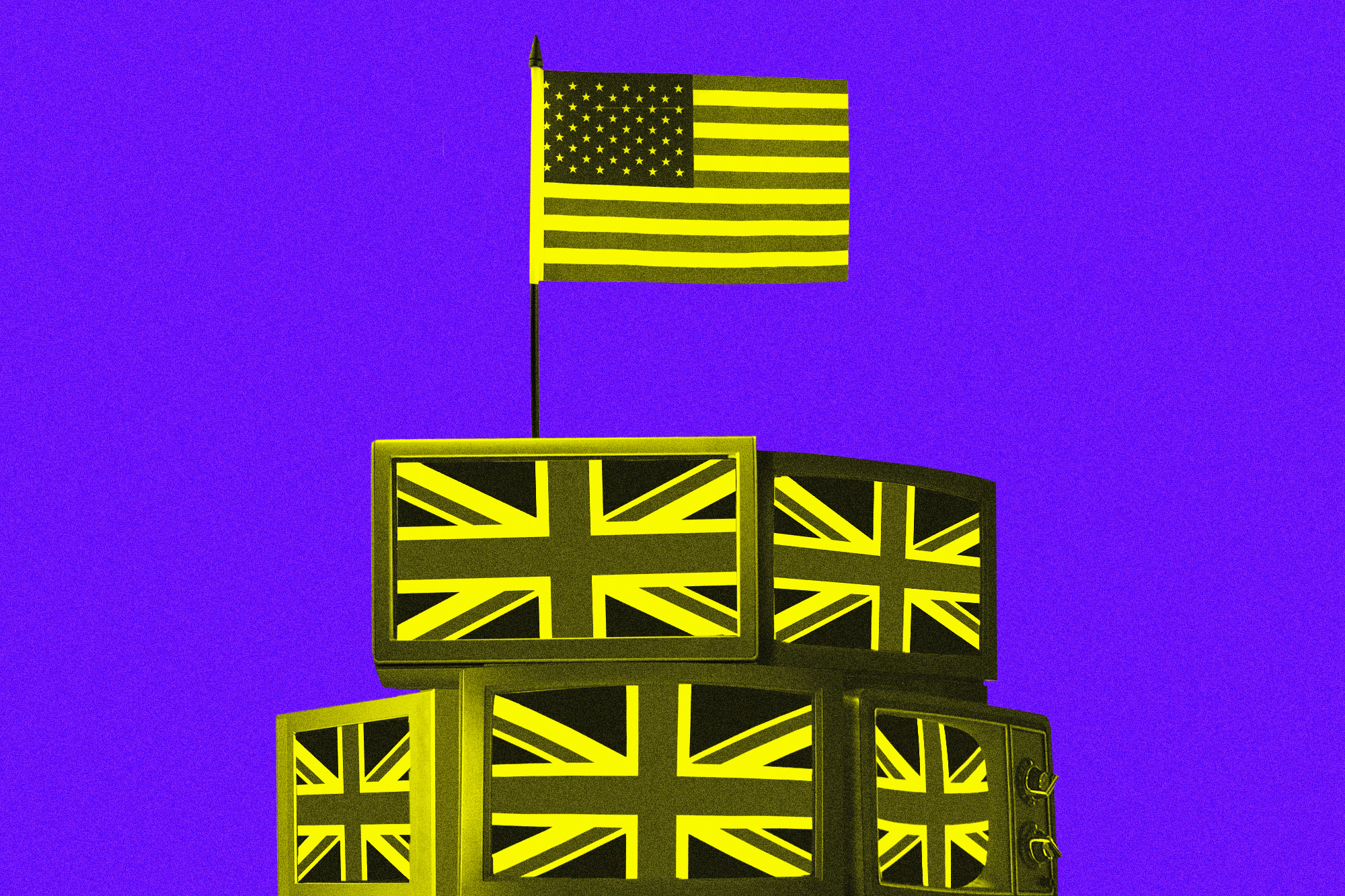
While Taylor Swift and Travis Kelce were getting hitched in front of 1,000 of their closest friends in New York during Independence Day weekend, another megawatt union — this one bringing the U.K. even closer to America — was in the works across the pond.
On July 6, Comcast’s pay-TV operator Sky said “yes” to buying the broadcasting and streaming arm of the U.K.’s largest commercial broadcaster, ITV, for $2.1 billion. It means that Sky, the home of Premier League soccer, Saturday Night Live UK and The Day of the Jackal — all of which sit behind an iron-clad paywall — will own the free-to-air broadcaster behind everything from Pop Idol (the template for American Idol) to Love Island and Coronation Street.
It’s the biggest deal in British broadcasting in decades; a bold move engineered to compete with streamers and tech giants. Together, Sky and ITV will command a 17.6 percent share of TV viewing, according to recent monthly viewing figures by ratings org Barb, edging close to YouTube’s 18.6 percent.
But as one production company boss gloomily tells me, “Another iconic British brand is falling into the hands of foreign ownership.”
If the deal goes through (and sources tell me it likely will, with a closing date expected in autumn 2027 following regulatory approval), Sky and ITV will join Channel 5 in a trio of big British broadcasters owned by U.S. studios, leaving only the BBC and Channel 4 to fend for themselves. (Channel 5 was acquired by Viacom — now Paramount Skydance — in 2014 for $750 million.)
ITV CEO Dame Carolyn McCall insisted on a conference call that the deal will help both broadcasters “compete with Netflix, Amazon and Apple and all of the others” and is ultimately a “good thing for Britain.” Some sources have similarly played down the U.S. angle, pointing out that Channel 5 has thrived under its American ownership, expanding into drama and crafting hits like All Creatures Great and Small.
But having NBCUniversal (following Comcast’s operational split) as its corporate parent will leave ITV vulnerable to stateside M&A volatility, particularly if NBCU is itself acquired by another media giant. Just look at the question marks over the future of Channel 5 programs under a combined Paramount Skydance-Warner Bros. Discovery — a deal the U.K.’s culture secretary raised the alarm about on June 30.
“We’re in an ironic situation where, because of this aggressive move of largely U.S. providers into the U.K. market, it becomes harder for the commercial broadcasters to continue to survive without some kind of input of additional money and support,” says Catherine Johnson, professor of media and communication at the University of Leeds.
And where is that investment coming from? America, naturally. “That’s one of the things that ITV are claiming that the Sky deal will offer them,” Johnson adds. “That’s the weird catch-22 situation we’re in.”
That’s the trap in miniature. The U.K.’s public broadcasters are rapidly losing market share and influence to U.S. tech giants — and the only rescue in sight comes from the other side of the same Atlantic.
This week, I look at …
- Why the asset everyone assumed this deal was about — ITV Studios, the crown jewel — isn’t part of it at all
- What Comcast really gets eight years after paying $39 billion for Sky and taking an $8.6 billion write-down
- Why a merger controlling 70 percent of Britain’s linear TV ad market still barely registers against Silicon Valley
- Why one media analyst calls the U.K. “a colony of America” — and the 2025 ad-spend numbers that back him up
- What Sky’s willingness to eat a $107 million breakup fee reveals about its confidence
- How public-service obligations — not who signs the checks — became the thing keeping British stories on British screens
- Why those same rules are now shielding one U.S.-owned channel from the anti-DEI orders landing elsewhere in its parent company
- And the uncomfortable question that outlasts the deal itself — whether Britain can even own the ground its television stands on
Don’t stop here
Get the rest of this story — and the scoops and intelligence Hollywood reads first.
Already a subscriber?