

I covered the Cannes Film Festival and market with Ashley Cullins and Katey Rich, and I wrote about YouTubers hijacking reality TV, HBO Max invading the U.K., and the Iran war’s impact on Mideast deals and production. Email me at manori@theankler.com
Something about the prospect of a U.K. edition of Saturday Night Live put noses so out of joint in Britain, you’d think SNL creator Lorne Michaels killed one of Queen Elizabeth II’s corgis in a past life.
When the show was first announced in April 2025, it was almost instantly written off by some British media. There was a litany of complaints: American shows don’t work over here. Their sketches are too long. Who even watches SNL anymore, anyway?
Weeks before it launched on Comcast-owned pay-TV operator Sky, one senior TV executive complained to me that it was “appalling” that the U.K. needed an American import to swoop in and try to revive British comedy. Sketch comedy originated in British music halls in the late 1800s, and iconic shows like Monty Python and A Bit of Fry & Laurie helped popularize the format worldwide. “The idea that we need to use a non-U.K. brand to launch something is sad,” continued the exec.
The message was clear: It’ll never work.
And then, inconveniently for the skeptics, it did.
Now, having wrapped its eight-week run on Sunday, SNL UK has silenced the naysayers, or at least the noisiest ones. Even hardened critics have admitted the show’s acerbic political commentary, absurdist sketches and deeply British references have combined for a killer take on character-led sketch that the U.K. hasn’t seen since the likes of Harry Enfield & Chums or The Catherine Tate Show. And in the process, it’s introduced an all-star team of young comics in a vehicle where they can shine.
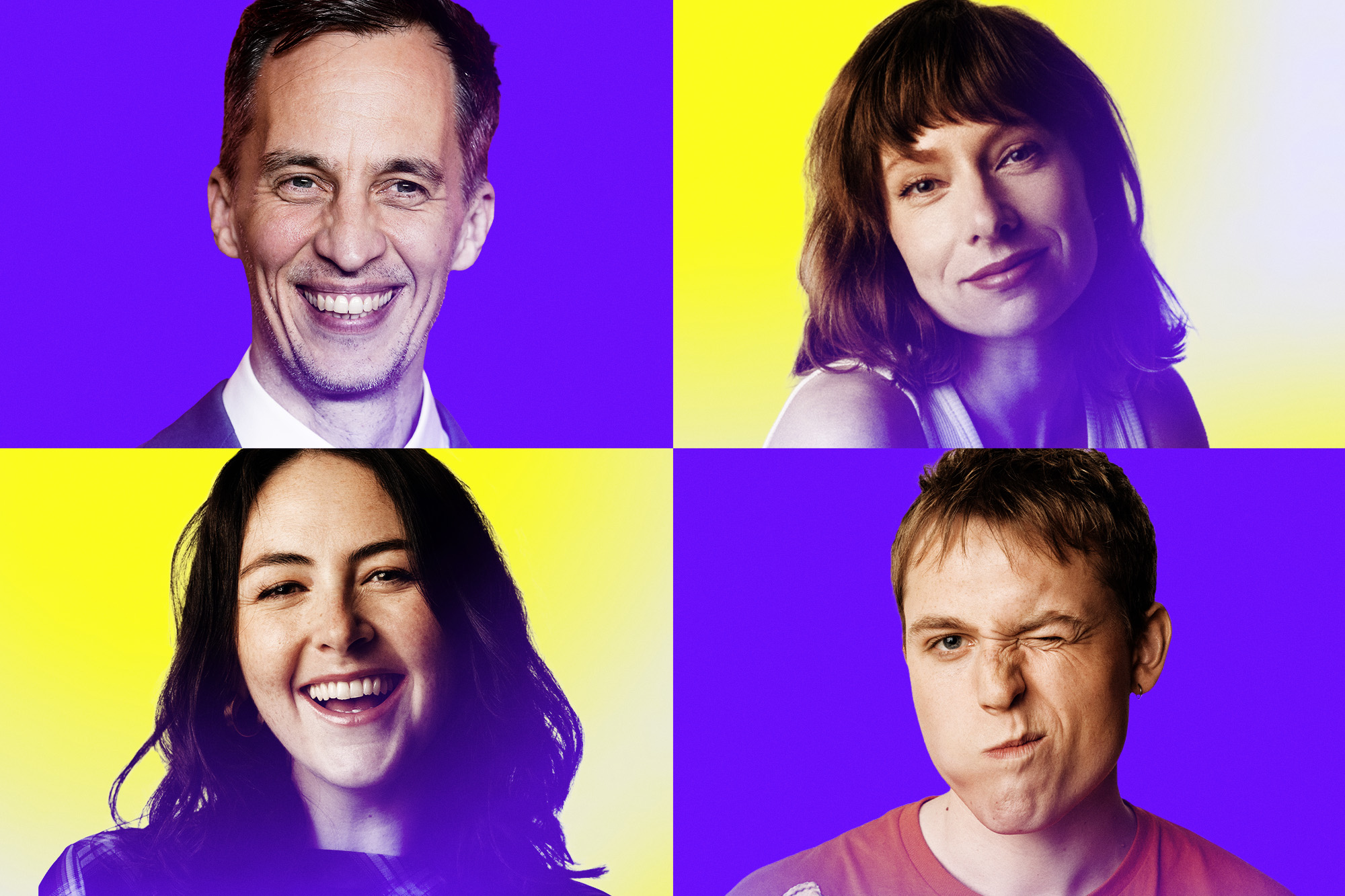
I learned more about how they pulled it off in an exclusive interview on Monday with showrunner James Longman and cast members Jack Shep, Emma Sidi and Celeste Dring.
With a reported budget of $2.6 million per episode, SNL UK — produced by Universal Television Alternative Studio U.K. Productions and Broadway Video — is likely the most expensive unscripted sketch program ever made on British TV. (Most half-hour sketch shows are produced for a maximum of £500,000, or $670,000, an hour).
The generous budget allows the show to employ 20 full-time writers, 11 cast members and more than 200 crew. In terms of structure, SNL fans will recognize the main format beats of its U.S. counterpart: a cold open, host monologue, Weekend Update and two turns from a musical guest.
SNL UK’s uproarious mid-March premiere, hosted by Tina Fey, set the tone: George Fouracres smashed the cold open with a feeble impression of U.K. Prime Minister Keir Starmer; Shep played coy as Princess Diana in her “revenge dress” in a Last Supper sketch; Dring and Sidi went bra shopping with Fey; and Weekend Update anchors Paddy Young and Ania Magliano roasted the country’s royals (Beckhams included).
Bill Carter wrote on LateNighter that the debut was “a remarkably polished first effort” and predicted the show would grow more distinctly British as it found its footing. And it did. Later sketches such as “Posh Gits” (a send-up of reality show Made in Chelsea) and “British Pork” (referencing a horrific retro commercial) underlined just how much SNL UK was for the hometown crowd. Sketches such as a Prince Andrew-centered cold open and “King Charles and Queen Camilla Fly Home” have drawn 2.4 million and 2.2 million views on YouTube, respectively.
There are seemingly no constraints around the political satire, either. Fouracres’ stammering Starmer was so popular, Donald Trump shared to Truth Social a clip of a sketch in which the sniveling PM calls the president a “scary, scary wonderful president.” Other British politicians are dressed down for their utter incompetence on a weekly basis — a freedom that may be in sharp contrast to a French edition of SNL that’s currently in the works.
I understand the Canal+ program, which I can reveal has already enlisted Marion Cotillard as one of its guest hosts, could face a turbulent road ahead for any edgy political sketches due to the pay-TV operator’s controlling stakeholder, right-wing billionaire Vincent Bolloré. (The mogul’s influence on the French media giant is currently at the center of a firestorm playing out at the Cannes Film Festival; his Bolloré Group also has a significant stake in Universal Music Group, currently the object of a hostile takeover bid by Pershing Square’s Bill Ackman.)
Luckily for Longman, a former Late Late Show With James Corden exec well-versed in both British and American TV-making, there are no such concerns in the U.K. But that’s not to say the program doesn’t have its share of headaches — namely, the ratings.
The premiere pulled in 226,000 overnight viewers on Sky (tripling the channel’s 10 p.m. slot average), but this figure has steadily dwindled over the weeks, with Doctor Who star Ncuti Gatwa’s Sunday finale drawing a mere 86,420 (against stiff competition, as Sean McNulty wrote in The Wakeup: the Eurovision finale). Although Sky tells me the show is its biggest program on social media, and has delivered 200 million organic views on YouTube, TikTok, Meta and X, you do have to wonder: How much do ratings matter? Evidently not enough to deprive SNL of a second season. The show, which streams on Peacock in the U.S. the day after it airs in the U.K., will return in September for 12 episodes that will stretch into the new year.
My interview with Longman and the cast, edited for length and clarity, got into the benefits of drafting on a U.S. format while making it very British (on a not-at-all-British budget), their dream guest hosts and how U.K. pols are responding to the satire.
‘We Just Need to Keep Being Funny’

What are some of the beats from the U.S. show that the U.K. show had to adhere to?
James Longman: We were always due to follow the format of the U.S. show, so we obviously have the same cold open and the monologue, sketches and music. We were questioned a lot in the run-up to the launch about how a U.S. show can become a British show, and I think we answered that with an inherently British program. It was full of British references and humor, and the chances and swings we took at times are very British. It’s a U.S. house, but we had to build our own rooms. With the voices of our cast and writers, we made it a really British experience and made it our own.
But with more swearing, right?
Longman: A bit more swearing.
What was it like on set after Donald Trump posted an edited cut of the first Keir Starmer sketch on his social media?
Longman: It was Sunday after the show, and you’re brain dead and physically dead, because it’s been such an intense week. I was dropping my kids at a party on the Sunday and someone texted me saying, “Donald Trump’s just tweeted your cold open!” and I just started walking and my wife shouted after me going, “You’ve left all the car doors open!” I was very confused about what it meant — whether it was a good thing or bad thing — but in truth it was brilliant. The fact we were part of the conversation from show one was amazing for us. It’s what we wanted to be. We wanted to infiltrate people’s conversations, and we did.
Emma Sidi: That was such a weird, shocking and unnerving moment. And then our job was to not give it more air, because he did it for himself.
Jack Shep: That’s the USP [unique selling proposition] of American SNL. It’s a temperature check on culture and what’s going on in the moment. That felt like a very revealing moment of the world at that point in time. That that happened was mental.
You’ve really skewered British politics on the show. Did you get any calls from senior figures after the episodes aired? Was there anything that was off-limits?
Longman: I know that we get spoken about in halls in the House of Parliament from various people. I know we’re definitely part of their conversations, and even political sketch writers now talk about how we’re going to skewer the news and talk about the news that week.
In the lead-up to the premiere, there was a lot of cynicism around the show. I spoke with one executive who said, “Why does the U.K. need an American format imported in order to revive comedy? Why can’t we do this organically from within the U.K.?” What are your thoughts on that?
Dring: As James says, it’s basically inheriting a format, and then not a lot else. So, I understand the question of, “Why do we need that? Why do we have to have an American thing?” Everything in culture is now recycled culture, and I suppose you can kind of lament that if you want, but there’s another way of looking at it: It’s an opportunity for lots of British comics and British voices, particularly those of us in the cast that are a bit older. There hasn’t been an opportunity like this for such a long time. I do understand wanting to bring back certain ensemble sketches, but frankly, there aren’t the budgets for those anymore. I’ve been trying to do sketch for a long time, and there’s just not these opportunities, and there isn’t that kind of money. So, there is an argument for saying, “Look, if you get involved in this massive institution, then what you have is the expertise, resources to take something seriously and really attack it.” I’ve never ever worked on a comedy show where a stunt’s been written into the sketch and someone’s gone, “Yeah, so the stunt woman’s coming on Tuesday.” What we’re able to achieve on this scale is different, and I would encourage people to embrace that rather than worrying about, “Well, it’s an American institution.”
Longman: I also think we’re in such a risk-averse industry now. We know that the show works in theory, and if you get the elements right, you’ll know it works here. People don’t say about The Traitors, “Oh, that’s a Dutch show.” We’ve borrowed and put our spin on it to try and make it work in a way that Traitors or Big Brother has. We’ve just tried to make it our own.
What’s one sketch from the last series you wish every member of the U.K. public would see?
James Longman: If I choose one sketch, then someone’s gonna be upset, but in terms of the cast, I loved “David Attenborough’s The Last Supper” in episode one (a gathering of “some of history’s greatest Britons,” Winston Churchill to Agatha Christie to Freddie Mercury), because everyone got a chance to show a little bit of their magic, so that was a real thrill for me.
Sidi: Great big crab man. That was The Traitors parody sketch (“A Very Confident Mistake,” which highlighted the U.K. show’s contestants’ unconscious bias against people of color). There’s a moment when I mentioned the people I voted off before — all non-white people — and I could feel the whole audience exhale at the same time as their laughter. You can almost see me breaking because of what that laughter actually sounded like and what it meant on so many levels. That really sums up the show: truly funny as well as toothy and pushing the envelope, and never letting comedy be the last element. Comedy comes first.
Shep: The sketch that blew me away when I first saw it was the hostage sketch, in the episode with Jamie Dornan (as a kidnapper who bonds with his hostage, Annabel Marlow, over her dating woes). At every point of that process — from read-through to blocking to acting — we all knew it was going to crush.
Dring: For me, it was episode two, the “Prince Andrew Plan” cold open (the royal agrees back in 1997 to participate an elaborate MI5 long-game campaign to elevate Prince Charles’ popularity by destroying his own, including via his association with Jeffrey Epstein). The premise was so clever, and with things that are about current affairs, or figures that loom large in the public consciousness, it’s very difficult to find an angle that feels fresh without being obtuse. You don’t want to disappear up your own asshole, but I thought that it struck the perfect tone.
It’s been reported that each episode costs $2.6 million, which is an amount that’s virtually non-existent for a comedy program in the U.K. Is that figure accurate?
Longman: I don’t really get involved in the budget; I just try and make things funny. But we’re in a very lucky position in that Sky really supported us and helped us make things as good as we can make them. We’re really appreciative of it.
When it was revealed the run was only going to be six episodes, there were lots of complaints that that was too few to make a real impact. And then pretty early on you were extended to eight episodes. How did the show’s original order and then that extension impact you?
Shep: The extension was kind of amazing, because initially we were going to do six in a row, and that — in hindsight — would have been doable. But it would have been incredibly tiring. We would have done it, but it would have been very intense. So it was good news all around, because it meant we were able to have this break in the middle, and get an extra two episodes. That extension really allowed us to make our mark a bit more and try some more things out, and push the boat out even more.
Longman: In the U.S., they never do more than three episodes in a row. They’ve done four in a row once, and it was like everyone’s own personal hell. So for our run of six, we’re very British, and we were like, “Let’s roll our sleeves up, let’s get on with it.” And then when you start making it, it’s so good to have that week break. Even doing four in a row is kind of draining creatively. But Sky are thrilled with how it went.
Was it difficult to get hosts? Tina Fey joked in the first episode that no one in Britain wanted to do it. Other hosts included Jamie Dornan, Riz Ahmed, Jack Whitehall, Nicola Coughlan, Hannah Waddingham and Ncuti Gatwa.
Longman: Lots of them did commit before we started. It’s amazing because they come and they spend essentially six quite intense days with us, taking a chance on us as a show, as a company, as a cast, as writers. We always thought about doing a handover show (on the first episode), kind of passing the baton on, and Tina was perfect for that.
Do you have dream hosts you’d like to get for Season 2?
Shep: I love Tilda Swinton. I think that would be so funny. She’d have such a filmic approach to it in a way that I’d find so genuine. What would Tilda’s monologue be? It’s genuinely unpredictable.
Dring: I’d say Joanna Lumley, she’d be really fun. And I’d love Stephen Graham; he’s a really committed dramatic actor. It’s always really cool to play off that and put them in a comedic space. And I have an idea for a sketch for Stephen Fry, so I kind of need him to do it.
Sidi: I got a bit of SNL jealousy last weekend, seeing Will Ferrell. If he could just come over here, that would be really helpful and really nice.
Longman: There are lots of comedy legends I would love to have pop in at some stage, like the Michael Palins of this world, and Jennifer Saunders, and Joanna Lumley. We grew up watching Tom Cruise. He’s never done it.
I mean, he’s based in the U.K. Come on, Tom. Take the tube over and just do it.
Sidi: We’d save some money on the stunt work.
The ratings for the show steadily decreased over the course of the run, with a couple of surges for certain episodes. How closely are you looking at the overnight ratings?
Longman: We have over 200 million views on socials. We’re being shared, we’ve been spoken about. The way people watch TV now, and the way people react to things, it all kind of blends into one, and we are the sum of its parts. So, if you take the overnights and the views over the week, and the social media, and in the way we’ve been spoken about — I get messages from dads and mums who say it’s the first show in years they’ve sat down as a family and watched. As far as I’m concerned, we are doing exactly what we should be doing, and the feedback from Sky is that they’re absolutely thrilled with us, and they’re supporting us. We’re ticking boxes, and we’re part of the conversation. We just need to keep being funny.