

I wrote about private equity buying authors’ publishing rights and summer reads begging to be developed. I excerpted books about Casey Wasserman’s role in the L.A. fires recovery and Coppola & Lucas’ ill-fated ’70s studio. Subscribe to The Optionist, my weekly list of available IP.
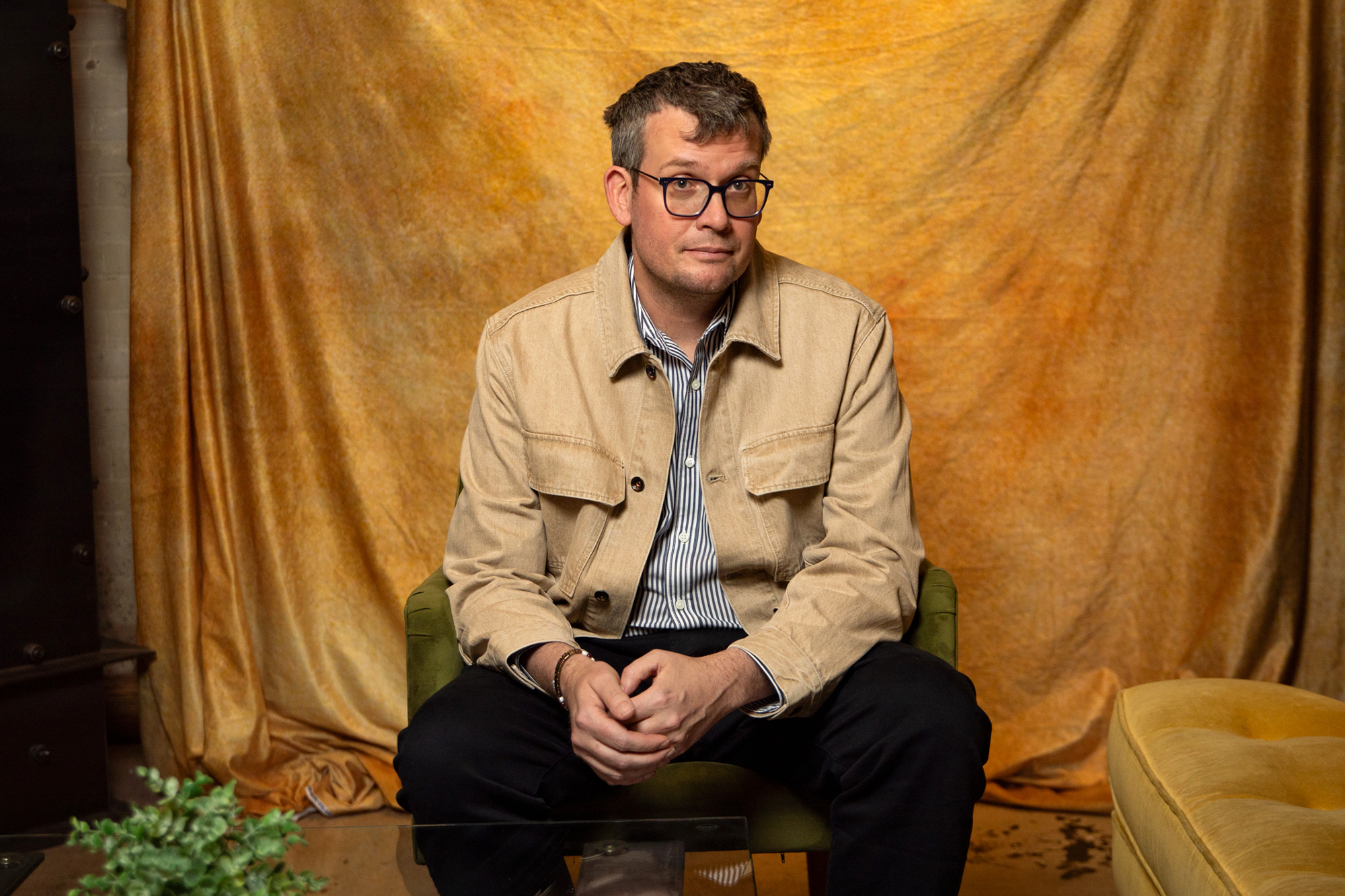
John Green knows what it’s like when a story becomes bigger than the person who wrote it. His 2012 novel The Fault in Our Stars became a publishing phenomenon, then a hit movie. More adaptations followed — along with a level of fame Green now says gave him almost none of what he thought it would.
Hollywood, Ending, his first novel in nine years, follows two actors — Kai, 20, and Juniper, 22 — who fall in love on the set of an Andy Warhol biopic and find their relationship complicated by the fishbowl of fame, Hollywood pressures and their personal traumas.
Hollywood, Ending is Green’s first novel for adults, a turn for the YA superstar who defined the genre with a string of hits that also includes 2005’s Looking For Alaska, 2008’s Paper Towns and 2017’s Turtles All the Way Down. He detoured into nonfiction with The Anthropocene Reviewed in 2021 and Everything Is Tuberculosis: The History and Persistence of Our Deadliest Infection in 2025.

Along the way to sales north of 50 million books, Green shifted YA literature away from the dystopia and dark fantasy of Twilight and The Hunger Games. Such was his influence that writing in the New York Times in 2013, A.J. Jacobs coined the term “Greenlit” to describe a genre that featured “realistic stories told by a funny, self-aware teenage narrator” with “sharp dialogue, defective authority figures, occasional boozing, unrequited crushes and one or more heartbreaking twists.”
That influence extended to Hollywood, where The Fault in Our Stars grossed $307 million worldwide on a $12 million budget. That was followed by adaptations of Paper Towns in 2015, Looking for Alaska (a 2019 Hulu limited series) and Turtles All the Way Down in 2024. All that helped create the YA ecosystem — the online fandom, the grounded stories, the record of success — that makes recent streaming hits like The Summer I Turned Pretty and Sterling Point possible. (Hollywood, Ending hasn’t been optioned yet.)
Green, 49, was also an influencer before anyone really used that word, which fed his success as an author. In 2007 he and his younger brother, Hank, started “vlogging,” as it was then called, on YouTube; three years later they founded VidCon, which is still going. Hank has since built his own career as an online personality, entrepreneur and novelist.
So when Green decided to write a novel about Hollywood, he did something unusual: He handed the manuscript to a producer, an agent and an actor and asked them to tell him what he’d gotten wrong. They did. One note changed the book; another punctured one of its central Hollywood fantasies. (His wife, Sarah Urist Green, however, likely gave him the most important note of all).
But the most revealing part of our conversation wasn’t about Hollywood at all but about Green himself — and what he spent 20 years believing fame would give him.
Ahead of today’s release of Hollywood, Ending, Green talked to me about those Hollywood notes that shaped the book, why he still loves being on a movie set, his hopes to see this book adapted for the screenm, the perils of being too online and what he thinks of today’s influencers.
Don’t stop here
Get the rest of this story — and the scoops and intelligence Hollywood reads first.
Already a subscriber?

Comments
Only Ankler All Access subscribers can comment
Already a subscriber?