

FYI: Ankler Alert is our new newsletter for timely takes on the moment’s top stories. Add newsletter@mail.theankler.com to your contacts and address book and never miss an email.
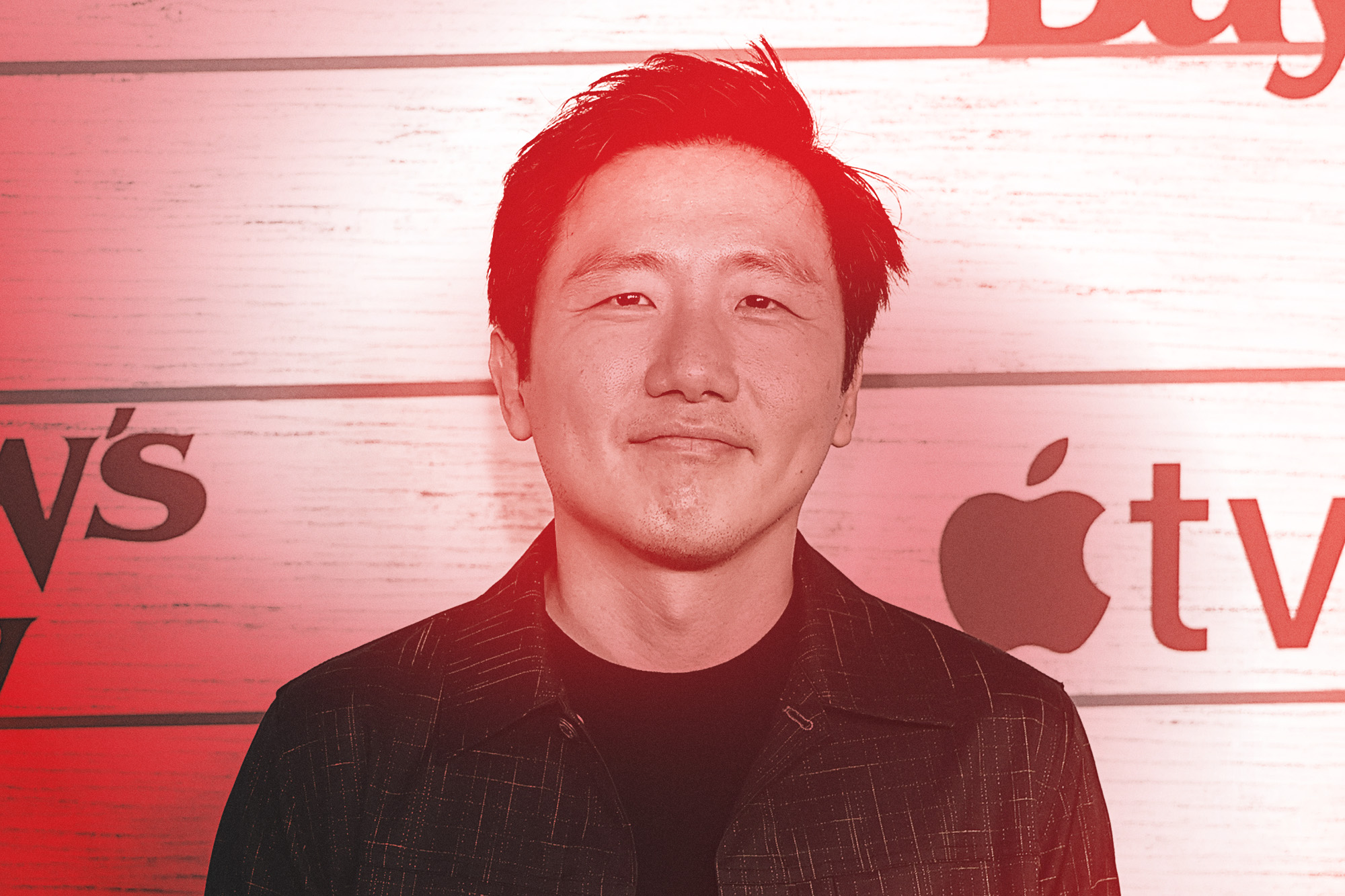
Today I’ve got a very exciting conversation to share with Widow’s Bay director Hiro Murai, who pulled off something truly impossible on television this year — and may finally win an Emmy as a result.
But first, a eulogy for one of the other big marvels of the past year of television, now gone too soon, and the director who probably had the weirdest weekend of anyone in Hollywood.
Destin Daniel Cretton is very much on top of the world right now. As the director of Spider-Man: Brand New Day, he boasts the highest-grossing opening weekend ever, and he’ll likely wind up with the year’s top-grossing film overall. Not bad, especially at a time when Marvel movies seem to be losing their shine; Cretton and stars Tom Holland and Zendaya are showing the entire industry how it can be done — and mostly that it helps to start with a movie that people genuinely like!
And yet — Cretton kicked off this banner weekend with Thursday’s announcement that Disney and Marvel had canceled the second season of his Disney+ series, Wonder Man, which Cretton co-created alongside Andrew Guest. The show was a pleasant success for Disney when it debuted in January, and a second season was announced in March; star Yahya Abdul-Mateen II, playing a struggling actor with secret superpowers, even earned a surprise Emmy nomination for best actor in a comedy series.
Related

Abdul-Mateen reacted to the cancellation news with an even-handed Instagram post that ended, hilariously: “See you at the Emmys.” On TikTok, Guest thanked the fans and said plans had been moving forward for season two of Wonder Man before the plug was pulled. “There was a decision made internally between Disney and Marvel that this didn’t make sense for them, even though a few months ago it did,” he said, making sure to note Cretton’s busy schedule wasn’t the reason for the decision.
Wonder Man always felt like an outlier in Marvel’s current plan, with so much riding on bringing the band back together for Avengers: Doomsday later this year before things presumably reset with an X-Men movie and the new Black Panther film. The company has, at least publicly, put the brakes on its television output. No shows were revealed at Comic-Con last month, and there are only two live-action series remaining on the roster — VisionQuest, a spin-off of WandaVision, out in October, and the third season of Daredevil: Born Again next year. I was grateful and a little astonished that something as inventive and heartfelt as Wonder Man could continue to be part of the Marvel system. Turns out it really was too good to be true.
Widow’s Maker
In a medium that is too often said to belong only to writers, there is a small handful of directors whose visual style and mastery of tone make their work instantly recognizable — and then there’s Hiro Murai, quite possibly the most influential television director of the past decade. His collaborations with Donald Glover on FX’s Atlanta, which started in 2016, blew the doors open for genre-bending, tone-shifting television, with Murai working on several of the shows that followed in its footsteps — Legion, Station Eleven, Barry and Mr. & Mrs. Smith, among others.
Murai, 43, directed 26 episodes of Atlanta over the course of its four seasons, an experience he calls “a lightning-in-a-bottle thing, because most of us had never made a TV show before that. I just thought that’s what was supposed to happen.” But it turns out, he’s found lightning can strike twice. Collaborating with creator Katie Dippold on Widow’s Bay, including directing five episodes, Murai is once again at the center of a show pushing the boundaries of what TV can be.
“I think I always get excited by the prompt of, ‘Oh, I don’t know how these things are going to mix together.’” That’s how Murai, who was born in Japan and moved to Los Angeles when he was 9, describes his initial meetings with Dippold. Her background in improv and writing for Parks and Recreation comes from a very different corner of the comedy world than Murai’s — which, she’s said, is exactly why she wanted to work with him on Widow’s Bay.
“To give Katie just the infinite credit that she deserves, she had a vision for this thing that included me in it from the start — she saw it before I did,” says Murai, who is an Emmy nominee both for directing the pilot episode, “Welcome to Widow’s Bay!” and as an executive producer of the series, which is up for best comedy. “She was just like, ‘I want this to be kind of cozy, and it’s structured like classic TV, but I want this to also have this kind of texture and tone to it that feels a little bit slippery and elusive.’ And we just figured it out step by step.”

As you’ve probably heard endlessly from other Widow’s Bay diehards like me, that slippery tone is the show’s magic. Dippold has compared it to the combination of laughter and fear she felt visiting a haunted house as a child; you can also imagine Parks & Recreation if surreal and genuinely scary things were part of the mix, too. Truly, though, “there’s no comps for this show,” as Murai puts it, explaining how he recruited directors like Andrew DeYoung (Tim Robinson’s Friendship and The Chair Company, among other surrealist comedies) and Ti West (a horror filmmaker best known for the movies X, Pearl and MaXXXine) to shepherd other episodes. He remembers telling them, “You have to listen to what the actors are doing and what the camera people are doing and play with us, but it’s hard. It’s like a moving target. So it’s like you have to be pretty open and vulnerable coming into it.”
There were times on set when Murai or Dippold would notice the show’s tonal balance tipping over the edge — “too comedic or too dry or too scary” — and they would work together to nudge it back, always relying on the actors, including nominees Matthew Rhys and Kate O’Flynn, to play the truth of their circumstances, no matter how ridiculous.
“I always make this analogy of just a bunch of hands on a Ouija board,” Murai continues. “You know what it eventually wants to spell out, but you kind of have to let go a little bit too, because that’s where the magic happens, especially on a TV show. And when that works, it’s the most joyful thing.”
Murai set the tone of Widow’s Bay in the first three episodes and then returned for the final two, which aired in early June after the show had become a bona fide phenomenon. I asked him how he tackled a scene like the genealogy presentation in episode nine, in which Rosemary (played by comedy supporting actress nominee Dale Dickey) drily walks the other main characters through generations of the town’s history before getting to a big reveal that fans had spent episodes waiting for — the identity of the last living descendant of island founder Richard Warren (guest nominee Hamish Linklater). It’s a torturously slow process for the characters, but a riotously funny, endlessly quotable one for the viewers.
“When the script first came out,” Murai tells me, “my immediate reaction was like, ‘This episode is great. You cannot end this episode with an eight-page monologue of Rosemary talking about the genealogy. It is going to bore people to tears.’” Even after he’d filmed the episode, he was convinced the scene would be cut down to a bare essential three minutes. Then in the editing room, “once we put it together, it just came alive.”
Murai gives a lot of credit to Dickey, who plays Rosemary and had spent much of the season delivering one or two lines in the background of scenes. “I realized that you’re waiting for her to show out the whole season, and she really finally gets her moment in the penultimate episode. Dale is just killing it.” But he also calls the scene another example of Dippold having a vision for Widow’s Bay that even he couldn’t quite see: “All of this is to say, Katie proved me wrong.”