


I cover audience and moviegoing trends. I wrote about horror’s influx of YouTube-native filmmakers and CinemaCon’s quiet wars, and broke down how fandom is upending Hollywood. Email me at matthew@theankler.com
There is a disturbance in the Force.
This week, for the first time in seven years, a new Star Wars movie, The Mandalorian and Grogu, will hit the big screen. Barring an unforeseen miracle, most industry observers and analysts expect it will open well below the debut of The Rise of Skywalker in 2019, and might even challenge 2018’s Solo: A Star Wars Story for the worst opening of the franchise’s Disney era.
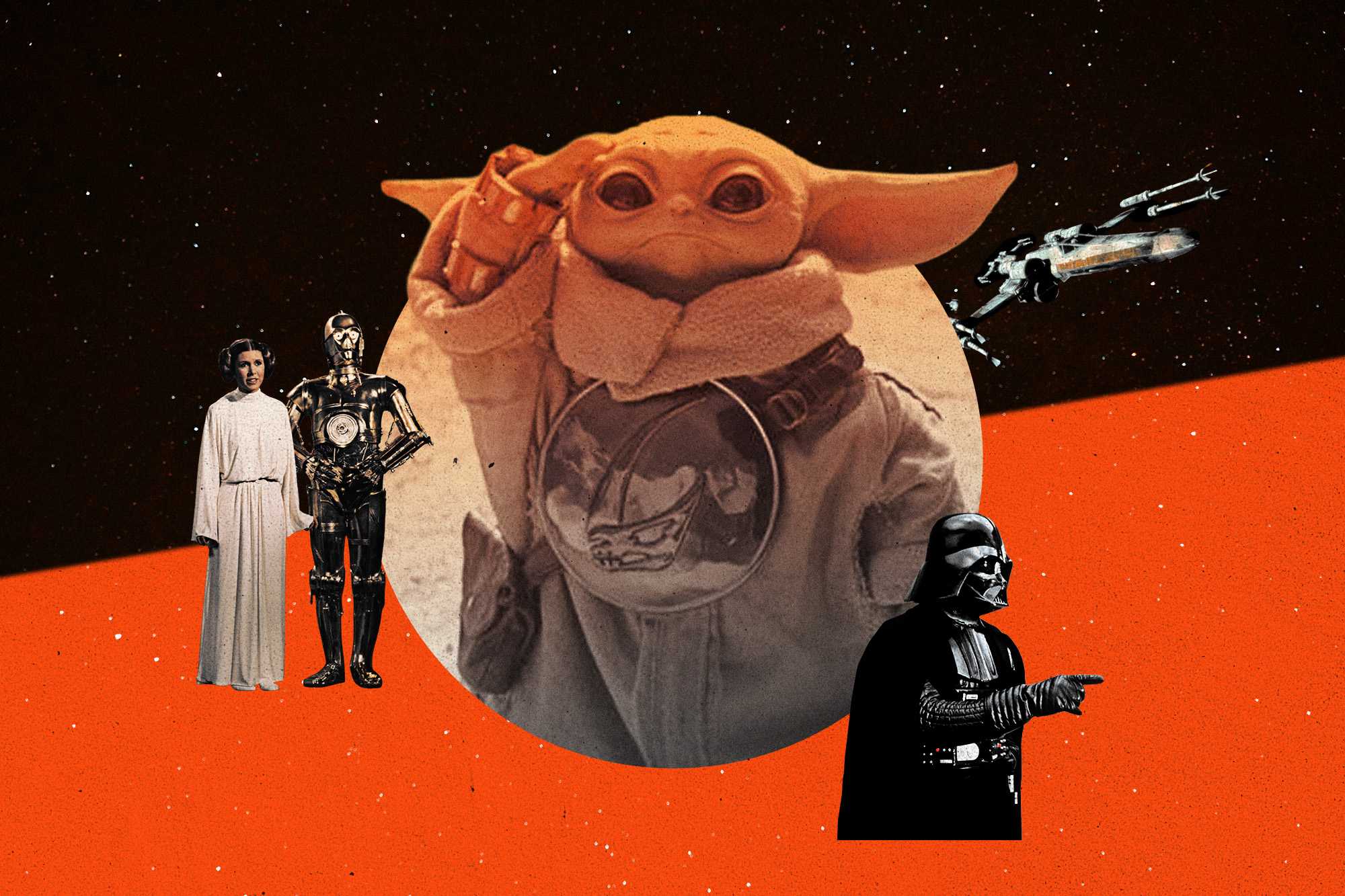
If The Mandalorian and Grogu — a theatrical spinoff of the Disney+ television series The Mandalorian that introduced audiences to “Baby Yoda” aka Grogu — earns $250 million in North America by the time it hyperdrives out of theaters, consider that a significant win.
But even if it does, that’s still a far cry from where the Star Wars franchise was even 11 years ago, when Star Wars: The Force Awakens brought back George Lucas’ original trilogy characters Princess Leia, Han Solo and Luke Skywalker and earned almost $250 million in the U.S. and Canada during opening weekend alone.
The difference, going from canonized event films to a TV-native property, speaks to where Star Wars, its fan base (the iconic fanbase in theatrical history) and fandom are at in 2026.
Since The Mandalorian debuted on Disney+ in 2019, the Star Wars universe has become a set of shows (in live-action and animation) for the small screen: Obi-Wan Kenobi, The Acolyte, Skeleton Crew, Ahsoka, The Book of Boba Fett. Most, with the exception of the acclaimed Andor, have struggled to break through beyond the base.
“It’s become mostly streaming IP. For the older fans, that’s not really what it is at its core, but a lot of younger fans have mostly experienced Star Wars at home,” Shawn Robbins, director of analytics at Fandango, says. “So it raises the question, where is the audience at large now?”
It turns out the audience still favors the film library. Nielsen reported that, of the 33 billion minutes viewers spent watching Star Wars in 2025, 44.2 percent was on live-action movies across linear TV and streaming. Meanwhile, for this weekend’s new entry, the awareness rate for The Mandalorian and Grogu is just over 60 percent (compared to last year’s franchise entries Wicked: For Good and Superman, which clocked in at 82 and 79 percent, respectively), according to Greenlight Analytics. The reviews have been mediocre, ranging from “enjoyable throwback romp” to “neglects to tell a meaningful tale worth anyone’s time,” while the film currently holds a 60 percent Rotten Tomatoes critics’ score. Most tellingly, The Mandalorian and Grogu has been compared to a super-sized TV episode.
Can the galaxy far, far away — now with TV veteran Dave Filoni (The Clone Wars) in charge after Kathleen Kennedy stepped down — shift its perception away from a TV franchise? It’s a long road ahead — and The Mandalorian and Grogu is far from the only test.
Today, I’ll try out my mastery of the Force by telling you:
- What data reveals about Star Wars’ splintered audience and the opportunity hiding in the numbers
- The surprising list of most-streamed Star Wars titles
- The cautionary tale from streaming learned from Disney+’s Star Wars strategy — and what TV has to do with it
- How the 2010s sequel trilogy set back the franchise an entire generation
- The Star Wars movie that insiders see as the real make-or-break test
- The surprising age groups Disney is counting on to show up for Baby Yoda
Don’t stop here
Get the rest of this story — and the scoops and intelligence Hollywood reads first.
Already a subscriber?