

Happy Monday and congratulations to, well, a whole lot of people. A spectacular weekend in the world of sports gave us jubilation on the streets of New York City and my own corner of North Carolina (though we haven’t set any buses on fire here in the Triangle, just saying!). The World Cup is just getting going and giving us the best kinds of cross-cultural viral moments, and the movies continue to be successful! OK, fine, not all news is good news, but I’ll draft off the good vibes of Knicks fans as long as I can.
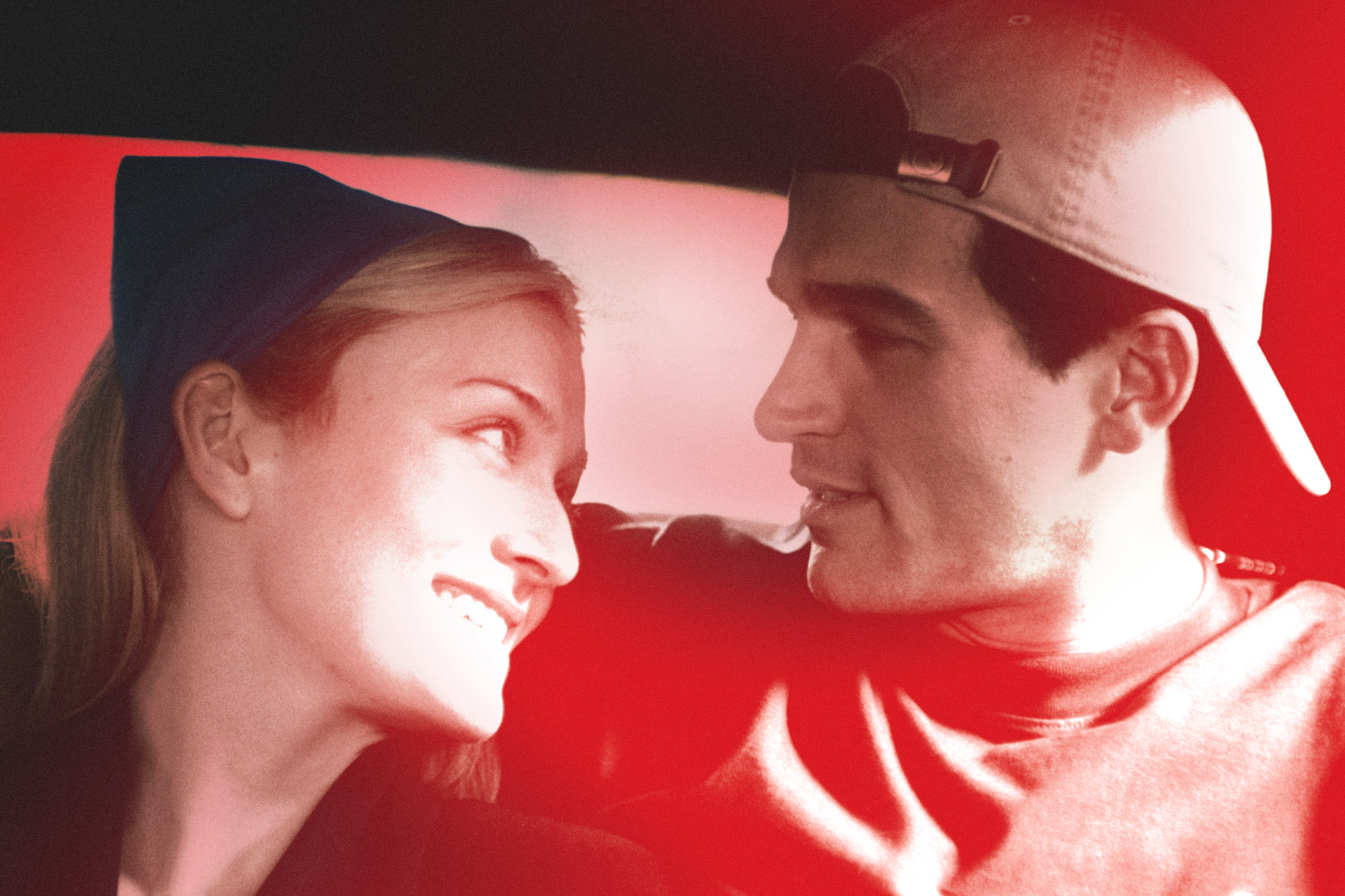
Today I’ve got a conversation with two of the team members behind FX’s Love Story: John F. Kennedy Jr. & Carolyn Bessette, one of the genuine breakout hits of this TV season — but first, a detour to summer movie season.
Like so many others in my circle, I took my kids to the movies this weekend to beat the heat, gambling that Disclosure Day would hit the mark for all of us. Well, the kids were into the chase scenes and the (spoiler?) aliens, while I got to thinking, inevitably, about the man behind it.
Throughout last year’s awards season, I noticed something happen over and over again during schmoozy cocktail hours, seated awards presentations and televised events. No matter how starry the room, everyone’s focus inevitably gravitated toward Steven Spielberg. On the circuit as a producer of Hamnet, the 78-year-old director caught the attention of his fellow esteemed directors — I watched Paul Thomas Anderson, Guillermo del Toro and Ryan Coogler all rapt as they watched Spielberg onstage at the Directors Guild Awards. I can’t tell you how many Oscar nominees I saw walk up to Spielberg during the Oscar nominees luncheon and express their awe.
And I couldn’t help but think of those moments around the halfway mark of Disclosure Day, Spielberg’s first summer blockbuster to connect with audiences since Minority Report.
Spoilers for the next few paragraphs!
The first half of the film keeps the audience — as well as Emily Blunt’s character, Margaret — in the dark about what, exactly, is leading her to suddenly speak an alien language and read minds. Once she finally starts to harness her powers, she uses them to free Josh O’Connor’s Daniel from the movie’s big bads. Instead of shooting or fighting their way to freedom, Blunt debuts one of the powers given to her as a child by visiting extraterrestrials: the ability to look people in the eye and seemingly transform into their loved ones, telling them exactly what they’ve always wanted to hear.
The people are astonished, naturally, and let Margaret and Daniel go in peace to carry on their mission. And it’s hard not to imagine that those people look exactly like the ones Spielberg himself has encountered for the past 50 years, each of them certain his movies are speaking to them, harnessing something personal and powerful that maybe even they didn’t previously understand.
Margaret’s gift eventually leads to the film’s titular disclosure day, letting the entire planet in on the secret of extraterrestrial life in an effort to avert World War III and restore what the film treats as the most precious of resources: empathy.
It was Roger Ebert who famously called movies “a machine that generates empathy,” but Spielberg is undeniably one of the builders of that machine. In his 2022 autobiographical drama, The Fabelmans, Spielberg’s avatar, Sammy (played by Gabriel LaBelle), is astonished by the power his movie has to make his classmates see themselves in new ways; even his bully is blown away. Disclosure Day is far less literal, but every scene of Blunt exercising that great power — knowing the name of everyone in the room, giving advice they don’t realize they need — hums with a similar magic.
I’m not sure I buy everything Disclosure Day is selling, with its convoluted conspiracy plot that sometimes loses track of key characters. But those scenes with Margaret, especially with Emily Blunt’s justly praised performance, earn every moment of awed Spielberg Face. Disclosure Day wants us to believe that empathy has the power to change the world. Spielberg’s career is evidence that it already has.
Story to Tell
Max Winkler had always wanted to make a love story. As a regular director in the Ryan Murphy roster, he’s filmed feuds, monsters and horror stories, but never the “old-fashioned romantic movie” that Murphy knew Winkler had on his mind. Winkler was ready for a break from work, and on his way to see Sinners, when Murphy sent him exactly the script he’d been waiting for: the pilot episode of Love Story: John F. Kennedy Jr. & Carolyn Bessette.
“I read it immediately instead of going to see Sinners,” Winkler says in a recent call. (Don’t worry: He went to Sinners the next day.) Winkler is joined on the line by Connor Hines, the creator of the limited series, who had written that pilot and two more episodes before assembling the writers room that would round out the nine-episode season. Hines had spent years developing the show before production began, and knew that the facts of the story lent themselves to “kind of a literally a fairytale,” But that wasn’t what grabbed Winkler, he tells me: “The writing felt so human and relatable, and it would work without their last names.”
Capturing the complicated marriage between John F. Kennedy Jr. (played by Paul Anthony Kelly) and Carolyn Bessette (Sarah Pidgeon), as well as the media and fashion circles of 1990s New York that surrounded them, Love Story leans into the Kennedy mythology and ’90s nostalgia — but also far more elemental forces of love and family.
“There were just so many variables with Calvin Klein as Carolyn’s boss and John having Jackie as his mom and Caroline as his sister, and navigating the politics of the Kennedy family,” says Hines. “The variables lent themselves to having a really captivating, tension-filled love story right out of the gate.”
But it’s also a lot to introduce in a single pilot episode, which opens with John and Carolyn’s separate daily routines before they meet at a charity gala. Carolyn works for Calvin Klein (played by Alessandro Nivola) but isn’t yet properly appreciated for what she can do; John has recently failed the bar exam for a second time and is trying to find purpose in a life constantly overshadowed by his family name.
Midway through the episode, we meet Naomi Watts as John’s mother, Jackie, in a complex dinner scene that introduces a lot of Kennedy family lore. “I think my original draft was twice as long because I was packing in so much,” Hines says of that scene, which also features Grace Gummer as John’s sister Caroline and Alex Karpovsky as Caroline’s husband, Ed. “Honestly, the trickiest part of that scene was making sure that Jackie felt like their mother,” Hines continues. “I read and listened to everything with Jackie, but I also had to remember that there’s the public persona that people have and then who they are at the kitchen table with their kids — and it’s not going to be the same thing.”
Winkler, who directed Watts as Babe Paley on Feud: Capote vs. the Swans, says that the dinner scene was Watts’ first on set, allowing the Kennedy family dynamic to form onscreen the first time the audience sees them together.
“She’s incredible,” Winkler says of Watts. “She jumped right into it, and it was a lot of stuff for her to do and a lot of different actors speaking and a lot of dynamics at play.”
The pilot episode ends with another pivotal dinner scene, this time with John and Carolyn on their first date at a low-key Indian restaurant that’s become a tourist destination since the episode aired. Winkler says the scene contains his favorite line from the pilot, in which John asks Carolyn about her father and she deflects, claiming it’s not an interesting story. He heard it over and over again during the audition process, with Pidgeon reading opposite the actors they were considering for the role of John.
“Every time Sarah would say that line, I was like, ‘This tells me everything. This is what she’s protecting herself from,’” Winkler remembers now. “There were multiple moments in the writing of the pilot where Connor held back and gave us so much more that I just thought were really elegant.”
Hines and Winkler both credit Murphy, who served as executive producer on the series alongside Nina Jacobson and Brad Simpson, for helping the pilot preserve smaller revelatory moments like that one. “Pilots are historically shit for the most part because they’re overstuffed,” says Winkler. “Without somebody like Ryan to protect it from the overstuffing, it’s not until the third episode that shows become what they’re supposed to become, because you’re setting up everything so much.”
“It probably wouldn’t shock you, but for all the pilots that I’ve developed, you’re asked to spell out so much in a way that feels so unnatural and so counterintuitive to what feels organic between people,” Hines adds. “If you offer some restraint, they’ll lean in to be like, ‘Well, why aren’t they saying more?’ With Ryan, he operates on his own instincts. He trusted me, and he trusted Max.”

Even that date scene, Winkler and Hines say, felt like something that would be cut far shorter in a typical pilot. “I assumed when I’d watched the cut that that date would’ve been so cut down,” Hines says. “The fact that they just let it feel so real, and the tension that exists in that date — there’s excitement, but there’s a discomfort too.”
“We’re asking people to care about two people who could easily be dismissed as a nepo baby and a starfucker, whatever these people have been regarded as in pop culture before this show,” Winkler adds. “To have that time with them [in that scene], I knew that if we could keep it, it would be doing a magic trick, which is to make it like these are just two people on a date who are clumsy— and they’re both protecting each other.”
Winkler continues: “I’m so grateful for that scene and then the kiss after, because I don’t think the kiss would have half of the amount of importance without it. I remember showing the kiss to my wife for the first time, and she was just like, “You’re good. It works. You got it.’”