

We’re not quite six months away from Oscar night — yes, almost an entire half year to go! — and yet, we’ve already got some awards to discuss. La Bola Negra and Elsinore, the two big winners of the Toronto International Film Festival’s People’s Choice Awards, have spent this week feeling pretty good, coming out of the first burst of festival season with the kind of reputation that can really help you go far: a crowd-pleaser that the critics also love.
Christopher Rosen and I discussed the TIFF winners in depth on Tuesday’s episode of the podcast, which also includes my lengthy conversation with La Bola Negra’s extremely charming directors, Javier Ambrossi and Javier Calvo (often better known as Los Javis). If we’re thinking of this Oscar race as The Odyssey vs. everybody else, La Bola Negra — a sweeping epic about queer identity and Spanish history — seems to have settled firmly in second place this week, becoming Netflix’s best shot yet at its first-ever best picture winner.
Elsinore, meanwhile, is showing eerie parallels to Hamnet, another Focus Features release that won the People’s Choice prize at TIFF last year and minted an instant acting frontrunner in star Jessie Buckley. The best actor buzz for Andrew Scott is stronger than the conversation about the film itself, but if a movie wants to stand out as different from The Odyssey, the intimate, character-driven Elsinore is in a good position to do it.
We’ll have so, so much more time to talk about these films, and in Monday’s newsletter I’ll be digging deep into the fascinating best actor race, which already has 15 worthy contenders by my count and seems to be adding them by the day.
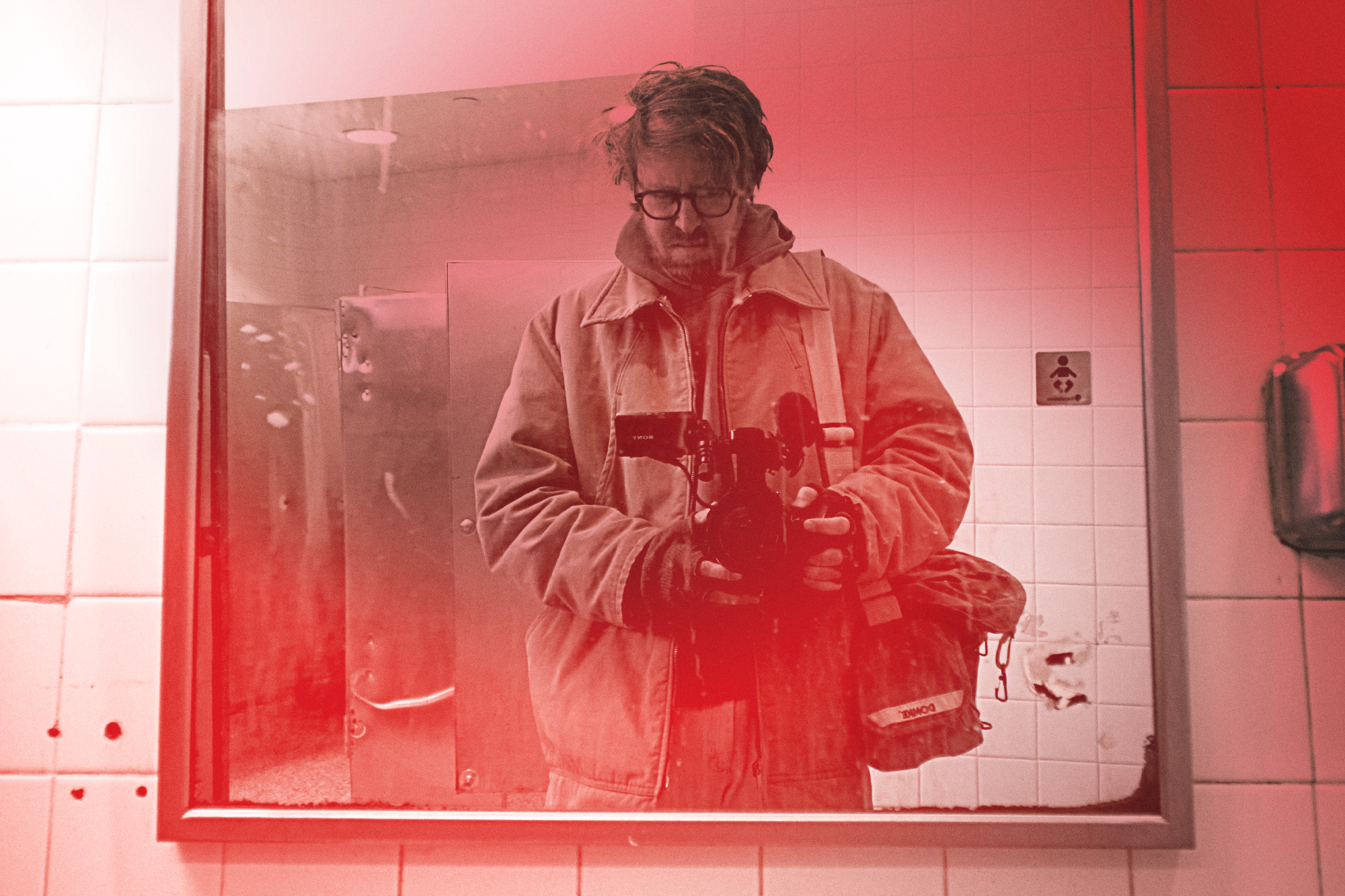
For today, though, I’m sharing my conversation with John Wilson, director of the first big indie hit of the fall. He’s a documentarian with a style so distinctive that even Zohran Mamdani has taken notice. You think you know the history of concrete? Not like this, you don’t.
Road Warrior
One of the questions I often ask filmmakers — “What was the process of trying to pitch or sell this movie?” — is answered in great detail in The History of Concrete, the new documentary from Wilson that’s busy setting records in its limited theatrical release. Filmed in the same discursive style as his HBO series How To with John Wilson, The History of Concrete covers many things — including the building material of the title and how Wilson tried to finance a movie called, well, The History of Concrete.
Wilson films Zoom meetings with baffled potential producers and even captures a strike-era workshop on how to write a Hallmark movie, offering a small glimpse into what’s always fascinating in a filmmaker’s life: what happens after you have a hit.
“Everyone has a different idea of what your follow-up should be,” says Wilson, 39, who made short documentaries in his now-distinctive style before the two-season run of How To began in 2020. “I remember when season one of the show came out, I got a cold call from Ari Emanuel, and I did not know who he was.”
Really, I asked him? He didn’t even know the character Ari Gold from Entourage? “No, I never saw it,” the New York-born Wilson tells me. So, to continue the story: “He tells me how much he loves the show and then immediately suggests that I write a book. You know, that’s probably good advice, but I just didn’t really have a book in me at the time.”
What he did have is a filmmaking style that, as one part of The History of Concrete proves in hilarious fashion, is instantly recognizable but difficult to recreate. As with each episode of How To, Wilson’s first feature film promises to examine something simple — show episode titles included “How to Make Small Talk” and “How to Put Up Scaffolding” — and then spins off in seemingly infinite directions. In the film, Wilson attends a conference for the concrete industry and meets a man with a company that removes gum from sidewalks; his digressions also take him to Rome, a Long Island cover band and the grave of the man behind Chef Boyardee.
“I didn’t land at this aesthetic and this form accidentally,” says Wilson, who acknowledges that while Hollywood may have wanted him to change his process after the success of How To, it’s also a business that rewards endless repetition. “I thought a lot about all the individual components for a while, and I really thought that this was the best way to do a lot of stuff. Changing it arbitrarily just for the sake of change didn’t feel right to me. My natural impulse was to shoot things the same way I always have, and the feature was kind of born out of that.”
To say The History of Concrete feels like a feature-length version of How To is the ultimate compliment — funny, insightful and surprisingly emotional, it leaves you as curious as Wilson himself by the time you’re through with it. Making his series for HBO, Wilson says, came with guardrails he ultimately valued; episodes had to be 28 minutes long, and he worked on six of them simultaneously, creating a natural structure. He had freedom in making his first feature, which he initially self-financed before Magnolia Pictures acquired it earlier this year — but plenty of challenges, too.
“I have a hard time with overthinking things sometimes,” Wilson says. “I sometimes get caught in a spiral about whether or not pursuing something is worth my time, when there’s this whole other universe of possibilities out there. But historically I tried to be governed by what is placed in front of me, almost randomly. I think it’s important to not know what you’re doing sometimes.”
Wilson’s voice is a key component of his work, narrating in second person (i.e., “You realize there’s a leak in your basement”) that makes the viewer feel like they’re standing with him behind the camera. The voice is so famous now that it’s being copied by AI for gutter guard ads, but Wilson still resists making himself a character onscreen.
“I just don’t like to put myself on screen because I think it’s kind of a waste of an image,” Wilson says. “There’s so much more interesting stuff out there.” He initially resisted including his struggle to get the film financed, but eventually conceded it strengthened the project’s overall narrative. “There’s a lot about order in this movie,” Wilson tells me, connecting everything from New York City high-schoolers doing military exercises to the rigid structure of writing a Hallmark movie.
It even connects to the story of the cover band musician who dominates much of the film’s final act, whom Wilson meets by chance at a liquor store and follows from there. The musician gives the film an emotional final beat that has almost nothing to do with concrete — but in classic Wilson style, it feels like it does anyway.
I asked him how he knew when the film was actually finished, given that part of his process is to basically never stop filming, in case something might be useful for the next project. “You don’t really know when the ending is,” he admits. “When I capture something that I can’t believe I captured, and when something happens that you could not have written — where the audience would be like, ‘I can’t believe you got that.’ That is usually a moment where I’m like, even if it doesn’t have anything to do with what you’re making, you know.”


Comments
Only Ankler All Access subscribers can comment
Already a subscriber?