

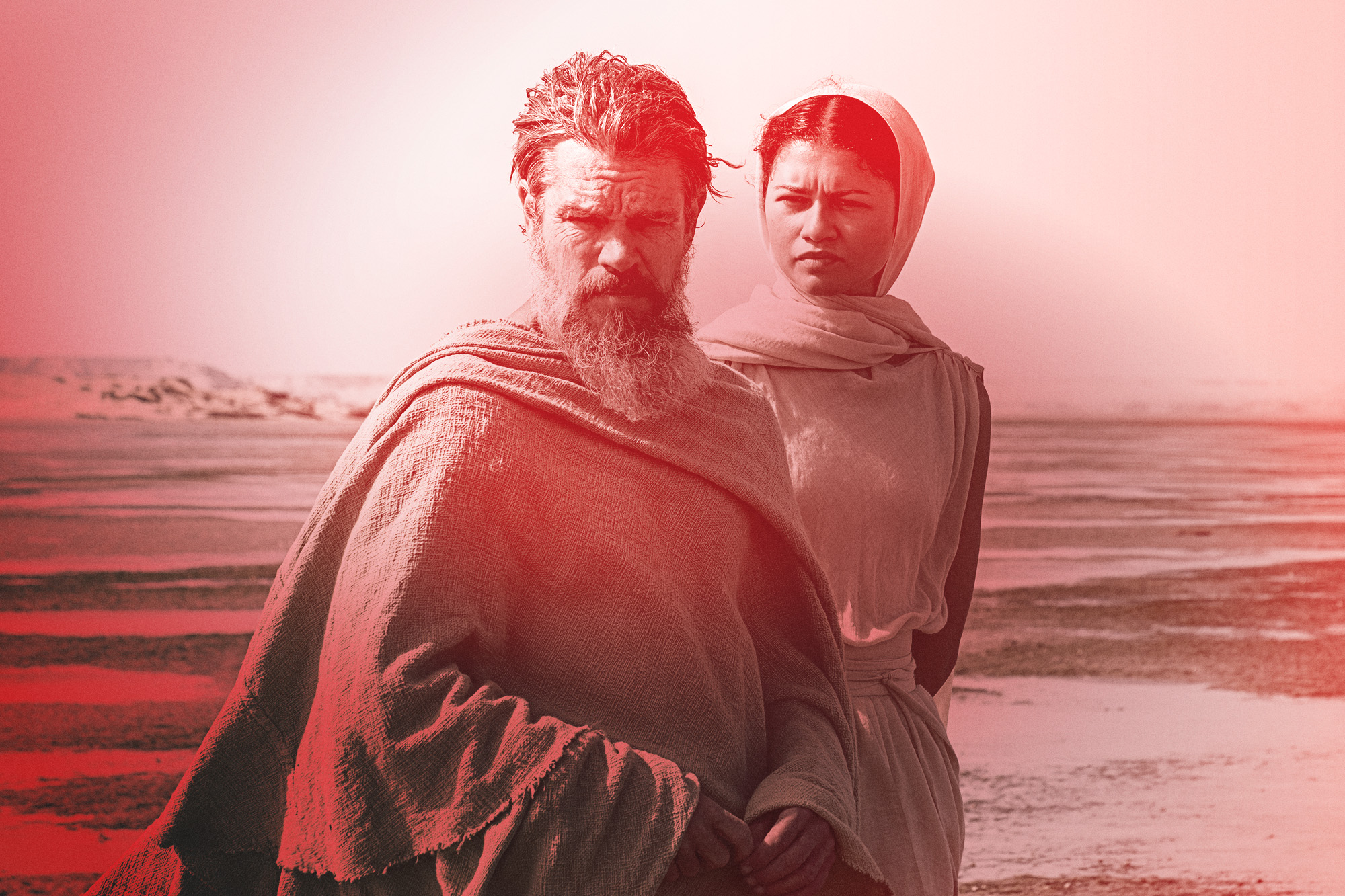
Before I get to today’s conversation with Jordan Klepper, an Emmy nominee who is a better conversationalist than maybe anyone else on television right now — let’s talk about the biggest movie of the year.
Now that The Odyssey has smashed past its lofty pre-release expectations — landing the biggest global box office debut weekend of Christopher Nolan’s career as well as the filmmaker’s best reviews — it has another hill to climb: eight months of high hopes from giddy awards pundits like me.
I mean, can you blame me? The Odyssey is the most ambitious movie of the year by far, an achievement on every possible technical level that also might just be the best thing Nolan and his A-list cast have ever made. It’s an achievement on a scale that only Nolan is granted these days and another triumph for the Hollywood studio system, which still sorely needs wins.
So what could possibly get in the way of something that enormous winning best picture? Sure, there are many exciting contenders waiting in the wings this fall; I previewed many of them in the newsletter last week. But the biggest obstacle to The Odyssey’s Oscar sweep is almost certainly Nolan’s prior success — specifically his last film, Oppenheimer, which was also a critically adored summer hit. Oppenheimer won seven Oscars, including Nolan’s long-awaited first for best director and best picture. To do it all over again for The Odyssey wouldn’t just be a huge achievement — it would be something almost no one has ever done in Hollywood history.

If he really did win best picture for The Odyssey, Nolan would be joining an extremely elite club that, depending on how you count it, includes either one or two other directors. The indisputable member is David Lean, who followed up his 1957 best picture-winning war epic The Bridge on the River Kwai with yet another one, 1962’s Lawrence of Arabia. He honestly came close to doing it three times in a row, except that 1965’s hit Doctor Zhivago had the misfortune of competing against eventual best picture winner The Sound of Music.
I’d argue — and once did, on a Screen Drafts podcast episode devoted to best picture follow-ups — that the club also includes William Wyler, who directed 1942’s best picture winner Mrs. Miniver, enlisted in the Air Force and made two war documentaries and then returned to Hollywood to direct one of the greatest best picture winners of all time, The Best Years of Our Lives. You have to discount the documentaries to call those movies back-to-back winners, but I say it counts!
The only person to come even close to this accomplishment in the past 60 years is Francis Ford Coppola, who may have done something even more astonishing: directing the taut 1974 thriller The Conversation between his best picture winners The Godfather and The Godfather Part II. Steven Spielberg also came relatively close in the ’90s, but squeezed two films between 1993’s best picture winner Schindler’s List and 1998’s Saving Private Ryan, an infamous near-miss for best picture.
It’s not really a question of whether Nolan belongs on a list that includes giants like Lean, Wyler, Coppola and Spielberg — if anyone has made anything as exciting and grand as Lawrence of Arabia’s famous match cut in the 21st century, it’s Nolan. The question is whether this modern, very international Oscar voting body will feel eager to reward a Hollywood master again, not just so soon after Oppenheimer but also after last year’s big studio triumph of One Battle After Another. Those two movies have been outliers as the best picture winners of the last decade have trended toward the intimate and scrappy (Anora, CODA, Nomadland, Parasite, Moonlight). But between The Odyssey and December’s Dune: Part Three, Oscar’s maximalist comeback may finally be complete.
Pulse of the People

Jordan Klepper probably interacts directly with more viewers of The Daily Show than anyone else on the show. It’s part of his specialty on the Emmy-winning late-night staple — when Klepper’s not taking his turn behind the anchor desk, he’s all over the world doing field pieces for his Fingers the Pulse series, which air as main Daily Show specials as well as standalone segments. “Because my face is on this show, I get the compliments — I also get the criticism,” Klepper tells me.
He can also tell, based on the age of those coming up to him, exactly how they watch the show. “People who are over 50 will say that they enjoy me on The Daily Show,” Klepper continues, speaking from the podcast studio inside The Daily Show offices in midtown Manhattan. “People from 30 to 50 will say that they like me on YouTube. And then under 30, they say they like my content.”
As so much of Hollywood tries to fend off the incursion of “content” and the digital-first creators competing for audience attention, The Daily Show and its late-night brethren have often been the most comfortable embracing it. Klepper’s latest Fingers the Pulse special, about Donald Trump’s campaign to get a Nobel Prize, is Emmy-nominated for outstanding hosted nonfiction series or special alongside other more traditional streaming and cable shows, but his colleague Desi Lydic is nominated for her “Desi Lydic Foxsplains” digital spinoff in the short-form categories alongside SubwayTakes. Now in its 30th year, The Daily Show is still finding its audience — just in many more places than before.
“We’re always thinking about context,” says Klepper, 47, who first joined the show as a correspondent in 2014. “I feel lucky because I get to communicate and connect with people in almost three separate formats.” For each episode’s opening monologue, for example, “we often craft something that connects with an audience who wants to sit down and watch the show on linear television, but also know that you’re going to clip smaller minute-long pieces that need to live within their own context on YouTube.”
The Fingers the Pulse specials, which air on Comedy Central and are available in full on YouTube, give Klepper the opportunity to dive deep into topics, even ridiculous ones like Trump’s quest for a Nobel. For this special, subtitled Give the Man a Prize, Klepper interviewed Trump supporters outside a JD Vance event in Mississippi and traveled to Oslo, Norway, to ask regular Norwegians about their thoughts on Trump and to visit the grand hall where the Nobel Prizes are actually handed out.
“Luckily, I have a producer who wants nothing more than to use Comedy Central to pay for all of his foreign vacations,” Klepper jokes. “And quite frankly, whenever there’s an opportunity to see an American story through an international lens, there is new comedy.”
The Norwegians he interviewed, Klepper continues, “were the kindest, most thoughtful people who really didn’t stand on any ceremony. They didn’t say, ‘Oh, I’m going to give America credit.’ They were like, ‘Well, we see stupidity and cruelty, and we don’t know why you guys put up with it, but oh well, enjoy your time here in this frigid climate.’”
The Norwegians probably align more closely politically with the average Daily Show viewer than most people the Michigan-born Klepper interviews. His specialty is going to Trump rallies or other right-wing events and capturing the supporters’ wild, contradictory takes, like crediting Trump for ending wars while unable to name any of them. But the reason Klepper gets these people to open up in the first place, he says, is that he’s not coming up to them trying to score points or change their minds.

“I’ve grown to separate the opinions from the people and to understand the performative nature that is inherent in everybody,” Klepper tells me. “In front of a microphone, in front of a camera, people become the most certain, outrageous version of themselves. When I talk to people who are maybe more progressive, they often ask me, and they’ll see me, and they’ll want to hear stories about the ‘crazy people’ that I talk to. I try to highlight that sometimes these opinions are crazy, but the people are not. America’s full of a lot of crazy ideas, and people who are getting bad information in all sorts of places.”
One of the biggest things Klepper has learned over his years of doing these segments, he tells me, is something you never see on camera: how people actually change their minds.
“Off-camera, when people feel more open, I reveal the things that I’m uncertain about. We are all these uncertain little beings who exist in spaces of failure, but we live in a world where we have to pretend like we’re these big, tough, very certain, very correct gods,” Klepper says. “But here’s some shit I don’t know — and that is so human that I’ve seen it start to open the conversation for other people. I do think if you’re somebody who’s attempting to change someone’s mind, your first move has to be an admission of failure in your own certainty.”
So when Klepper comes back to the Daily Show office in Hell’s Kitchen, he’s sharing the conversations he’s had both on camera and off — and may know better than anyone what The Daily Show means in 2026.
“I do try to tell people, ‘don’t listen to the bots online,’” he tells me. “Here’s what the people I’ve connected with have to say.”