

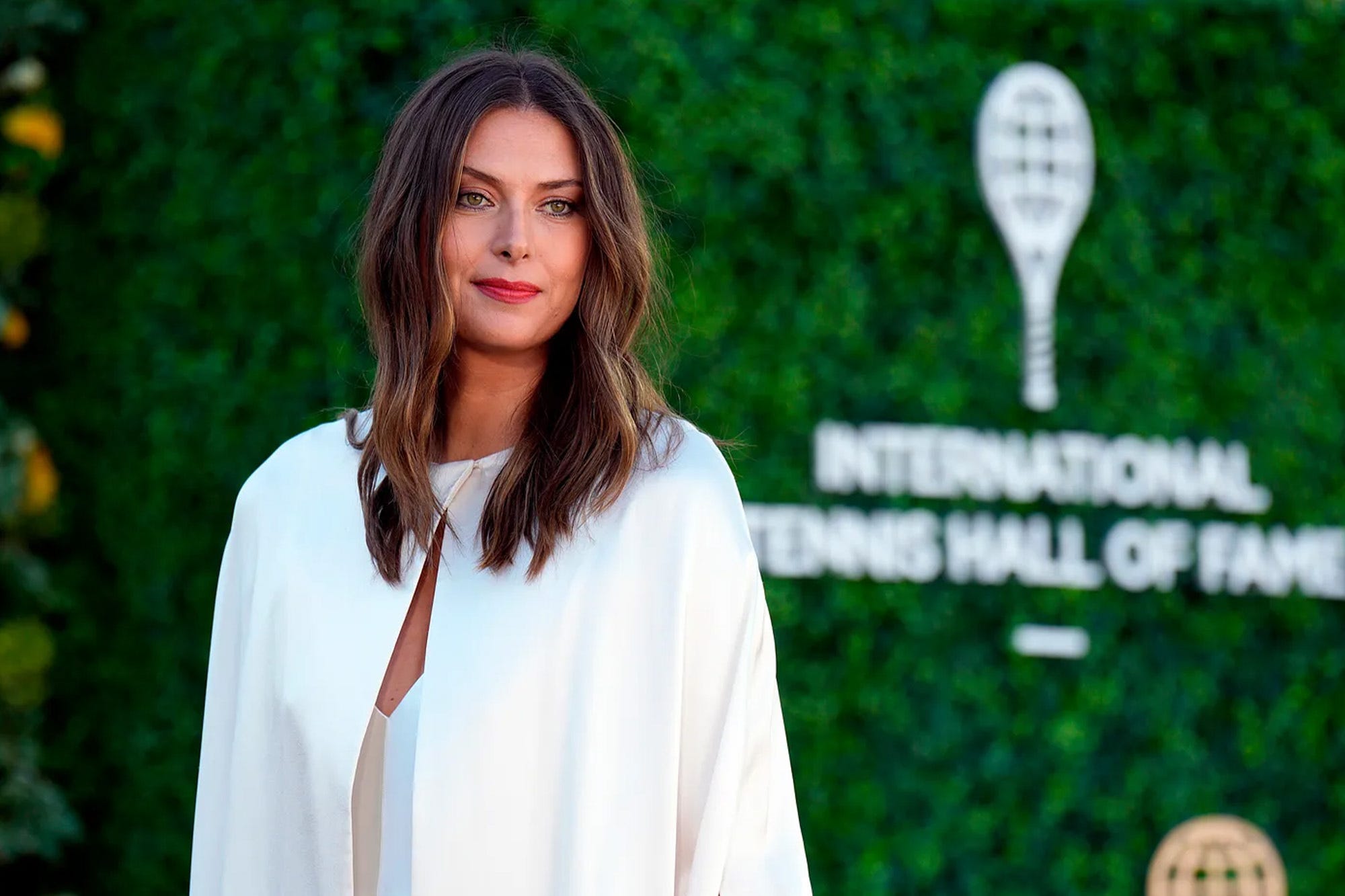
Maria Sharapova, 39, is a former world No. 1 seed, Olympic medalist and International Tennis Hall of Fame inductee. As an investor and entrepreneur, she’s backed Supergoop!, Tonal and MoonPay, among others. She leads conversations on her Pretty Tough podcast and Substack with high-achieving women about the pursuit of excellence.
I was early in my career — maybe even a teenager still — when I was labeled with “the ice queen” moniker that followed me for the rest of my tennis playing days. The idea that I was cold and aloof was so ubiquitous by the peak of my career that I was once asked on late-night television why I thought I’d earned “a reputation for being kind of a bitch.”
It’s a question that’s crossed my mind in the years since.
It came up when headlines about my retirement focused on how I “was more respected than loved.” And as I’ve pursued new ventures in this next phase of my career — spending time at conferences and in boardrooms — I’ve realized this experience isn’t unique to me.
Many of the highest-achieving women in the world subscribe to the same win-at-all-costs mentality that defined my tennis career and has helped me transition into new arenas in the years since. This is hardly surprising considering 94 percent of women in C-suite positions have backgrounds in competitive sports, where mental resilience and relentless drive are essential to success.
I came by my own steely mentality honestly, both situationally and culturally. I was 6 years old when my father and I left our home in Russia for the United States, betting it all on my potential to become a tennis champion. We left everything but a couple hundred dollars behind — including my mother, who was unable to join us for another two years due to visa restrictions. It was a tremendous sacrifice, and I knew that whether it would pay off rested on my shoulders.
So I gave tennis my full attention. I kept my head down, kept my eyes on the prize and kept to myself. Soon enough, this intense persona and my singular focus on winning became my whole brand. My peers and the public alike mistook my ruthless competitiveness for a lack of geniality, my confidence for an absence of gratitude and humility. Somehow, my dogged pursuit of excellence became a personality flaw.

Now, as I move through the business world, I feel that same critical lens on women’s toughness. I’ve noticed that conversations around female achievement almost always require some level of emotional accessibility. While vulnerability certainly has its place, it shouldn’t be a prerequisite for all women pursuing greatness. Pigeonholing female ambition in this way results in many women, especially those of us who are more self-contained and forthright, getting dismissed as “aggressive” or “too intense.” And then that becomes all we are: the opinionated officemate, bossy board member or pushy partner. We get compressed into a single dimension that drowns out the fullness of who we actually are.
Believe me, I know how that feels. I know plenty of spectacular women who do, too.
The Fierceness of Female Achievement

Why is the overwhelming majority of content devoted to female excellence focused on themes of healing and self-care? And why are nearly all of the resources touting tenacity and discipline led by men? The message seems to be that women can chase greatness, but only if they package it in palatable wrapping.
This disparity becomes even more striking in the broader media landscape. Chart-topping shows and podcasts that celebrate relentless drive and unwavering focus are overwhelmingly made by and for men. As I’m writing this essay, men host eight of the top 10 business podcasts in the United States. The same is true in the health and fitness category.
But there’s overwhelming evidence that there is demand among women for such material; the Joe Rogan Experience is the most consumed weekly podcast among women in the United States, according to Edison Research and the New York Times. Steven Bartlett’s Diary of a CEO podcast, which attracts millions of listeners each week, boasts an even split of male and female listeners. The same is true of Huberman Lab, the world’s top-ranking health podcast.
Yet we think of these shows as inherently masculine. It’s as if we’re afraid to acknowledge that female achievement can be just as fierce, just as unapologetic and just as gratifying as what men experience.
The landscape is changing, albeit slowly. Women’s sports are gaining unprecedented attention, female founders are scaling new heights in business, and more women are claiming their space in traditionally male-dominated fields. But we’re still missing honest conversations about who these women truly are, in their entirety, and what it really takes to reach these pinnacles. We celebrate their results but rarely grant them the complexity behind those outcomes. We want the highlight reel without the full picture.
We need to create spaces where female ambition isn’t required to apologize for itself. Where discussions about peak performance, career trajectory, wellness and leadership aren’t diluted by gender-specific expectations. Where being tough and being female aren’t seen as contradictory, and where we’re all granted the dimension to contain multitudes, to be driven and tender, exacting and generous, fiercely competitive and deeply thoughtful, all at once and without contradiction.
This isn’t about rejecting vulnerability; it’s about expanding the acceptable ways women can pursue and express excellence. It’s about acknowledging that the path to extraordinary achievement often requires an edge, and that the edge shouldn’t need to be softened simply because it belongs to a woman.
As I’ve transitioned my focus from professional tennis to business, wellness, motherhood and investment, it’s become increasingly clear to me that the qualities that drive excellence are universal. Determination, intellect and resilience aren’t gendered traits; nor are the depth, complexity and multidimensionality ascribed to the proverbial Renaissance man. It’s time we stop treating them as such.
It’s why I decided to start my new podcast, Pretty Tough. I want to sit down with high-performing women I admire for candid conversations about excellence. I want to challenge how we define and discuss women’s ambition alongside women who refuse to be boxed into narrow definitions of success and dare to exist as complex, multidimensional individuals rather than carefully packaged archetypes. I want to give everyone who tunes in permission to embrace all sides of themselves, to break out of their comfort zones, to try (and sometimes fail at) new things, to cultivate mental resilience, to lean into curiosity and to redefine what it means to be driven across all aspects of life. And I want to connect with people who resonate with these ideas.
To the women grinding it out in boardrooms, on courts, in labs and everywhere else excellence is pursued: Your intensity is not a liability. Your ambition doesn’t need a softer filter. Your pursuit of greatness, in one arena or several, doesn’t require an explanation. You are allowed to be all of the things you are, all at once. And no, you’re not a bitch.

Comments
Only Ankler All Access subscribers can comment
Already a subscriber?