

I am an author of Sound Money and the former lead analyst for Billboard. I wrote for The Ankler about Bill Ackman’s bid for Universal Music and the jury ruling that Live Nation operated as a monopoly.
A Note from Janice Min: Introducing Sound Money
There’s no shortage of storylines about the business of music right now. Catalogs are trading hands for billions, touring and live continue to grow, streaming models are under scrutiny, and new questions are emerging around who owns music, how it’s valued, and who gets paid in the age of AI and big platforms. So we’re trying something new.
Starting today and running through the Grammys, The Ankler will publish Sound Money, a special-edition newsletter on the business of music from three veteran music-industry journalists: writers Robert Levine and Glenn Peoples and editor Ethan Smith. Few people know the forces at work in this industry better, and I know you’ll agree.
Sound Money is included for all Ankler subscribers. The first edition, Music’s 25 Best-Paid Execs: The Rich, The Scorched and What Wall St. Says, is below. On our website, you can read The Grammys Need BTS and Drake, Not Vice Versa.
Thank you, as always, for reading.
— Janice Min
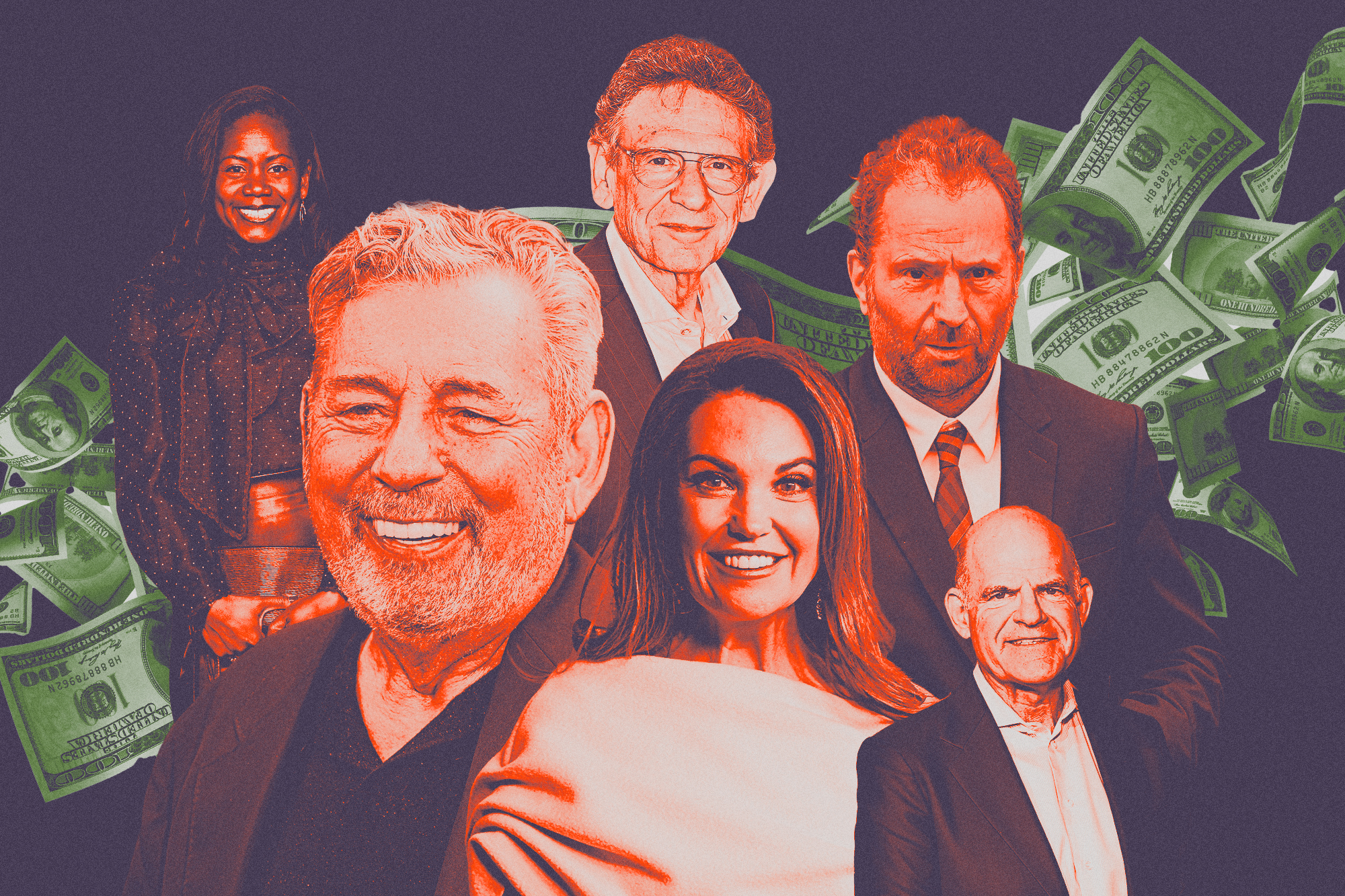
Lucian Grainge was the highest-paid executive in music last year, collecting $46.5 million to run Universal Music Group. James Dolan, whose Sphere Entertainment has become one of Wall Street’s favorite bets on live experiences, came in third with a combined $28.4 million from Sphere and MSG Entertainment.
But check the stock prices, and the rankings look very different.
UMG shares have fallen sharply, off 21 percent for the year through Nov. 13, dragging the estimated current value of Grainge’s 2025 compensation package down to $40.5 million. Dolan’s package, meanwhile, has soared to an estimated $125.9 million, thanks largely to the extraordinary appreciation of his Sphere stock options. That’s nearly $97 million more than the value reported for his original package.
It’s a reminder that in the music business, the biggest payday doesn’t necessarily produce the biggest fortune — and Wall Street has its own ideas about who’s winning.
Consider the size of the businesses these executives oversee. Spotify generated roughly $19.4 billion in revenue last year, nearly three times Warner Music Group’s $6.7 billion. Yet Spotify’s two executives who would become co-CEOs collected a combined $27.9 million, compared with $15.9 million for Warner chief Robert Kyncl. Grainge, meanwhile, made more than three times either Spotify executive’s compensation, even though UMG generated billions less in revenue.
And at iHeartMedia, where revenue was roughly $3.9 billion, the company’s two top executives, Bob Pittman and Richard Bressler, collected nearly $26 million combined — despite missing their compensation plan’s targets for the fourth consecutive year.
Of course, revenue isn’t profit, and compensation isn’t a simple referendum on a company’s stock price. Some of these packages reflect years of negotiated equity awards, long-term incentives and performance targets. But put the numbers side by side, and the disparities are hard to ignore.
For Sound Money’s launch, and inaugural ranking of music’s 25 highest-paid executives at publicly traded companies, I examined disclosed 2025 compensation packages, compared them with company revenue and stock performance, and calculated what the equity awards are worth today.
I also looked at who’s collecting those paychecks in the first place. Of the 25 executives on our list, just five are women; two are people of color. It’s a striking imbalance in an industry whose artists and audiences are considerably more diverse.
And because a multimillion-dollar paycheck doesn’t necessarily mean a job well done, we’re introducing the Sound Money Sound Check: five musical verdicts on whether these executives are earning their millions — or simply collecting them:
Sound Money Sound Check
We Are the Champions: Pay looks affordable given exceptional company and shareholder performance.
Even Flow: Compensation broadly aligns with business results.
Livin’ on a Prayer: Pay appears excessive relative to company performance or shareholder returns.
Under Pressure: Investors are still waiting on promised payoffs such as cost cuts, turnarounds or AI revenue.
Fly Me to the Moon: An extraordinary compensation windfall that stands apart from the rest.
So who’s getting richer alongside shareholders? Who’s collecting millions while their stock struggles? And who’s getting paid regardless?
Here are music’s 25 biggest executive paydays — and what Wall Street has to say about them.
Don’t stop here
Get the rest of this story — and the scoops and intelligence Hollywood reads first.
Already a subscriber?

Comments
Only Ankler All Access subscribers can comment
Already a subscriber?