

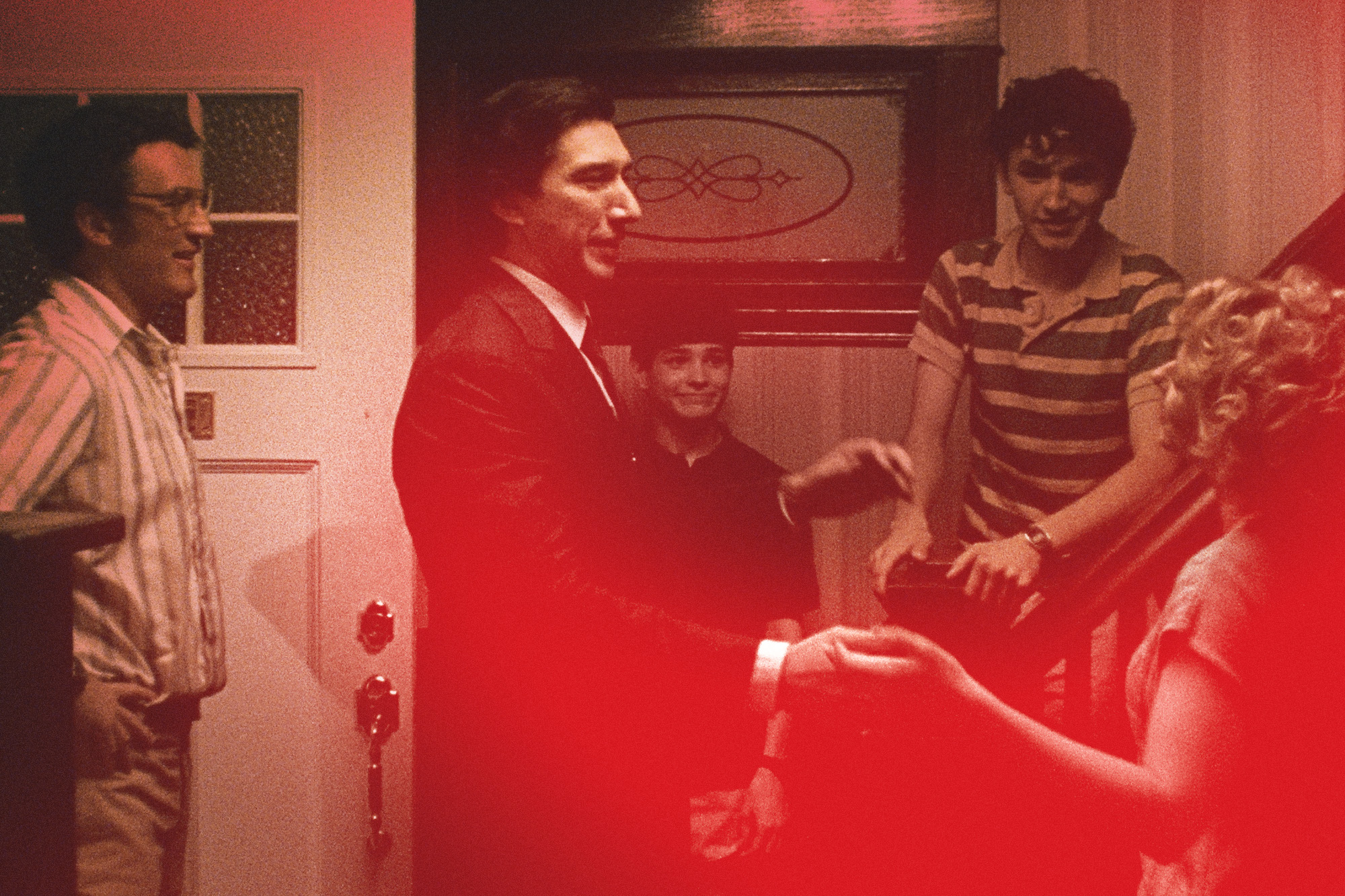
Bonjour! Unfortunately, after four days in Cannes, I haven’t learned much more French than that, though I’ve at least nailed the art of nodding and walking away when someone tells me in French that I’m in the wrong line or wrong place (happens multiple times a day!). The crowded, chaotic and yet eternally glamorous Croisette is exactly what I’d imagined for years — those red steps at the Lumière Theater are even more red in person! — and a totally new experience, a rare thing for me after so many years of covering the business.
Hopefully, you’ve been keeping up with the day-to-day action in our Cannes Daily newsletters, where my colleagues and Cannes flatmates, Manori Ravindran and Ashley Cullins, have been doing a heroic job recapping the festival’s many comings and goings, while I’ve chimed in with any tidbits I’ve been able to grab. (The bathroom line at the Club Kid afterparty was a gossip lover’s dream.) Over on The Ankler’s YouTube page, you can also watch the interviews we conducted at our studio setup at the Armani Caffè, where we partnered with Brand Innovators to host conversations with many of the festival’s most fascinating people. On our first day of the studio, as I talked to Diego Luna and spotted the yachts on the Mediterranean just over his shoulder, I definitely had a “how in the world did I get here?” moment.
Some quick highlights from our interviews, which I’ll write about more later this week, I promise: Diego Calva talking about the explosive success of his film Club Kid here at Cannes; Ira Sachs and Mauricio Zacharias on how their film set during the 1980s AIDS crisis, The Man I Love, became suffused with joy; Lauren Miller Rogen and Leah Nelson on their surprisingly funny animated dementia film Tangles; and some fun hints about what might be coming up at not just this year’s Oscars, but the 100th, courtesy of the Academy’s CEO Bill Kramer, president Lynette Howell Taylor, and chief membership, impact, and industry officer Meredith Shea.
Now that I’m one of the lucky ones in Cannes, I guess my job is to explain what it’s actually like to be here after many years of watching from afar. Don’t worry, I’ll have more on the awards buzz emerging from the festival in tomorrow’s podcast as well as Thursday’s newsletter, including the speculation that’s been starting about which film might take home this year’s Palme d’Or. So, before I get to my Q&A with Adam Driver, perhaps the biggest star of the starriest movie of the festival, Paper Tiger, here are a few of the lessons I’ve learned at my first Cannes — from where to find nearly every afterparty to the most creative ways I’ve seen to get around the infamous red carpet selfie ban.
Standing Ovations Are No Joke
No, I didn’t time them, but I do understand why the trades so often have conflicting tallies of the infamously long Cannes ovations. When the credits began to roll for James Gray’s Paper Tiger after Saturday’s gala premiere, the applause began and continued in a polite, somewhat subdued fashion, with everyone clearly saving their energy for when the lights came up to reveal Gray and his stars, Driver and Miles Teller. (Gray attempted to call in an absent Scarlett Johansson, but seemingly couldn’t get the call to go through.) That’s when the clapping and cheers began in earnest, eventually egged on by Gray himself, who tapped his watch and mockingly scowled before holding up his hands to coax even more cheers from the upper balcony.
The clapping only ended when an usher handed Gray a microphone to speak, after which, of course, the applause started back up again. So was that a “spirited six-minute” ovation or a 10-minute ovation that “roars”? Who knows! But based on my conversations with other journalists, everyone seems to like this one a lot more than, say, Hirokazu Kore-eda’s Sheep in a Box, which received an allegedly “tepid” four-minute ovation. So maybe every minute really does count!
Fortune Favors the Bold

If you’re brave enough, it’s possible to get a red carpet selfie eight years after they were banned. Now, to be clear, I am not brave enough. But multiple friends later told me some of their secrets, which include walking a few steps behind a friend who can then turn around and secretly snap you, or just keeping the video on your phone rolling and seeing how long it takes an usher to put their hand in front of your lens (shoutout to Vulture’s Rachel Handler, who hopefully will post her video of this soon). Cannes is so scenic that you really don’t need the red carpet selfie to prove you were somewhere gorgeous, but now that I know it’s even possible, I might get brave enough next year.
Everyone Is Here

If you try to walk down the Croisette, the main waterfront boulevard of Cannes, you must either become an expert at weaving through crowds or get used to stopping dead in your tracks, navigating the crowds awaiting celebrities outside their hotels or tourist groups or film executives stopping to chat — sometimes all three at once. You’ll also hear every language you can imagine, and if you listen closely enough, you’ll start hearing the gossip from other film industries around the world.
Many of the executives I’ve spoken to told me that Cannes is even better for meetings than it is for movies — you can schedule a 15-minute coffee with a colleague who’s usually halfway around the world, then wrap up in time to meet someone else for another 15-minute chat. Over at the International Village, where the film offices from 90 different countries set up lounges to boast about their tax incentives and experienced crews, you could also meet many of the members of the selection committees for international Oscar consideration. Unfortunately, I have not managed to talk to all of them, but there’s always next Cannes.
Party All the Time
Multiple people have reminded me that the parties are in many ways the point of Cannes, even if that’s maybe what we just tell ourselves when we fail to secure a much-coveted premiere ticket. There are parties seemingly every hour and every day, many of them held in structures I had no idea existed: temporary tents erected along the beach, many of them branded (Nespresso and Magnum consistently have huge lines outside), and all of them a lot fancier than “temporary tent” makes it sound. The space called Lucia has been the spot for virtually every premiere afterparty I’ve attended, and I’ve watched the bartenders welcome return customers with a smile, making you feel like you’re the Norm from Cheers of Cannes, but maybe that you should be getting more sleep.
Now on to the main event…
Driver’s Roar

So, back to that Paper Tiger premiere and that extensive standing ovation. I was sitting close enough to the cast and crew to see Driver take his seat alongside his director, Gray, and Teller, and then watch him stand throughout the ovation at the end. As it turns out, I totally missed the part where he snuck out — because as Driver told me in our conversation the next day, he still never sits through the premieres of his own movies.
He’s got plenty of reverence for Cannes premieres, however, as you might expect from someone who has had so many films play here — from early breakthroughs like Inside Llewyn Davis in 2013 to Francis Ford Coppola’s Megalopolis just two years ago. When we spoke inside the Carlton Hotel, he was fresh from the festival press conference and in good spirits, seemingly accustomed to the gauntlet of attention that a Cannes premiere can be.
Driver has given many great performances over the years — including Oscar-nominated work in BlacKkKlansman and Marriage Story — but Paper Tiger may genuinely be a new high-water mark for him. Playing the charismatic, scheming brother of Teller’s Queens family man, Driver swoops into the life of the family — Teller and Johansson play the parents of two teenage boys — and sets into motion a series of events that lead to an almost Greek level of tragedy. He told me about how he went from a fan of Gray’s work to a star in his film, and what he loves about the parts of filmmaking that are a million times less glamorous than what you see standing on the steps of the Palais.
A lightly edited version of our conversation is below.
You’ve premiered a bunch of movies here in Cannes. Does it feel really different than a premiere anywhere else?
Yeah, to me, Cannes is still the preeminent film festival. The history of the jury, the history of the films that have been here, the steps of the Palais — it still feels surreal and like a ritual. I love coming here, and I have very surreal, great memories at this festival.
Do you get used to the standing ovations?
I know that it’s weird, but I just have to accept it. One year, Leos Carax [the director of Driver’s film Annette], started smoking a cigarette because he was so uncomfortable, and he offered me one, and I’m like, “I’m not going to get another chance to smoke a cigarette in the Palais.” So we started smoking.
James Gray was so funny during the standing ovation, and I know he’s such a warm, friendly guy, even though his movies can be so dark. Did you know that side of him at all before you started working together?
No. I had heard from friends who were like, “He’s hilarious.” But my first introduction to his films was The Immigrant and Ad Astra, his more recent films. And then Criterion was doing a retrospective of his earlier New York films, Two Lovers, The Yards and We Own the Night. And I’m like, “Oh, this guy’s awesome.” He’s trying to do something ambitious, but at the core of all his films are really small, personal family dynamics. And so I’d reached out to him and was like, “Whatever you’re doing next, I hope we find something.” And then six months to a year later, he called me, and he’s like, “I have something that’s kind of more in the zone of We Own the Night and The Yards.”
You’ve done so many director-driven projects — does that often come from just emailing them and saying you like their work?
It’s all different ways. I’ve reached out to people whose films I like. When we were shooting Star Wars, and I knew I was going to be in London for a while, I reached out to (illustrator) Ralph Steadman through friends because I liked his work. He invited me over, and I spent an afternoon with him. I kept in contact with his family, and they came to the Star Wars premiere. There have been a lot of people who reach out to you for one project, but it doesn’t work, but for another one, it does. Ron Howard reached out to me about something, and at the time it wouldn’t have worked, but then luckily we connected recently on this thing that we just shot, and I loved him. So it’s a variety of things, but I’m not against reaching out to somebody great.
I always think about the moments on set where everyone is tired and trying to make their day, but you have to make sure you get it right. How does James Gray handle moments like that?
He’s very good at setting up a process that is very deferential to the actor. He sets up his camera based on what the actors are doing. He has a lot of respect for that, and he gives you a lot of freedom. He schedules the workday to make sure that you’re not as rushed as possible. We shot this in 32 days, and eventually there’s going to be something that’s going to be technical because it’s film, it’s a visual medium, it’s not about you all the time and that’s fine. But he’s very good at putting everyone at ease and giving you a strong, specific script, along with a lot of freedom to improvise blocking and try things out.
So, in a scene like the one where your character arrives for dinner at the family house, you’re able to move around freely?
Yeah, it doesn’t say in the script, “Grab Scarlett and dance with her.” It’s just something we found on the day. But I knew going in that we hadn’t seen each other in a long time, and that this character loves his family. I know Scarlett. We all feel comfortable with each other. We can just try things out.
Like many of James Gray’s films, this movie has an almost Biblical level of tragedy, in which these characters are brought down by flaws they’ve had since the very beginning. Did you discuss that aspect of it with him?
We talked about the Greek tragedy part of it. He mentioned Ajax and Philoctetes in the press conference.
I know who Ajax is; I don’t think I know who Philoctetes is.
Philoctetes was left on an island because he had a wound and they couldn’t deal with his wailing, so they abandoned him and then realized that they couldn’t accomplish their goal without going back and getting Philoctetes. It’s kind of a “no man left behind” thing. And then with Ajax, he’s someone who was passed over for promotion. He was a great warrior and respected by all of his men, but wasn’t a very good public speaker and was kind of outdone in a competition for rank because he was less eloquent than the guy who wound up getting it. He gets disillusioned and kills a field full of sheep, thinking they’re his superiors. It’s a classic case of PTSD, but that’s a very intimate internal conflict.
You don’t typically watch your own movies. Now that you’ve been in a James Gray movie, it will be a James Gray movie you haven’t seen. That’s kind of sad!
Yeah. There are some movies of mine that I have seen, and I tried to go through a phase of watching them just to see (what it was like). I was heavily involved with Megalopolis when Francis Ford Coppola brought me into the process, which was really fun. But then I’m like, no, I tried it. I prefer going back to not watching.