

I am an author of Sound Money. I was the deputy editorial director of Billboard and am the author of Free Ride: How Digital Parasites are Destroying the Culture Business, and How the Culture Business Can Fight Back.
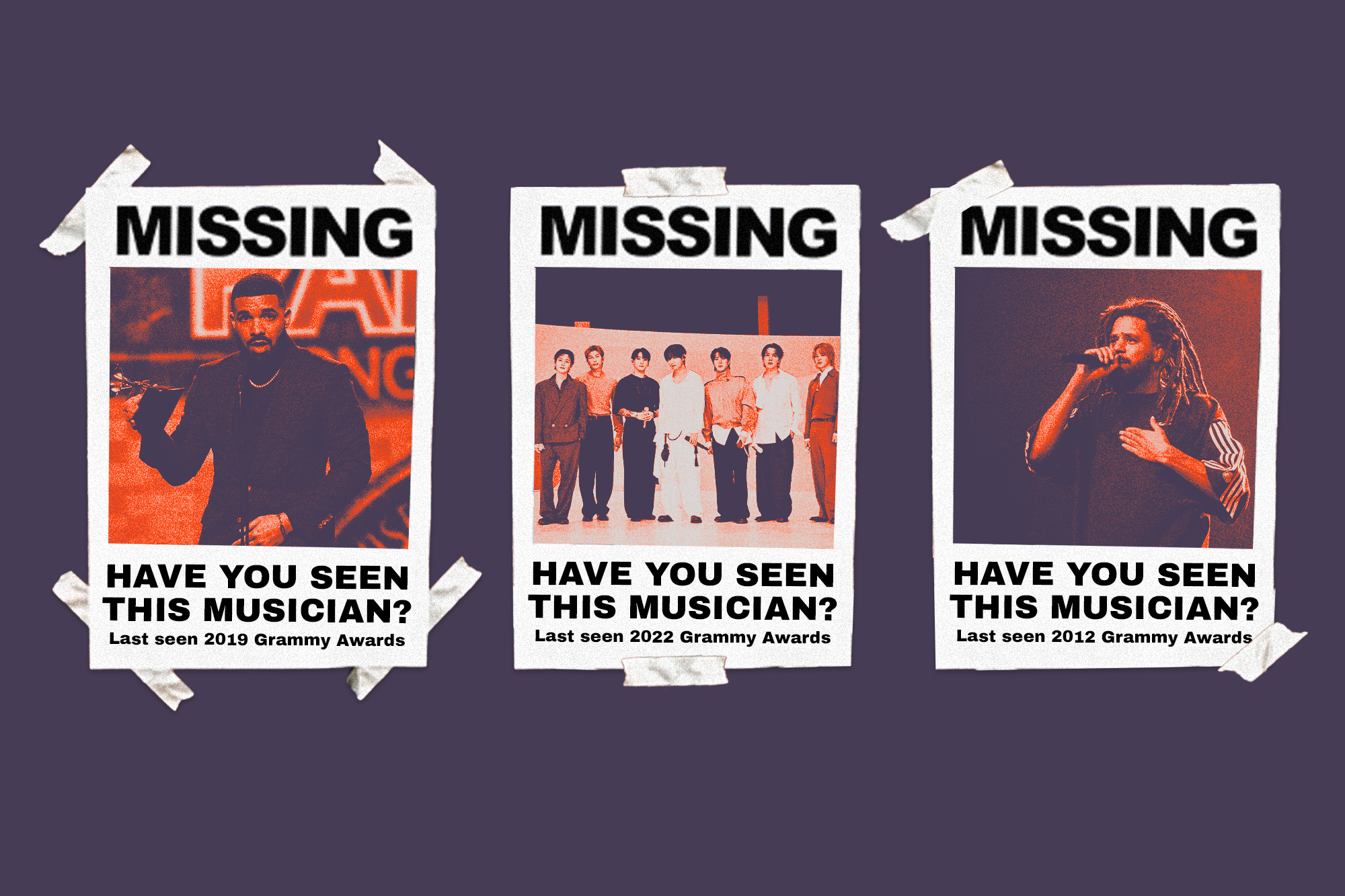
Two of the names most conspicuously absent from the Grammy nominations announced Monday never entered: BTS and Drake.
After the Grammys introduced a new category for Asian pop this year, two of the most popular K-pop groups, BTS and Stray Kids, said they would not submit their new music for consideration — in any genre. In late July, all seven members of BTS posted identical Instagram statements saying music should be appreciated for what it is, “rather than being divided by region or language.” Stray Kids pulled out a few weeks later. Never mind that most of the songs on BTS’ Arirang, which broke first-week sales records in the U.S. and South Korea, might not have qualified for the Asian-pop award anyway: The category requires “significant” use of an Asian language, and the album is mostly in English.
BTS is in good company. Over the past few years, a string of stars have sat out the Grammys out of frustration with the genre categories or the way the awards work — or perhaps just annoyance at losing the big ones, though no one has said as much. Drake didn’t enter any of the three albums he released this year — Iceman, Maid of Honour and Habibti — and hasn’t submitted solo music since 2021’s Certified Lover Boy, which he pulled from two nominations. J. Cole didn’t submit his new album, The Fall-Off. Morgan Wallen opted out last year. The Weeknd boycotted in 2021 after After Hours was shut out; he came back to perform at the 2025 show, introduced by Recording Academy CEO Harvey Mason Jr., only to see Hurry Up Tomorrow shut out the next year.
This week’s nominations snubbed Malcolm Todd, Audrey Hobert and Noah Kahan — whose sole nomination was for best contemporary folk album — potentially setting up a new crop of big names who might avoid the awards.
Artists still care about the awards on a personal level, according to a half-dozen music executives. “The artists want the prestige,” says one. “But from a business perspective they don’t care.” To labels, the Grammys are a marketing tool, and a weakening one. Ratings have slid along with those of other awards shows, from a steady 25 million or more viewers between 2010 and 2017 to just over 15 million last year. A nomination or win still brings a “Grammy bump” in streaming, especially for artists outside the mainstream, like 2023 best new artist Samara Joy. But younger fans, who spend the most time streaming, are more likely to discover music online than on a CBS telecast. “It’s not like the Super Bowl,” says a second industry executive. (Bad Bunny’s halftime show this year reached 128 million people.)
And labels pick up the tab. The telecast has a production budget, but a memorable TV moment — custom sets, dancers, rehearsals — can run hundreds of thousands of dollars, according to label executives, and labels cover most of that, along with travel for nominees and tickets for executives. “We pay millions of dollars for their show,” says one. “They treat labels like cash cows.”
Boxed In

The idea of the Grammys was that music, as seven-time winner Madonna once sang, makes the people come together. Only these days it doesn’t, at least not the way it used to. BTS is by some measures the biggest act on the planet, yet only 43 percent of U.S. music consumers are familiar with the group, according to a recent Luminate report.
To Academy voters, K-pop is still the new kid, which made BTS a long shot in the Big Four categories: record of the year, song of the year, album of the year and best new artist. With a monster album and tour already in hand, why schlep to L.A. to perform for free and fly home empty-handed?

Genre categories were supposed to spread the honors around. To some artists, though, they look like a seat at the kids’ table. In 2017, Drake wondered on his Apple Music radio show why “Hotline Bling” won best rap song and best rap/sung performance when it’s “not a rap song.” “The only category they can manage to fit me in is a rap category,” he said. Three years later, Tyler, the Creator won best rap album, then said backstage that music made by “guys that look like me” always ends up in a rap or urban category.
Artists who don’t like the results tend to blame “the Academy,” but the organization doesn’t control the votes of its roughly 16,000 voting members. “Like any election, people are going to unpack the outcome,” says an Academy spokesperson. “Part of what makes the awards special is that they often spark conversations, and that’s a great thing.”
Mason said he was “saddened” by BTS’ decision but argued that “more categories mean more artists’ work is recognized.” And the Academy has changed. Since the 2019 exit of CEO Neil Portnow — who infamously suggested that women in the music business needed to “step up” — it has taken significant steps to diversify its voting membership, expanded the top four categories to eight nominees, limited how many categories members can vote in and scrapped its “secret” nomination review committees.
Meanwhile, the stakes keep rising. Next year the show moves to ABC after 54 years on CBS, under a deal with Disney that the Wall Street Journal reported is worth more than $500 million over 10 years. And the Grammys have always run on star power: The highest-rated telecasts came in 1984, when Michael Jackson and Thriller swept, and 2012, with Adele’s 21 and a Whitney Houston tribute pulled together on a day’s notice. Few artists today have that kind of reach, so the Academy needs the acts that are huge with their own audiences — and right now, some of them are doing just fine without the Grammys. The awards show presents itself as “music’s biggest night,” but it will be hard to keep that status without some of music’s biggest artists.

Comments
Only Ankler All Access subscribers can comment
Already a subscriber?