
Art & Crafts is our podcast series that goes behind the scenes with the artisans who create the film and TV we love. This conversation is sponsored by Searchlight Pictures. Subscribe on Apple Podcasts.

When director Mona Fastvold was co-writing The Testament of Ann Lee with her creative and personal partner, Brady Corbet, she didn’t waste any time in bringing her key collaborators — like cinematographer William Rexer and production designer Samuel Bader — into the process.
“It was early,” Fastvold, an Oscar nominee for co-writing The Brutalist with Corbet, told Ankler Media deputy editor Christopher Rosen on the latest episode of the Art & Crafts podcast. “The three of us started meeting up while we were on other jobs, in evenings and on weekends, sitting down with all of our art books and research books and looking at paintings and drawings, and talking about the period — but also talking about our way into the story and the emotional journey that would take us through the visual journey of the film as well, and how that would support the various characters.”
Rexer recalled creative brainstorms in Fastvold and Corbet’s living room. “Brady’s mother would be making some food in the other room, their daughter would be there — Mona created this family that was very open for us all to be participating in,” he said. “I don’t think making this movie would have been possible without that sharing and that openness, and without us all being so deeply steeped in the project. We would be socializing, but we’d be talking about the film. We’d be eating, and we’d be referencing something Sam was putting in front of us. … It was this incredible cooperative experience.”
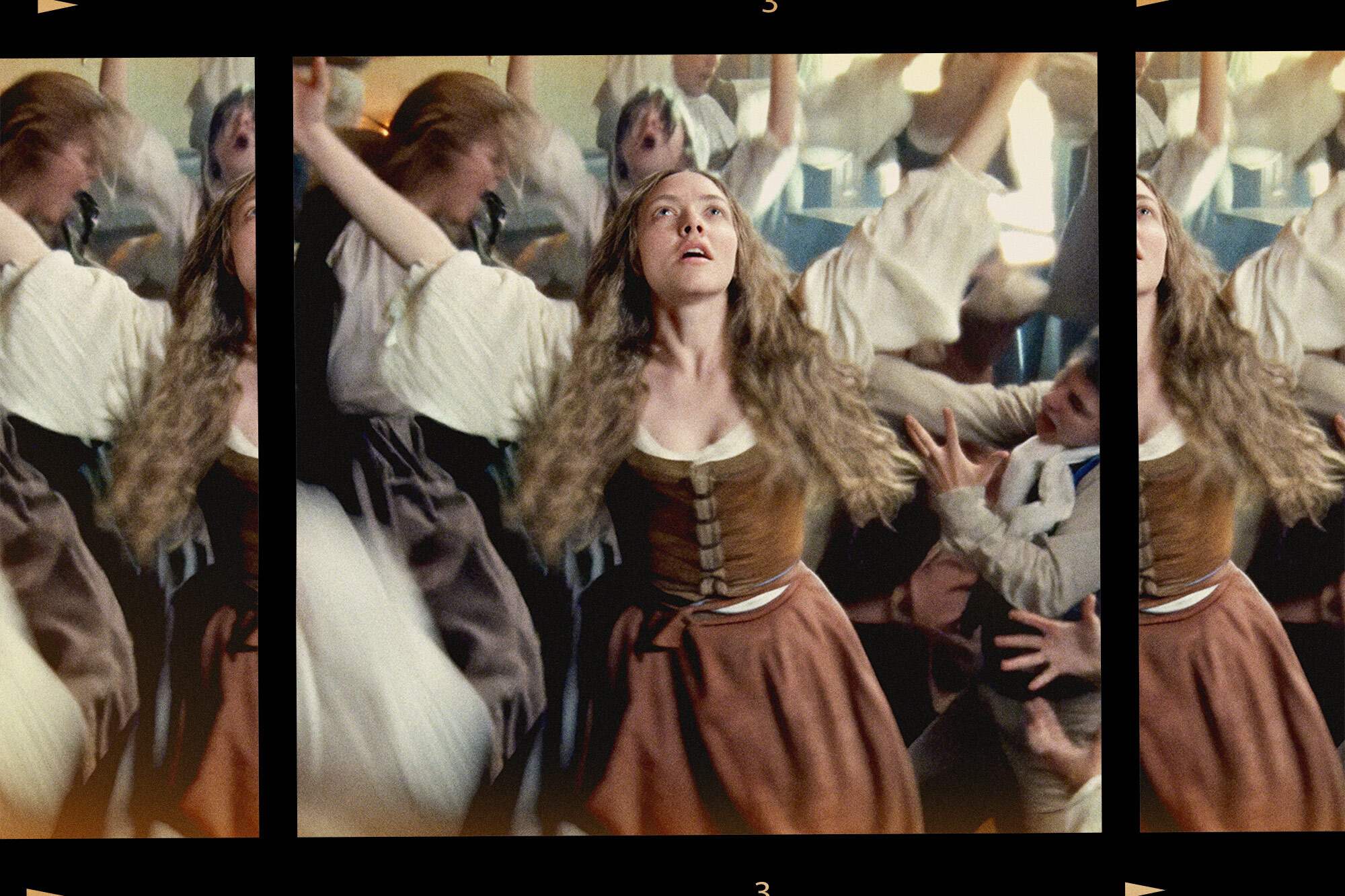
A period drama shot on film in just 34 days on a reported budget of $10 million, The Testament of Ann Lee is up there with the biggest swings of the year. That’s no surprise considering Fastvold’s previous project, The Brutalist (which Corbet directed), was a three-and-a-half-hour epic about a Hungarian architect in post-World War II America that landed 10 Oscar nominations and two wins. But Ann Lee arguably ups the stakes, turning the life of Ann Lee (played by Oscar nominee Amanda Seyfried), the founder of the Shakers movement, into a musical drama with original songs from Oscar winner Daniel Blumberg (The Brutalist).
“There’s sort of these two push-and-pull things that are going on during the musical sequences,” Rexer said of the elaborate scenes where the cast — featuring choreography by Celia Rowlson-Hall — perform complicated dances to Blumberg’s music. “Sometimes that observational quality is from above, because the forms that Celia has created are better from there, sometimes from a right angle, or sometimes it’s from straight on proscenium. But always, the camera then becomes one of these believers who wants to join in. So I think that’s part of the unique quality of this.”
Rexer and Bader, who built countless sets for the movie, didn’t just walk away once production wrapped either. Fastvold had both of them by her side during post-production, allowing each collaborator the chance to see their work through to the end.
“Often, when you’re done with a movie, that’s it,” Fastvold said. “But to have everyone be part of that post-production process, the continuation of what we did on set, is something I would love to just continue on all my projects. Because why isn’t the designer part of the effects process? It doesn’t mean that a director can’t figure that out on their own, of course. But my mind is on the story. So there are things that they will see and bring to it that I won’t, because you’re just looking at it with a different perspective.”
Bader seconded Fastvold’s motion. “I hope just to keep making films in this manner as well, because I think the opportunity to stay on is so valuable,” he said.

The Testament of Ann Lee is just the third movie Fastvold has directed, following 2014’s The Sleepwalker and 2020’s The World to Come. But the filmmaker has already found a groove she wants to stay with going forward, with a small creative community around her and what she calls an “element of sustainability” in the production process by keeping the budget small.
“We didn’t make it for someone else, and there’s something quite exciting about that to me; there’s a lot of freedom in that,” she said. “I’m learning about how to build these projects every time I make them, and I’m always learning about the craft from my collaborators.”
The Testament of Ann Lee is in theaters in limited release starting Dec. 25.