

'Wicked' Wiz Teases Ariana Grande-Cynthia Erivo Oscar Spot, Part Two's New Songs
My interview with composer Stephen Schwartz, who just can't believe Jon M. Chu's snub and a movie 30 years in the making

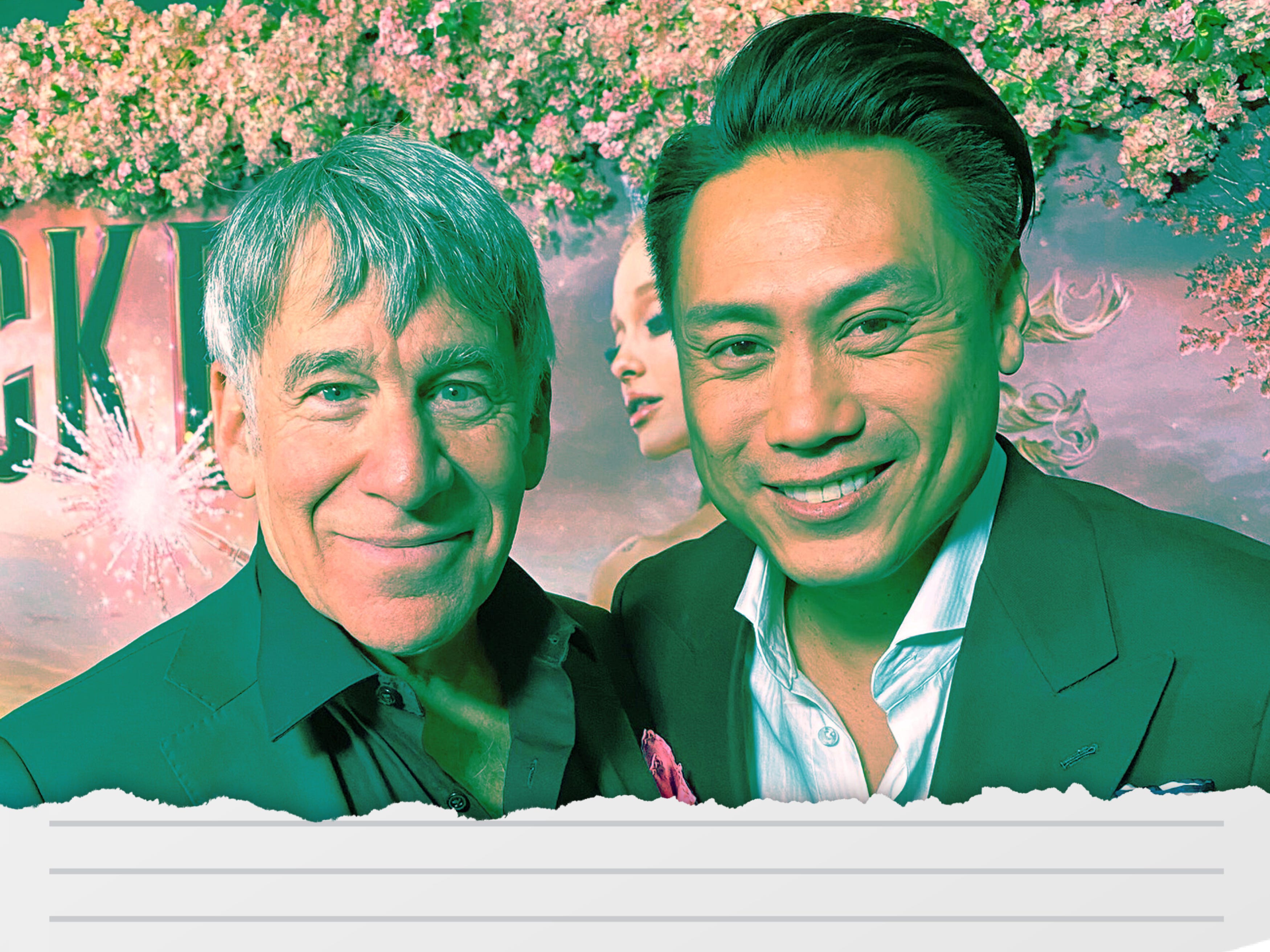
Rob LeDonne recently spoke with The Brutalist’s Oscar-nominated composer, Daniel Blumberg, as well as song nominees including Adrian Quesada and Abraham Alexander, Diane Warren, Elton John and Brandi Carlile and the husband-wife duo behind the music of Emilia Pérez. He’s at rob@theankler.com
And now, the end is near. As the final notes of Oscar season, and its music races, ring out, it feels to me like one of the strangest in recent memory. (For evidence just click on, well, any Ankler article from December up to today.)
Through it all, one film in particular has walked its own yellow brick road on the way to the Dolby Theatre. (And no, I’m not referring to Conclave, though I’m sure there must be golden roads somewhere in the Vatican). The years-in-the-making Wicked is improbable in many ways: a big-budget, special-effects driven movie-musical that became a mainstream box office smash and earned 10 Academy Award nominations, including one for best picture.
For Stephen Schwartz, the soon-to-be 77-year-old Broadway legend who masterminded and wrote the music and lyrics to the original 2003 stage production with the precision and expertise of a Shiz professor, this weekend serves as a well-earned victory lap. I was lucky enough to have a magical conversation with him about the movie’s phenomenal success and long journey to the screen, the shocking Academy snub of director Jon M. Chu, as well as the much-talked about Wicked performance planned for the Oscars — expected, though not confirmed, to open the telecast — and the film’s highly-anticipated sequel, which unfurls later this year. If Oz had its own The Ankler (those Munchkins wish!), it’s an interview that surely would have gone viral.
Check out Chu as the mastermind of Munchkinland 👇🏼
Throughout his stunning career, Schwartz has won three Academy Awards (the first 30 years ago for Disney’s animated Pocahontas), and he could collect his fourth statue on Sunday as he’s nominated alongside John Powell for best original score. To win, the duo will have to beat Conclave’s Volker Bertelmann as well as past Notable subjects Daniel Blumberg (The Brutalist), Kris Bowers (The Wild Robot) and Clément Ducol and Camille (Emilia Pérez). While Brutalist has the edge with most pundits in this category, my colleague Katey Rich predicts a win for Bowers — check out her expert prognostications here.
Katey’s sticking with the crowd on her original song pick, predicting “El Mal” from Emilia Pérez, which is the one to beat — unless the film’s much-dissected troubles have hurt the song too, in which case this could finally be the year for Diane Warren with her song “The Journey” for Netflix’s The Six Triple Eight.
But you won’t be hearing those two compositions or any other nominees from the category live on Sunday. Eschewing traditional performance of the nominated songs, the ceremony instead is slated to feature a tribute to the sound of James Bond (to honor producers Barbara Broccoli and Michael G. Wilson) as well as pop stars Doja Cat, Blackpink’s Lisa and Raye in unknown roles. Oscars producer (and former Notable subject!) Raj Kapoor also teased a performance by Queen Latifah (honoring Quincy Jones).
Still, the most-anticipated performance of the show is that Wicked moment, which Schwartz offers tantalizing clues about, as you’ll see. We’re off to see the Wizard! I mean, Mr. Schwartz.
Rob LeDonne: First off, a happy early birthday. It’s coming right around the corner (Mar 6). These couple of weeks must be a heck of a way to celebrate it.
Stephen Schwartz: Well, it’s nice to be out here [in L.A.]. First of all, out of the cold. Paradisiacal weather. But this is a fun week; there are a lot of events, and I’m seeing a lot of friends and colleagues. Everybody obviously is feeling quite celebratory. It’s all that, plus work is getting done, so it’s all good.
RL: The Oscar nominations for Wicked feel like yet another chapter of this legacy that you built. What do they mean to you?
SS: Obviously, this amount of nominations across the board is very gratifying for everybody who worked on the film, because it means that it’s being appreciated on many levels. But frankly, how a film can get 10 Oscar nominations in so many categories and not nominate its director seems very strange to me. I wonder if people understand what a director actually does. But there have been many strange aspects to awards and award nominations before. And to be perfectly honest, I don’t really take awards all that seriously. I’ve won my share, I’ve lost my share. But the nominations do call attention to the film, obviously, which is good. I think it makes everybody feel good about the movie and energized to work even harder on movie two, which is what we’re working on right now.
RL: Aside from the nominations, it was announced earlier this week that Ariana Grande and Cynthia Erivo will perform. How is that process going?
SS: Yeah, we’re very pleased about that. I was at Universal today and I know they’re very happy about it. We’ve known about this for a little while, and I’ve been told what they’re doing. Maybe I’m not allowed to say it. I don’t know if you’ve been told as well, but it’s a great idea, and if it’s happening, it’d be lovely; not just for Wicked, but having to do with the history of the movies, The Wizard of Oz, et cetera. So I hope they’re doing what I was told because I really liked the idea.
RL: Some people raised eyebrows that they’re performing, yet the songs weren’t eligible for nominations because there were no original songs in the new film.
SS: It will make a lot of sense when you see it. And I actually think it’s a very smart idea. Whoever had it.
RL: Got it! As they say in The Sound of Music, let’s start at the very beginning: What was your earliest conversation about turning Wicked into a film?
SS: The show itself came about because I heard about the book and thought it was a great idea for a musical and discovered that the rights had already been bought by Universal, who were planning to turn it into a non-musical movie. So my job was essentially to talk them out of that and suggest that it would make more sense, given what the property was, to first mount it as a stage musical and if that worked, then for it to become a movie. So the point of this is that it was always going to be a movie and it just took a (30-year) detour. The question was always, when does it become a movie? David Stone, one of our producers of the show, always said that his preference would be for the movie to come out 20 years into the run of the show, since he was able to chart early on that the show was going to have an extraordinary long run. So this is all by way of saying, we’ve known for a while.
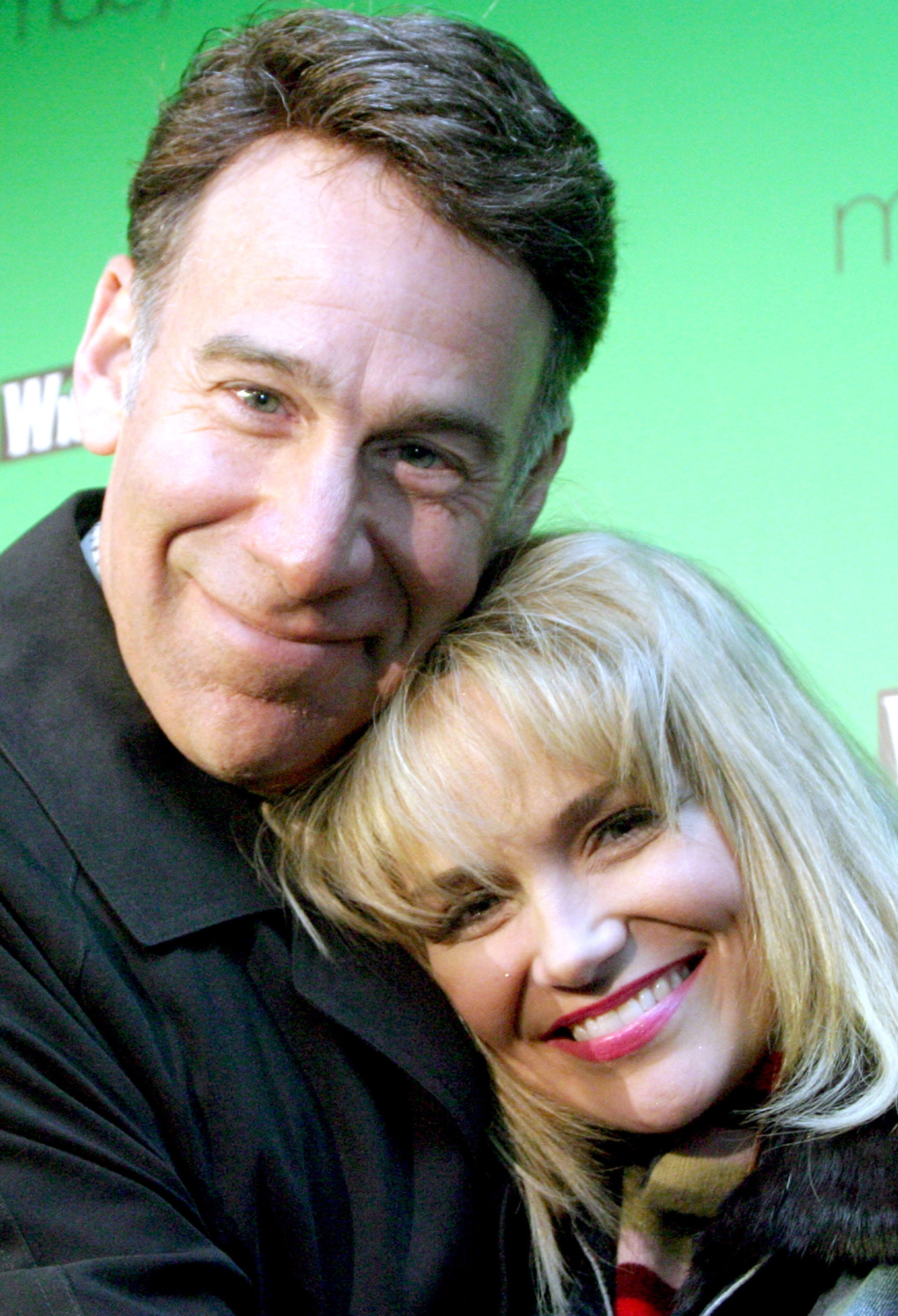
RL: What’s it like for you as a creative to hand over your vision to other collaborators, in this case Jon M. Chu or producer Marc Platt. Is there ever any trepidation or do you have complete confidence? Sometimes as a writer, it can be hard to hand over a personal, deeply-worked piece to an editor, for example.
SS: I go back to what you just said — sometimes it’s hard handing a piece off to an editor or whatever. But I would suspect that if it’s an editor who is very collaborative with you, who will call and say, “Hey, have you thought about this?” — that would feel a lot different than seeing something in print who cut things you didn’t know about. This is all by way of saying that I have had experiences like that in the movies, where the director and the movie studio clearly could not care less what the writer thinks, and that’s not a lot of fun as you yourself described. That was not the case with Wicked.
First of all, Jon Chu was most definitely in charge; he was most definitely the director. But he was also extraordinarily collaborative. I always felt heard. And I go back a long way with Marc, the lead producer on the show; we have a lot of affection and respect for each other, and know how to collaborate. So it never felt like handing something off and then going away. Winnie (Holzman, Wicked book writer and screenplay co-writer) and I were consulted all the way through. They screened the movie for us several times while we were editing and of course, because I was working on the score and the soundtrack, there was a lot of back and forth. It was very enjoyable.
RL: I think that joy comes across in everything from the film to the music, and even the casting of Cynthia and Ariana and seeing how close they’ve become. When did you start to notice that?
SS: I was there the night that they met each other because it was at a dinner party Jon Chu gave. I played piano for both of them and they sat down, sang and bonded. Their relationship is real, and I think that definitely comes across; their actual chemistry as friends was clear on the screen. They bonded very strongly immediately — maybe more than anybody expected, including them.
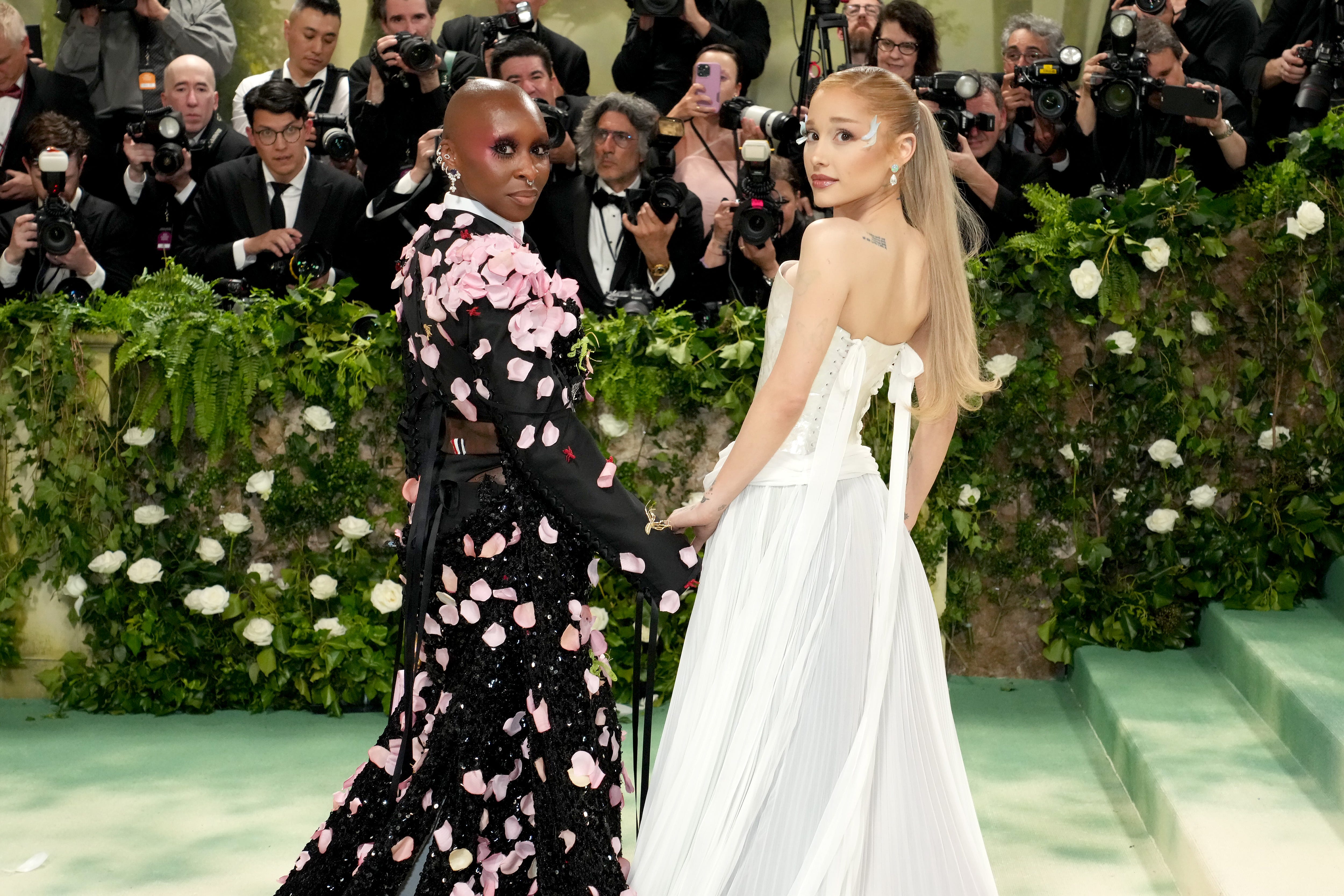
RL: The movie and its promotional tour generated so many viral moments, from the choreography to the final note of the film: the war cry, courtesy Cynthia. What was the genesis of the war cry?
SS: That was in the show, when we were working on the original with Idina (Menzel). As you say, it sort of became iconic because then every Elphaba who played the role on Broadway and in tours would do a slight variation on it. You know, you can find on YouTube videos like 25 war cries of various singers. So we went into the movie kind of knowing that that moment would get a lot of attention from the fans, and Cynthia has an extraordinary vocal instrument, which can do pretty much anything, and she came up with what she wanted to do.
RL: What was it like for you hearing Cynthia’s spin on that? I mean, she made it all her own.
SS: I’m not a big fan of musical movies that cast people who can’t sing in the leading role, no matter how big they are as stars. But one of the things that I really valued about Jon Chu and the support we got from Universal and the whole process was that they let us cast people who could actually sing right to play the leads. Some recent movie musicals have featured people playing leading roles who can’t actually sing very well.
RL: Isn’t that like hiring a chef who never cooked?
SS: I understand there aren’t that many big movie stars who actually can sing. But yeah, as I said, I am always faintly annoyed . . . more than faintly. I’m always annoyed when I see a musical and they’ve cast people who can’t sing.
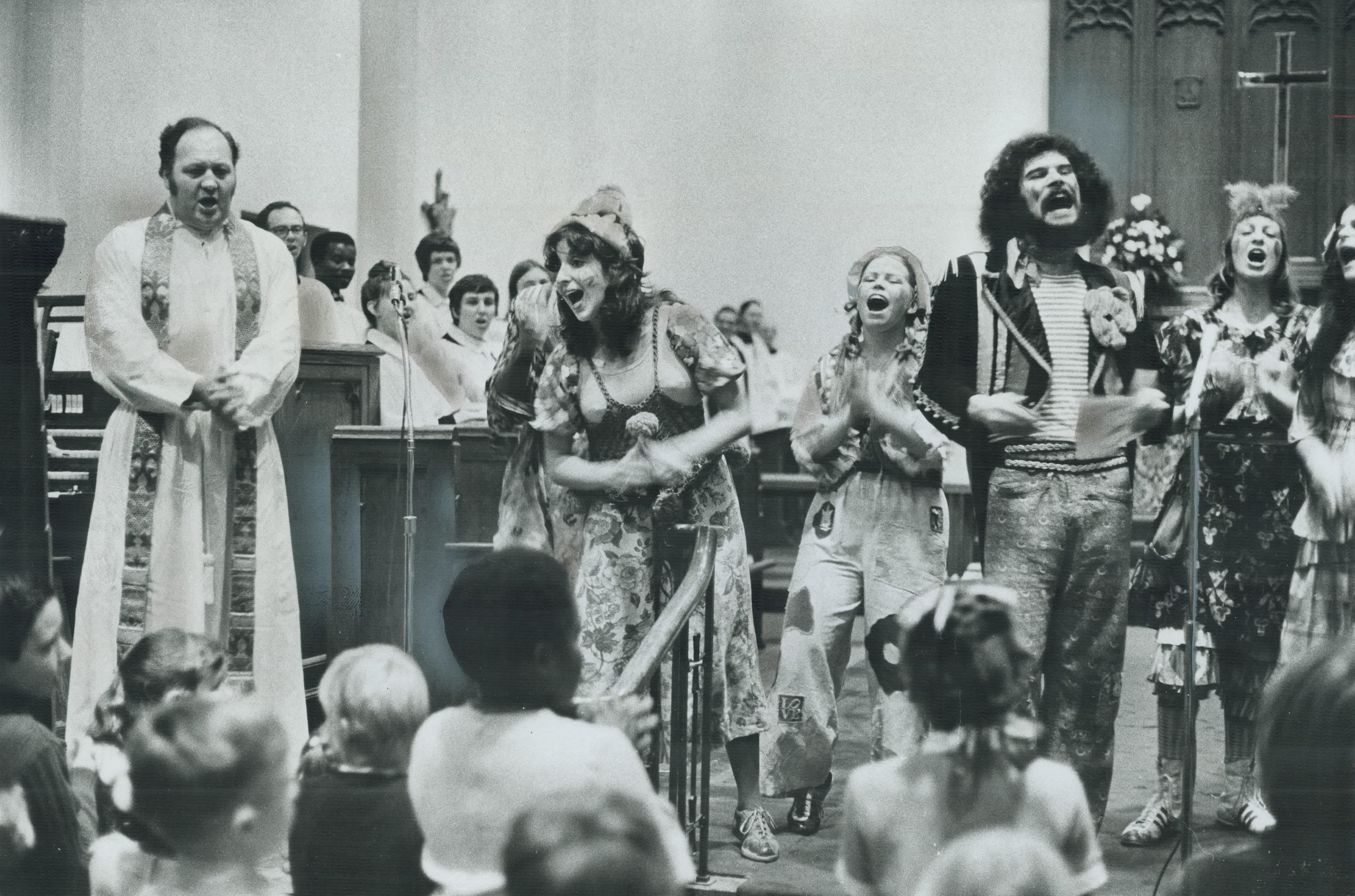
RL: I’m reading Susan Morrison’s new biography of Lorne Michaels and in it she mentions this all-star stage production of Godspell in 1971 that starred then up-and-comers Gilda Radner, Martin Short, Eugene Levy and Andrea Martin, which was all of their breakout roles. What do you remember about that production?
SS: And Paul Shaffer! He played for somebody who auditioned, and he was such a remarkable keyboard player and musician that we asked him if he was interested in being the musical director. So, yeah, definitely, I remember it all very well; in theater you’re very involved with casting and rehearsals for major productions of the show, and that Toronto production was a major production. But they were all kids, and they were all hilarious. It was amazing to have that much comedic talent in one place at one time. I saw Andrea Martin the other day; I thought she [had been] cast immediately, but she said no. She started out as the understudy and then moved up.
RL: This seems to be a common thread in your work where people either become stars or transform their lives because of your productions, from facilitating Gilda Radner’s breakout role to seemingly launching Ariana Grande’s career as a major movie star. Have you thought about that?
SS: Yeah, and a lot of the cast of Godspell was very young people; that show tends to be a breeding ground for people who would become big stars because we catch them very early. So I think in many cases that is true. The roles themselves and, maybe the songs, give really talented performers an opportunity to show how talented they are, and then as you said that can lead to more recognition for them.
RL: Wicked: For Good comes out later this year and is set to include two original songs. Is there anything you can reveal about that? Are these songs you already had, or did you write them fresh?
SS: I’ve been strictly forbidden by Universal Pictures to reveal anything. But there are two new songs because the storytelling required them, whereas in the first movie there really was no place for an original song. There was one spot we talked about for a while, like “Oh, maybe we should do a new song here that expands this moment.” But then ultimately we decided we didn’t need it. So what I’m trying to say is that the new songs in Wicked: For Good are story-driven, but I have been asked not to reveal anything. So I’m honoring the request.
RL: What is it like as a creative person to then dip back in to add to something you first worked on decades ago? Is that fun? Scary?
SS: Of course it’s fun, to go back to this story and these characters — Winnie and I loved reimagining them for film. When we realized we were going to be able to make two movies and that we could expand the storytelling in places, it was a lot of fun. But because the show is ongoing, you know, and I have to see it a couple of times a year in various places, it’s not as if I lost touch with its musical world and then had to remember it again. It’s very much in the present for me, and therefore, to tell parts of this story musically again wasn’t unfamiliar to me
RL: One last question for you. Like the president gives a State of the Union, I’m wondering how you see the State of the Movie Musicals. They’ve gone through periods of ebb and flow over the years, so how are things looking from your perspective with the resounding box office success of Wicked in hindsight?
SS: That’s an unfortunate analogy.
RL: You know, as I said it I realized it might be.
SS: I think you’ve sort of answered your own question. For obvious reasons, particularly because musicals are extremely expensive to make, if the studios in Hollywood start to feel as if people are not going to musicals, then they stop making them and that’s what creates the ebb and flow. And, I do feel that instead of them saying, “Oh, well the reason no one went to see this is because it’s a bad musical” they say “people aren’t going to musicals” in general. I think some movie musicals in the last couple of years did not do well at the box office for various reasons that I don’t think had to do with lack of quality. But now that Wicked has proven so successful — and we’re not the only ones, because Wonka was very successful — it proves that if you do a movie musical that audiences like, they’ll do well at the box office. So consequently, I think we will now see another slate of movie musicals and hopefully some of them will be good.
 | A guest post by
|