


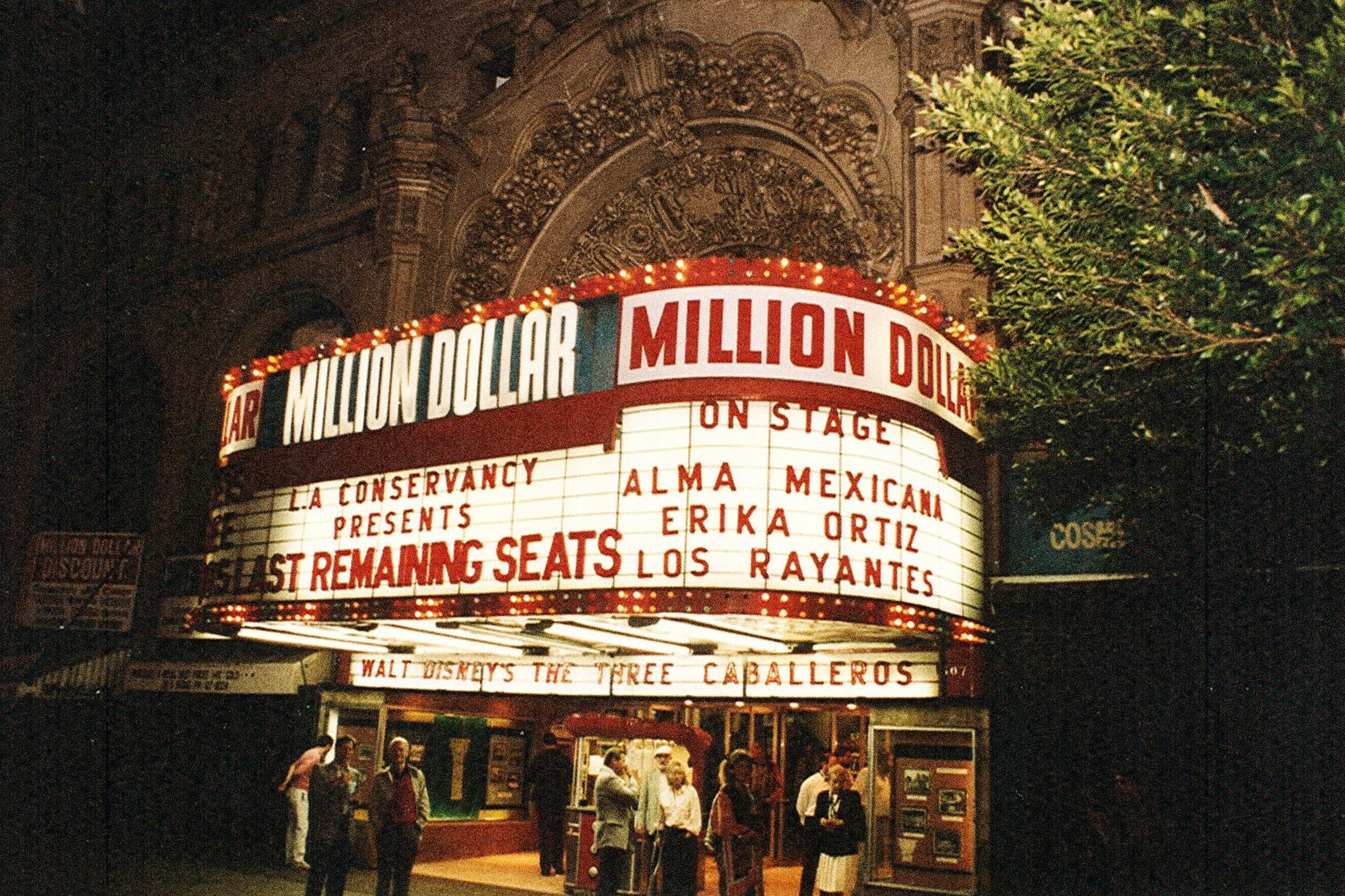
↑ A 1991 image of the Million Dollar Theater marquee, where the Los Angeles Conservancy ran — and still runs — repertory screenings. (LAC Archives)
I cover audience and moviegoing trends. I looked at the coming IP that Gen Z will make or break, dissected the struggle for films to stay memorable in the streaming era and covered the return of MoviePass as a prediction market. Email me at matthew@theankler.com

Movies once defined the culture of Los Angeles — not just the films themselves, but the red carpets, the premieres, the choreography of glamour that surrounded them.
At the center of it all were 12 movie palaces, temples to Hollywood, clustered across an eight-block stretch of Downtown L.A.: The Million Dollar, Roxie, Cameo, Arcade, Los Angeles, Palace, State, Globe, Tower, Rialto, Orpheum and United Artists.
These theaters were destinations in their own right, lionized by swarming press hoping to catch Charlie Chaplin and Mary Pickford in the silent era, Clark Gable and Marilyn Monroe in the 1950s, and Jack Nicholson and Faye Dunaway during the New Hollywood boom of the 1970s.
“For 25 cents, you could be transported to an exotic environment you could never hope to see in your actual life,” says film critic Leonard Maltin of the ornate, themed palaces that once defined Los Angeles moviegoing.
As Loew’s Theatres founder Marcus Loew famously put it: “We sell tickets to theaters, not movies.”
It’s a line worth considering today. None of L.A.’s 12 historic movie palaces still operates as a full-time, first-run commercial cinema. The State Theatre is now leased to a church. The Rialto in Downtown L.A. has become an Urban Outfitters. Elsewhere in the city, preservation battles rage on — from the petition to save the Cinerama Dome to actor-director Kristen Stewart’s effort to bring back the Highland Theatre, a cinema built in 1925 that she calls “an antidote to all the corporate bullshit.” Director Jason Reitman is also personally leading the restoration of the Fox Village Theatre in Westwood.
“We often like to think of movie theaters as churches,” Reitman said last fall. “If so, the Village is a cathedral.”
During Hollywood’s Golden Age, studios poured money into these palaces as monuments to ambition, ego and showmanship, helping drive tens of millions of weekly ticket sales and turning moviegoing into a shared ritual, a national habit as those photos circulated through newspapers and magazines, marketing Hollywood and its stars to the world. What remains now are echoes: faded marquees, cavernous ghostly lobbies and architectural splendor — frozen in time.
“When these movies would premiere at these theaters, you’d have sometimes up to 30,000 people in the street just waiting for a glimpse of their favorite movie star,” explains Marcus Lovingood, chairman of Broadway West — an organization dedicated to activating downtown L.A.’s historic theater district. “It was the epicenter of entertainment for the entire world.”
At its peak, Hollywood had eight studios, producing 300-400 films each year. Today, of course, it’s a far different story. The Big Five studios — which, pending Paramount’s acquisition of Warner Bros., will shrink down to four — produce around 80-120 films each year for theatrical release.
Since Covid, roughly 5,700 North American screens have been lost. More and more, theaters are having to pivot, hosting screenings of old movies due to a dearth of popular new ones and turning their venues into catch-all “event spaces.”
Related:

“If you think about a theater and it being reused as something else, a church is very easy,” says Alex Inshishian, program manager at the Los Angeles Conservancy. “You have a big stage, you have all the seats already set.” Following its closure as a cinema, Million Dollar served as a church for a period of time — a fate currently shared by two nearby movie palaces: the Rialto Theatre (a different one) in South Pasadena and the State Theatre on Broadway.
What follows is a look back at L.A.’s great lost movie palaces — beginning with the epic Million Dollar Theatre — and the ghosts of glamour they still hold.

Million Dollar Theater
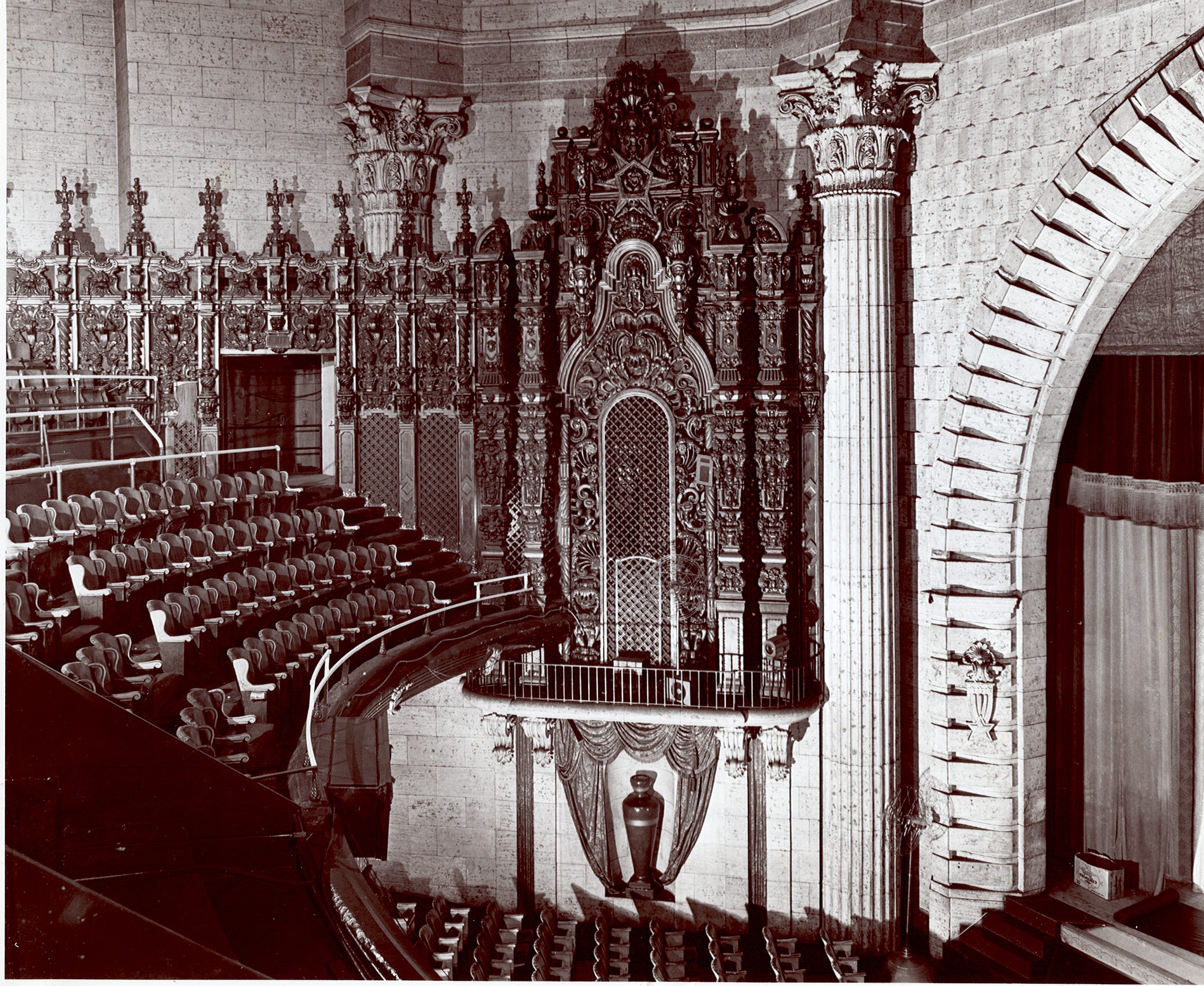
↑ MILLION DOLLAR THEATER — The interior facade, pictured here in 1945, features sculptures and illusions that reference characters from the children’s fairy tale The King of the Golden River, including dog figures and anthropomorphized wind figures set in the orchestra grilles. (LAC Archives)

Location: Downtown Los Angeles
Current function: Repertory screening theater, event space, filming location
The Million Dollar Theater opened on Feb. 1, 1918, with a showing of the silent Western film The Silent Man, accompanied by a 30-piece orchestra and attended by Douglas Fairbanks, Jr., Pickford and Chaplin. Marking the West Coast’s first-ever movie palace, Million Dollar was also Sid Grauman’s initial entry into the exhibition space.
“It was a big experience to come and not just see the movie but to experience the theater in and of itself,” says Inshishian. “Opening night on some of these films had 2,400 people. It’s just an experience that I think most people don’t really get anymore.”
These days, the theater — which now seats 1,996 due to some interior adjustments — is at its most crowded during private rentals. In October, a beauty brand’s conference filled almost every seat, except for a few in the upper level. The Conservancy also partners closely with Million Dollar, allowing the organization to regularly use the venue for weekly walking tours and repertory screenings. Last October, their showing of Mel Brooks’ Young Frankenstein, replete with a Frankenstein’s monster on stilts, drew about 1,000 people.
Roughly three or four times a month, Million Dollar opens its doors to local productions, ranging from music videos from stars like Miley Cyrus, a W Magazine feature highlighting Oscar nominees and the upcoming Michael Jackson biopic, Michael, which used the theater to recreate a Grammys performance.
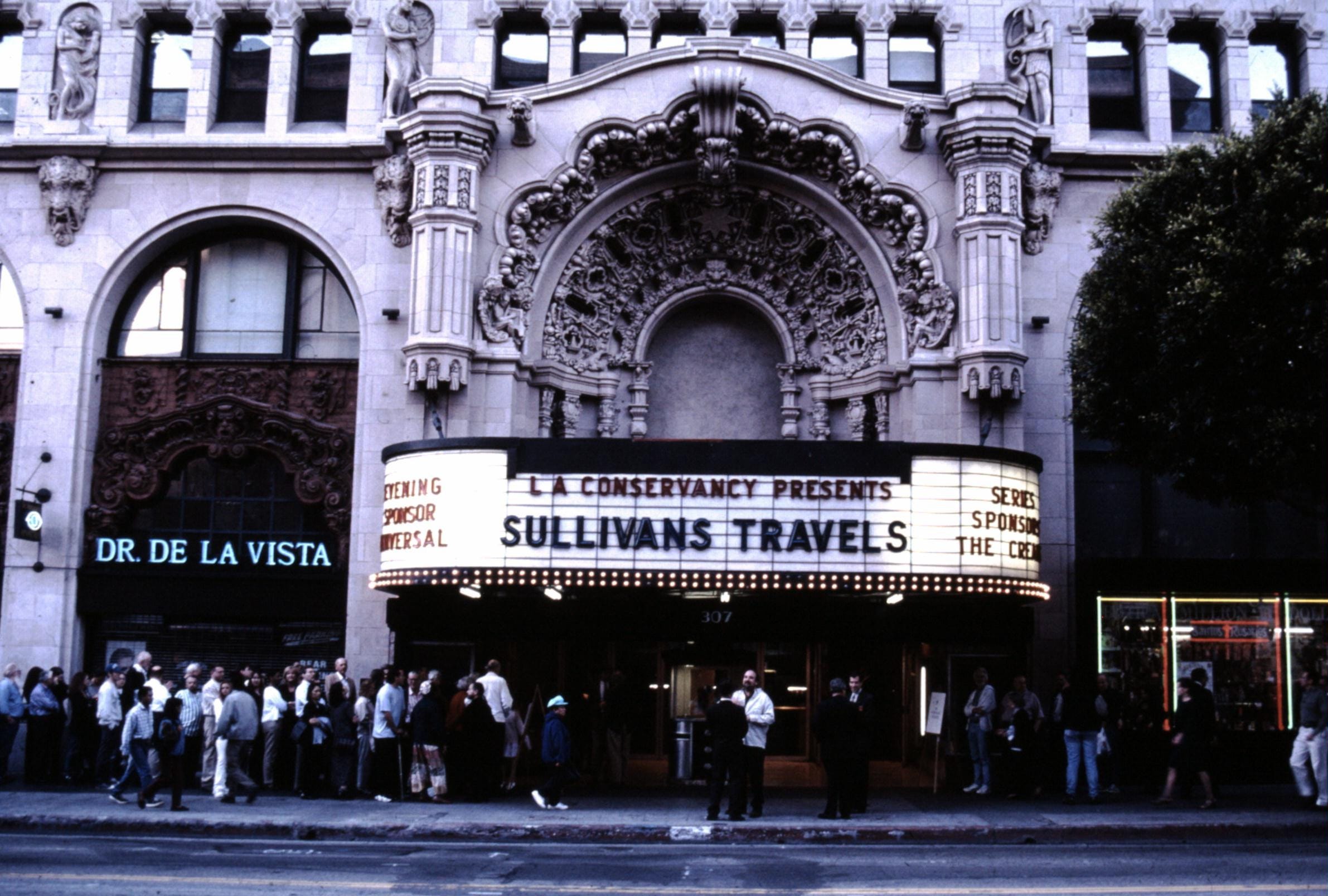
↑ MILLION DOLLAR THEATER — A crowd queues up for a showing of the 1941 Preston Sturges classic Sullivan’s Travels in 1999. Though the theater continues to show movies, it is at its most crowded during private rentals. (LAC Archives)
Los Angeles Theater

↑ LOS ANGELES THEATER — An exterior marquee advertises a repertory screening of 1932’s Grand Hotel in 1991, three years before the space stopped operating as a movie theater. (LAC Archives)
Location: Downtown Los Angeles
Current function: Special events, filming location
Los Angeles Theater marked its opening in 1931 with the premiere of Charlie Chaplin’s City Lights, where the star’s guest of honor that night was Albert Einstein.
As the last movie palace built in the city, it’s also the most elaborate and lavish of the bunch. A periscope in the projection room projected the film’s image onto a ground-glass screen at the center of a lower-level lounge, allowing patrons to follow the movie even while visiting the restrooms. It had two balconies instead of one and even a room with double-thick glass and speakers for parents with toddlers to watch the movie without disturbing anyone.
These days, Los Angeles hosts the occasional special event and film shoot, most recently, Taylor Swift’s music video for “The Fate of Ophelia.”
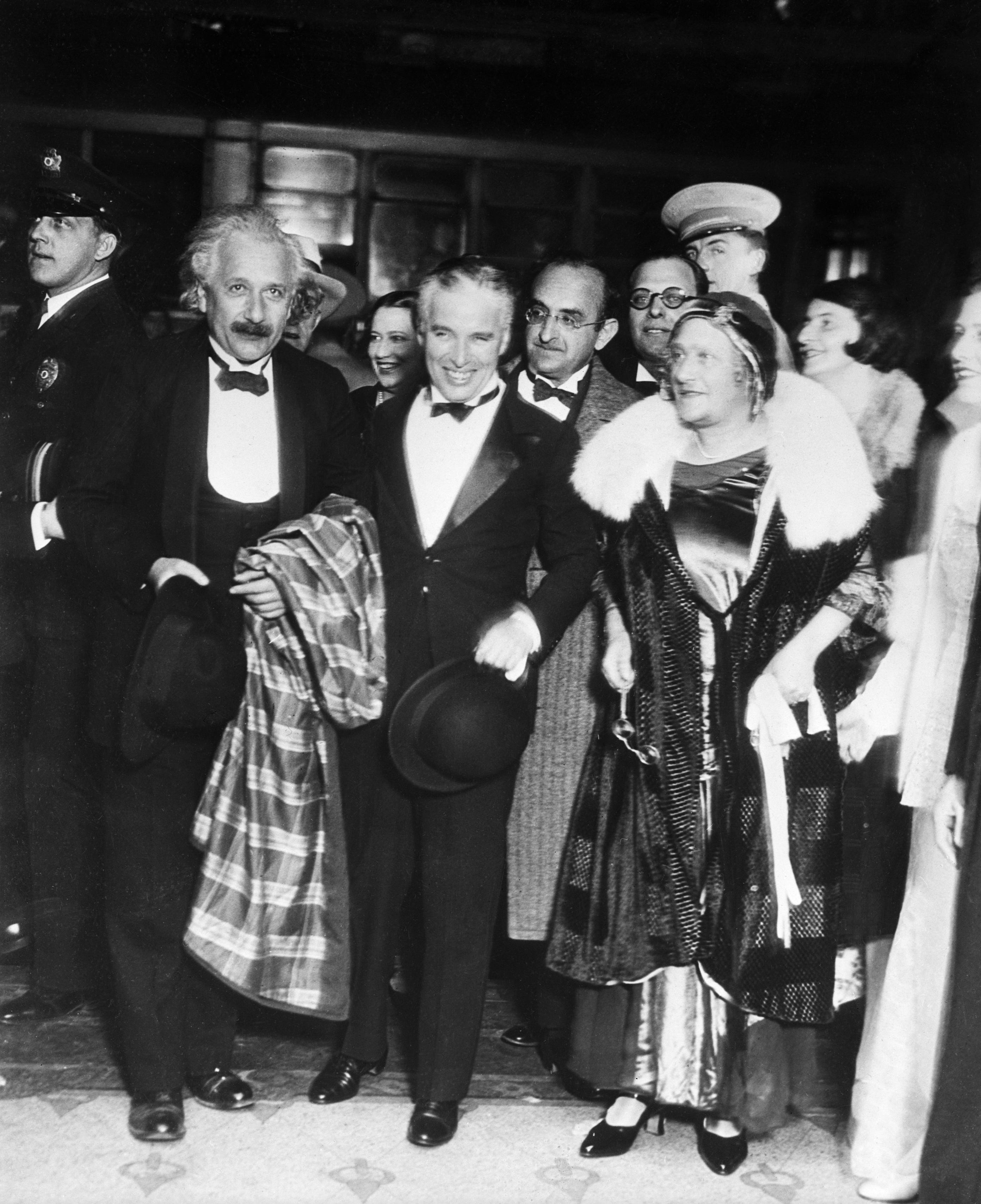
↑ LOS ANGELES THEATER — The venue marked its opening in 1931 with the premiere of Charlie Chaplin’s City Lights, where the star’s (center) guest of honor that night was Albert Einstein (left). (Getty Images)
Wiltern Theater
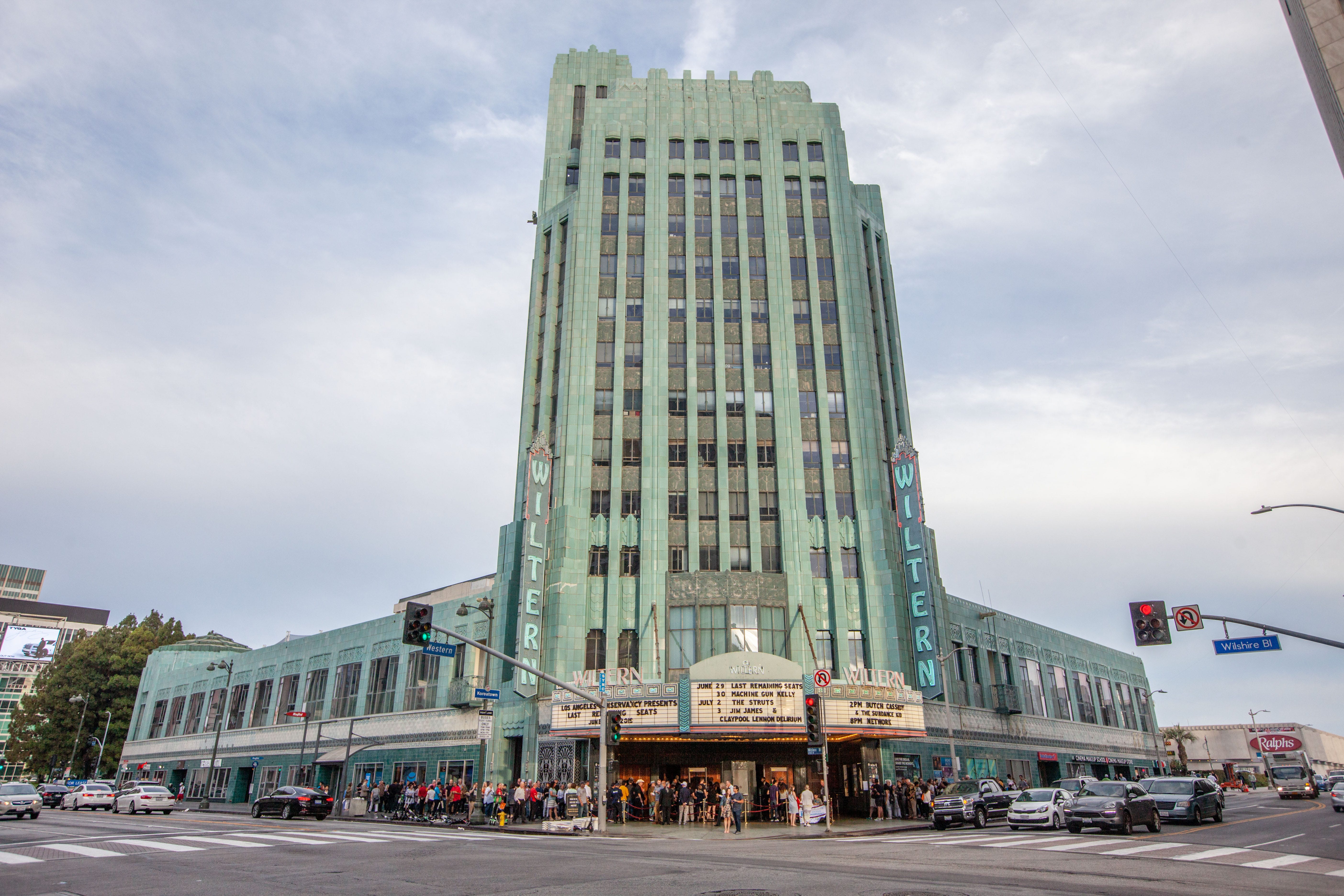
↑ WILTERN THEATER — The Mid-City theater in its current era, where it plays host to nearly nightly concerts and comedy shows. (Mike Hume)
Location: Mid-City Los Angeles
Current function: Concert venue
At the corner of Wilshire Boulevard and Western Avenue — hence the “Wil-tern” name — is the Wiltern Theatre, a 1,850-seat venue that originally seated 2,344 when it opened in 1931 with George Arliss-starrer Alexander Hamilton. The theater, then operated by Warner Bros., welcomed a bevy of stars on its opening night, including James Cagney, Clark Gable and Jean Harlow, as a staggeringly large crowd of 100,000 fans watched.
The theater struggled with attendance early on and shut down in May 1933, less than two years after opening. The Wiltern — that name came on the second go-around — reopened in April 1934, though it continued to plummet relative to the nearby Uptown Theatre.
Ironically, the Wiltern is now one of the most successful movie palaces left in Los Angeles, serving as one of the city’s liveliest concert venues. Among other performers, singer Zara Larsson is playing there for two nights this month, and during the 2020 election, the Wiltern also served as a polling place.
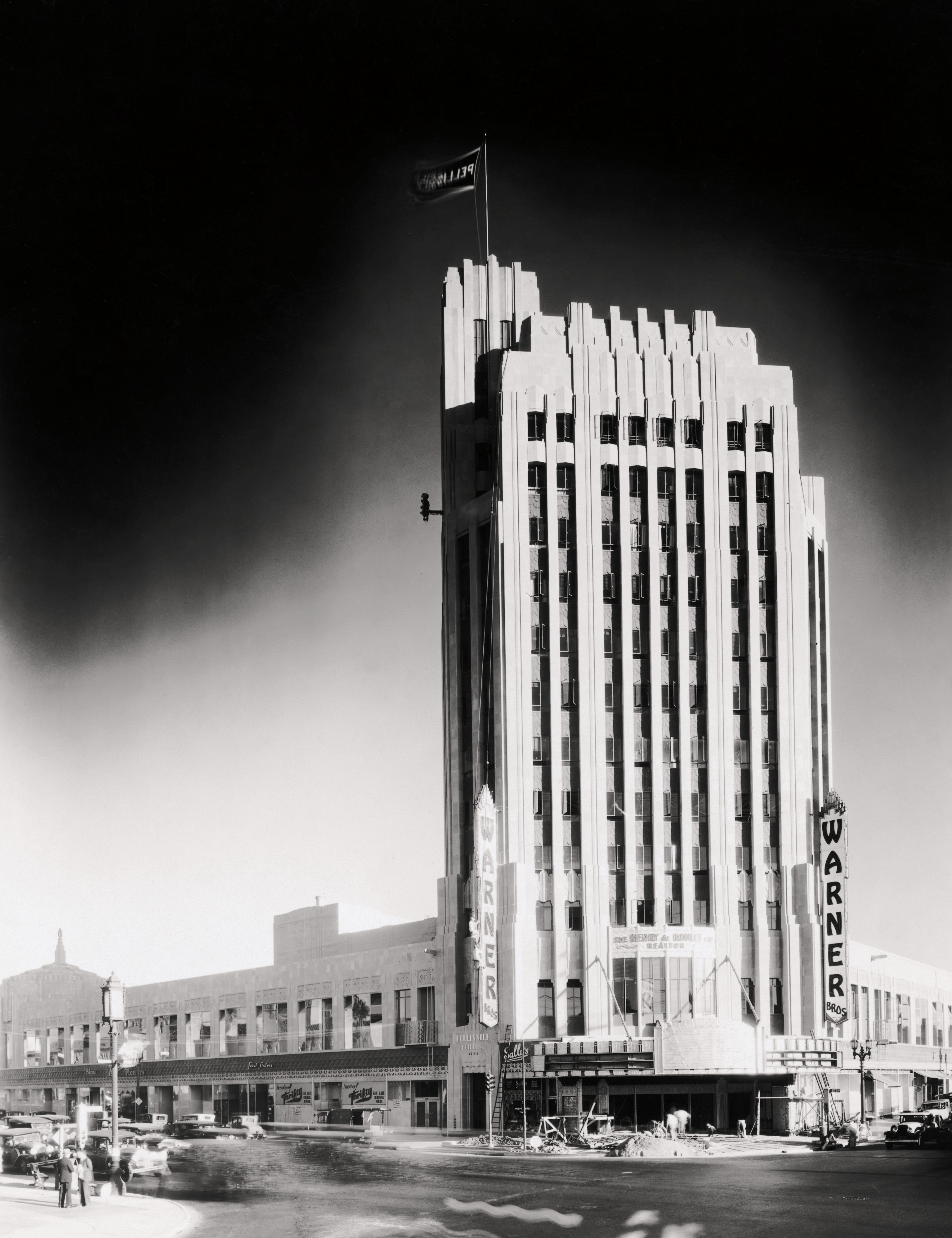
↑ WILTERN THEATER — Originally called the Warner Bros. Western Theater, the Wiltern first opened in 1931 with the premiere of George Arliss’ Alexander Hamilton. (Getty Images/Bettmann)
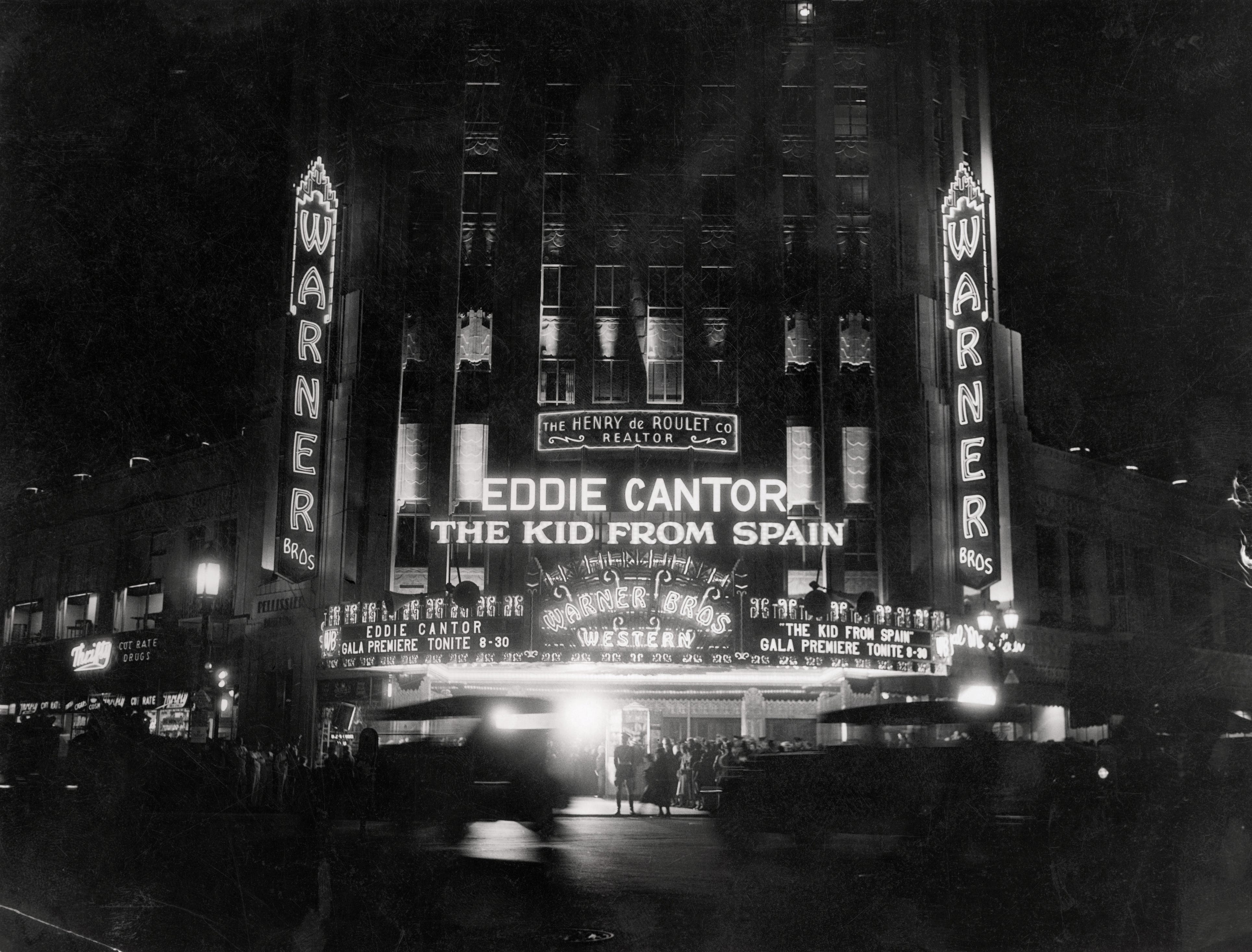
↑ WILTERN THEATER — Crowds at the West Coast premiere of Eddie Cantor's The Kid from Spain at the Warner Bros. Western Theater, on the corner of Wilshire and Western, in 1932. (Getty Images/Bettmann)
Rialto Theatre
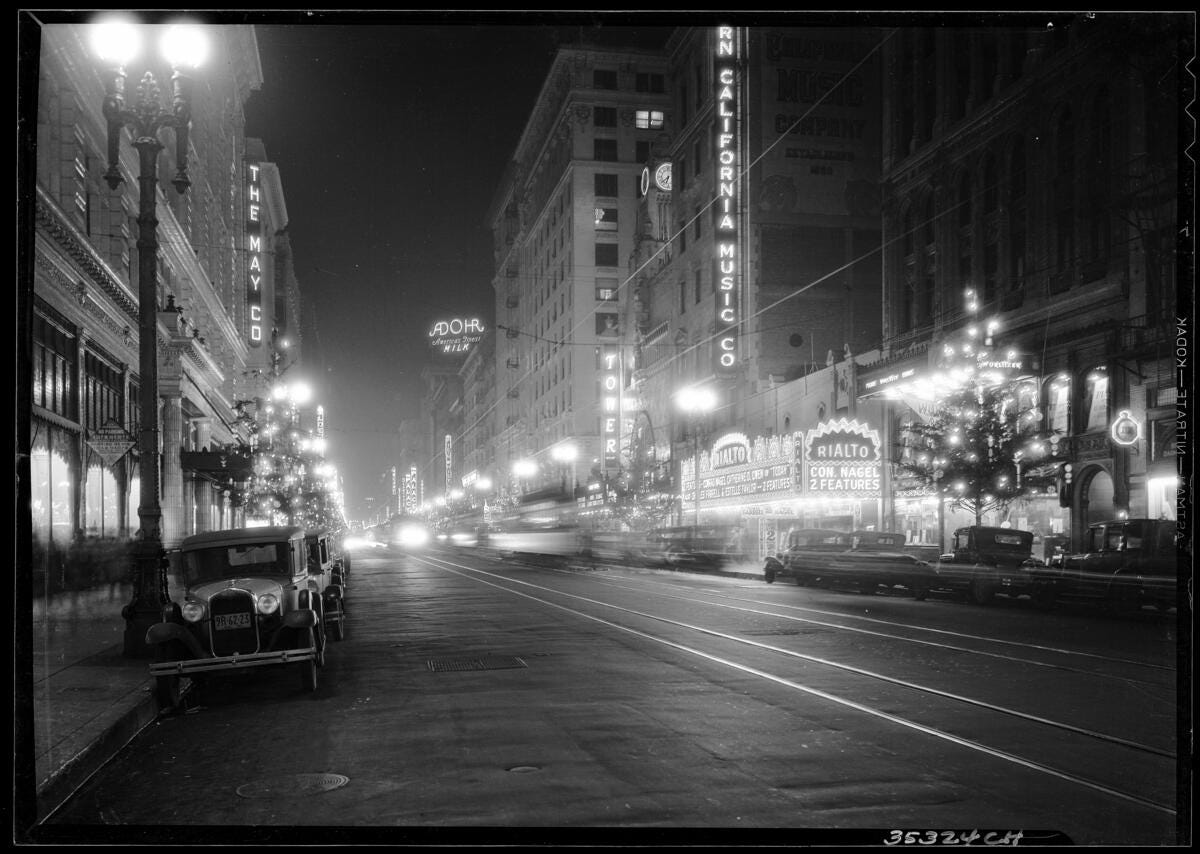
↑ RIALTO THEATRE — A northward view of Broadway from Ninth Street with Christmas decorations and neon store signs, circa 1930. (Courtesy of University of Southern California Libraries)
Location: Downtown Los Angeles
Current function: Urban Outfitters
The Rialto Theatre opened in May 1917 with a screening of the silent film The Garden of Allah. Sid Grauman assumed ownership of the venue two years later and operated it until 1924. The original structure has been remodeled several times over the decades — that marquee, one of the longest on Broadway, dates to 1930 — and little of the original interior design remains. But the marquee was designated a historic landmark by Los Angeles city officials in 1989, and it remains there.
Now, though, it’s the signage for an Urban Outfitters store that opened in 2013. The Rialto isn’t the only Broadway movie palace that’s been turned into a retail venue — Tower Theatre, which opened in 1927 and was the first film venue in L.A. to be equipped for talking pictures, became Apple Tower Theatre, the tech company’s L.A. flagship store.
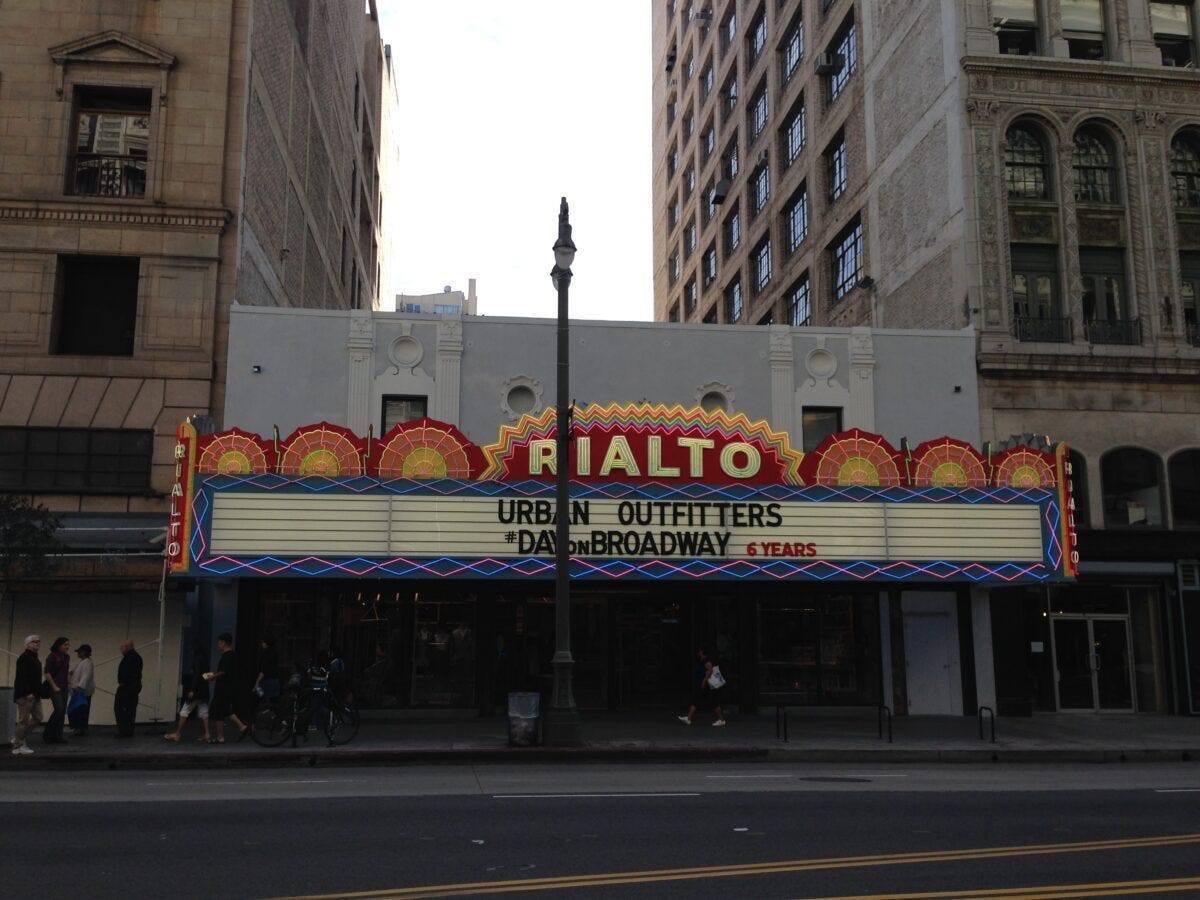
↑ RIALTO THEATER — The theater’s marquee, which now displays its retail occupant’s name, has been designated a historic monument, though the space itself hasn’t. (Adrian Scott Fine/L.A. Conservancy)
United Artists Theater
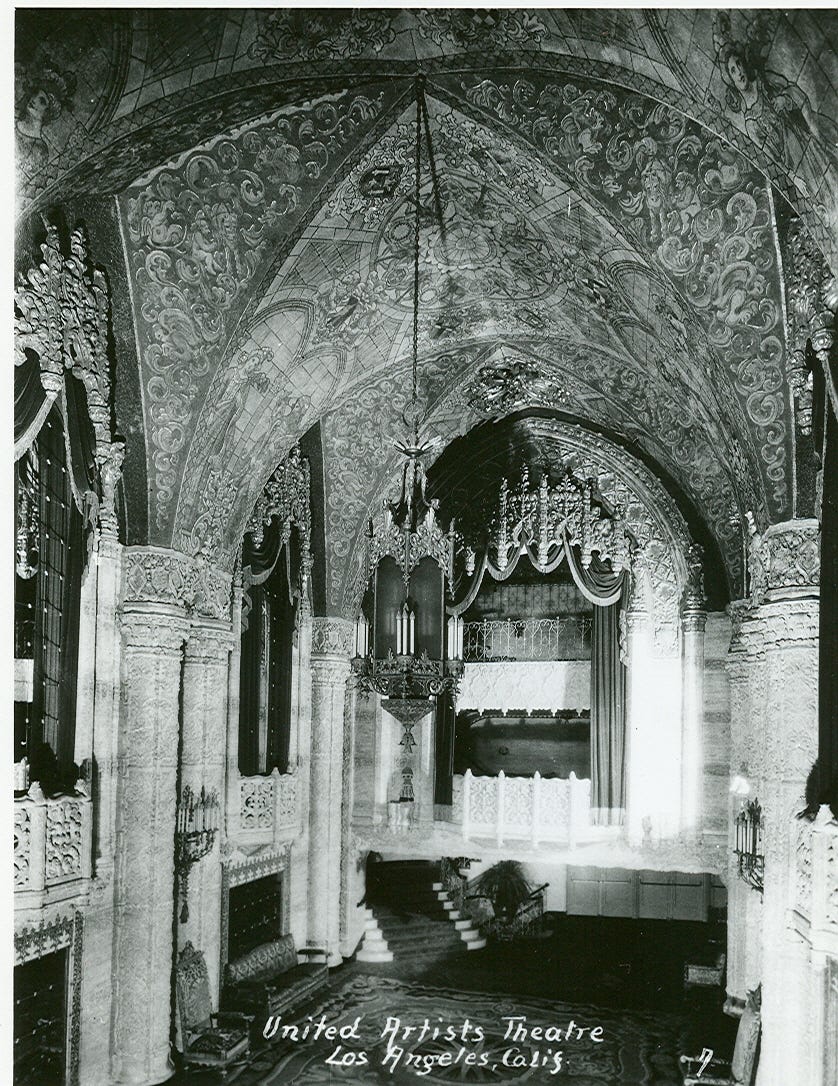
↑ UNITED ARTISTS THEATER — Opened in 1927, it was the tallest privately owned structure in Los Angeles until 1956. (LAC Archives)
Location: Downtown Los Angeles
Current function: Concerts, comedy shows, repertory screenings
Operating as a church for a period of time and later owned by the Ace Hotel, the United Artists Theatre is currently one of the more actively programmed theaters among the historic theater district venues. At roughly 1,600 seats, the United Artists debuted in 1927 as part of the United Artists film studio that was formed by D.W. Griffith, Chaplin, Pickford and Fairbanks eight years prior.
“[United Artists] really has this beautiful Gothic feel to it. It’s like you’re walking into the Sagrada Familia,” Lovingood says. “It’s almost like the architecture is built off candle wax. It’s just absolutely stunning.”
During its time under the Ace Hotel’s ownership, the venue underwent updates and renovations, with its carpets replaced and seats modernized, making it a “much further along” theater in terms of its readiness to host modern programming, Lovingood says.
Currently known as the United Theater on Broadway (and owned by the hotel chain Kasa), the theater hosts a variety of acts, including music events, comedy shows and repertory screenings. A notable highlight is their Halloween programming, which features movies screened alongside a live orchestra playing the score (such as a past screening of Get Out).
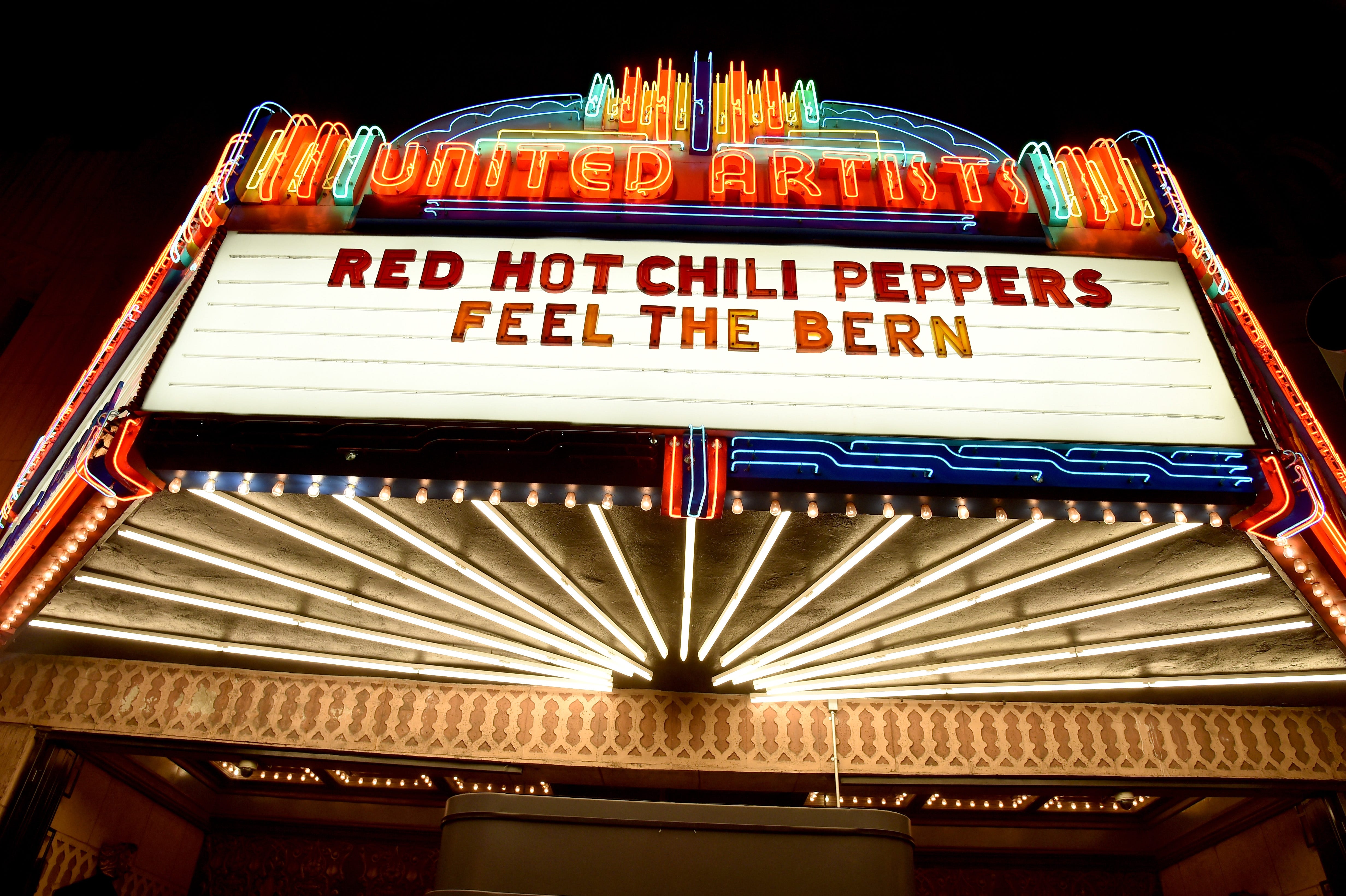
↑ UNITED ARTISTS THEATER — Now called the Ace Theater, the venue formerly known as United Artists Theater hosts concerts and events, like this 2016 Red Hot Chili Peppers fundraiser concert for then-presidential candidate Bernie Sanders. (Kevin Winter/Getty Images)
Orpheum Theater
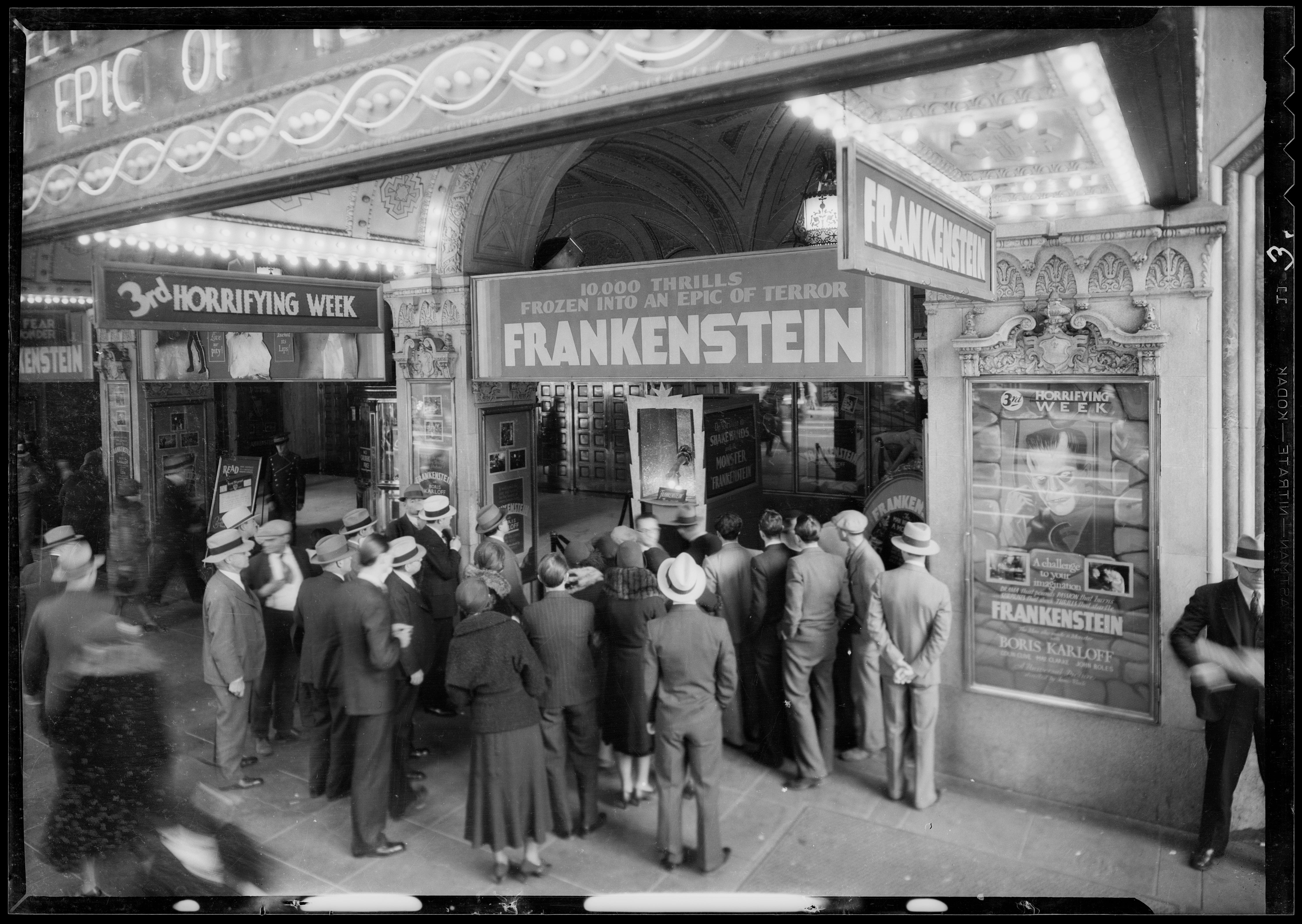
↑ ORPHEUM THEATER — Patrons enter the lobby of the Orpheum Theatre in 1932. (Dick Whittington Studio/Corbis via Getty Images)
Location: Downtown Los Angeles
Current function: Event space (concerts, premieres, etc.)
Celebrating its 100th anniversary just last month (Feb. 15), the Orpheum Theater is the most actively programmed theater on historic Broadway. Similar to United Artists, it primarily hosts outside entertainment acts, such as concerts and comedy shows, including the Netflix Is A Joke Fest this May, when the venue will host eight stand-up shows and live podcast recordings.
The Orpheum is also the most renovated theater on the block, featuring modern amenities like elevators, and was the first theater on the street to replace its traditional marquee with a digital billboard. Similar to the Los Angeles Theater, the interior resembles the Beaux-Arts style of the Palace of Versailles.
Because of its preserved beauty, one of the Orpheum’s primary uses today is as a filming location. The theatre has been home to American Idol, a scene from Spider-Man 3 and yes, another Taylor Swift music video (“Mean”).
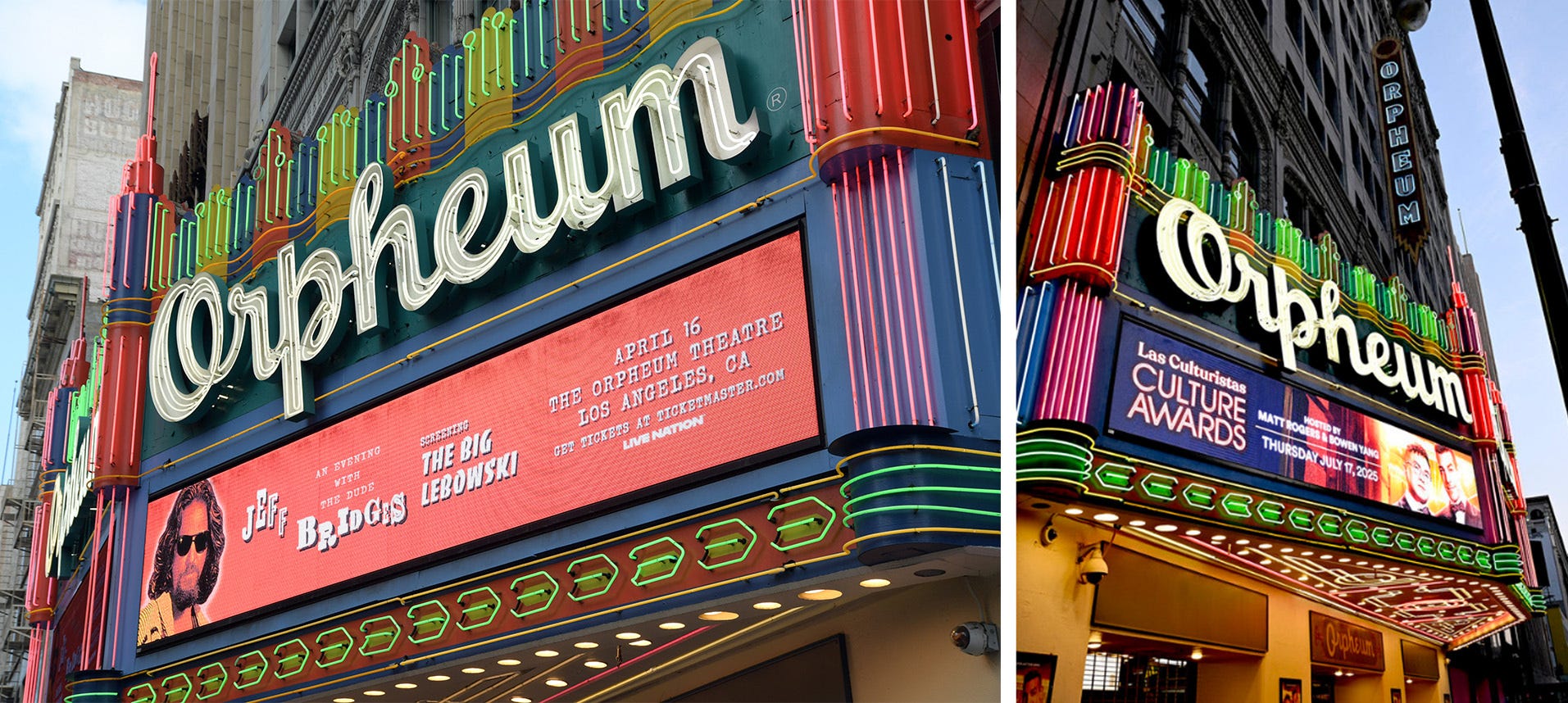
↑ ORPHEUM THEATER — Today, the Orpheum hosts concerts and premieres along with quirkier events like “An Evening with The Dude: Jeff Bridges” and Bowen Yang and Matt Rogers’ Las Culturistas Culture Awards. (Michael Tullberg/Getty Images; Michael Tullberg/Getty Images)
Palace Theater
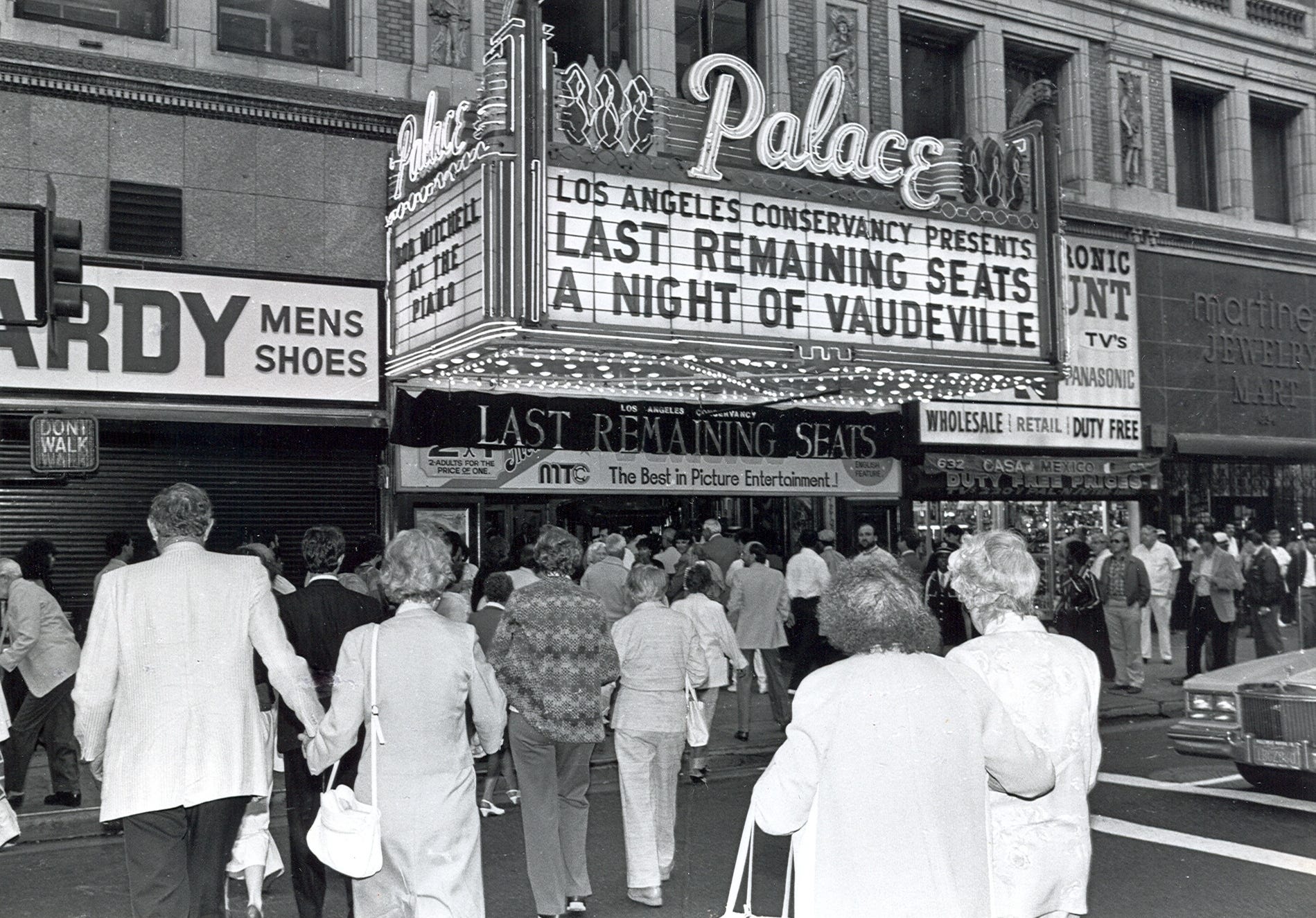
↑ PALACE THEATER — Patrons flock to the entrance of the theater for a night of vaudeville in 1987. (L.A. Conservancy)
Location: Downtown Los Angeles
Current function: Event space
Designed in the style of an early Renaissance palazzo, the Palace Theater opened in 1911 as a home for vaudeville before transitioning to movies in 1926. The Palace is one of the smaller venues on the street, housing about 1,000 seats, though it originally could house nearly 2,000 attendees.
According to the L.A. Conservancy, it is the oldest remaining Orpheum theater in the U.S. Harry Houdini, Will Rogers, Fred Astaire and a young Rita Hayworth all performed there, and currently, the venue serves as home to a rare piece of performance history: an original lift that Houdini used during his magic acts.
Among other historical applications, the Palace famously appears in Michael Jackson’s iconic “Thriller” music video during the opening scene, where Jackson and his girlfriend walk out of a movie theater. Now, the Palace is home to the occasional repertory screening, live performance and special event, along with more recent film shoots, including David O. Russell’s 2022 crime caper Amsterdam.
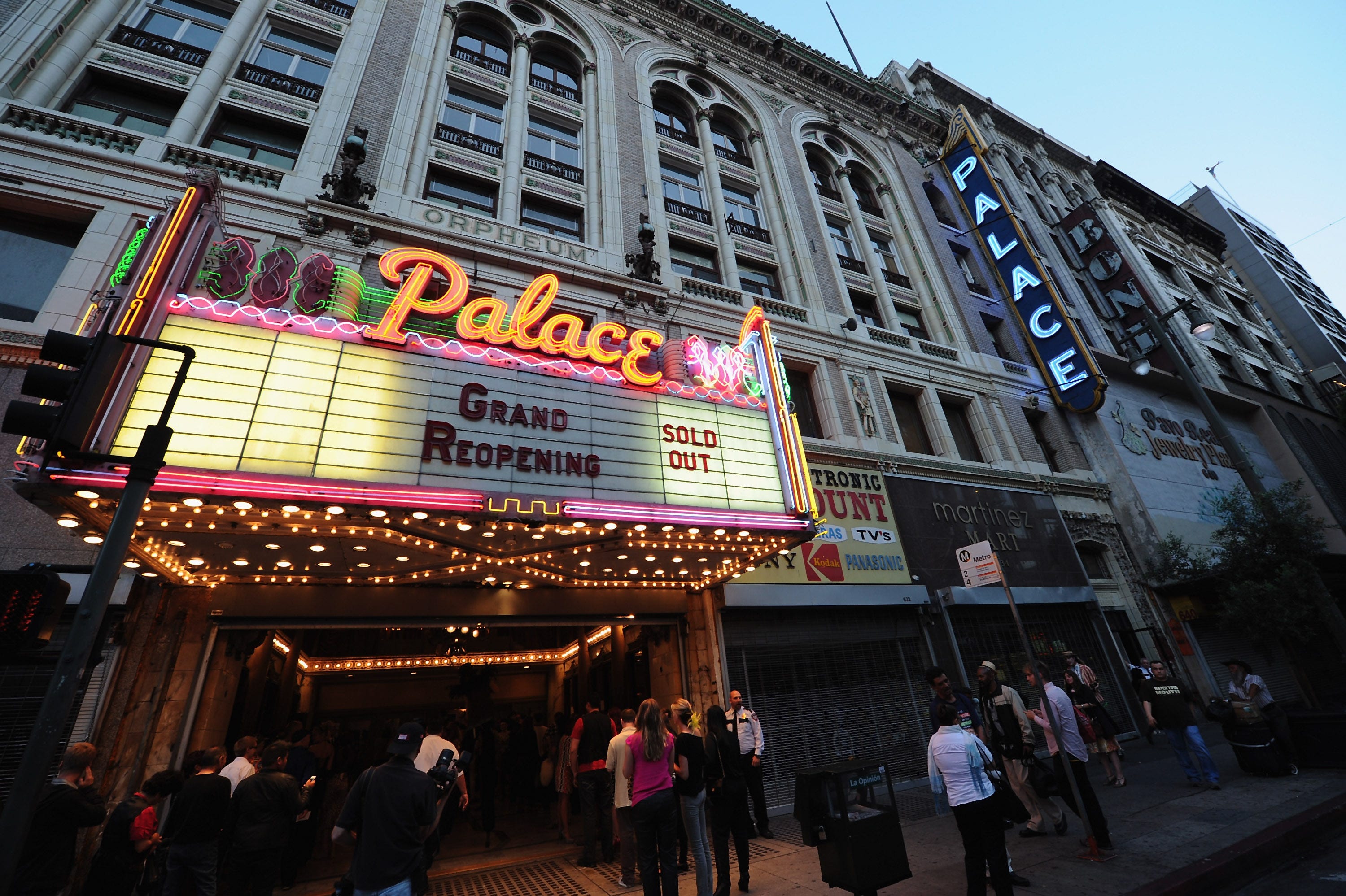
↑ PALACE THEATER — A view of the Palace Theatre in 2011 after a renovation. (Alberto E. Rodriguez/Getty Images)
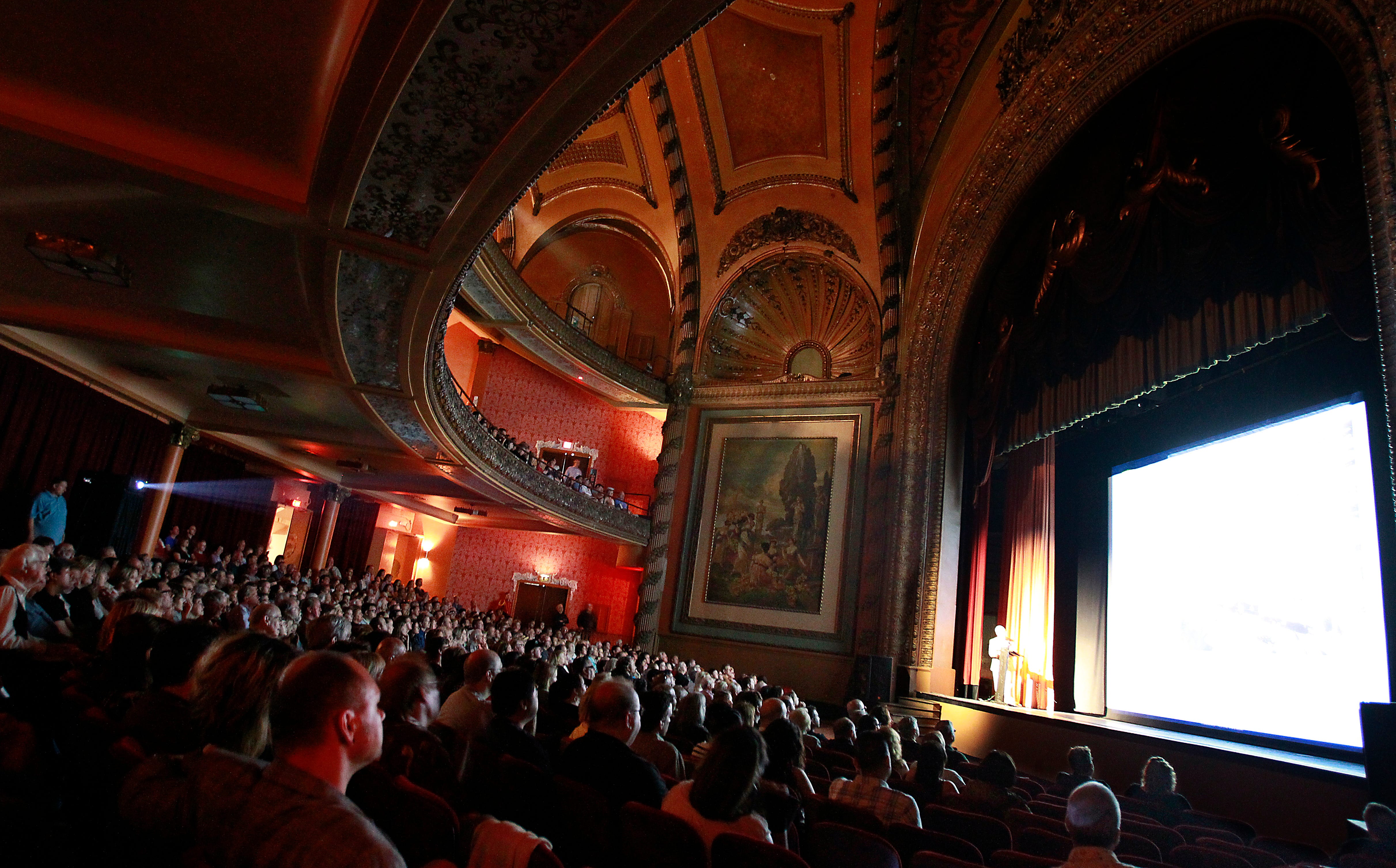
↑ PALACE THEATER — To celebrate its 100th birthday, the Palace Theatre hosted three sold-out shows of Sunset Boulevard. (Luis Sinco/Los Angeles Times via Getty Images)
State Theatre
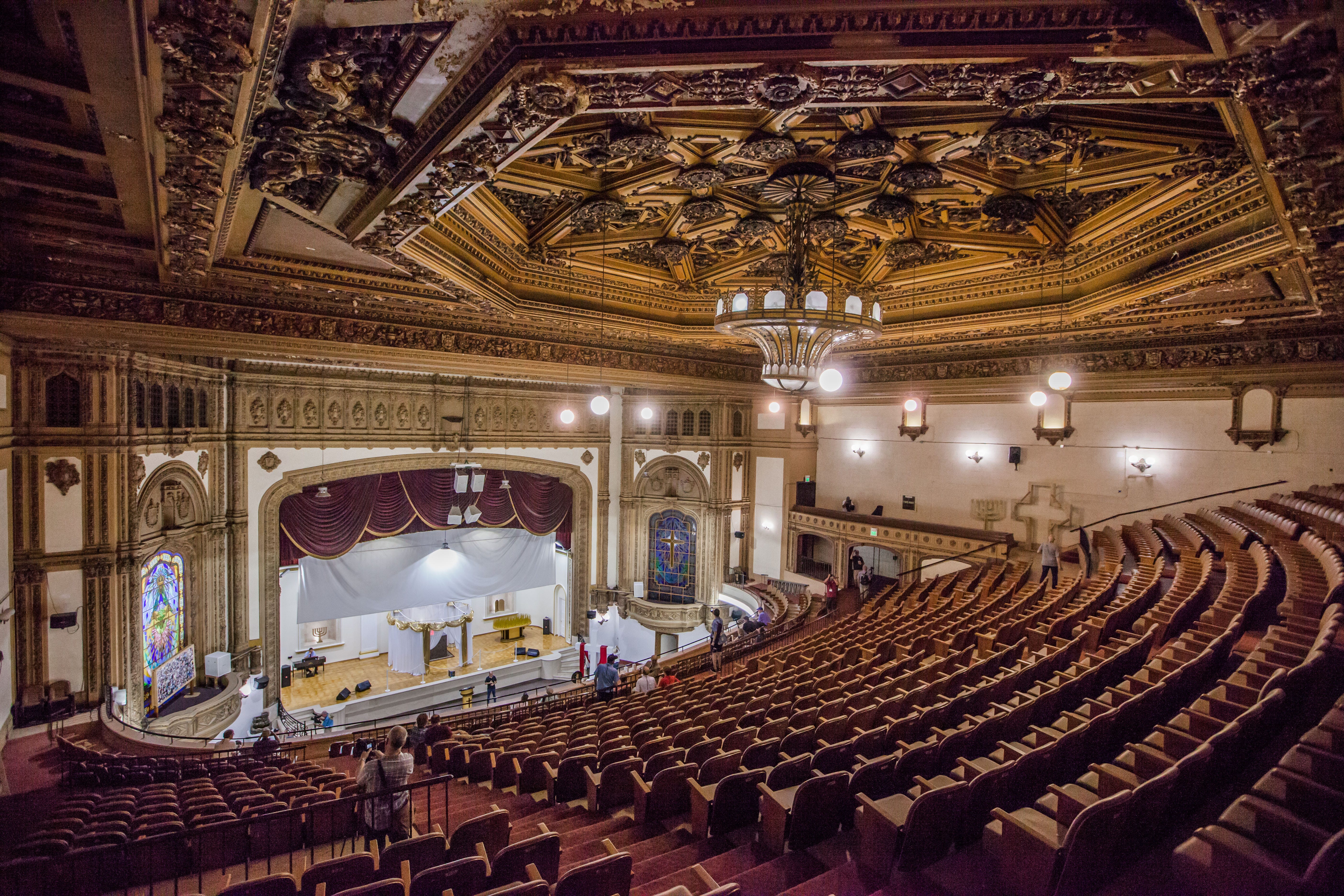
↑ STATE THEATRE — The large theater has served as a church worship space since the mid-2000s. (Mike Hume/LAC Archives)
Location: Downtown Los Angeles
Current function: Church
Down from its original 2,450-seat capacity, the State Theatre now seats just over 2,000, allowing it to still hold the title of biggest venue on Broadway — though now, it’s the Universal Church of the Kingdom of God reaping the benefits.
After the State closed its doors as a first-run movie house in the 1990s, it reopened in the mid-2000s as the Universal Church of Christ, a Protestant denomination with a strong Los Angeles contingent.
Back in the day, though, like many of the movie palaces on Broadway, it originally operated as a vaudeville movie house, later becoming a venue for more modern fare. Along with several other movie palaces at the time, the State’s first-run Spanish-language films became the primary driver by the 1960s and into the subsequent decades.
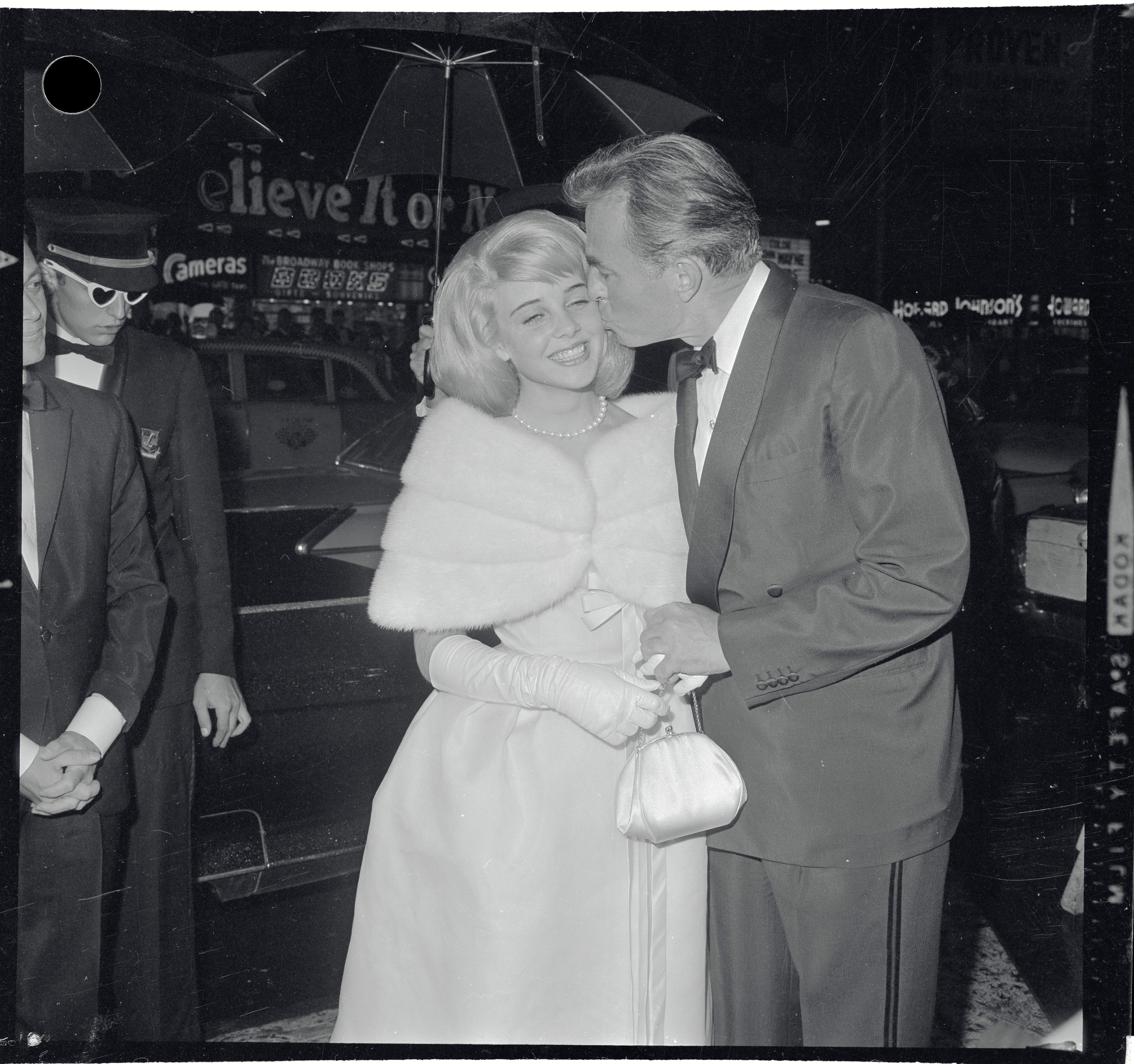
↑ STATE THEATER — James Mason kisses Sue Lyon on her cheek as they arrive at the premiere of Stanley Kubrick’s controversial Lolita in 1962. (Getty Images/Bettmann)
Highland Theatre
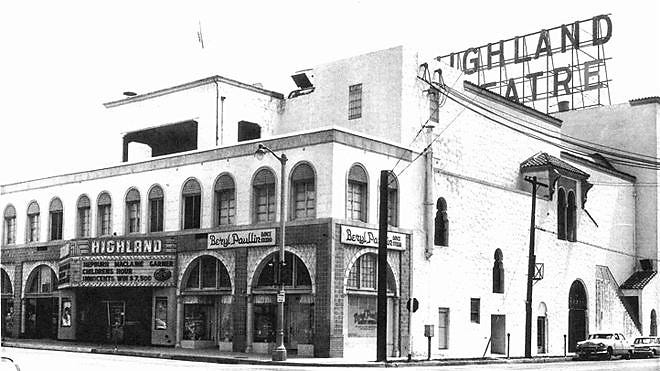
↑ HIGHLAND THEATRE — Pictured here in 1962. The Highland was built in 1924 and closed in early 2024; its final showings included Madame Web and Bob Marley: One Love. Over the last two years, the venue has been used for film and television productions, including the Marvel series Wonder Man and the upcoming Netflix movie The Adventures of Cliff Booth. (Courtesy of HPI Film Festival)
Location: Highland Park, Los Angeles
Current function: Mid-renovation
Six days before its 100th anniversary in early 2024, Highland Theatre shut down after a post-pandemic revival attempt failed to turn around the theater’s attendance issues. But this year, in one of the more hopeful signs for any of these palaces, actor-director Kristen Stewart purchased the Highland with plans to renovate it.
“I didn’t realize I was looking for a theater until this place came to my attention. Then it was like a gunshot went off and the race was on. I ran toward it with everything I had,” Stewart told Architectural Digest. “I’m fascinated by broken-down old theaters. I always want to see what mysteries they hold.”
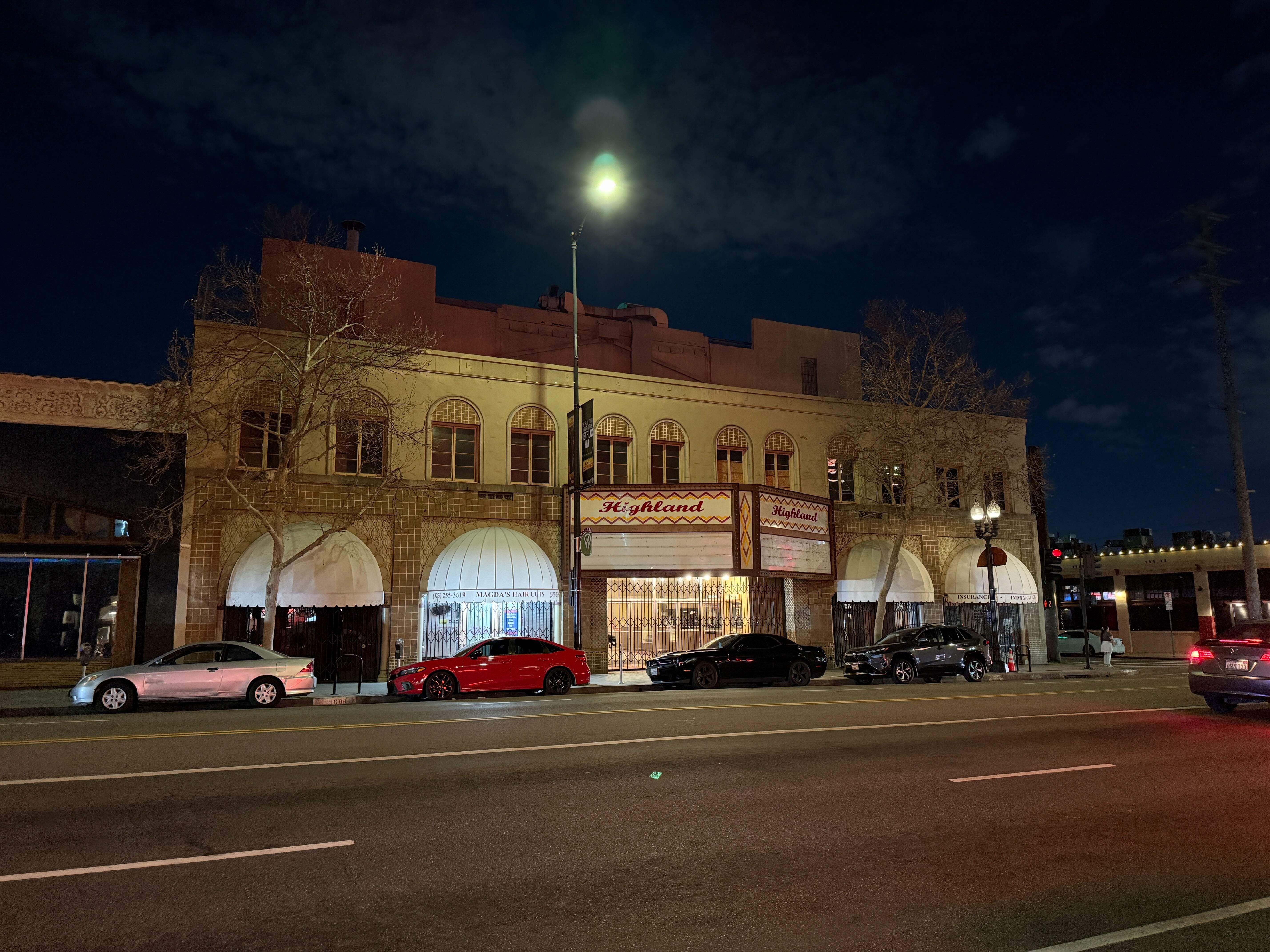
↑ HIGHLAND THEATRE — Pictured here recently. “I didn’t realize I was looking for a theater until this place came to my attention,” Stewart told Architectural Digest. “Then it was like a gunshot went off, and the race was on. I ran toward it with everything I had. I’m fascinated by broken-down old theaters. I always want to see what mysteries they hold.” (Kelsey Stefanson for The Ankler)

Now From Letterboxd: Advances in Theatrical
This week, the importance of the experience of watching films on the big screen
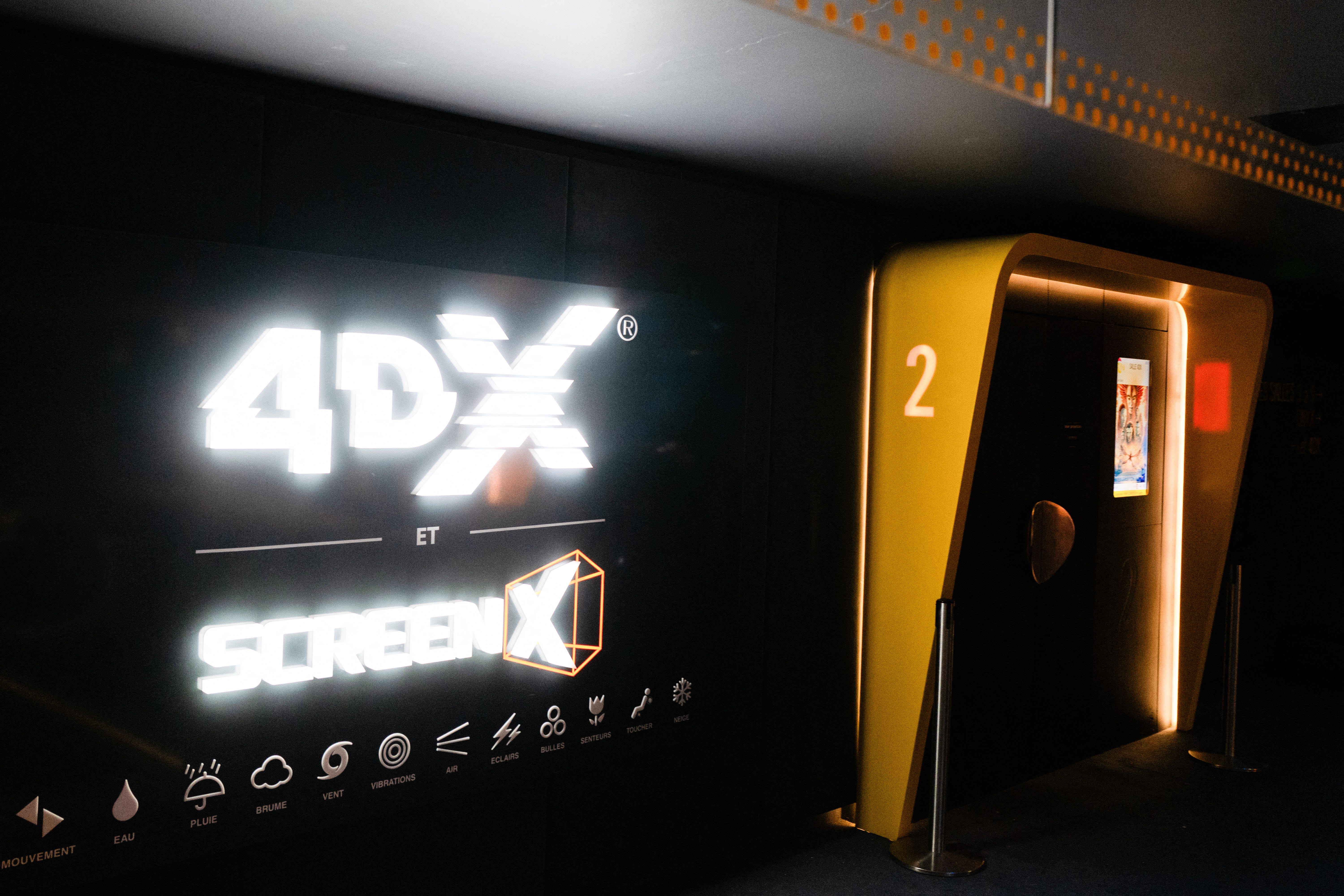
Since the advent of television, theaters and Hollywood have sought to make the theatrical experience distinct from what audiences could get at home.
Some of these changes, such as the widescreen format, became the new standard. Others, however, struggled to take hold, such as the audience electing the picture’s outcome, as in Kinoautomat and I’m Your Man. One current format that seems to have found a foothold is 4DX, a theatrical experience akin to a theme park ride where audiences not only view the movie in 3D but also sit in chairs on gimbals, get misted with water and experience wind effects. It’s not for everyone. (I went to a press screening of Red One in 4DX and had to check out after 20 minutes because it was all too distracting. Can’t Dwayne Johnson and Chris Evans save Christmas without me getting misted in the face?)
Still, others have found 4DX to be a worthwhile endeavor. Georgia notes in their review of 2024’s Twisters, “watched this in 4DX (as the lord intended) and I genuinely cannot imagine a better use of those wind machines and mist sprayers and rocking seats and flashing lights. Exhilarating. I actually started crying at one point and I’m not sure why.” For Megan, 4DX is the only thing that saved 2025’s Jurassic World: Rebirth: “If I hadn’t seen this in 4DX, I would have fallen asleep.” Other times, 4DX can just be bizarre, as KYK describes on a rewatch of this year’s Send Help: “Funniest part was my chair moving when she’s storming into Dylan O’Brien’s office in one of the early scenes.”
But it appears these rocking seats are here to stay, with their box-office growth ticking upwards in 2025, so hold on tight. — Matt Goldberg for Letterboxd