

Indie Intel: Tom Quinn, Roeg Sutherland, Ken Kao & More Give Best Advice for a Changing Market
Revisit the inside scoop as TIFF opens
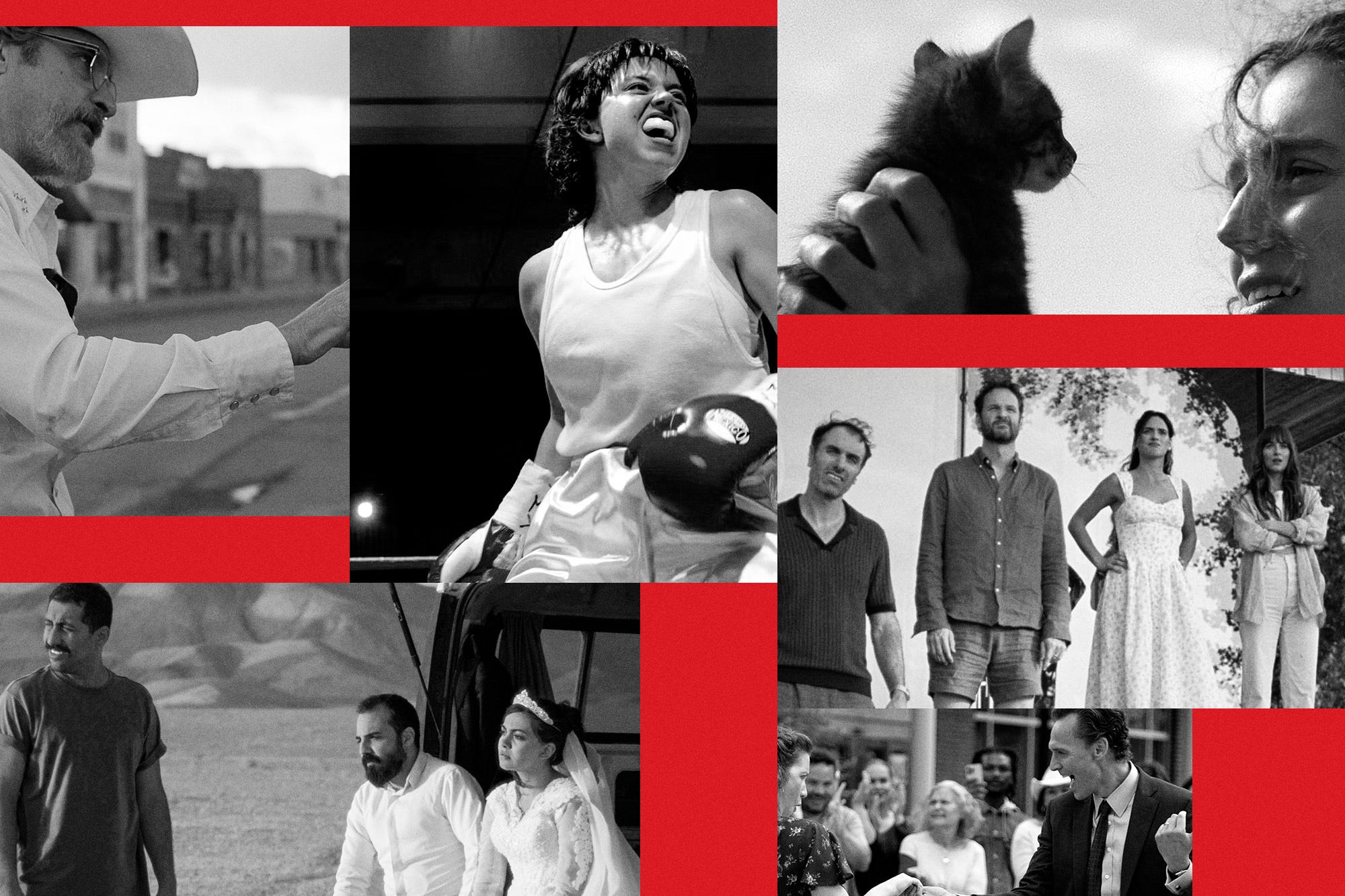
When Anora filmmaker Sean Baker won best director at the Oscars in March, he used his acceptance speech as a plea to the industry: “We are all here tonight because we love movies. Where did we fall in love with movies? At the movie theater,” said Baker, who won a record four individual Oscars for his indie comedy (which took home five overall). “In a time in which our world can feel very divided, this is more important than ever: It’s a communal experience you simply don’t get at home.”
Anora’s wins weren’t just an argument for theatrical movies — they also made a powerful case for independent film as an essential driver of Hollywood, both creatively and commercially. Baker’s film scored more than $57 million at the global box office on a $6 million budget. In the months since, Celine Song’s Materialists (A24), the year’s buzziest indie release, grossed $92 million worldwide as reps, attorneys and all kinds of industry stakeholders expressed a growing optimism about this year’s films and festival markets (other than Sundance — more on that below).
So as the Toronto market kicks off, with upstarts like Black Bear self-distributing Sydney Sweeney’s Oscar play in Christy and Steven Soderbergh’s latest star-studded picture The Christophers seeking a buyer, here’s what the industry’s sharpest minds including CAA’s Roeg Sutherland, Miramax chief Jon Glickman, Neon CEO Tom Quinn and WME Independent co-head Deborah McIntosh, have told The Ankler about the state of being independent this year — and more importantly, how the opportunity in being indie has become as big (and important) as ever as the sclerotic legacy studios move at a snail’s pace.
But it can only work for you if you have the intel…
Herewith, our reading list for your plane ride to Toronto:

Art of the Indie Deal

As Hollywood players adjust their engagement with film festivals (read: attend fewer of them), lawyers, execs and sales agents give Dealmakers’ Ashley Cullins the ins and outs of securing an indie film sale today. CAA Media Finance co-head Roeg Sutherland tells Cullins, “Toronto is already probably the best market to sell a completed movie for North American rights, but they’ll expand and become a market to set up and finance a film.”
The Palme d’Oracle

In an in-depth interview with Cullins, the Neon boss talks about his studio’s unprecedented run of success, including six straight Palme d’Or victories at the Cannes Film Festival after taking home the honor again this year with Jafar Panahi’s awards contender, It Was Just an Accident.
“If we stick to a very clear mantra of who we are and what we want to represent, we will be successful in the aggregate,” Quinn said in March. “Those things that are important to us are very clear: auteur-driven films that have purpose, something to say. Cultural heft, in some cases social impact, but also artistic merit in equal measure. Those things cannot exist without one another.”
Bonus: Quinn opens the books to reveal the financial picture behind Neon — and how you can build your own indie too.

A Bloody Innovative Indie Model?

Can’t secure financing the old-fashioned way? Upstart and stalwart filmmakers alike (Eli Roth and Robert Rodriguez included) are relying on fans to fund their budgets, with the hope of paying back their amateur investors tenfold down the line.
“My hope is that this becomes a new, third and complementary avenue for financing,” Marc Iserlis, head of film at Republic — a platform that lets fans invest directly new projects — told Ankler contributor Nicole LaPorte.
Original Sinners

Following the success of Ryan Coogler’s Sinners with Michael B. Jordan in a dual role, the industry found hope that the movie will lead studios and producers to take more swings. If it doesn’t, though, making an indie film outside the bounds of the studio system has never been more doable, Cullins reported.
“The thing that’s not being discussed in this moment is the degree with which technology has democratized the filmmaking process,” one studio exec told her. “This is an unprecedented moment in time.”

Ken Kao’s Tough Words for Making $

Waypoint CEO Ken Kao has produced everything from Yorgos Lanthimos’ The Favourite, Scott Cooper’s Hostiles and Martin Scorsese’s Silence to last year’s horror smash Longlegs and this week’s relationship comedy Splitsville. The latter two are part of his company’s strategic partnership with Neon to create a slate of $10 million-plus indie movies, and Kao revealed to Cullins how he approaches films with the town’s hottest indie distributor.
“As a basic foundation, we want to make sure that whatever we’re making is quote-unquote good, meaning it’s trying to say something,” he said. “I’d like to make films that are meaningful to people in some way, that aren’t just purely entertainment. That could mean that it’s approaching something in a new subversive way or adding something to the genre creatively. It doesn’t have to be some kind of heavy-handed messaging.”
Old Is New

Speaking to Richard Rushfield, Miramax CEO Jon Glickman, former head of MGM Motion Picture Group, suggested that IP had evolved from rehashed superhero stories and soulless reboots to a more discerning place where familiarity and originality blended together.
“I was lucky enough when I was at MGM to have, you know, Ryan Coogler come in and say, ‘Let’s take the Rocky franchise in this direction,’” Glickman recalls of 2015’s Creed, which has seen two sequels. “So I think you’ll see a lot more versions of people taking pre-branded stuff and creating original stories that aren’t necessarily just derivative sequels of those shows. I still think we live in a moment where the pre-brandedness means a lot.”

AI’s Sci-Fi Revolution

“Indie” and “sci-fi” are words you don’t often hear in the same breath. But, as Reel AI’s Erik Barmack detailed, Tye Sheridan and Nikola Todorovic’s Wonder Dynamics, which they launched in 2017 and was acquired in 2024 by Autodesk, aims to democratize access to high-quality VFX.
“We wanted to build something that would allow any filmmaker, regardless of budget, to tell stories at the level of the best studios in the world,” Sheridan said.
Glass Half-Full

As the success of KPop Demon Hunters has proven, nobody knows where the next hit is going to come from — but people like WME Indepedent co-head Deborah McIntosh are well aware of how to navigate an industry that’s constantly changing.
“If we can just figure out a better way of monetizing the consumer’s attention so that distributors don’t have to spend the wrong way to get that attention, it will fix a lot of broken things,” she told Cullins. “We’ve had so many cool iterations of [the business] and we are going into another cool one. Let’s all calm down. No more freaking out. It is going to be okay and fun and exciting, and we’re here to create opportunity amongst the challenges.”
Yes, But: The Sundance Slump
McIntosh also spoke to Cullins how important it is for the Sundance Film Festival to handle its transition to Boulder, Colorado in 2027 with care. But for Richard, who was seriously underwhelmed by this year’s dreary gathering in Park City, the January confab is ripe for a refresh. This year’s Sundance exposed how the indie community gets in its own way, Richard wrote, but it also gave him some powerful ideas to turn the tide.


“The landscape feels like it is in crisis,” Richard wrote. “But it’s a crisis with an opportunity: For the independent world and new forces to seize the newly created void.”