

Why OpenAI Needs ‘TBPN.’ Badly
Sam Altman now knows the next AI arms race isn’t about tech — it’s about narrative

I cover Hollywood and AI. I wrote about the sudden death of OpenAI’s Sora, Val Kilmer’s upcoming AI-assisted posthumous movie role, Ben Affleck selling his AI company to Netflix and the entertainment industry’s meltdown over ByteDance’s Seedance.

There was a time not long ago, recently enough to feel faintly embarrassing, when Sam Altman seemed credibly determined to be the one tech CEO who didn’t need a narrative strategy. No chaos, no theatrics, no compulsive need to insert himself into every news cycle.
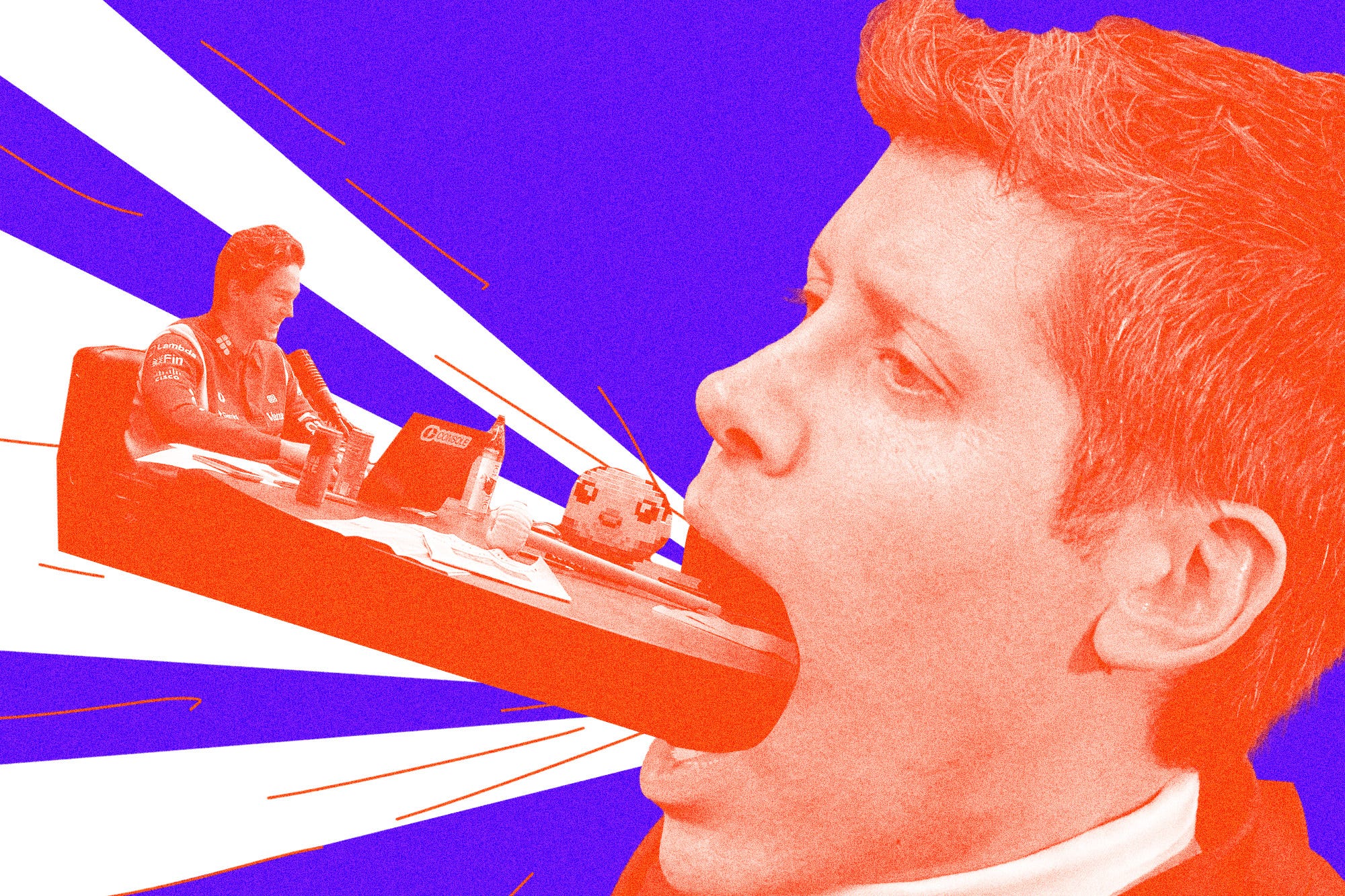
That era is over. Within a week of OpenAI scooping up TBPN — a deal reportedly in the “low hundreds of millions” that practically screams, “We would like to control the narrative, thanks” — Altman is everywhere again, performing that very modern trick of seeming reluctant while somehow never missing a spotlight (and annoying almost everyone at the same time).
And that makes sense, because the AI industry has a legitimacy problem. These companies have been extraordinarily effective at demonstrating what their systems can do. They’ve been far less effective at explaining why those outputs should matter in a cultural sense. The default framing — faster, cheaper, scalable — has driven adoption while quietly undermining value.
Which is ironic, because the official line — the literal, on-the-website mission — is still aggressively pure: OpenAI exists “to ensure that artificial general intelligence benefits all of humanity.” Ah, humanity and its need to be saved by tech oligarchs! That sentence does a lot of work. It is sweeping, moral, vaguely planetary and flexible enough to stretch over just about any strategic decision. It is also, in spirit if not in letter, a sentence the entire AI industry has been writing versions of for years — and increasingly, the inconsistent behavior underneath those mission statements is converging too.
Acquiring TBPN is not a side quest. TBPN — short for “Technology Business Programming Network,” which is a mouthful — has, in a relatively short period, become one of Silicon Valley’s preferred narrative engines, as Natalie Jarvey recently reported on Like & Subscribe. It operates as a hybrid: part podcast network, part live-streamed roundtable, part always-on commentary layer for the tech industry. Founders, VCs and operators rotate through its programming, reacting to the news in real time and, more importantly, shaping how that news is interpreted.
That dynamic was on display this week, when a TBPN guest quoted Shopify CEO Tobi Lütke saying “AI is coming for everything, and you’re going to look back and realize that this is the year it should have been obvious that you could rebuild the AI-native version of whatever exists out there.”
TBPN may be less interested in breaking stories than in accelerating consensus.
This is why AI-generated content occupies such an awkward position across the board. It is ubiquitous, yet rarely feels essential. It is impressive and yet routinely treated as a shortcut. The industry has, in effect, optimized for capability before establishing legitimacy. OpenAI’s acquisition of TBPN is the most visible expression yet of a problem every major AI company is quietly trying to solve.
Below, I break down:
What OpenAI’s acquisition of TBPN reveals about the AI industry’s anxiety — and where it’s turning for solutions
The risks of narrative control colliding with OpenAI’s original mission
How Google, Meta and Runway are solving the same problem by different means — and why none of it is working
The growing gap between AI capability and cultural legitimacy
What Hollywood already understands about the true value of content that AI companies still don’t
The big question underneath it all: Who gets to define what AI is for?
This column is for paid subscribers only. Interested in a group sub for your team or company? Click here.
For full access and to continue reading all Ankler content, paid subscribers can click here.