

Tilly Norwood: Exec Dream, Union Nightmare and an AI Actor Army Already on Set
SAG-AFTRA is great at fighting the last war, not the one in front of it

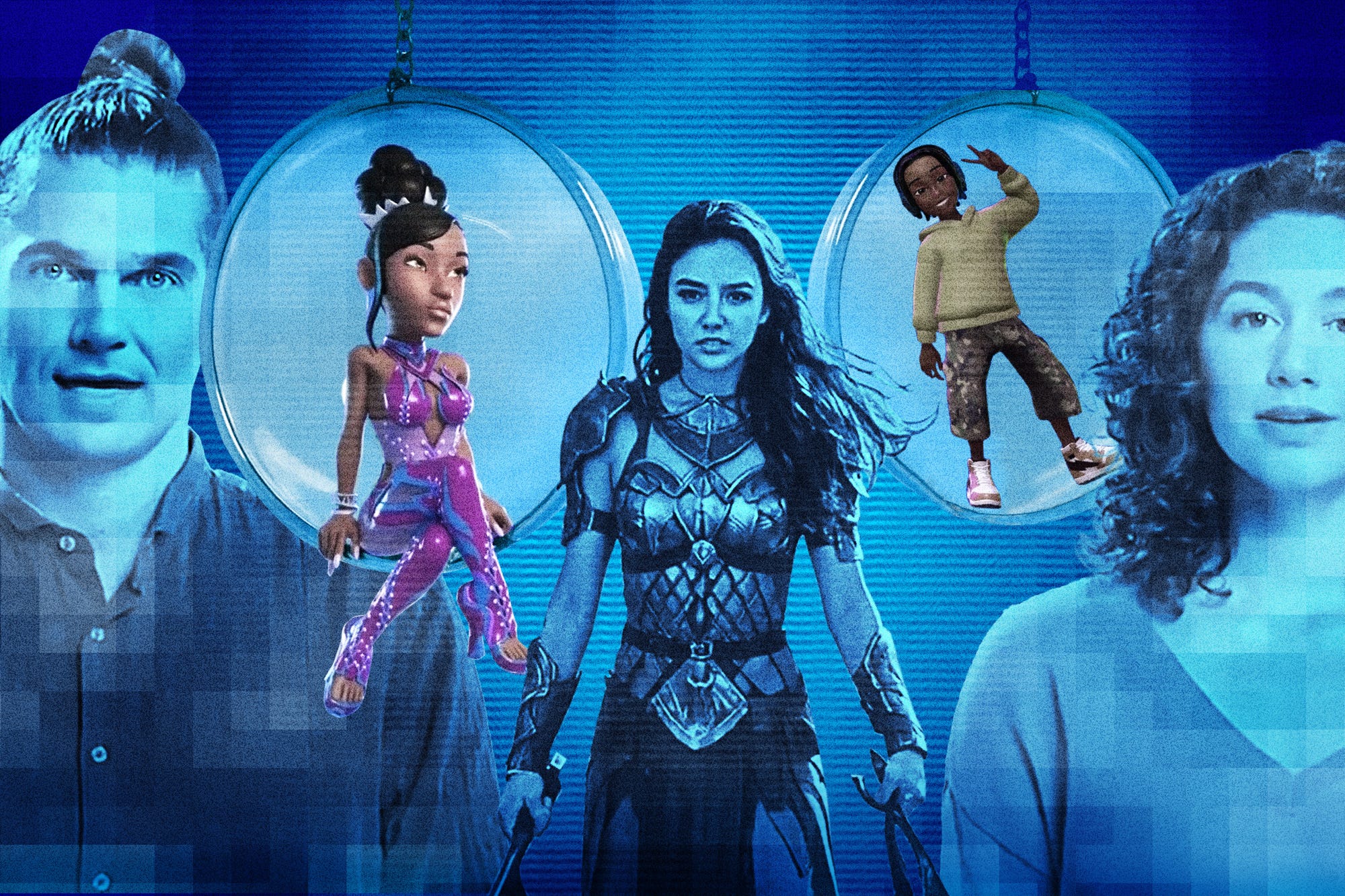
I write every other Tues. for paid subscribers. I explored how AI is threatening jobs across Hollywood and the impact of Sora 2 and ChatGPT-5 on development and production, and I interviewed Asteria’s Bryn Mooser about his strategy to safeguard IP.

Hollywood’s collective blood pressure spiked the moment Tilly Norwood’s latest Instagram post went live. Not because the AI actress — a creation of London-based production company Particle6 and its AI studio, Xicoia — flubbed a line or missed her call time, but because she looks frighteningly castable. As Ankler CEO Janice Min reported from Web Summit Lisbon, where she interviewed Particle6’s Eline Van der Velden, there has “never been anything like Tilly in likeness, speech, physicality and personality.” The panic, the outrage, the existential dread? That’s not about novelty. It’s about a digital performer who, with zero union dues or trailer requests, threatens to rip up rules Hollywood spend decades to enshrine.
Related:

And Hollywood knows it. Emily Blunt called the concept “really, really scary.” SAG-AFTRA issued a statement warning that Tilly is “trained on the work of countless professional performers — without permission or compensation,” framing her as a direct threat to jobs. Yet the hysteria misses the nuance Van der Velden stressed to Min: “People were misinformed… They thought she was going to take their jobs. Tilly’s meant to be an AI actor in the AI genre.”

Van der Velden insists the aim is additive, not cannibalistic: “I feel very strongly about the creative industries being in charge of these guidelines… as opposed to it being imposed by the tech industry,” she told Min.
Still, most in Hollywood remain unconvinced. Industry insiders have expressed deep concern that Norwood’s ultra-realistic likeness, combined with her ability to perform endlessly on demand, could normalize the replacement of human actors in supporting roles. It’s not just the stunt — it’s the precedent. Once studios realize they can get an actor without paying residuals or negotiating schedules, studio heads might be asking themselves why they’re paying real actors at all.
Particle6 is already proving that AI can be broadcast-ready. The company yesterday announced its third AI-driven series commission from Hearst Networks: Straten van Toen (Streets of the Past), a 10-episode short-form series for the History Channel in the Netherlands (Van der Velden is Dutch). The show, premiering in January, stars Dutch historian and reality star Corjan Mol digitally transported to historical moments — from 17th-century Amsterdam’s first stock exchange to WWII resistance activity at Janskerkhof in Utrecht.

Particle6 blends live-action footage and archival materials (paintings, historical photos) with AI-driven reconstructions, creating cinematic, historically grounded moments that would be nearly impossible on a traditional production budget. “This is our first series where AI is majorly deployed on screen, all carefully guided by humans of course!” said Van der Velden in a statement. “It has proved the perfect creative partner.”
Tilly Norwood lives in the same universe as this pipeline — a universe where AI isn’t a tool but a talent class. Hollywood is now confronting the reality it has spent years pretending was still decades away.
Today, I break down what’s coming for actors, agents, unions and filmmakers as AI performers move from fringe curiosity to front-of-camera force, including:
How AI could make sets safer and shoots faster for human actors — and still threaten thousands of jobs
Four companies leading the AI talent wave, from photoreal digital performers to endlessly scalable celebrity-branded avatar IP
Why unions, agents and entertainment lawyers are already behind the curve — and struggling to build guardrails fast enough
The unresolved fight over who owns a synthetic performance — and who gets paid when an AI actor is trained on human work
Which human roles will be replaced first, which jobs can be saved, and what the new “entry-level” career path might look like (if one exists)
Why filmmakers are eyeing AI actors not just for cost savings, but for creative control they could never have with humans.
This column is for paid subscribers only. Interested in a group sub for your team or company? Click here.
For full access and to continue reading all Ankler content, paid subscribers can click here.