

The Brazilian Wave Hits the Oscars
How ‘Train Dreams’ cinematographer Adolpho Veloso became this season’s symbol — along with Wagner Moura — for a nation’s movie moment


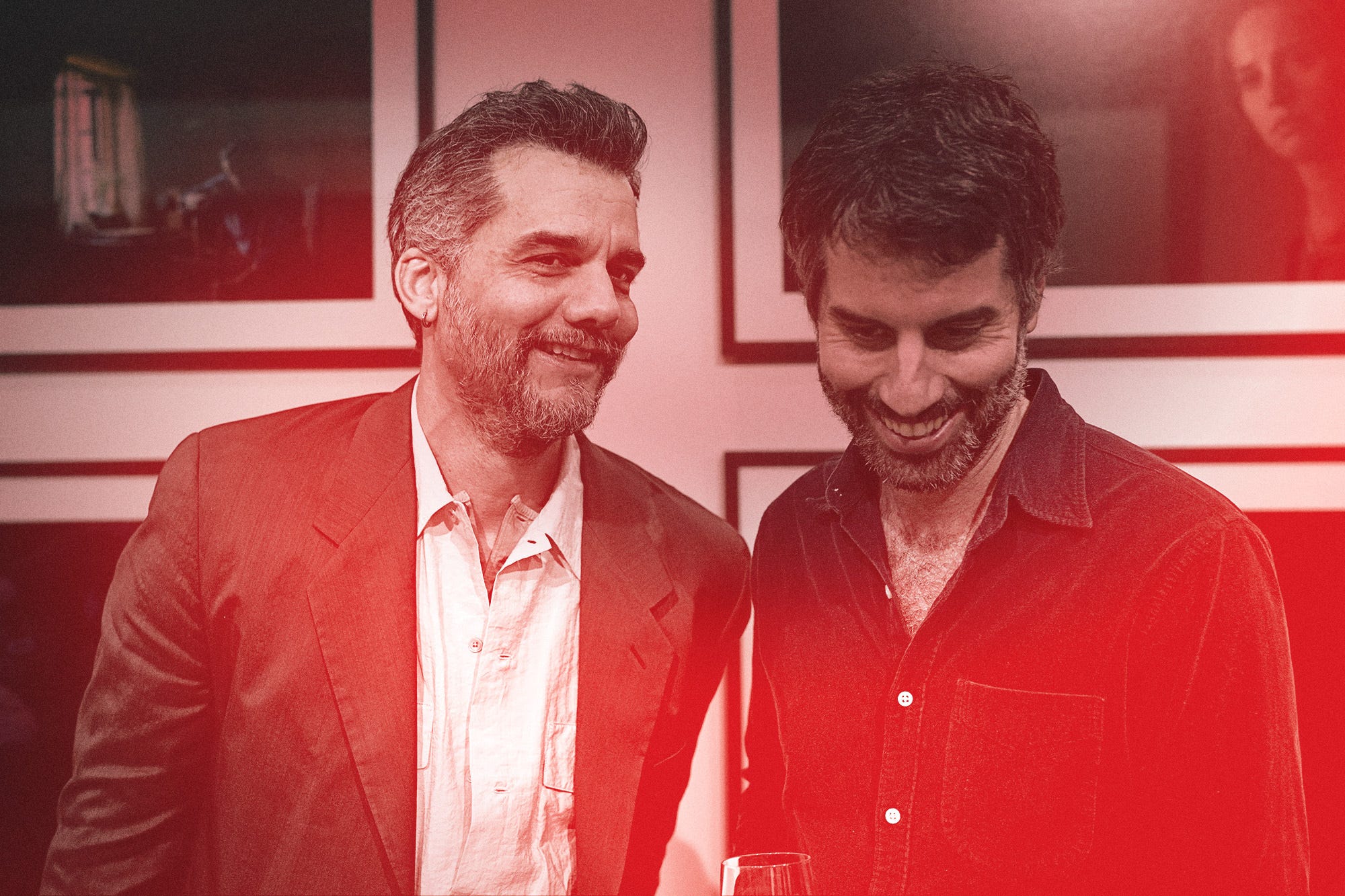
When Wagner Moura stepped onstage to present the best cinematography award at the Film Independent Spirit Awards, Train Dreams cinematographer Adolpho Veloso couldn’t help but see it as a sign.
Or at least, Veloso tells me, he thought “it would be a bad joke” if he wasn’t announced as the winner. Fortunately, even before Veloso’s name was spoken aloud, he knew he’d won: Moura opened the envelope and said in Portuguese, “And I’m really happy with it.”
Moura, the star of Brazilian hit The Secret Agent, and Veloso, a São Paulo native, have had plenty of time to catch up in their native language throughout this long awards season, where they’re both now Oscar nominees (Moura for acting; Veloso for cinematography).
“Obviously, when you see fellow Brazilians in those spaces, it’s like a magnet,” Veloso tells me. “You end up talking to each other and sharing experiences— this is all new to all of us.” Veloso is particularly grateful that after months of doing press and talking about his work on Train Dreams, he can find Moura — even at fancy events, like one hosted by the Brazilian ambassador in London ahead of the BAFTAs — and talk about something totally different: Brazilian soccer.
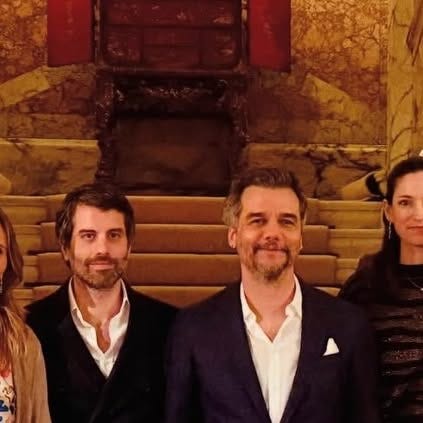
Though Train Dreams is otherwise a very American movie, directed by Texas-based Clint Bentley and set in the Pacific Northwest in the early 20th century, it’s benefiting from the highly visible enthusiasm of Brazilian movie fans thanks to Veloso. Instagram posts and YouTube videos about Veloso’s work are filled with Brazilian flags in the comments, and the celebrations for awards season victories for Veloso and The Secret Agent team sometimes rival what happens around the World Cup. Both Veloso and The Secret Agent director Kleber Mendonça Filho have speculated that the famous enthusiasm shown by Brazilian soccer fans has now transferred over to the movies.
“Brazilians are very present on social media— they’re very much part of the whole internet package,” Mendonça told me during our interview a few weeks ago. He points to last year’s Oscar breakthrough, I’m Still Here, from director Walter Salles, as paving the way for The Secret Agent, both with Brazilian moviegoers and around the world. “Some people now are saying in Brazil that cinema is replacing football in terms of enthusiasm. I find it a little dramatic to say that, but I think Brazilians are very proud of these two films, and I hope that the energy that is being given to The Secret Agent and last year to I’m Still Here is also given to other films.”
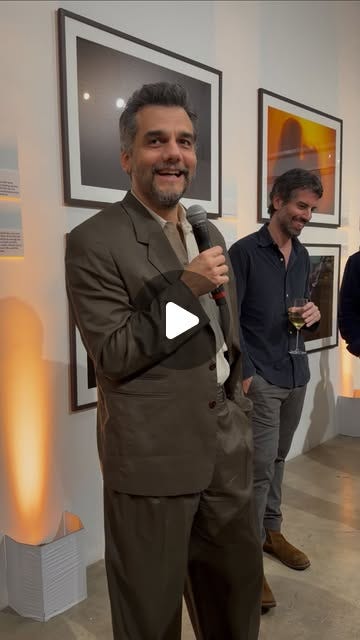
The mutual appreciation between The Secret Agent and Train Dreams, both best picture nominees, continued this week, with Moura hosting a cocktail reception on Wednesday to open Netflix’s exhibit “Train Dreams: The Visual Journey.” In a video from the event, Moura praised Bentley’s direction and star Joel Edgerton’s lead performance before adding with a smile, “But of course, the film wouldn’t be what it is if it wasn’t for a Brazilian guy.”


The Tracks to Train Dreams
It was his work on the documentary On Yoga: The Architecture of Peace, from Brazilian director Heitor Dhalia, that first put Veloso on Clint Bentley’s radar, back when Bentley was hiring a cinematographer for his debut feature, Jockey. But even then, Veloso, now 36, was already working well beyond the boundaries of his home country.
“I was almost never there anymore for the past three years that I was living in Brazil — I was working everywhere else but Brazil,” he told me in a phone call from London last week. Now based in Portugal, Veloso had followed work to Argentina, India, New York and other points around the world before Bentley came calling, asking for Veloso’s help bringing a cinematic feel to a low-budget indie set at a horse race track in Arizona and shot with a budget of just $300,000.
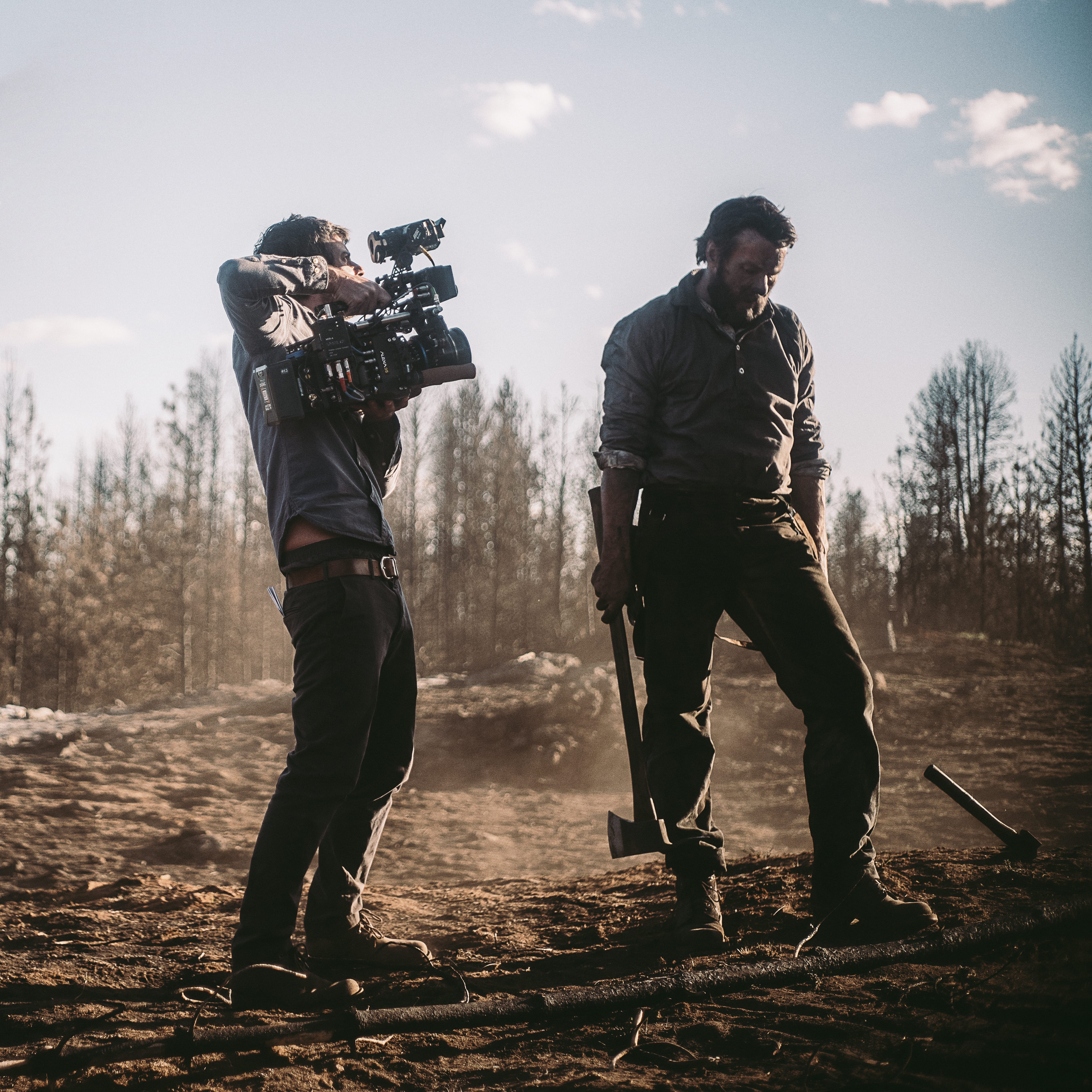
When Veloso and Bentley reunited for Train Dreams a few years later, the budget was a bit bigger, but so were the challenges. On Jockey, they worked with a crew of 10 people and could set up without even being noticed by the real people at the racetrack. For Train Dreams, Veloso explains, it required weeks of prep to recreate that same intimacy within a period-appropriate setting. “It was a full conversation with all departments during prep to figure out how to do that,” Veloso tells me. “To have that smaller footprint while we were shooting, to make it look, when we were around the actors, that it was a 10-person set in a way.”
Key sets, like the cabin where the film’s hero, Robert (Edgerton), sets up a homestead with his new wife, Gladys (Felicity Jones), were built on location to allow Veloso’s camera to move freely within them, capturing the natural movements of the actors — or even some animals — as well as the nature around them. “We had a 2-year-old, we had animals, chickens, horses, and to have the only weird element there be the camera — it’s amazing,” Veloso says. “It’s a throwback to the way I learned how to do things when I didn’t have access to equipment, to work mostly with natural light.”
All that naturalism meant that the film’s one big effects-heavy sequence, when Robert comes home to find a forest fire has engulfed his home, had to feel just as authentic, too. Filming in a forest that had recently burned, Veloso and gaffer Kevin Cook experimented with a range of lights to capture the many colors of a large fire, from top to bottom. “It was quite simple in the end, but it was hard to get to that simplicity,” Veloso says. “We didn’t want to do the Hollywood version of a fire, but the most accurate and respectful representation of a fire.” He admits he grew a few new gray hairs in the process, but it’s hard to deny it was worth the effort.

Pride of Brazil

The day that Veloso and I spoke, he was awaiting the awards announcements from the Berlin Film Festival, where his new film Queen at Sea had just premiered. It wound up winning two awards, the jury prize for director Lance Hammer and a shared supporting actor prize for Tom Courtenay and Anna Calder-Marshall. Early reviews have already singled out Veloso’s cinematography as a key element of the harrowing dementia drama, and though it’s a little soon to make predictions, it’s very possible Veloso’s awards journey may soon start all over again.
For now, however, he’s soaking up the time spent in these rooms with people he’s long appreciated — “Competing is also terrible, by the way, because I’m competing against people I admire so much,” he says — and trying to enjoy the less stressful parts of the season. He seemed confident heading into the BAFTAs that he wouldn’t win (he was right; One Battle After Another cinematographer Michael Bauman took home the prize), and was looking forward to seeing host Alan Cumming as a fan of the U.S. version of The Traitors. (Right there with you, Adolpho!) And of course, he’s going through it all with the continuous, vocal support of Brazilian cinephiles, who are proudly cheering for the first Brazilian ever nominated for the best cinematography Oscar — and surely not the last.

 Tiktok failed to load.
Enable 3rd party cookies or use another browser
Back in December, when Timothée Chalamet had recently shown up in São Paulo wearing a custom Marty Supreme jacket with the colors of the Brazilian flag and The Secret Agent was on its way to becoming the most successful Brazilian film of the year, I got on the phone with Beatriz Izumino, a culture reporter based in São Paulo. I wanted to ask what felt like an ignorant American question: Has Brazilian film culture always been this vibrant, or are we only now noticing it because I’m Still Here and now The Secret Agent have brought it to our attention?
The answer, of course, is complicated. Like any country with its own film industry, Brazil makes plenty of goofy comedies and blockbusters that play well for local audiences and never make it here. The Secret Agent is the fourth-highest-grossing film in Brazil so far in 2026, but it’s still behind Zootopia 2 and The Housemaid. But there is a genuine national pride emerging around Brazilian films and filmmakers, moving in tandem with the newfound political optimism both Moura and Mendonça have emphasized throughout The Secret Agent awards campaign.
“We like being validated,” Izumino says. “We like that someone else has seen that we can do things that are good and important. Brazil has a pretty robust movie industry within the country, but that international recognition still feels like a special extra. I think when you were a colony, it’s different. Having this validation from the U.S. and from Europe, it means a lot.”
But there might also be another link between Brazil and Marty Supreme that made that custom jacket such a natural fit. “We are very confident and very cocky,” Izumino continues. Though Brazilians are excited when their films and filmmakers hit big around the world, they’ve also been waiting for us to catch up. As Izumino puts it, “We know that our culture is really good — good on you for seeing that.”
