

Nia DaCosta’s Double Header: The Week ‘Hedda’ Meets Horror
Plus: How a whirlwind Critics Choice night just reshaped the Oscar races

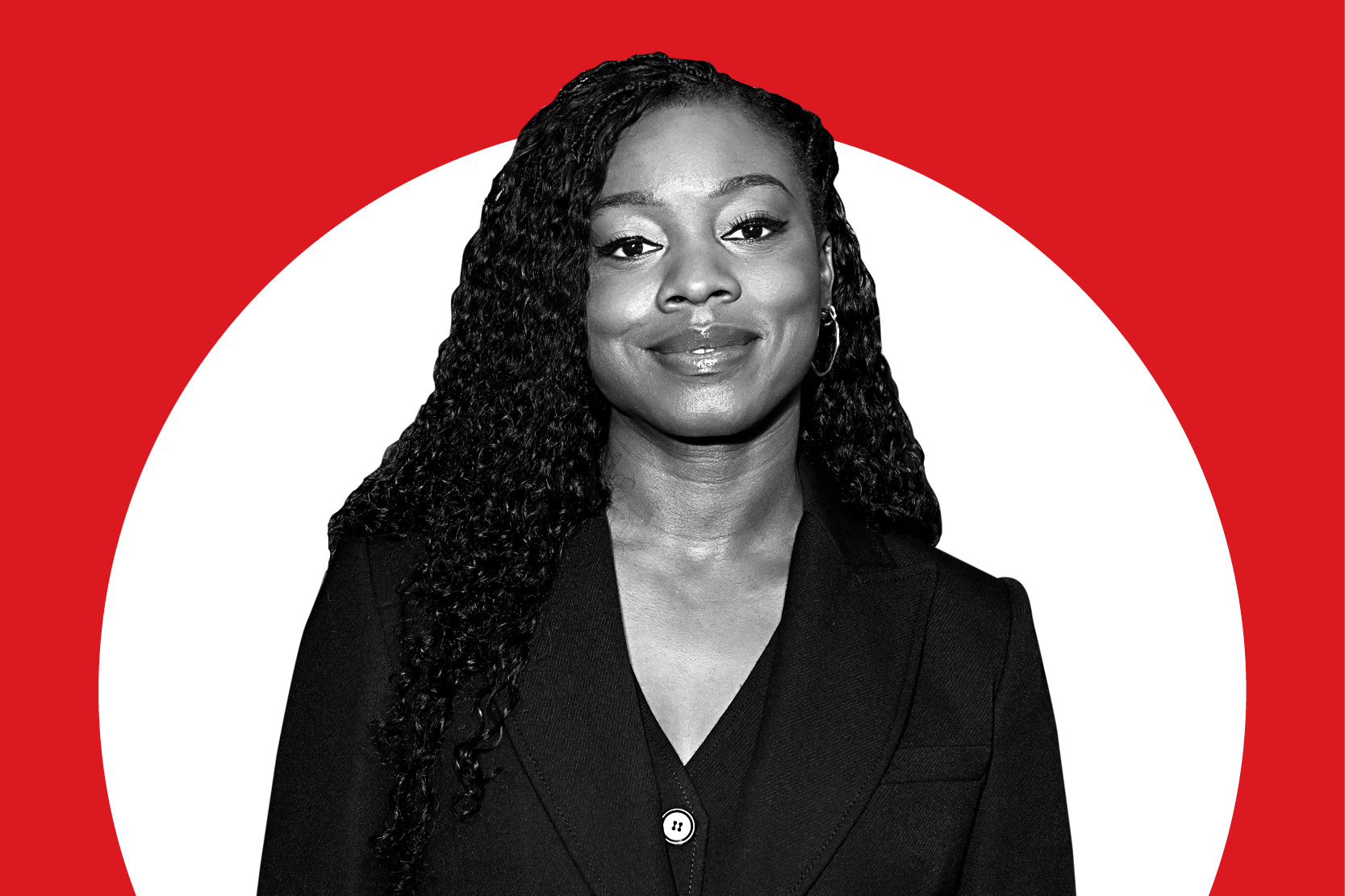
Today, I’m sharing my conversation with director Nia DaCosta, whose awards campaign for her new movie Hedda is now overlapping with the release of her newest movie, the upcoming horror sequel 28 Years Later: The Bone Temple. I’m always fascinated to talk to people who are capable of that kind of multitasking, and DaCosta had plenty to say about what makes it possible.
But first, a few takeaways from last night’s Critics Choice Awards, which surely felt a bit like being shot out of a rocket after two blissfully quiet weeks of holiday break. (Pity poor Leonardo DiCaprio, who was held over on his yacht trip in St. Bart’s with Jeff Bezos due to airspace restrictions near Venezuela, and barely made it to the awards show on time.) Critics Choice is the start to a jam-packed week of awards events on both coasts, all leading to the Golden Globes this Sunday. On tomorrow’s pod, Christopher Rosen will preview the busy week ahead, and I’ll also share the Substack Live conversation we had immediately after the Critics Choice Awards ended last night. (Missed it? Make sure you’re a Prestige Junkie After Party paid subscriber and catch up!)
So what did we learn last night about the vibe in those jam-packed rooms this week? Read on!

1. The One Battle Coronation Is (Mostly) Proceeding as Planned
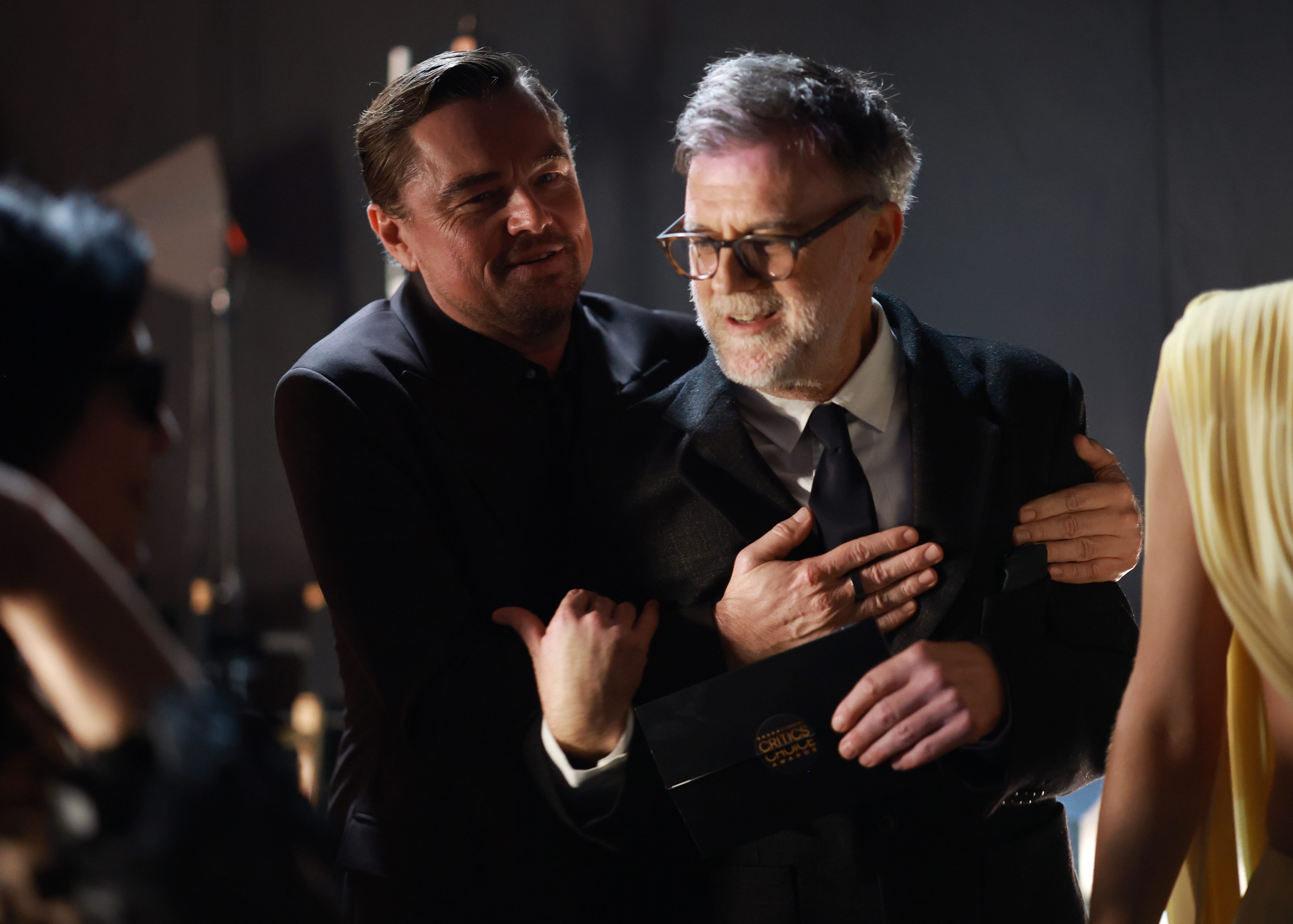
The Paul Thomas Anderson film One Battle After Another only scored three wins at the ceremony, all for Anderson: adapted screenplay, director and as one of the producers when it won best picture — a.k.a. the three awards that really mattered. Sure, if Leonardo DiCaprio or Benicio del Toro had taken home acting awards (more on those races in a moment) or One Battle had scored a win for casting or score, we might be looking at it as more of an Oppenheimer-sized juggernaut than simply a regular best picture frontrunner. But the season-long sense that One Battle was the film to beat was very much confirmed on Sunday night, even if its competition in many other categories is starting to look stronger and stronger. That includes its competition from within its own studio…

2. Sinners Is Showing Strength at the Exact Right Moment
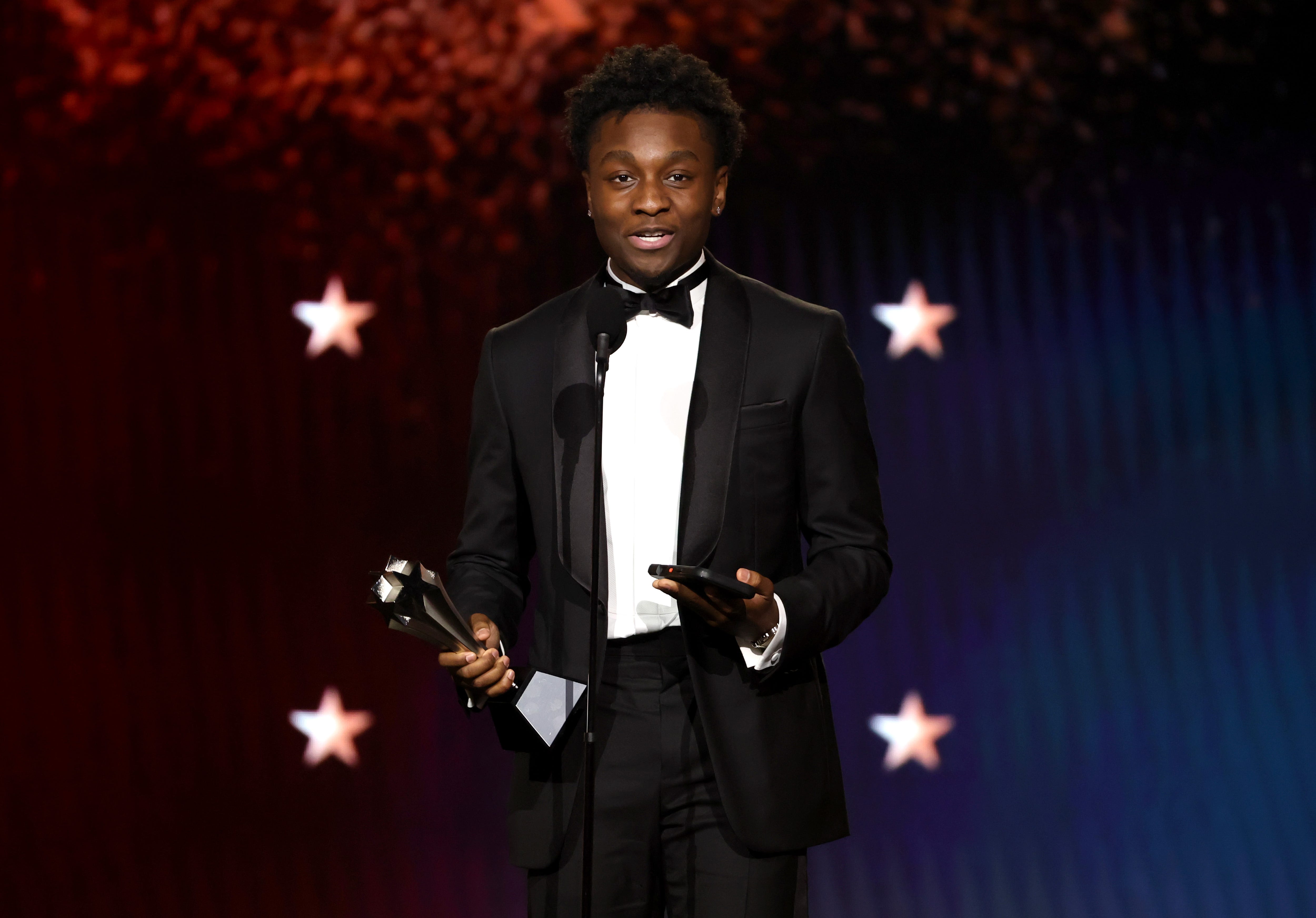
After 20-year-old Miles Caton took home the night’s first award, for best young actor, and especially when casting director Francine Maisler accepted the award for best casting and ensemble, I briefly wondered if Sinners could surge for a shocking best picture win. Instead, it tied for the most trophies of any film, adding best score (for Ludwig Göransson) and best original screenplay for Ryan Coogler to its tally.
With Oscar voting beginning a week from today, it’s an excellent time for all the major players behind Sinners to remind everyone of what a phenomenon this movie was and, not for nothing, a bigger box office hit than its fellow Warner Bros. release One Battle After Another. The tables with the casts of both movies were side by side at the awards, and rather than feeling like feuding siblings, they seemed to draw strength from each other. One of the first things Paul Thomas Anderson did when he took the stage to accept his best director award was to acknowledge Coogler. That’s the kind of teamwork that could very easily make One Battle and Sinners the two most dominant films on Oscar night as well.

3. OK, But What About Frankenstein?
 Tiktok failed to load.
Enable 3rd party cookies or use another browser
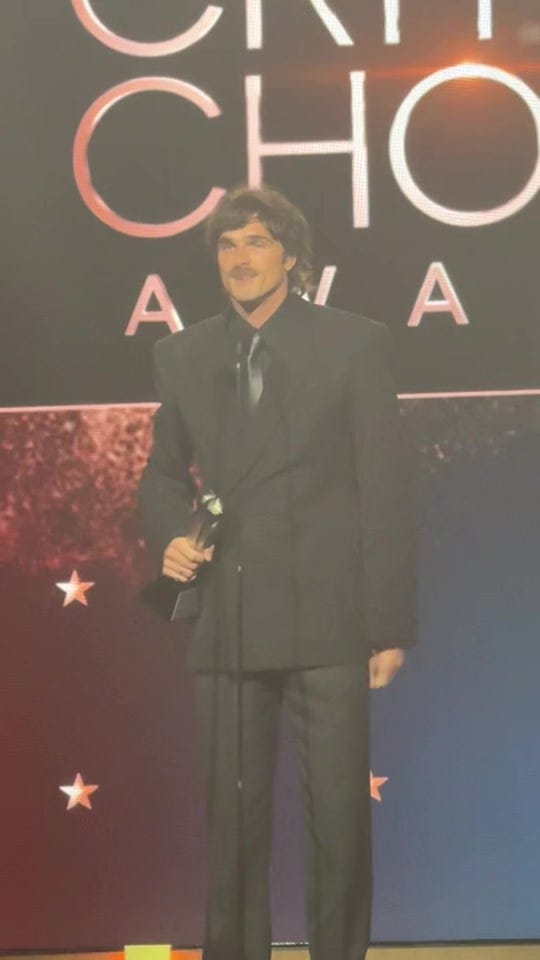
Yes, Sinners tied with Guillermo del Toro’s Frankenstein for the most wins, though, since supporting actor Jacob Elordi was the only winner from the Netflix movie to give a speech, it was a bit harder to notice. (The film’s other awards, for hair and makeup, costume design and production design, were announced in a quick montage leading into a commercial break.)
Elordi’s victory was probably the biggest surprise of the night, given how Benicio del Toro had decisively swept all of the critics’ awards leading up to this, including wins from the New York Film Critics Circle, National Society of Film Critics and National Board of Review. The supporting actor category has been especially fond of sweeps in recent years — remember watching Kieran Culkin and Robert Downey Jr. give an endless string of speeches? — and del Toro could very well be on his way toward one. But Elordi’s victory and lovely speech put a fascinating wrench into things, and his win ought to make supporting actor one of the most interesting categories to watch at the Globes on Sunday.

4. Best Supporting Actress is Truly Anyone’s Game
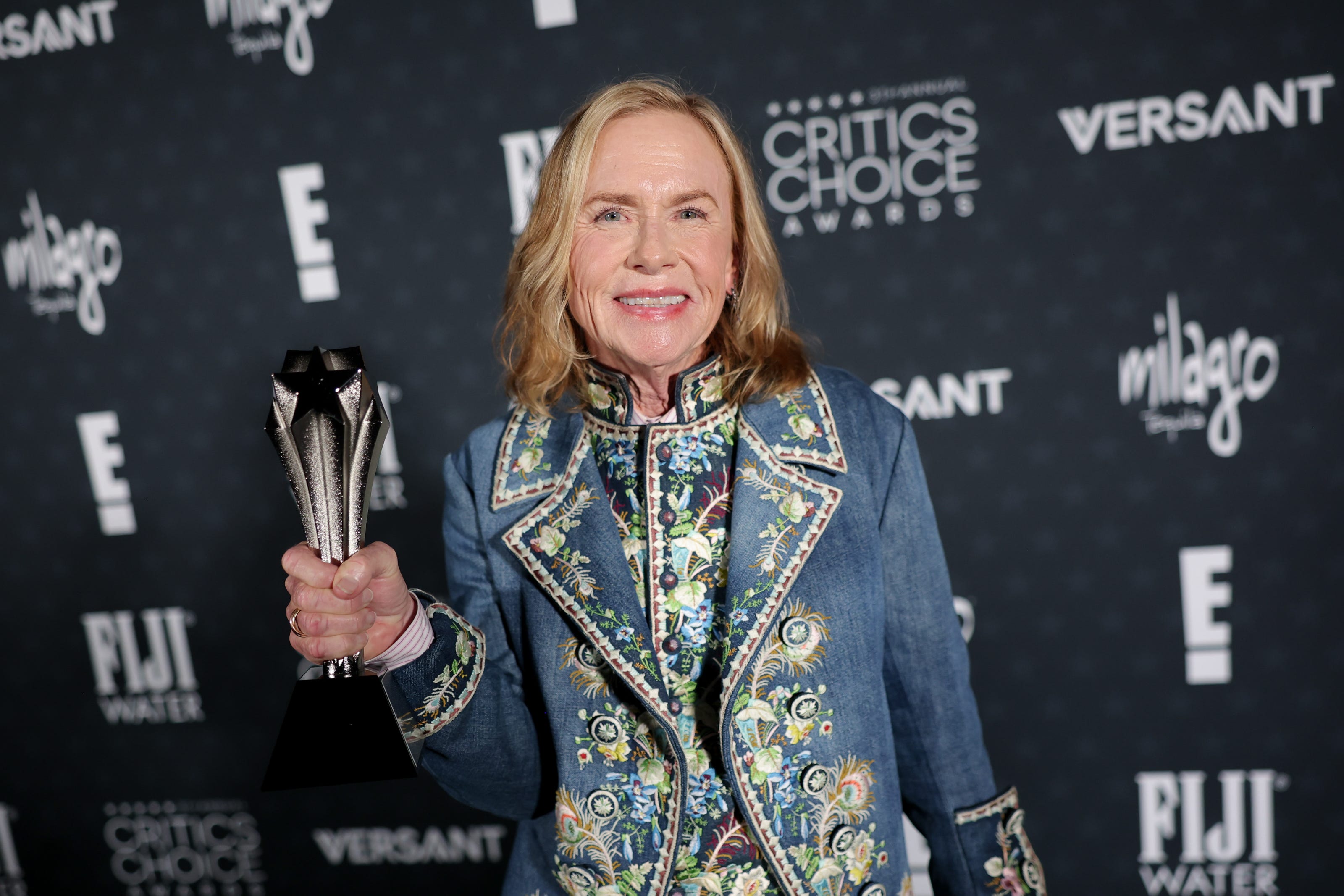
Amy Madigan’s victory for Weapons wasn’t a total shock — she’ll be accepting the supporting actress award from the New York Film Critics Circle tomorrow night, as well — but she sure seemed surprised by it. I imagine Ariana Grande was as well, given how she sent a personal note to Critics Choice Awards voters, and many people had assumed she had the Oscar sewn up with her dominant performance in Wicked: For Good. But that sequel’s box office underperformance compared to the first movie seems to have dampened its awards-season flame, leaving supporting actress the most wide-open of the acting Oscar races. It’s very easy to imagine Grande, One Battle After Another’s Teyana Taylor, or even Sentimental Value’s Inga Ibsdotter Lilleaas winning at the Globes this Sunday and making everything feel even more up for grabs. Bring it on!

5. Timothée Chalamet Is In It to Win It
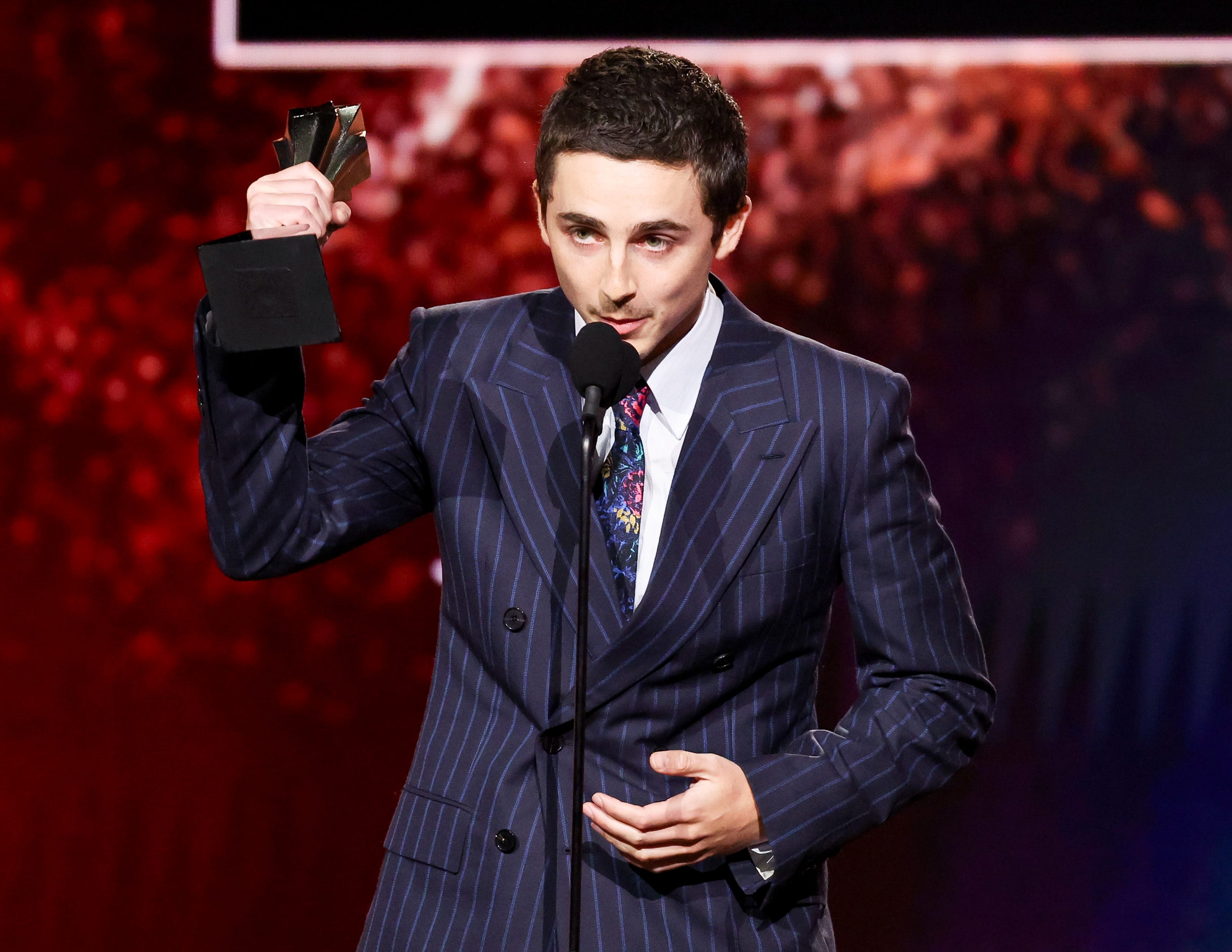
With Marty Supreme a certified hit, Chalamet can take a break from the onslaught of promo duties to open the movie and drill down on the retail politics that actually win you an Oscar. He spent Saturday night in Palm Springs, accepting the Spotlight Actor of the Year Award. Then on Sunday, though he was a late arrival at Critics Choice, he arrived in time to win the best actor award, thank girlfriend Kylie Jenner and appear genuinely, appealingly nervous to be up on that stage.
The best actor race remains, to me, competitive and endlessly fascinating, but Chalamet has notched an undeniable major victory; if he wins again at the Globes on Sunday, the narrative may settle into place that it’s finally his year. I’m still betting that DiCaprio or Michael B. Jordan have room to pull ahead, but Chalamet and his big hit Christmas release are in pole position at the moment.

6. Oh, and There Were TV Winners, Too
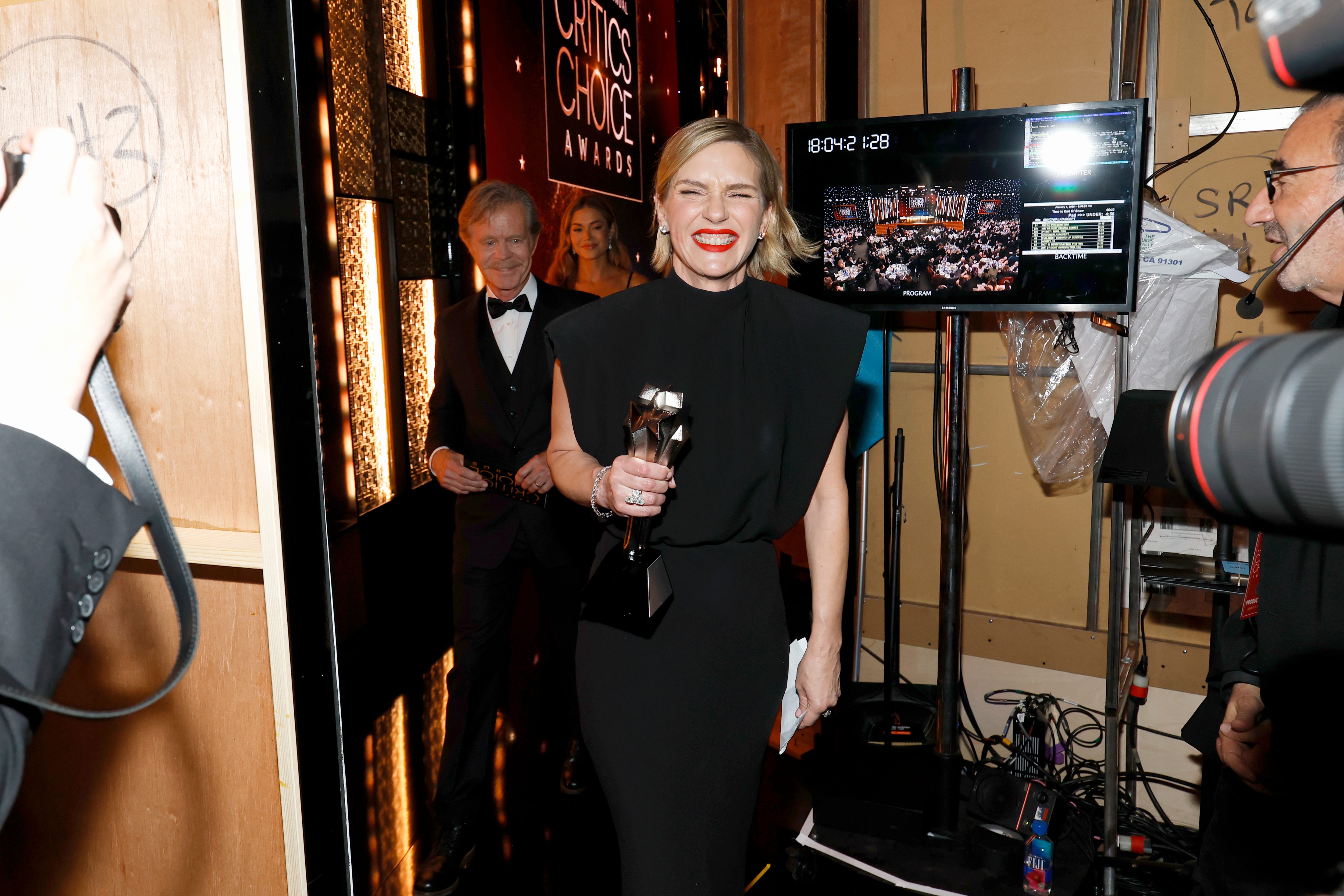
Three cheers for Rhea Seehorn, who was genuinely surprised and moved to win Sunday night for her role in the Apple TV series Pluribus, which recently wrapped its first season. She’s a deserving winner on her own, but also was a thrilling break from what was feeling like a lockstep repetition of September’s Emmy winners. With all love and respect to the Adolescence and The Studio teams, did they really need to win awards all over again?
I expect a lot of these repeat winners at the Globes on Sunday, but I would love to see some of the old maverick Globes tendencies to reward newcomers or real outliers. Take your chance to give Diego Luna an award for Andor, finally! Let Carrie Coon win at least something for The White Lotus! If we’re going to have TV awards in the middle of Oscar season, we can at least make them fun.

Nia’s Double Header

If you run into Nia DaCosta and congratulate her on her new movie, you’re going to have to be a bit more specific than that. Her bold adaptation of Hedda Gabler, titled simply Hedda, premiered at the Toronto International Film Festival in September and is still making its way through awards season, with star Tessa Thompson up for a Golden Globe this Sunday. Then, on Jan. 16, she’ll debut her new film, 28 Years Later: The Bone Temple, which is earning such strong advance buzz that the next installment of the franchise already has been greenlit.
That kind of productivity has become almost standard for DaCosta, a 36-year-old native New Yorker who has made seven feature films in the past eight years. She makes it look easy. Of course, she doesn’t describe it that way at all.
Directing, DaCosta told me a few weeks ago, means “you’re essentially a freelancer forever. When you’re trying to figure out how to break into the industry, for me at least, you’re knocking on every door, pushing at every window, seeing if it opens. So then when it gets to a point where now people are answering the knocks at the door and they’re offering you things or asking you to pitch on things— I was just going and going and going.”
With both Hedda and Bone Temple now finished, she says, she’s trying to slow down. But it was that drive to keep going that helped Hedda come to life, the idea she kept coming back to as she released her debut feature, Little Woods, in 2018 and then moved on to larger-scale projects like Candyman and The Marvels. “When I was doing the Marvel film, I really was like, oh, this is what I have to do next,” she tells me of the Amazon MGM feature (which is now streaming). “This is personal, it’s smaller, it’s me. It just felt like I could hold it in my hands in the way that I hadn’t been able to with this big superhero thing that I was doing. And I like contrast.”
Hedda takes the classic Henrik Ibsen story about a woman trapped within a loveless marriage whose scheming has disastrous consequences and updates it to the 1950s, all set within a single evening at a luxurious English manor. Technically, it’s smaller than Ibsen’s original — but it never feels that way. Hedda has the same huge emotions that have captivated audiences for over a century, with Thompson capturing both Hedda’s seductive glamour and vindictive streak, plus gorgeous production design and costumes that immerse the audience in this rarefied world. But DaCosta’s adaptation also introduces a bold twist in casting, bringing in Nina Hoss to play a male character from the original play — an academic rival to Hedda’s husband who also happens to be Hedda’s ex.
Casting Nina Hoss is a coup for any movie — anyone who has seen her in the final scene of 2014’s Phoenix will never forget it — but particularly for Hedda, given that Hoss has played Hedda Gabler onstage in her native Germany. Both she and Thompson came to the production with a wealth of knowledge about the Ibsen play, which DaCosta says could cut both ways. “My only fear was that they would be stuck in the play,” DaCosta says. “I think truthfully, they had to get through that a bit. But it also was so helpful because it was a part of the rigorous process of making sure we were making the movie that we wanted to make and that we were all on the same page.”
There’s a heightened reality in Hedda that can sometimes make it hard to get your bearings, partly thanks to the character of Hedda herself — one minute she’s the life of the party, the next she’s trying to break up relationships and even worse behavior. With DaCosta’s careful guidance, the film follows Hedda’s lead. “Something that I like about the play is that Hedda is kind of ridiculous,” she tells me. “She says really ridiculous things, and obviously, the things she does are horrid. I wasn’t trying to create an unreality [in the film]. I was more trying to set it within her reality of this emotional space, where you have these really emotional, truthful, sad scenes between people, but then you also have elements of farce that occur.”
Or there’s actually an even more straightforward way to describe the vibe of Hedda, and what makes the movie so captivating and unlike any other take on the classic play. DaCosta continues: “I feel like we’ve all been to a party where you’re like, ‘What the actual fuck is going on?’ And that’s the kind of party I wanted to create.”