

Bradley Cooper’s ‘Balls,’ and Kirsten Dunst on Making Channing Tatum Cry
Plus: Remembering Diane Keaton, and the hidden gem I’ll watch in her honor


Before I get into today’s newsletter — you obviously want to know how that headline pays off, right? — allow me a brief moment to eulogize one of the all-time greats, the late Diane Keaton, who died on Saturday at the age of 79. I’ll have more on Keaton’s life and career later this week, as I get into the lineup of women who are hoping to follow in her huge footsteps (and win their own best actress trophy too). But in the past few days, I’ve been struck by what a singular star she was, and across so many generations. Whether you remember her by revisiting Annie Hall, The First Wives Club or The Family Stone, you’re considering a career that will absolutely never be replicated, and one we were lucky to witness. Personally, I’ve always had a soft spot for the underseen 2010 comedy Morning Glory, in which Keaton spars delightfully with Harrison Ford as morning show co-hosts, with a never-better Rachel McAdams as their struggling producer.
Morning Glory was not a big hit at the box office — Paramount opened it in November 2010 to middling results, and it faded from the awards scene soon after. But the box office is not always destiny in the Oscar race. Earlier this year, Anora became one of the lowest-grossing best picture winners of the modern era, with just over $40 million worldwide at the time of its victory. (The Neon release eventually earned $57 million worldwide, but that’s still awfully low; think of it as one-sixteenth of an Oppenheimer.) Every year, there seems to be a film that doesn’t land with audiences but makes enough critics swoon to stay in the race, be it Tár ($29 million worldwide) or all the way back to Secrets & Lies ($13 million worldwide).
But there are also, inevitably, always movies with big ambitions that run into a brick wall at the box office and never recover. This year, the Oscar outlook is cloudy for the already much-discussed The Smashing Machine, which flopped for A24 earlier this month. It could now be a similar situation for Paramount’s Roofman, which debuted over the weekend with a very modest $8 million in North America.
Not to go full “don’t blame me, I voted for Roofman,” but I went and saw it on Friday after missing the Derek Cianfrance title at the Toronto International Film Festival, and found it surprisingly gentle and heartfelt despite the more antic trailers. Having seen Cianfrance’s previous films, The Place Beyond the Pines and Blue Valentine, I probably should have expected it. Roofman focuses on the true story of Jeffrey Manchester (played by Channing Tatum), a “polite” thief who escapes from prison after being sentenced to 45 years in jail and then begins living inside a Toys “R” Us for months while embarking on a new relationship with a local woman (Kirsten Dunst).
Despite the strong reviews out of Toronto and a good promo push from its stars (more on that in a second), audiences are notoriously not fond of being sold a movie that’s one thing — in the case of Roofman, a zany comedic thriller where Peter Dinklage is blasted in the face by an exploding dye pack while holding a stack of money — and then being given a quieter, darker version of that story. It’s a phenomenon that quite possibly happened with The Smashing Machine as well, which was sold as an inspirational sports drama and undercuts that premise at every turn. (Roofman earned a B+ grade on CinemaScore, which polls opening weekend audiences; The Smashing Machine received a B- grade.)
As a longtime true believer in Tatum, I was glad to see he was as excellent in the role as I’d hoped. Meanwhile, my colleague Richard Rushfield is a longtime Dunst devotee. Not only has he been singing the praises of her performance since seeing Roofman in Toronto, but he also took some time at the festival to sit down with Dunst and Cianfrance. So today I’m sharing Richard’s conversation with the star and filmmaker, which tells you far more about Roofman’s merits than any box office returns could.
Before that, however, Christopher Rosen has once again caught the movie of the moment, attending a screening of Bradley Cooper’s latest, Is This Thing On?, on Saturday night. Cooper’s newest film closed out this year’s New York Film Festival on Friday, and Searchlight Pictures has already been screening it for voters ahead of its December release. So I’ll hand things over to Chris once again to tell us if the director of A Star Is Born and Maestro is once again about to barnstorm the Oscar race.

Bradley’s New Role: Underdog
When Bradley Cooper has a movie that’s part of awards season, it’s really part of awards season. Since breaking through with Oscar voters in 2013 for Silver Linings Playbook, Cooper has amassed an almost-staggering 12 Oscar nominations across acting, producing, directing and writing. The last four films on which he’s credited as a producer — A Star Is Born, Joker, Nightmare Alley and Maestro — all have received best picture nominations. The movies he’s directed, as Katey alluded to above, earned 15 nominations between them. And for all that success, Cooper has still never won an Oscar — and, worse, has often been accused of trying too hard to win an Oscar.
So it’s notable that hype for Cooper’s third outing as a director, producer, co-writer and co-star, Is This Thing On?, has matched its title. Only one Prestige Junkie pundit — Vulture’s Joe Reid — is predicting the Searchlight Pictures release anywhere at this stage in the season (Joe, rather smartly, has it in the newly formed best casting category for Cooper’s longtime collaborator, Shayna Markowitz, who also worked on Joker and Maestro). Zero pundits, meanwhile, are predicting nominations for Cooper, despite his four opportunities (best picture as the film’s producer, director, supporting actor, screenplay).
But maybe Cooper has awards season right where he wants it: He gets to play the underdog. While even the filmmaker would likely agree that the small-scale dramedy about Alex (Will Arnett, who co-wrote the script with his longtime writing partner Mark Chappell and Cooper), a dissatisfied middle-aged dad who becomes an unlikely stand-up comic after amicably splitting up with his wife, Tess (Laura Dern), is not a massive swing like Maestro and A Star Is Born, it’s no less accomplished. Better still, Is This Thing On? fits among some recent low-key relationship movies to find favor with the Academy — think Searchlight’s own A Real Pain, which missed a best picture nomination but won an Oscar for Kieran Culkin, or Celine Song’s best picture nominee, Past Lives.
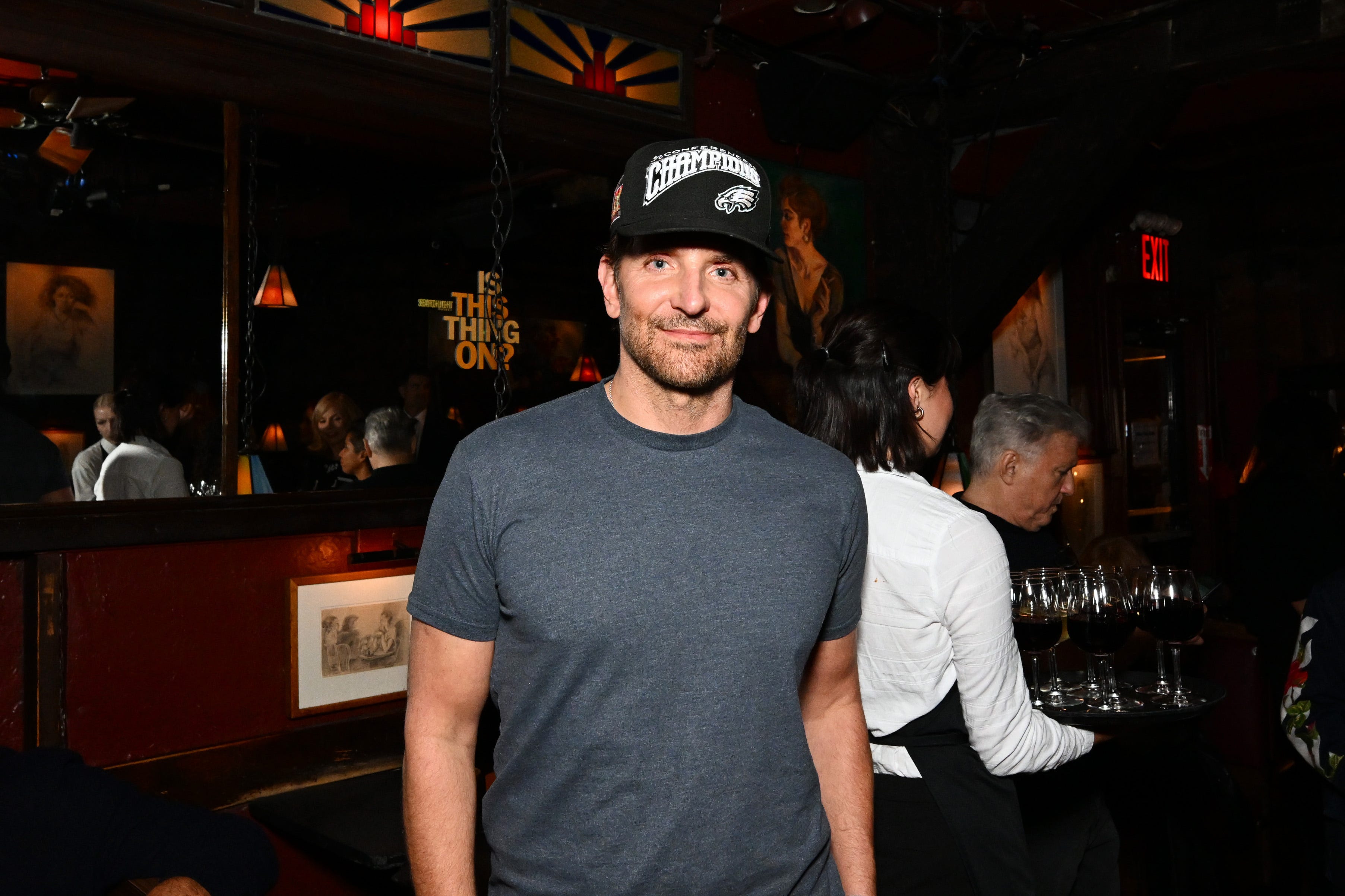
Speaking on Saturday night in New York after a special screening for Screen Actors Guild members, Cooper almost seemed relaxed about the road ahead. Awards didn’t come up once, and the conversation included little discussion about the difficulty of the project, a stark contrast to his campaigns for Maestro and A Star Is Born, both of which were steeped in effort. Instead, Cooper spoke fondly of his friendship with Arnett, which dates back to the early 2000s, and expressed his joy at playing a supporting character in the film as Alex’s best friend, Balls. (Yes, this is true.)
“I love Balls,” Cooper said as the crowd laughed. He quickly clarified: “The character.” In a movie about stand-up comedy, which features many actual New York stand-up fixtures, it may or may not surprise you to find out that Cooper’s the funniest part: Balls is a struggling actor, often stoned off his ass, who pops up now and then to offer perspective to Alex. It’s the classic scene-stealing romantic-comedy “best friend” performance that a lot of actors have excelled in without accompanying awards heat; if this were 2013’s What If, Cooper is doing Adam Driver (“I just had sex and I’m about to eat NACHOS!”), to pull but one example from the recent past. But since Balls is played by Bradley Cooper, a five-time acting nominee, it feels like the kind of flashy supporting turn that could easily get the star another nomination — consider that Cooper landed a SAG Award nomination for playing Jon Peters in Licorice Pizza despite appearing in less than 10 minutes of that film — especially in a year with some flexibility at the bottom of the best supporting actor category.
Is This Thing On? won’t likely be for everyone — it’s maybe the most divorced man movie ever made. (A middle-aged guy does stand-up comedy, in this economy? Was podcasting not available?) But Cooper’s empathy for the characters and the way the script balances the perspectives of Alex and Tess (Dern is fantastic here and would be a worthy contender for best actress, in my humble opinion) separate it from the logline. Plus, even without having a presumed frontrunner in the race, Cooper knows how to communicate with prospective voters, who often want to celebrate movies that speak to the moment (think Moonlight, Green Book, Parasite and, before Karla Sofía Gascón immolated it, Emilia Pérez).
When asked what he hopes audiences will take away from Is This Thing On? when it’s released in a limited capacity in December, the filmmaker said, “My hope, and it is what I believe, is that as the world gets smaller with technology, we actually are so much more aware of everybody in the world. Maybe it’s an opportunity for us to communicate, as opposed to being sort of tribalistic.”
Positioning a smart, mature relationship movie as a treatise on the political divide? You can’t take the awards campaigner out of an awards campaign after all. — Christopher Rosen

Through the Roof with Kirsten Dunst

Thanks, Chris! Now, to close things out, here’s Richard and his conversation with Dunst and Cianfrance. One more programming note: Make sure to listen to tomorrow’s Prestige Junkie podcast, where I talk to one of the year’s newest best actress contenders, One Battle After Another breakout Chase Infiniti. For more on Chase and the best actress race, make sure to listen to the special Prestige Junkie After Party bonus episode that I posted Friday with Chris and Prestige Junkie pundit Joyce Eng. Not a subscriber yet? Fix that for $5 a month. Richard, take it away!

At the dawn of September, back at the Toronto International Film Festival, when the award season was still young and fresh in every pundit’s eye, I had the pleasure of enjoying the premiere of Roofman at the cavernous Roy Thompson Hall. For an intimate, character-driven film, it was a vast space to fill, but I found the delightful and touching movie filled it and then some.
The next morning, as they made the rounds of festival press, I had the chance to talk to the director, Derek Cianfrance, and one of the stars, the great Kirsten Dunst.
Both, in very different ways, are icons of independent film. Cianfrance broke with force onto the Sundance stage with 2010’s Blue Valentine, a searing relationship drama that landed Michelle Williams a nomination for best actress. Dunst is the veritable first lady of independent film, having graced the works of so many great directors that the list is almost laughable. (But, for the laugh: Hayao Miyazaki, Brian De Palma, Neil Jordan, Gillian Armstrong, Barry Levinson, Joe Dante, Sofia Coppola, Peter Bogdonovich, Sam Rami, Mike Newell, Cameron Crowe, Lars Von Trier, Walter Salles, Jeff Nichols, Jane Campion, Alex Garland.)
Still, the indie icons’ talents combined here for what might be the broadest, most crowd-pleasing film of either’s career — for Dunst, certainly since she took her indie turn post-Spider-Man.
Neither, however, has yet been given an Oscar trophy to prop open their doors with. In Dunst’s case, indeed, this is an oversight that has long passed the unforgivable line (her only nomination came a few years ago for The Power of the Dog; she lost to Ariana DeBose for West Side Story). Fortunately, in Roofman, she delivers a sensitive and quietly complex performance upon which the entire film rests. Dunst plays Leigh Wainscott, the Toys “R” Us employee that Channing Tatum’s thief-on-the-run character falls in love with, altering his trajectory and his escape.
Here are some highlights from my chat with the pair, as they readied to dive into The Circuit. — Richard Rushfield
Richard Rushfield: Derek, was it nerve-racking having such an intimate film debut in this massive concert arena?
Derek Cianfrance: Well, I feel like movies are made for intimate stories. You see, the beautiful thing about that room (The Roy Thompson Hall) is that these incredible actors were towering on the screen. As a kid, I always loved actors because I had trouble reading. Actors were the people who helped me understand the world. So to sit inside a movie theater and look up at such performers as Kirsten, Channing, and LaKeith Stanfield, Peter Dinklage and Juno Temple, and just be in awe of those people, experiencing these intimate human emotions. And then, sharing that with an audience was overwhelming.
Richard: Derek, you have done some television work in the last decade, but it’s been nine years since your last film, 2016’s The Light Between Oceans. Where have you been, and what brought you back?
Derek: Making movies is so hard, and it’s supposed to be hard, the struggle to make a movie. What do they say? Pressure makes diamonds. And I think my experience making this film was that this was the hardest film I’ve ever made. I kept hearing from people that they don’t make films like this anymore. I felt like it’s always a miracle to make a movie. And I felt like when I came around with this movie, everyone told me, “Sorry.” I wanted to make a movie that felt like the movies that I loved when I was a kid. After making something as serious as the HBO limited series, I Know This Much Is True, I wanted to have fun and find the magic — find the potential of movies, because movies can do anything. I see this as like a movie movie. That was the first title I ever wrote on the script — Movie Movie. It lasted a month, then it became the Jeffrey Manchester movie, and later, Roofman. When I went out with the script, what I heard a lot was, “We don’t make these kinds of movies anymore.” And that’s why, as you saw last night in the theater, there were all of those production company credits that come up at the beginning. You realize how many people we had to convince to give us a tiny scrap of bread.
Richard: Kirsten, what’s the process of de-Hollywooding yourself and playing a character as plainly American as Leigh in this movie?
Kirsten Dunst: My drive is to create somebody who feels real, no matter who I’m playing. My goal is to be authentic, live in the moment with people, and make something feel like you’re watching reality. For this, I did a North Carolina accent, got some ’90s highlights in my hair. I did things that would make me feel like that woman from the Midwest or from the South. But, also, you draw from people. That’s my job — a people decoder, and there’s definitely a little of my mother-in-law in this role.
Derek: Can I say the best scene that she shot? There’s a little bit in the movie, but the police who actually interviewed the real-life Leigh Wainscott are the ones I cast to interview Kirsten. I had no dialogue written for the scene, and I just told them to interview her, as they did, to replay the actual events from 20 years ago. And they agreed, but they had this idea that here we are, Hollywood coming to town to tell a movie. I put Kirsten in this room, and she got interviewed by these two cops, and Leigh was watching on the monitor. And these two cops were blown away. They said it was as if we were back in that situation again. Kirsten, they were so complimentary of you and in awe of what you could do because you brought them back.
Richard: Music always seems to play a big part in your films, Derek. That scene towards the end, where Channing is watching Kirsten sing with the choir and everything changes in him as he makes eye contact with her — the music and the performances convey everything without anything being spelled out.
Derek: I love music. The church where the movie takes place is the actual church where Jeffrey and Leigh met. That was the exact place. That music is some of my favorite music. I love Christmas music. I collect Christmas music. And there’s this Mahalia Jackson version of “No Room at the Inn”, which is the song that Leigh is singing. It’s one of my favorite songs. I mean, my wife only allows me to play it from Thanksgiving to Christmas. But if I could, I would listen to Christmas music all year long.
Richard: What’s the best Christmas album?
Derek: My first one was the Elvis Presley Christmas album, Elvis’ Christmas Album. But there are so many — Al Green’s got a great Christmas album. There’s a million. But anyway, that moment, can I talk a little bit about what happened in that moment? We were shooting that scene with the camera right next to Kirsten, using this long lens. We were zooming through the crowd to find Channing in the audience. And Channing was having a good time. And Kirsten, I remember, I whispered to you, I said, “Can you make him cry?” And from across the room, I started to zoom in on Channing, and that began to happen. And I said, “How did you do that?” And I remember you said, “I just have no idea.”
Kirsten: Hold on. It’s not fresh. Well, I remember, but I also feel vulnerable sharing.
Derek: Okay, I’m sorry.
Kirsten: No, no, I’m happy you brought it up. It’s great. Sometimes, I’ll talk about it, you know… (pauses to gather herself) I work with great directors because they understand how to nourish your performance. All I have is the experience at the end of the day. And then the audience sees the movie, and that’s their experience. So for me, it’s like, that’s why I always wait to work with great people, because that’s all I have.