

Year of the Creator: Inside 2025’s Top Deals, Platform Wars and Next Big Opportunities
Top dealmakers and reps look back at 12 booming months as brands, eyeballs and big cash set the stage for an explosive new year

I cover the creator economy at Like & Subscribe, a standalone newsletter that’s being sampled today for all subscribers to The Ankler. I interviewed a top kindness influencer, scooped Netflix’s podcast deal with iHeartMedia, wrote about Patreon’s strategy to poach Substack creators and spoke to two Gen Z media founders about winning young audiences. I’m natalie@theankler.com

How’s this for a poetic ending to 2025? Eleven months after TikTok went dark in the U.S. for a whopping 14 minutes as a result of a federal law banning the app, majority owner ByteDance finally announced a deal last week to create a new American unit of the company with backing from Oracle, Silver Lake and Emirati investment firm MGX.
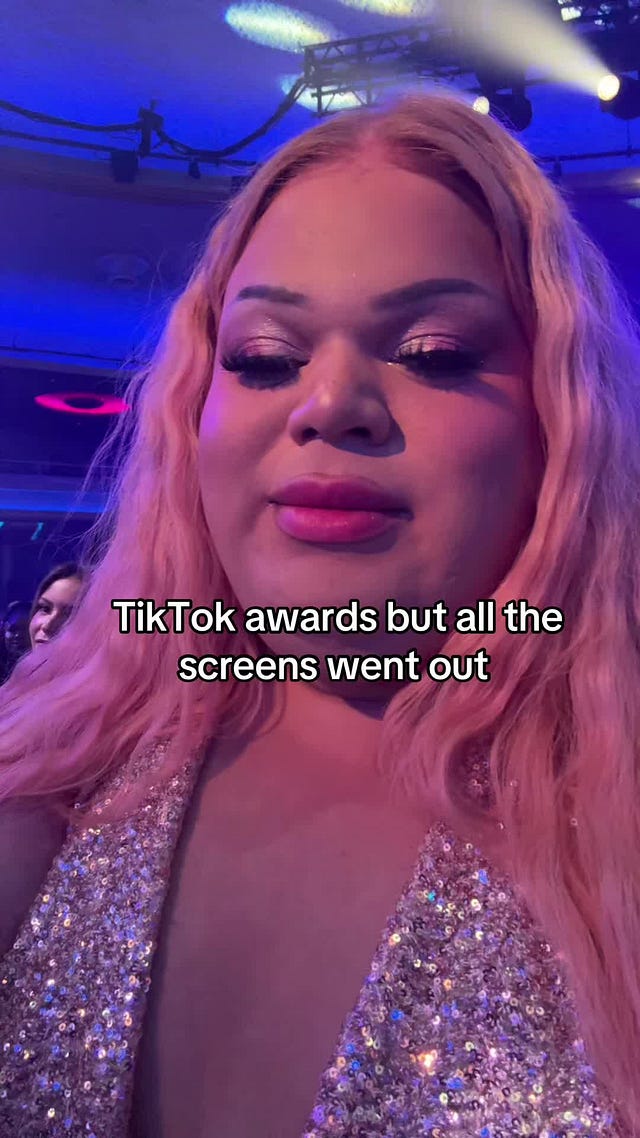
Hours later, TikTokers gathered at the Hollywood Palladium for the first-ever U.S. TikTok Awards, where food reviewer Keith Lee was named creator of the year. But on what should have been a celebratory night for the platform and its stars, the mood was dampened by a technical snafu inside the theater that led to a complete blackout of all the screens on stage — turning pre-scripted segments into clunky and confusing bits. Maybe it was the universe’s way of paying homage to the TikTok ban that never truly materialized.
 Tiktok failed to load.
Enable 3rd party cookies or use another browser
As significant as the TikTok deal is, I’m betting it won’t be what people remember when they look back on this transformative year for the creator economy. Not when 2025 also brought Ms. Rachel to Netflix, the NFL and the Oscars to YouTube and Bari Weiss’ The Free Press to Paramount — in other words, this was the year creators went mainstream.
Related:


And it’s more than just a vibe shift. Advertising spending on creators in the U.S. is projected to hit $37 billion this year, according to IAB. That’s up from $13.9 billion just four years ago and represents a 26 percent increase compared with 2024 ad spend — that’s 4X the rate of growth of ad spending across the media industry. There have been 78 acquisitions in the creator economy in 2025, per data from Quartermast Advisors, and more could be announced before the end of the year. The largest known deals:
Bending Spoons acquires Vimeo for $1.38 billion
Later acquires Mavely for $250 million
Publicis acquires Captiv8 for $175 million
Publicis acquires BR Media Group for $99 million
Wonder acquires Tastemade for $90 million
“This was the year traditional players realized that creators are a big deal,” says Sean Atkins, himself a former executive at traditional players like Viacom and Discovery Communications who now oversees Dhar Mann Studios as CEO. “For those who’ve been in the business, it was like a 20-year overnight success. It was that moment where everyone was like, ‘Oh my God, creators are a thing.’ That happened this year.”
Creators are clearly the big winners of 2025, especially when you juxtapose the growth of their industry with the ongoing contraction in legacy entertainment. But that doesn’t mean every creator-adjacent swing was a hit. Dude Perfect: The Hero Tour didn’t bring droves to the box office, and brands like E.l.f. and Poppi had pretty major creator campaign misfires.
In July I broke down all the major deals up to that point as part of my mid-year guide to the 2025 creator boom, and the news hasn’t slowed since then, so today I’ve got a full breakdown of the biggest deals in the creator economy this year. To help me sort through the headlines, I called up about a dozen top executives, dealmakers and stars and asked them to tell me what stories shaped the year. Keep reading for a full analysis of the five trends that mattered most for creators (including links to my previous stories) — and come back next week for part two of my year-end coverage, where these same industry experts share their predictions for 2026.
Today, with help from some pros including SiriusXM President Scott Greenstein, WME’s Bennett Sherman, Night Media CEO Reed Duchscher and Select Management Group’s Lisa Filipelli, I’ll tell you much more about:
The new buyers chasing creator content, and how the lines between Hollywood and the creator economy are blurring fast
Who’s investing in creator brands now and the top deals for firms that power relationships between brands and digital talent
How podcasts are fully embracing video — and sparking a talent arms race among Netflix, YouTube, Spotify and more
Why niche fandoms are booming — and the creators cashing in
How creators and entertainment stars are leaning into subscriptions to connect directly with fans
Why creator talent and tactics are reshaping every screen we watch — and what comes next in 2026

1. Podcasts Fully Embrace Video
The slow creep of video into our audio-first feeds picked up steam this year as YouTube embraced its newfound podcast dominance. The ad-supported streamer, which earlier this year began publishing a weekly chart of top shows on its platform, has more than 1 billion monthly active podcast viewers and in October alone saw more than 700 million hours of podcast viewing in the living room, up from 400 million hours a year ago.
“Video has emerged officially as a major creative force and a major economic force,” says Scott Greenstein, president and chief content officer at SiriusXM. His company — now the No. 1 podcast network, according to Edison Research, and the distributor of three of the six shows nominated for the first-ever best podcast award at the Golden Globes — has been aggressive about capturing market share as the entire podcast industry reorients around video.
Here’s a sampling of 2025 podcast deals fueled in part by the rise of video:
The Chernin Group invests $40 million in Ashley Flowers’ Audiochuck to fuel video expansion (Feb. 23)
Libsyn renews its exclusive distribution deal with The Viall Files host Nick Viall’s Envy Media for a reported $30 million (April 3)
Fox News licenses conservative podcast Ruthless and creates new media division (July 15)
SiriusXM inks an exclusive distribution pact with John Allen, the storyteller better known as MrBallen who’s behind The MrBallen Podcast: Strange, Dark & Mysterious Stories, that also encompasses his YouTube channel (Oct. 27)
“Podcasts are being recognized as today’s talk shows,” says WME digital agent Bennett Sherman. These interview-style podcasts are not only driving much of the dealmaking but also topping the charts. And while that’s led to some industry growing pains, like the summer overhaul of Amazon’s audio business that resulted in the dismantling of Wondery and layoffs of more than 100 employees, it has also created an active new market for video podcasts led by Netflix and Fox Corp., which earlier this year acquired podcast network Red Seat Ventures.
Tunde St. Matthew-Daniel, EVP of original content at Wave Sports + Entertainment, the company behind shows like New Heights and Not Gonna Lie, calls Netflix’s year-end activity “quite a big punctuation” on the industry’s shifts.
Here’s some of the dealmaking that’s been fueling the new podcast economy:
Khloé in Wonder Land launches on X (Jan. 8)
Spotify goes after YouTube creators with video revenue sharing, says it has paid more than $100 million through its program (April 28)
Netflix licenses slate of 16 video podcasts from Spotify Studios, including The Bill Simmons Show and The Rewatchables (October 14)
Ashley Flowers’ Audiochuck signs $150 million distribution and ad sales deal with Fox’s Tubi Media Group that includes the creation of a Crime Junkie FAST channel (Oct. 30)
Netflix licenses a slate of 15-plus shows from iHeartMedia including The Breakfast Club and My Favorite Murder (Dec. 16)
Netflix licenses three shows from Barstool Sports including Pardon My Take (Dec. 17)
Catch up on my top stories about pivots in the podcast space this year:



2. New Buyers Shake Up Content Distribution
It’s not just the podcast business that has had a sudden influx of new buyers. Creator content is suddenly in high demand in Hollywood, thanks in large part to the success of MrBeast’s Beast Games (technically a 2024 deal but its ripple effects are still being felt this year). “Beast Games broke through every window and door, and everyone heard about it,” says Reed Duchscher, CEO of Night Media, which manages such talents as Kai Cenat and Sam and Colby.
YouTube has also been laying the groundwork for creators to storm Hollywood by making its 20th anniversary all about how the platform has conquered living rooms — and backing up that argument with major deals for streaming rights to an NFL game and (starting in 2029) the Oscars.
Now with Netflix, Hulu and Peacock all making their own creator bets in 2025, not to mention the rise of major FAST streaming deals for creators on platforms like Samsung TV Plus, Tubi and Roku Channel, it’s a good time to be sitting on a library of YouTube programming. “It seems like YouTube native talent finally have a multi-buyer universe,” says Brian Flanagan, who leads Rhett & Link’s Mythical Entertainment as president.
Streaming deals announced this year include:
Netflix licenses repackaged Ms. Rachel YouTube videos (Jan. 14)
Alan Chikin Chow’s Alan’s Universe expands to Roku Channel (March 24)
Amazon’s Prime Video renews Beast Games for two more seasons (May 12)
Samsung TV Plus plans channels for content from Mark Rober, The Try Guys, Smosh, Epic Gardening and Dhar Mann Studios, which also agrees to make original episodes for the service (July 28)
ESPN hires Katie Feeney as sports and lifestyle content creator (Aug. 4)
Netflix greenlights a CrunchLabs show based on Mark Rober’s YouTube videos (Aug. 20)
Tubi orders slate of digital-first series from Joey Graceffa, Rock Squad, Shuang Hu and more (Nov. 12)
Hulu renews The Secret Lives of Mormon Wives for a fourth season, orders 20 more episodes. (Nov. 25)
Lisa Filipelli, a partner at Select Management Group who also executive produced Mormon Wives (I spoke to her for my reporting on the show), describes these moves as a sign that “the lines are blurring more than ever” as creators cross over into more traditional spaces. And it’s not limited to television. Just look at Addison Rae, Alex Warren and PlaqueBoyMax — all first-time Grammy nominees.
Here’s more of my reporting on those blurring lines between Hollywood and the creator economy:



3. Creators Grow Up & Cash In
“The operationalization and increased sophistication of how creators are thinking about running and growing their businesses was a massive trend this year,” says CAA’s Brent Weinstein, who earlier this year joined the agency’s senior leadership team to oversee its creator group among other divisions.
In other words, creators aren’t just teens vlogging from their bedrooms anymore, they’re media moguls building next-generation studios and master marketers and merchandisers.
Last year was a big year for investments into the creator space, with Dude Perfect raising upwards of $100 million in private equity funding, Beast Industries raising $300 million at a $5 billion valuation and Hot Ones owner First We Feast going independent from BuzzFeed in an $82.5 million deal.
While the dealflow wasn’t quite as high in 2025, there were still a few notable transactions:
Sacheu Beauty-owner Gloss Ventures raises $15 million on a projected $100 million in sales (Jan. 21)
Wonder acquires Tastemade for $90 million (March 12)
Good Good Golf raises $45 million led by Creator Sports Capital (March 20)
E.l.f. Beauty acquires Hailey Bieber’s Rhode for $1 billion (May 28)
TSG Consumer acquires Chriselle Lim’s Phlur fragrance brand (July 22)
Diary of a CEO host Steven Bartlett raises eight figures at a $425 million valuation for his media and technology startup, from Slow Creator and Apeiron Investment Group (Oct. 28)
And the power of a creator-led business extended to those fueled by advertising and affiliates, too. Creator advertising revenue is set to surpass $235 billion this year, per WPP, and I witnessed the brand frenzy over digital stars firsthand at Cannes Lions. Jade Sherman, who leads the digital department at Gersh, tells me that this year advertisers “became smarter about how they spend their money and how they [generate] a return on investment.”
That materialized in deals by the major holding companies as well as investments for firms that power relationships between brands and talent:
Social media management software firm Later acquires shoppable link platform Mavely for $250 million (Jan. 3)
Affiliate link platform ShopMy raises $77.5 million led by Bessemer Venture Partners and Bain Capital Ventures (Jan. 24)
Publicis Group acquires Latin American influencer marketing firm BR Media Group for approximately $99 million (Feb. 18)
Publicis Group acquires influencer marketing tech platform Captiv8 for a reported $150 million (May 21)
ShopMy raises an additional $70 million at a $1.5 billion valuation led by Avenir with participation from Sofia Richie Grainge (Oct. 22)
AI-powered creator advertising marketplace Agentio raises $40 million from Forerunner (Nov. 18)
Talent and content studio Fixated raises $50 million from Eldridge Industries, following on a $12.8 million investment earlier in the year (Dec. 18)
Here’s my reporting on creators expanding into new business ventures:



4. Niche Fandoms Deliver
Forget trying to grow the biggest audience possible — having a small, passionate audience was much more valuable this year. Just look at the Sephora launch of youth skincare line Sincerely Yours from 16-year-old Salish Matter, which attracted an IRL crowd of 80,000 at the American Dream Mall. Matter’s dad and business partner, Jordan Matter, attributes the launch’s success to Matter’s “intimate relationship with the audience,” noting that the brand’s targeted approach allowed it to “have a niche approach on a large scale.”
Other deals that speak to the growing power of the niche include:
Slow Creator invests $2 million in woodworking creator Jonathan Katz-Moses to grow his online tool shop (Aug. 9)
Disney acquires 2 percent stake in Webtoon, plans digital comics platform (Sept. 16)
Warner Bros. Animation inks pact with Webtoon Entertainment to co-produce 10 series based on webcomics (Nov. 12)
Slow Creator invests $1.1 million in PT software business from Tayla Cannon (Nov. 18)
Savage Ventures acquires food brand Sporked.com from Mythical Entertainment (Dec. 19)
Here’s what I wrote about creators winning big with niche audiences this year:



5. Owning Your Audience Pays Off
Social media platforms may have dominated the conversation about the creator economy during its first two decades, but as the industry’s third decade kicked off this year, it became all about the platforms that help you own your audience instead. This was the year that competition really heated up between membership platforms such as Patreon, Substack, Beehiiv and Ghost as more creators and mainstream talent — not to mention publishers and brands — focused on reaching their fans directly. (A non-exhaustive list of people and brands that have launched on these membership platforms this year includes Charli XCX, Kamala Harris, Katie Couric, Jim Acosta, Oliver Darcy, Ballerina Farm’s Hannah Neeleman, Aaron Parnas, Vox, The New Yorker, The Real Real and American Eagle.)
“Creators of all kinds and all categories are realizing that they can’t depend on the algorithmic reach [on social media] and they can’t build an audience there,” says LTK co-founder and president Amber Venz Box. Earlier this year, the social shopping company revamped its app with the goal of helping creators and brands connect directly with shoppers.
From email newsletters to memberships to courses (which I covered earlier this year), social media stars are increasingly finding creative ways to circumvent the social media platforms altogether and build one-on-one connections with their supporters. Earlier this year, creator commerce company Kajabi said creators on its platform have made $10 billion in sales, the same amount creators have earned on Patreon since 2013.
Here are the 2025 deals that point to the rise of memberships and subscriptions:
AI newsletter The Neuron sells to publisher TechnologyAdvice (Feb. 19)
Dear Media acquires fitness platform Obé Fitness (June 23)
Substack raises $100 million from investors including The Chernin Group valuing its business at $1.1. billion (July 17)
Paramount acquires The Free Press for $150 million and names Bari Weiss editor-in-chief of CBS News (Oct. 6)
Here’s more of my reporting on these platforms and what’s coming:


I’m expecting even more big deals in 2026, and so are my sources, with some suggesting it’ll be an even bigger year for looking to build bridges to Hollywood — and others predicting sports creators will have a real moment. Plus: Could a creator IPO be in our future? Read more about that in this column next week — and follow my coverage throughout 2026 as I continue to chart all the highs, lows and whoas of the creator industry.