

A Writer’s Guide to Loving the Netflix–Warner Bros. Deal
What's the worst that could happen?

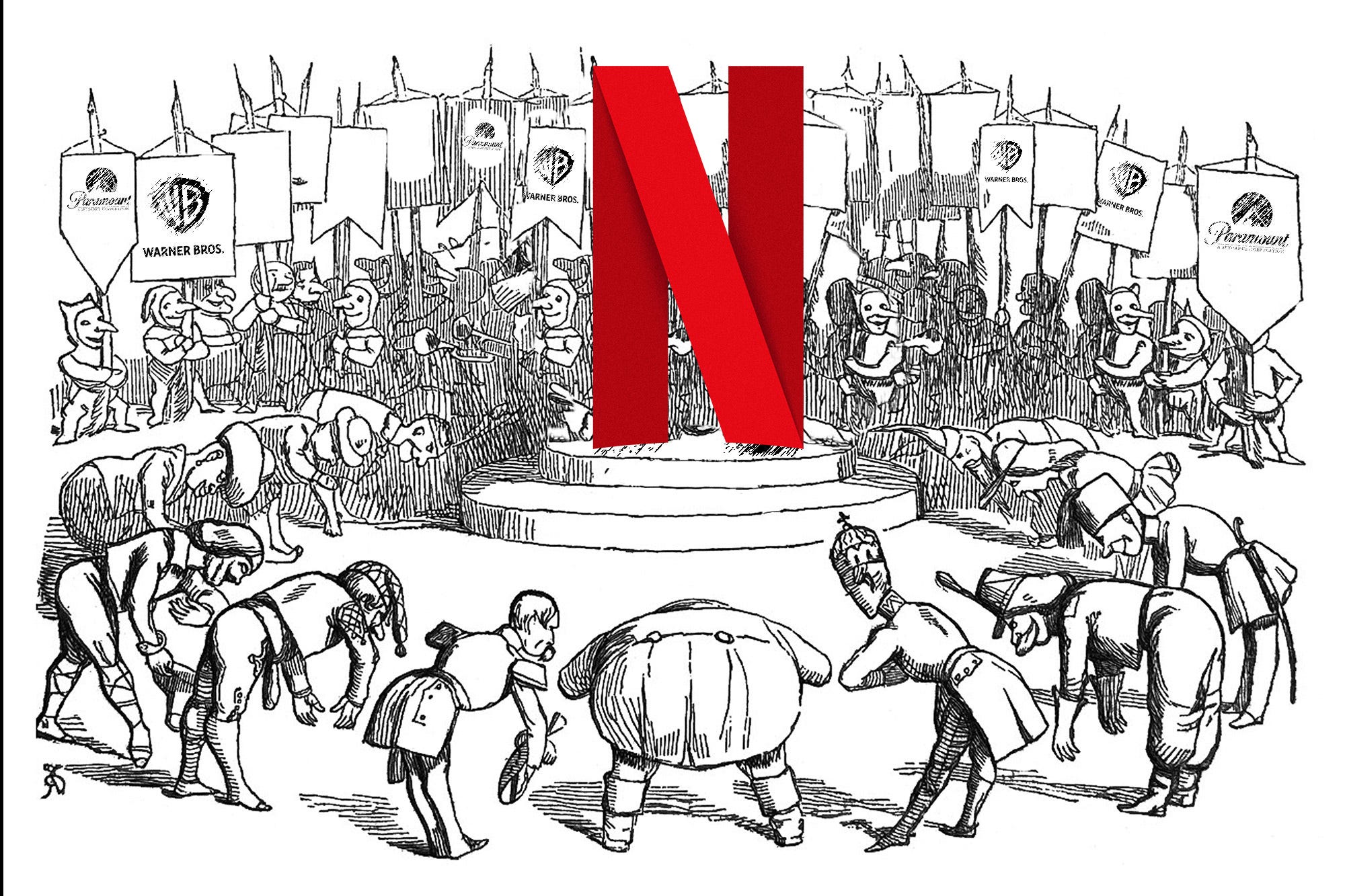
Joel Stein has written for TV shows including Lifetime’s American Princess, Funny or Die’s Best Presidency Ever and the Academy Awards. He is a former humor columnist for Time, the Los Angeles Times and Entertainment Weekly, the author of the books In Defense of Elitism and Man Made, and writes the Substack The End of My Career.

As someone who regularly pitches television and movie ideas, Netflix’s proposed $82.7 billion purchase of Warner Bros. has me panicked. Because I’m also a longtime Hollywood reporter. And my research shows that I’ve written nearly nothing about Netflix. Which is insane. Because it’s such a great company.
My union, the Writers Guild, issued a statement demanding that the government block the merger. “The world’s largest streaming company swallowing one of its biggest competitors is what antitrust laws were designed to prevent,” it began.
I do not question my fellow writers, even when they use the passive voice. But I think they’re overlooking an important fact. Which is how awesome Netflix is.
Does the WGA not think it’s in the public interest to know if something is cake or not cake? Do they want to see if our country’s population will drop even more when men are forced to ask to Fubo and Chill? I wonder if the WGA even knows about Netflix’s charity work? Without it, who knows what would have happened to Harry and Meghan? Who would be feeding Phil? That man hasn’t cooked since the 1970s.
Is Netflix the best studio to pitch to? I don’t know, do you enjoy a waiting room where you can gaze at a wall of living plants while you brew your own espresso to accompany your selection of seven different power bars? I have been employed several times by Warner Bros. and eaten countless meals on its lot, mostly at a Mexican place called Poquito Más. Putting these two giants together, Poquito Más and seven different power bars, would create a very long Spanish phrase. Something like Un Poco Más de Siete Barritas Energéticas Diferentes starring Pedro Pascal.
During the writers strike, I deliberately chose not to picket outside Netflix, instead walking in dizzying, tiny circles around itsy bitsy Paramount. Did I do this because I couldn’t bear to disrespect Netflix, or because Paramount is near Swingers, the diner where Drew Carey paid for all of our meals? Union rules probably prevent me from disclosing, but let’s just say it was a bit of both.
Let me add that, I shouldn’t have picketed Paramount either. Because after just learning more about the studio in an article about how it’s offering a hostile bid for Warner Bros., I realize that it too, is a tremendous organization. The only way Paramount could be any better is if it added creative input from the governments of Saudi Arabia and Qatar, as well as Jared Kushner. If you think Taylor Sheridan’s action sequences were wild before, imagine what they’ll be like after Mohammed bin Salman gives notes.
The WGA worries that a near monopoly in streaming services, should Netflix win after all, will mean less competition for our writing services. That might be true in an economics textbook. But in the real world, it costs writers more to drive all around town to have our sitcom pitch turned down by multiple studios than to get rejected in one spot. A spot with all those power bars.
Plus, remember how boring it was pre-Netflix when you were on staff at Warner Bros. and knew exactly where you were going every day for an entire year, ordering two or three lunches from the same place? With Netflix’s eight-episode orders, you get to look for an exciting new job every few months. Poquito Less!

A Deal James Cameron Should Love
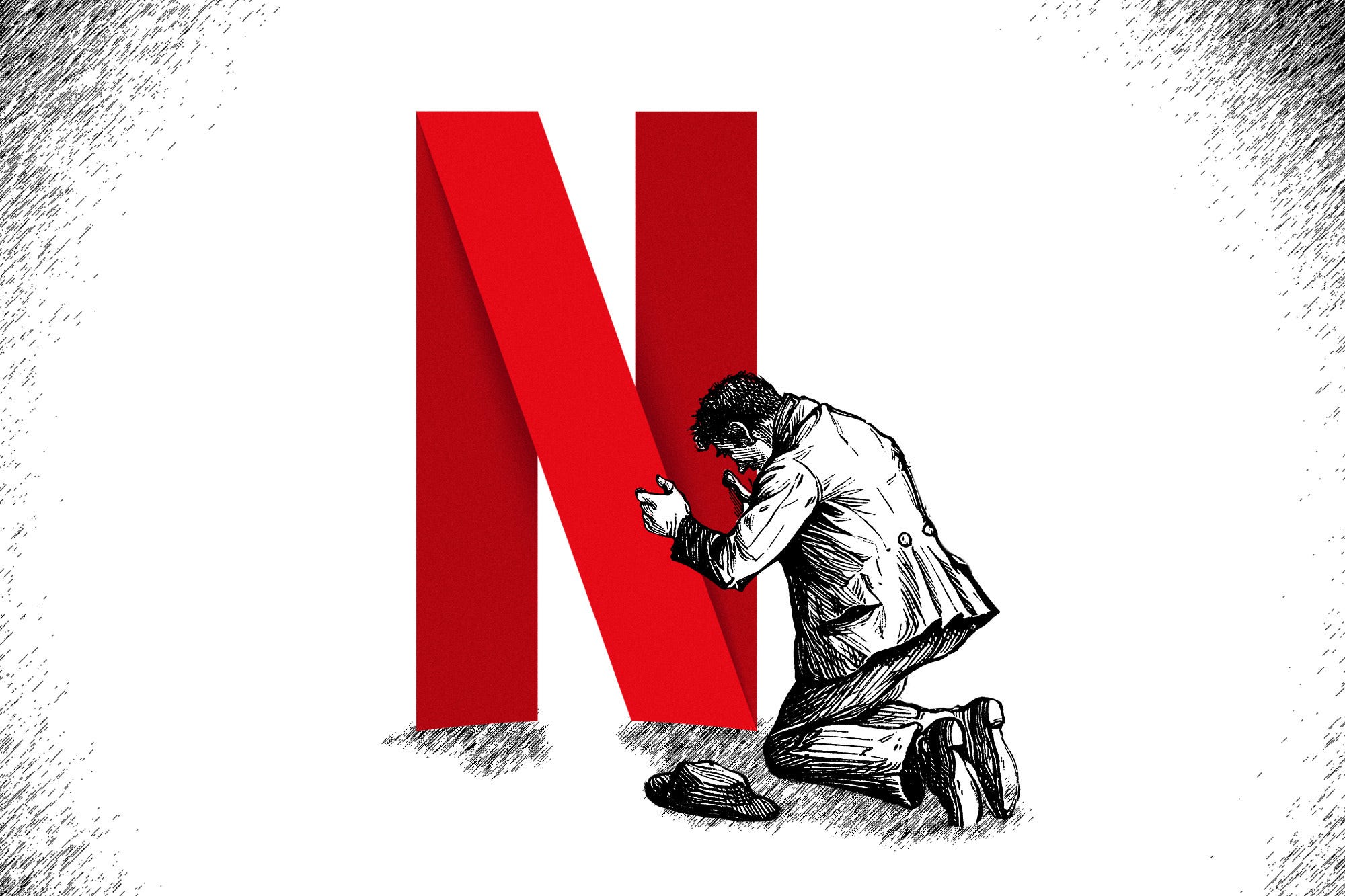
I understand that new things are scary, and that Netflix doesn’t want to put movies in theaters or fund news that might offend American leaders or foreign governments. And Paramount is funded by billionaire Trump buddy Larry Ellison. But Jane Fonda overreacted when she wrote in her op-ed for The Ankler that any studio’s purchase of Warner Bros. is “an alarming escalation in a consolidation crisis that threatens the entire entertainment industry, the public it serves, and — potentially — the First Amendment itself.” As much as I respect Ms. Fonda, she has a history of jumping in a Silkwood Shower over everything. Remember all that time she spent working for women’s rights when it turns out they all wanted to be tradwives?
In that same Ankler column, Fonda wrote, “I know that members of our industry are terrified to speak up because it could entail criticizing the very companies their livelihoods depend on or might depend on in the future.” I hope that’s not true. But if it is true, I bet those companies will figure out who the pathetic sycophants are with search terms such as “Netflix rules” and “David Ellison was great in Flyboys.”
The only Hollywood player who has the guts to say he likes the merger is James Cameron, the director of Titanic, who said it “would be a disaster,” which is clearly his favorite thing.
The U.S. Representative of my district, Laura Friedman, released a statement which warned ominously that “repeated consolidation in this industry has already cost so many film and television jobs, and any merger should be evaluated on its impacts on competition and employment.” Friedman was the producer of the 1995 Olsen Twins film It Takes Two, which — and it’s hard to believe this is a coincidence — is not available on Netflix.
I’d like to quickly tell a story that explains why Netflix prevailing and getting this merger through is going to be good for the entertainment industry. I was once at a book party in L.A. and started talking to a stunning woman who had been the U.S. Ambassador to the Bahamas. When her very handsome and well-dressed husband joined us, he introduced himself as Netflix co-CEO Ted Sarandos. The point is, Sarandos is good at mergers.
If I wind up writing a book about how this merger saved Hollywood, I can’t wait to sell it through the amazing store that sold nearly every single copy of my first two books. God, I love Amazon.

 | A guest post by
|
Needed this laugh
excellent piece