

TIFF Day 5: Crying at ‘Hamnet’ & Elordi on ‘Frankenstein’
Some huge premieres as major talent hits the final day in our studio


If you were at Netflix’s Frankenstein after-party in Toronto last night and saw someone emerge from the bathroom crying, don’t worry — it was just me, still trying to recover from having finally seen Chloé Zhao’s Hamnet.
Monday night in Toronto brought the premieres of several hugely anticipated titles from other festivals. Hamnet had already played here on Sunday, I was just late to the game, and it was surely worth the wait. Playing back-to-back at the enormous Princess of Wales Theatre were Guillermo del Toro’s Frankenstein and Benny Safdie’s The Smashing Machine, both of which had already bowed at Venice; with Safdie fresh off winning the best director prize at Venice for the biopic of UFC fighter Mark Kerr, the anticipation in that room was palpably high.
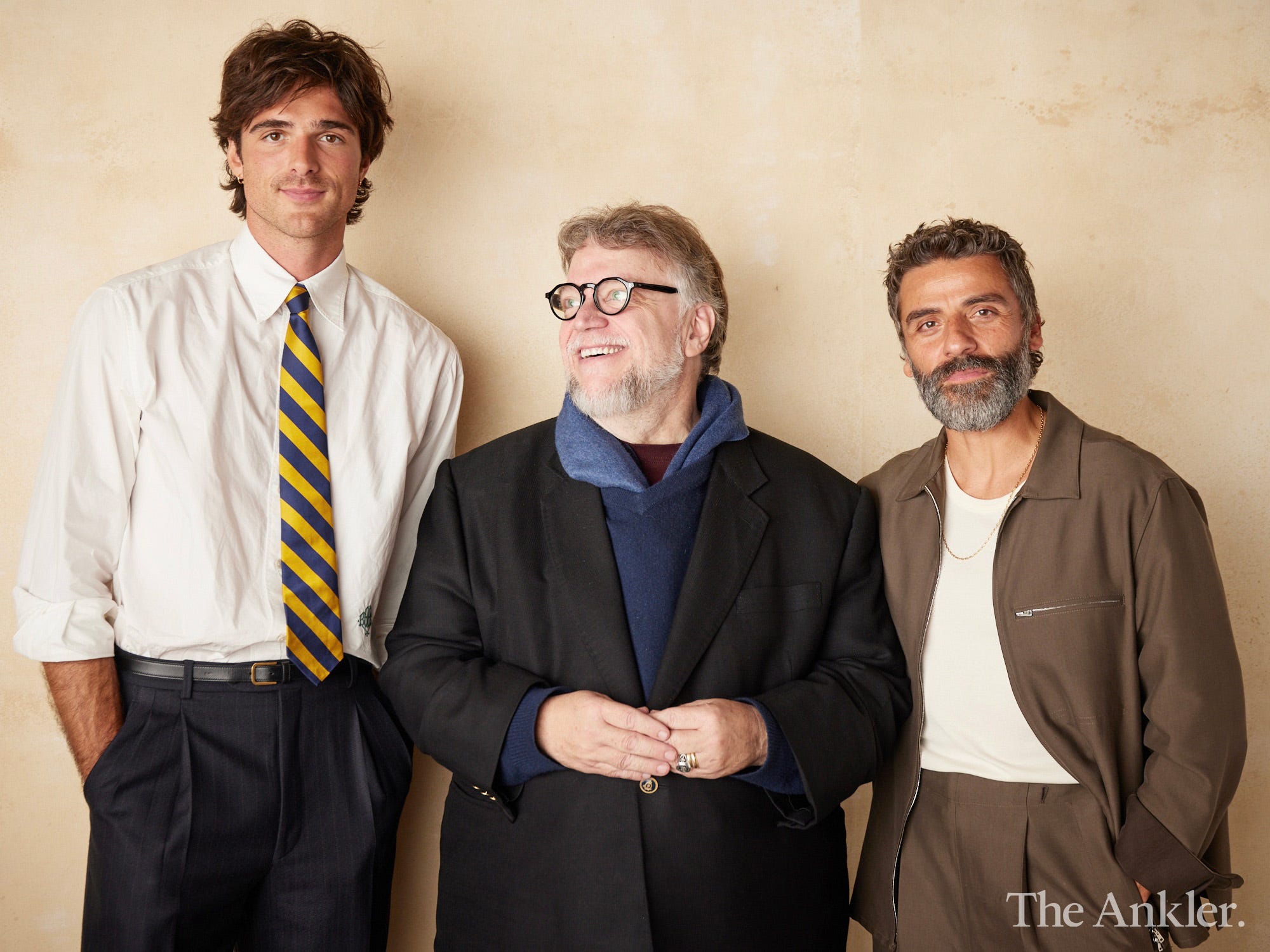
Both movies feature physical, transformative performances that should remain relevant throughout awards season: Jacob Elordi as Frankenstein’s powerful, childlike creature and Dwayne Johnson as the muscle-bound but anxious mixed-martial artist Kerr. I had the chance to speak to Elordi, along with Oscar Isaac and del Toro, who came through for the final day of our Prestige Junkie Studio at Soluna Toronto. In today’s dispatch, you can watch that lovely — and, sometimes, surprisingly funny — conversation, along with chats with the teams behind Blue Moon, Scarlet and the documentary Orwell: 2 + 2 = 5.
These videos — and all the others you can watch right now on The Ankler’s YouTube page — couldn’t have happened without a small army of incredibly capable and kind contributors, including Matthew Byrne and his Byrne Production Services team and video editor Peter Hatch. Plus, while I’m doing my thank-yous, shout out again to photographer Chris Chapman, who captured all the awesome portraits we’ve shared throughout TIFF. And, of course, the Prestige Junkie interview studio’s official coffee supplier, Lang’s Coffee and Steve Lang, who kept everyone just the right amount of wired with his delicious beverages.
The studio may be wrapped, but we’re not done! There will be one more Prestige Junkie Daily hitting your inbox tomorrow, with the final round of videos from our studio as well as my thoughts on my last day at the festival, which will include finally seeing another Venice success, Park Chan-wook’s No Other Choice. Then, on Friday, Prestige Junkie After Party paid subscribers can catch another live recording between me and Christopher Rosen recapping our time at the festival and in our studio, hopefully with some special appearances from other Ankler team members who made it all possible.
If you can believe it, we have another awards show right around the corner, and I promise Chris and I aren’t too wrapped up in TIFF Oscar buzz to focus on the Emmys! We’ll be watching the Emmys together this Sunday night LIVE on Substack Live — yes, the entire show, hopping in during commercial breaks to comment on everything that’s happening. That, too, will be available only to After Party paid subscribers. For just $5 a month you won’t miss out!

Inside the Prestige Junkie Studio
Now onto the show, with great conversations below featuring the Frankenstein fellas, Oscar nominee Raoul Peck and Chris’ chat with Ethan Hawke and his Blue Moon collaborators.

FRANKENSTEIN: ‘IT CAME FROM THE SOUL, IF THERE IS ONE’
What you won’t see on camera, but right before we got started on our conversation with the Frankenstein team, is that Oscar Isaac and Jacob Elordi do a mean rendition of Cat Stevens’ “Father and Son.” They sang it at the film’s wrap party, but it’s also got some profound thematic resonance with Guillermo del Toro’s version of the Frankenstein story.
“It’s about fathers and sons,” del Toro says plainly of the forthcoming Netflix film, in which Isaac plays Doctor Frankenstein and Elordi is his powerful but childlike creature. For Isaac, it got even more personal; during our conversation, he told a story about performing his final scene in the movie and wanting to try a take in which he played it exactly the way his father would.
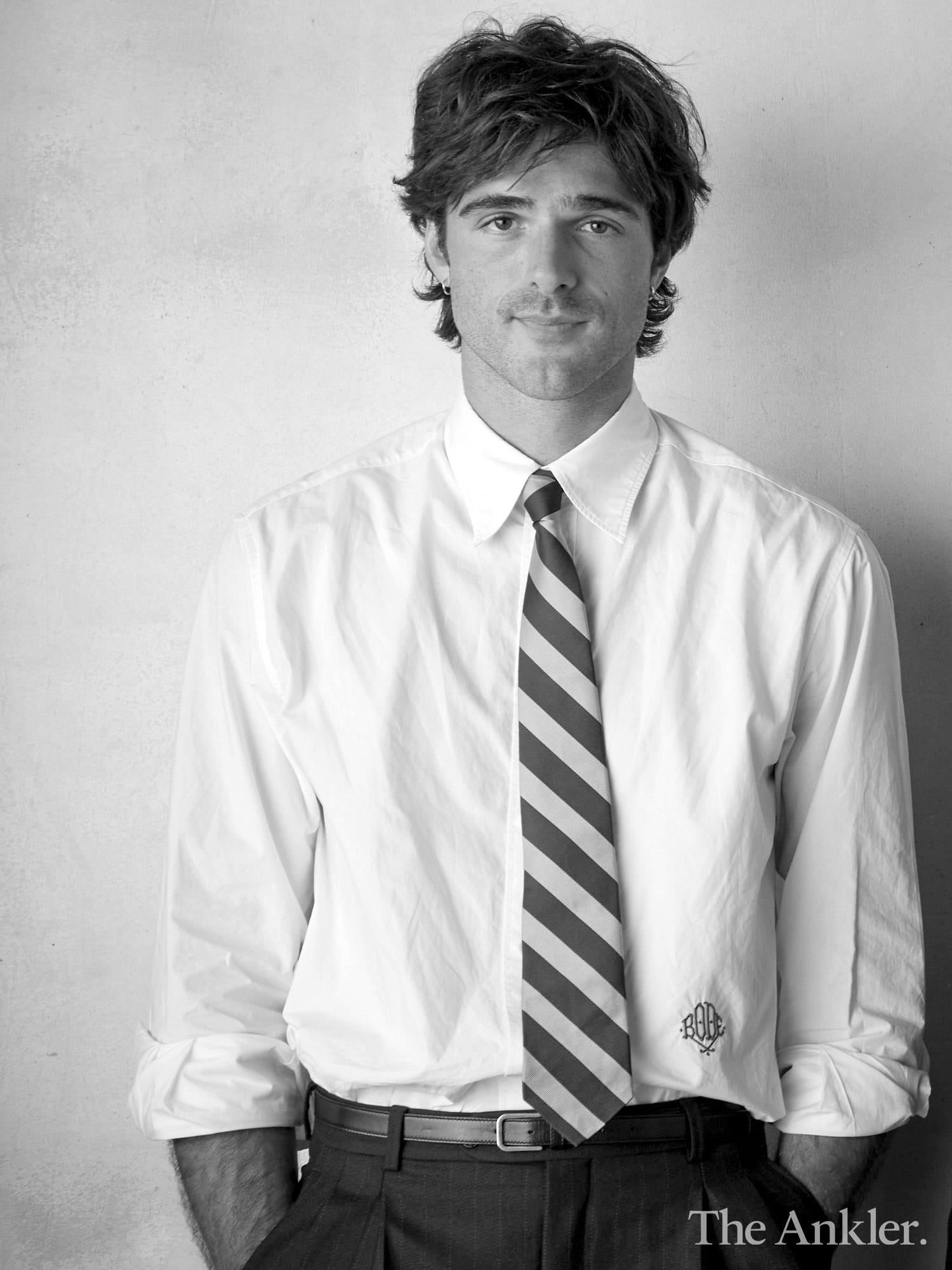
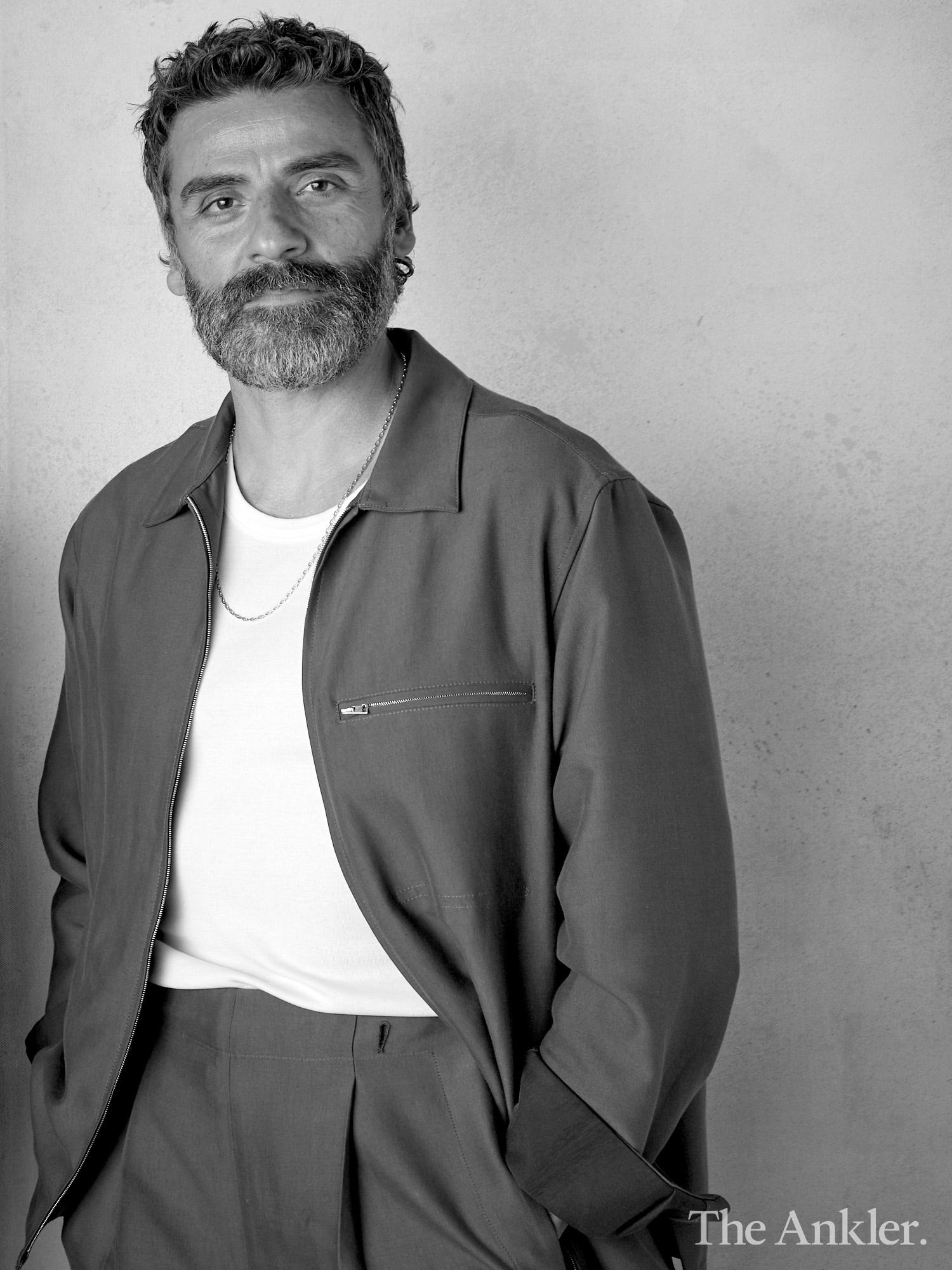
Isaac and Elordi had to develop a unique kind of father-son dynamic for the project, and they did so through long conversations with each other and del Toro. Thinking back to those early days of the production now, Elordi finds it hard to talk about.
“Paul Newman and Joanne Woodward said that talking about acting is like talking about sex,” Elordi says. “It is a little bit like that. It makes me nervous to talk about whatever happened in that space because I don’t know what it was. Because so much of it was subconscious, and it felt like it came from the soul — if there is one. So then, when you start talking about it, you never quite get it. You never quite say the right thing.”

SCARLET: HAMLET BY WAY OF ANIME
Japanese animator Mamoru Hosoda has been making films for nearly 25 years, working with legendary animation houses as well as his own independent projects like the breakthrough The Girl Who Leapt Through Time and 2021’s Oscar-nominated Mirai. But the changes he’s watching in moviegoing now, with international films and ambitious animation breaking through with audiences more than ever before, are making entirely new things seem possible.
“I was actually here 10 years ago at the Toronto International Film Festival, and it’s really made me think how the times have changed since then, especially in animation,” Hosoda tells me. “The streaming services have really changed the game and made Japanese films, international films and animation more available to people around the world.”
Scarlet, which Sony Pictures Classics will distribute this year with hopes of breaking into what has become a wide-open animated feature Oscar race, is one of several movies on the circuit right now with roots in Shakepeare’s Hamlet (including my beloved Hamnet and a Riz Ahmed adaptation of the tragedy that’s seeking distribution). Scarlet focuses on a young girl who seeks to avenge her father’s death but gets poisoned and sent to purgatory before she can extract her pound of flesh. It’s the kind of project that maybe, not so long ago, wouldn’t have been ferried to festivals around the world, like Venice, where the movie premiered, and now TIFF.
“Film festivals like these have slowly started to incorporate animation films in their lineup,” Hosoda says. “I think it really tells a story and tells a message to the world that animation is not only for kids or not only for selected audiences, but it’s a means of portraying art. It’s a means of expression that is now being normalized as not just animation, but just filmmaking, and it’s going beyond borders.”
ORWELL: 2 + 2 = 5: GEORGE ORWELL’S FUTURE IS HERE
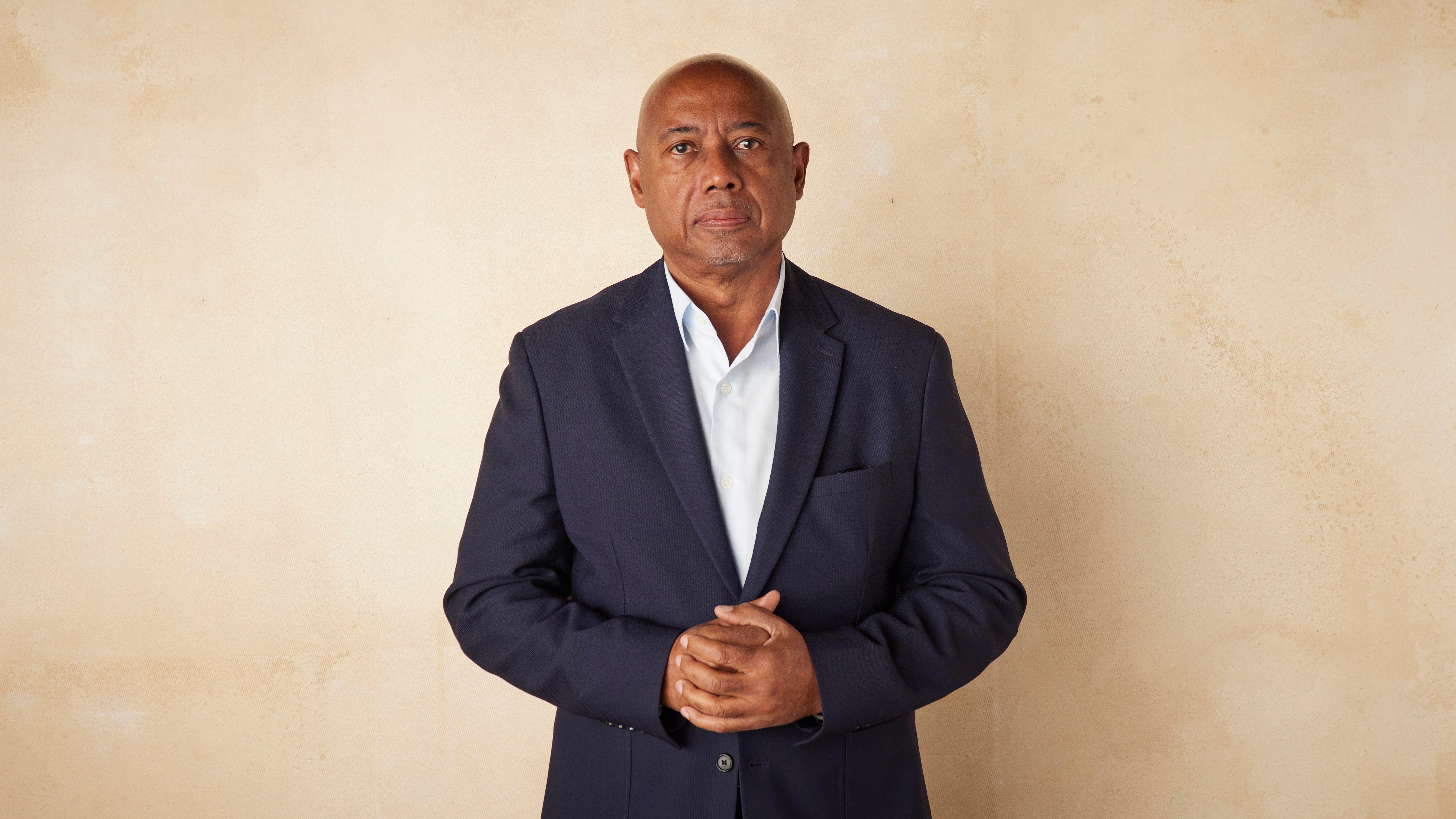
When Raoul Peck got the phone call from fellow documentary filmmaker Alex Gibney that would lead to Peck’s next acclaimed film, it was a simple three-word proposition: “Orwell. You in?”
Gibney had been asked to make a documentary based on the life and work of George Orwell but thought it might be a better fit for Peck, who had already approached the work of another literary titan, James Baldwin, for the Oscar-nominated documentary I Am Not Your Negro.
The result of seeing Orwell’s work through Peck’s lens is 2+2=5, which layers Orwell’s own words and writing (voiced by Damian Lewis) over documentary footage that proves just how correct Orwell was about predicting the future. Take AI, for example, which didn’t exist in Orwell’s time but has a clear thematic place in Peck’s film.
“AI was at the center of our lives already,” Peck tells me about his decision to include it. “It’s related to the Newspeak of Orwell, to the fact that they are telling you what you know, and what you know out of experience is not what you see. It’s a constant changing of your identity, of your reality.”

BLUE MOON: A CREATIVE BREAKUP
Ethan Hawke and Richard Linklater have been friends and collaborators for 31 years, ever since Before Sunrise. In that time, they’ve made nine features together, including Blue Moon, their first joint project since 2014’s Boyhood landed each indie legend Oscar nominations.
“Rick has edited my work a lot over the years,” Hawke told Chris. But the filmmaker had never seen his star like this before. In Blue Moon, Hawke plays lyricist Lorenz Hart, whose collaboration with Richard Rodgers birthed several classics — including the movie’s title song, “The Lady Is A Tramp” and “My Funny Valentine” — but ended in 1943, just before Hart’s death. To play the diminutive writer, Hawke had to change not only his hairstyle (a combover to match Hart’s look) and height (Linklater used “stagecraft” to shrink his star in the frame, including perspective shifts), but his entire being.
“He didn’t want to see me as Ethan. So he would watch the monitor, and every time he saw me [instead of Hart], we had to go again,” Hawke said while seated alongside Linklater and costar Bobby Cannavale. “Slowly, through the process, I started not pulling out any of the other tricks I would normally use.”
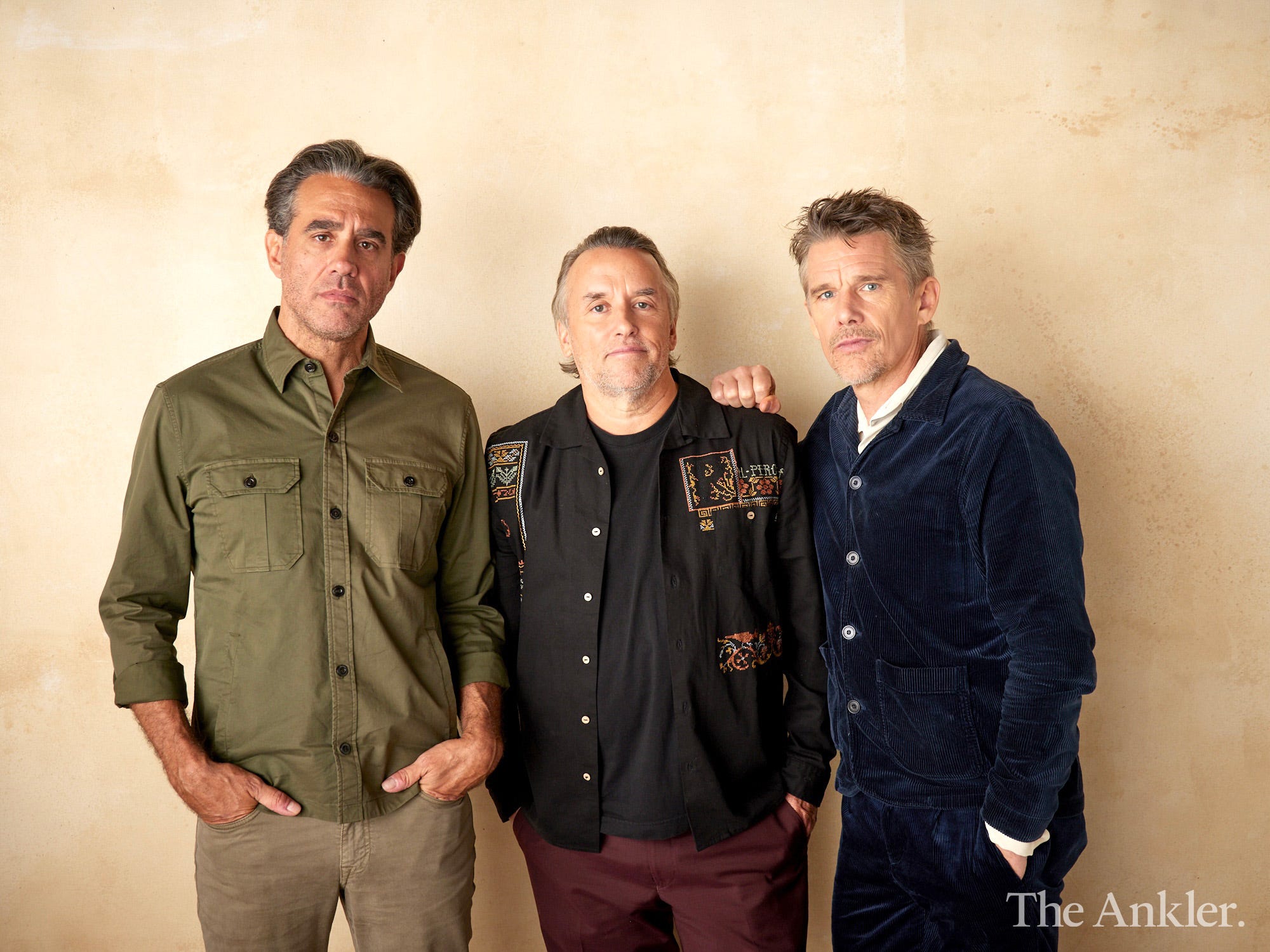
Blue Moon debuted at the Berlin Film Festival in the winter and is one of two features Linklater has in contention this awards season, alongside Netflix’s Nouvelle Vague. But Blue Moon, out this fall via Sony Pictures Classics, is getting a real go in movie theaters.
“I’m glad it’s going to be in the theater,” Linklater said. “I think back to even the ’80s when I was first falling in love with cinema, there were all those Robert Altman films — Streamers, Come Back to the 5 & Dime, Jimmy Dean, Jimmy Dean. These kinds of movies that I always liked — like an old Woody Allen movie or something, too. That’s kind of the vibe here.”

CALIFORNIA SCHEMIN’: A HIP-HOP DEBUT
James McAvoy has worked with some of the most prominent directors in the world, including Joe Wright, M. Night Shyamalan and Danny Boyle. So when he decided to step behind the camera for his directorial debut, the underdog hip-hop story California Schemin’, McAvoy knew what he didn’t want.
“One of the worst things on a film set is when you get there and you’re like, ‘Let’s rehearse,’” McAvoy told Chris. “What is rehearsal? It’s like you’re not trying to perfect it, so let’s agree what the story is and agree how we’re going to try and tell it. If you don’t have rules, you don’t have a game; you just have a bunch of people on a piece of grass. The parameters, the confines, the structure and the obstacles make the game. But you don’t win the game of storytelling. The game is to tell the story. So being a director is about a little bit of freedom, and it’s a little bit structured as well.”
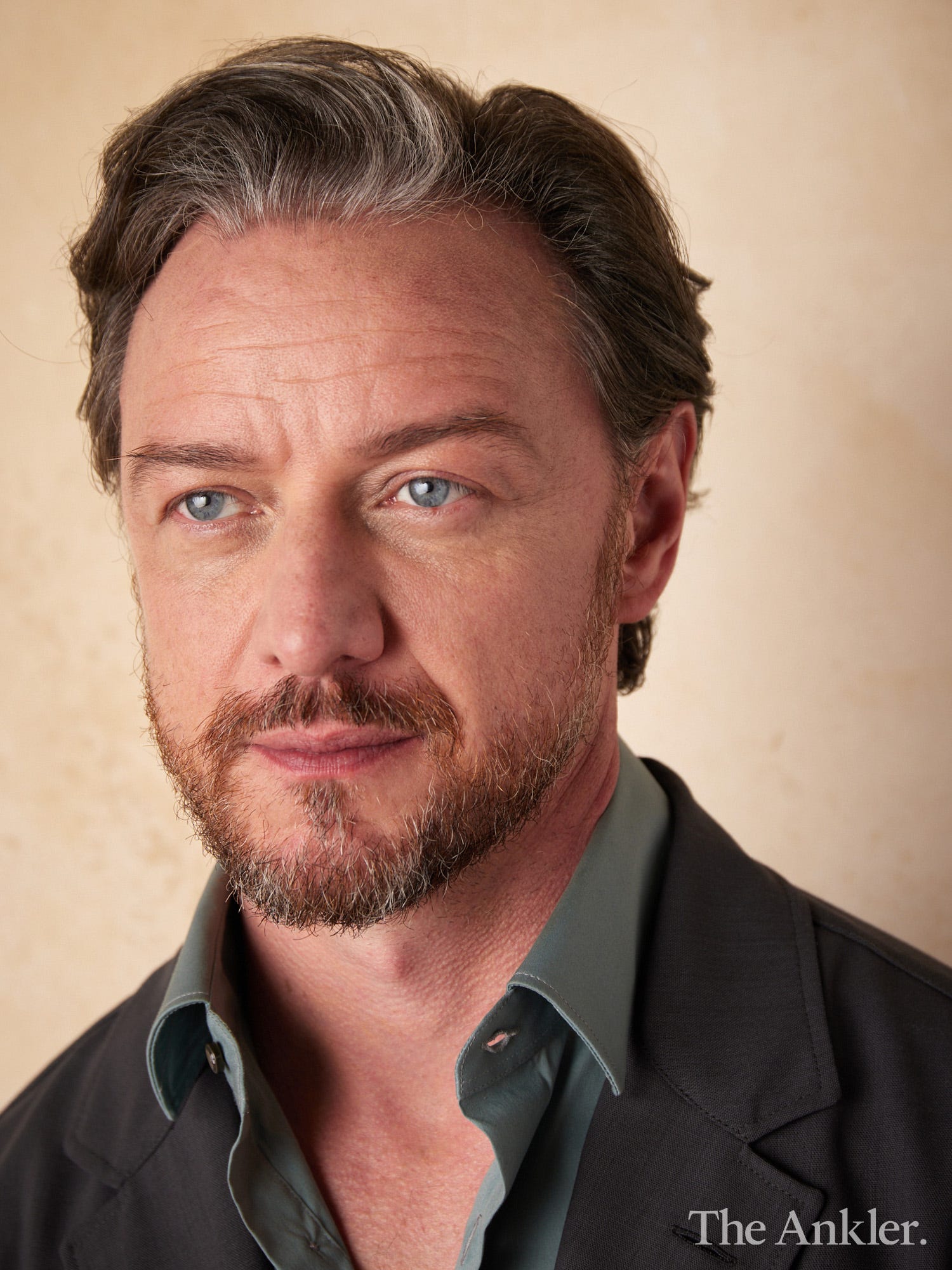
McAvoy makes a brief appearance in his feature debut, but the movie belongs to young Scottish actors Samuel Bottomley and Seamus McLean Ross. They star as, respectively, Billy Boyd and Gavin Bain, two aspiring Scottish rappers who, after facing career rejection, break big while pretending to be American. Their rise-and-fall story, which is still seeking distribution, spoke to McAvoy because of his own background.
“I wanted to tell a story about people who I recognized set in the kind of neighborhood where I grew up,” he said. “I wanted to tell a story about that kind of environment, creating people who are aspirational, had a dream, and also still have limited horizons and limited opportunities, and try and get beyond that… So I read the script and I was like, ‘This is it. A hundred percent.’”