

🎧 ‘These People are Fighting a Moral Battle’: Making of ‘Andor’ Season 2
Emmy-nominated writer Dan Gilroy, director Janus Metz and costume designer Michael Wilkinson reveal how the show broke the Star Wars mold
Art & Crafts is our podcast series that brings audiences behind the scenes with the artisans who create the film and TV we love. This conversation is sponsored by Disney+. Subscribe on Apple Podcasts.

When Dan Gilroy sat down with his brother, Andor creator Tony Gilroy, and fellow writers Tom Bissell and Beau Willimon, to work on the Emmy-nominated show’s second and final season, he knew they had a tall task ahead.
“On a lot of shows, climax means spectacle, and throwing a lot of money on the screen and looking for things to break and crash,” Dan Gilroy tells Ankler Media deputy editor Christopher Rosen on the latest episode of the Art & Crafts podcast. “That was not our climax. Our climax is a moral, character-driven climax, and in many ways, it’s driven by Rogue One (the Star Wars prequel movie that introduced audiences to the Andor title character, played by Diego Luna). So the audience knows what’s going to happen to these people at the end, when this is all said and done. Most of them are going to die, which is a very unusual starting place. However, it gives you tremendous power as you’re barreling toward your climax.”
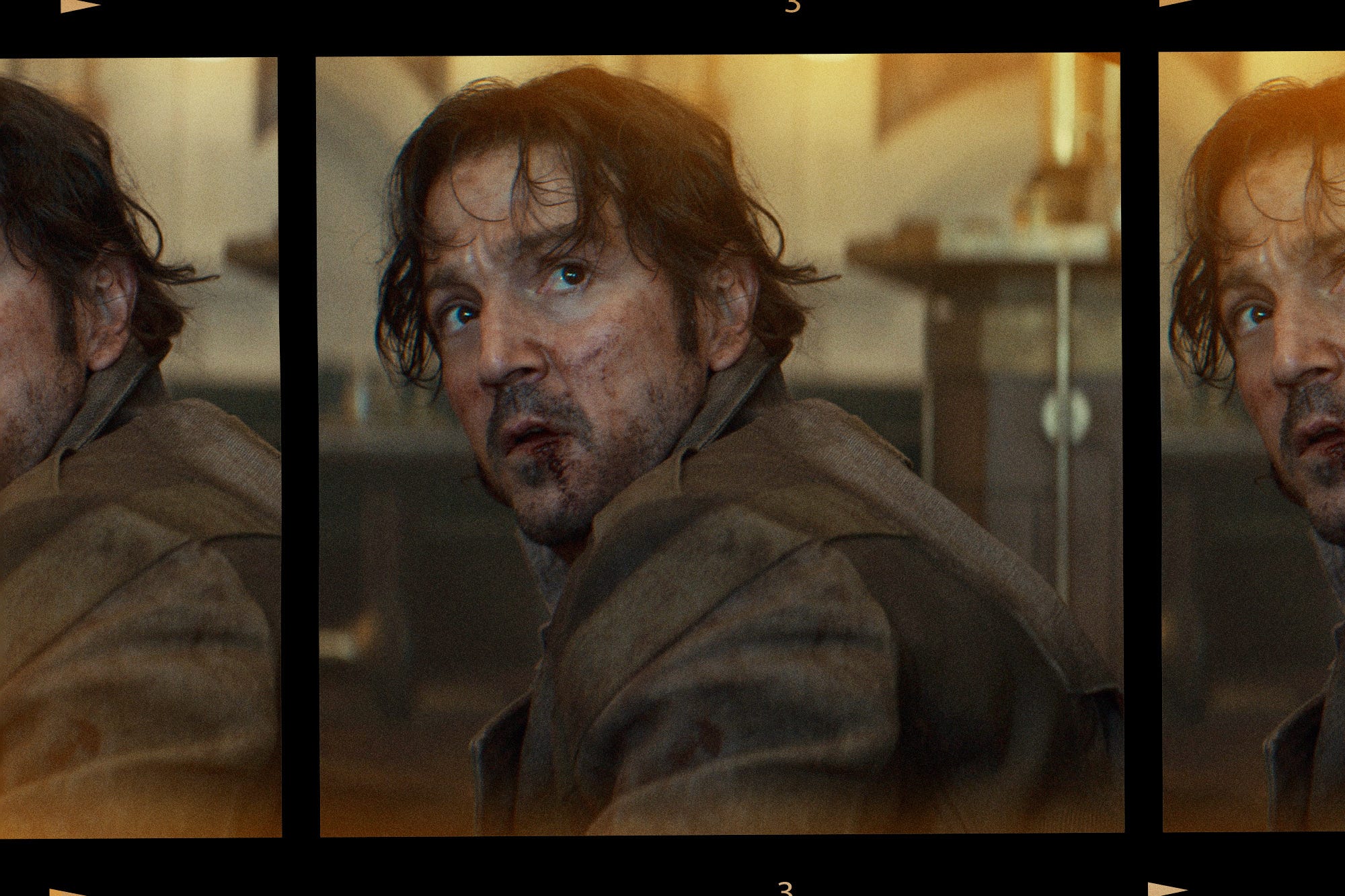
Set in the five years before the events of Rogue One — which follows fighters from the Rebel Alliance who steal the Galactic Empire’s plans for the Death Star, an act of rebellion that allows Luke Skywalker to destroy the space station in 1977’s original Star Wars — season 2 of Andor is unlike typical stories in the long-running franchise. The drama series, a 14-time Emmy nominee this year, focuses primarily on its characters and their choices — whether that be Cassian Andor (Luna) as he grows into a Rebel leader, or Syril Karn (Kyle Soller), an Imperial bureaucrat who doesn’t consider his moral code until it’s too late.
“When you know that these people are fighting a moral battle — and they are, in their minds and in reality — there is a great chance that they won’t live to see the victory,” says Dan Gilroy, an Emmy nominee this year in the drama writing category for the Andor episode “Welcome to the Rebellion.” “So what are you paralleling? What are you echoing? You’re echoing one of the greatest speeches of all time: Martin Luther King’s Lincoln Memorial speech. ‘I have a dream.’”
Gilroy had such a belief in that ethos that he took inspiration for one of the season’s standout moments — the speech Mon Mothma (Genevieve O’Reilly) gives to the Galactic Senate following the massacre on planet Ghorman — from that King speech.
“I believe there are things worth dying for, so when I watch something in which I’m watching characters sacrifice themselves for a greater good, almost like acolytes, it’s practically a religion,” Gilroy adds. “My human frailty and my will to live have now been superseded by something bigger than me. So when I have that as a beacon and I’m aiming for that in the script, I’m on fire.”
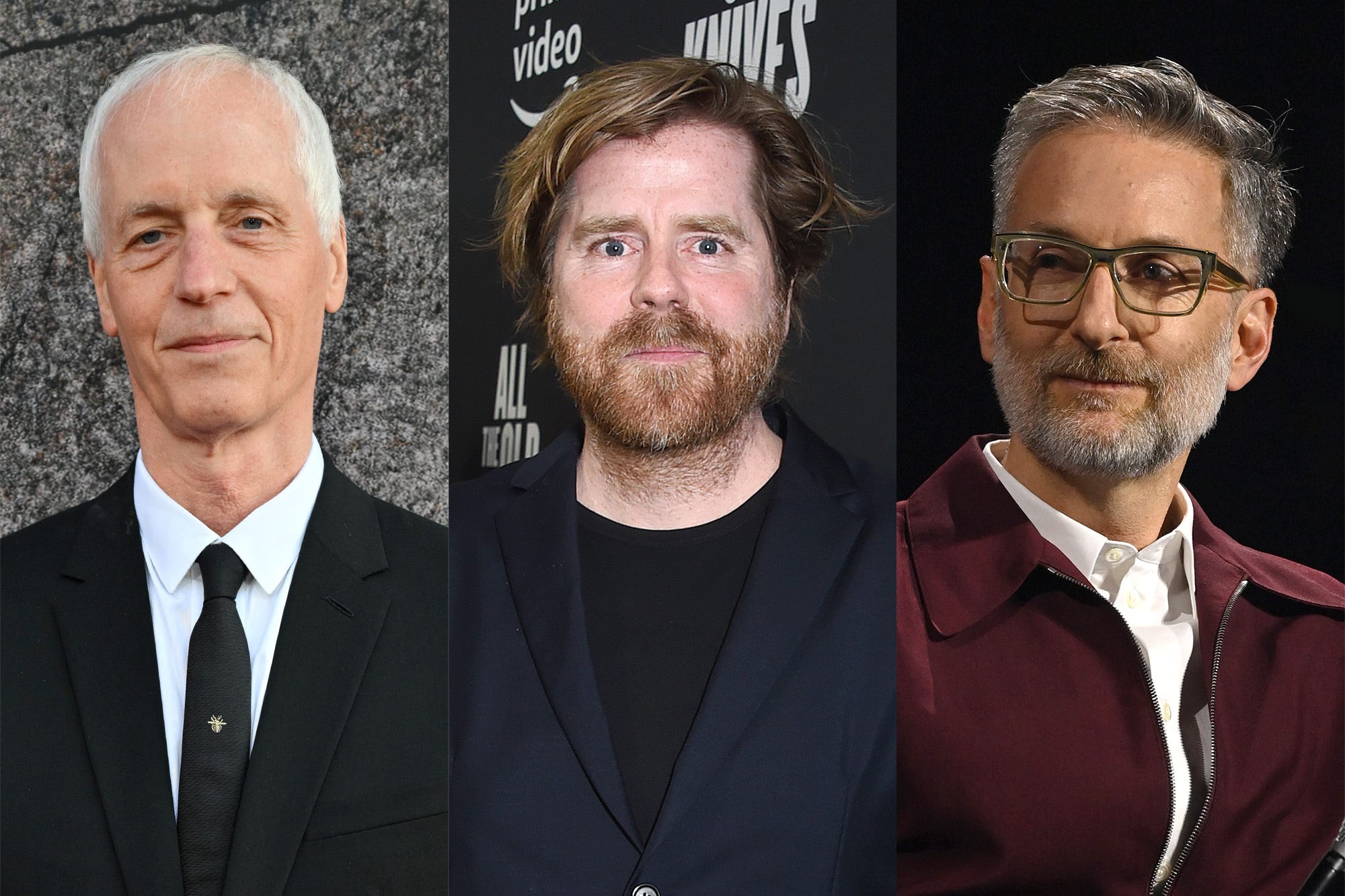
Gilroy is one of several people responsible for turning Andor into a show that marries timely political commentary and discourse and science-fiction fantasy — including director Janus Metz (nominated for episode 8, “Who Are You?” written by Gilroy) and costume designer Michael Wilkinson (a nominee for episode 3, “Harvest”).
“We were going to create an illusion there of thousands of people being essentially massacred in that place and trying to figure out how to do it,” Metz says of his nominated episode, which depicts the Ghorman massacre, an infamous event in the Star Wars canon, where Imperial forces gun down a population of peaceful protestors. An acclaimed documentary filmmaker, whose 2010 film Armadillo focused on Danish fighters during the Afghan War, Metz says he was inspired by movies like 1966’s The Battle of Algiers and 2022’s Athena, as well as his own experiences, to direct the pivotal episode.
“When I was being considered as a director, one of the things that Tony said was, ‘Look, we’re really trying to use the franchise to talk about real issues, to talk about politics, to make it feel grounded in character.’ So that really drew me in,” Metz says. “[With Armadillo] I experienced first-hand what it means to be in real combat and what it feels like. And I tried to capture that in a documentary film. And that was hugely informative to the way that we shot the Ghorman massacre.”
As for the costumes, Wilkinson says his team approached the storytelling on Andor with a similar truthful rigor. Across two seasons and 20 hours of television, Wilkinson, an Oscar nominee for American Hustle and now a first-time Emmy nominee, estimates he has spent five years creating intricate costumes for the Disney+ series.
“This is no sort of space opera, straight-out action series. We’re treating these stories as very important and very relevant to today,” he says of the approach. “So that means when I’m designing costumes, the characters have to feel extremely realistic and believable, and there’s nothing that’s just ornamental or looks or is Star Wars-y — everything is there for a reason, whether it’s the cast members or the background.”