

The Women at the Heart of Making ‘Sinners’
How artisans Ruth E. Carter, Hannah Beachler and Autumn Durald Arkapaw helped turn Ryan Coogler’s blockbuster into an Oscar fave



Production designer Hannah Beachler, costume designer Ruth E. Carter and cinematographer Autumn Durald Arkapaw all ended their work on 2022’s emotional Black Panther: Wakanda Forever — the first Black Panther movie after the death of star Chadwick Boseman in 2020 — knowing that their collaboration, both with each other and with director Ryan Coogler, was far from over.
But none of them saw the vampires coming.
“I was super surprised,” recalls Carter, 65, who won two Oscars for the Black Panther films (making her the only Black woman to receive multiple Academy Awards), when I ask about her first conversation with Coogler that led to Sinners. For Beachler, 55, an Oscar winner for the first Black Panther (a history-making victory as well, as she was the first Black person to ever win in the category), who has worked with Coogler since his first feature, 2013’s Fruitvale Station, it was a moment of, “Oh? Okay!”
Arkapaw, 45, whose first collaboration with Coogler was Wakanda Forever, sat down with Coogler’s completed script knowing almost nothing about the story. “As you know, it’s a very original piece,” she says of Sinners, the highest-grossing original movie of the year with almost $280 million in North American ticket sales. “Scripts that good are few and far between.”
However, for all three, that initial surprise immediately led to a conversation, working quickly to both recreate 1930s Mississippi and reinvent it for this specific, unforgettable story about twin brothers (both played by Coogler’s onscreen right-hand, Michael B. Jordan, who has appeared in all the director’s films) who return home to open a juke joint and must contend with a bloodthirsty group of vampires. Able to lean on a shared language developed on the Black Panther set, the trio of craftspeople worked closely with each other, and with Coogler, to build a world that matched the ambition of that script.

In speaking to Beachler, Carter and Arkapaw, it became abundantly clear how much it means to have that past history when embarking on a project like Sinners — and how much that history means to Coogler, too. As the writer and director wrote to me via e-mail, “I put all of my trust in the incredible artisans I work with, like Autumn, Hannah and Ruth. What they might not realize is how much it means to me that they, in turn, trust me today and also trusted me when I was a less-seasoned filmmaker who came in with big ideas but not a long resume. Sinners could only have been realized as it exists today with the help of their collective artistry.”

Bringing History to Life
One of the first steps for everyone designing the world of Sinners was to delve deeply into archival photographs — black-and-white shots taken by Eudora Welty in 1930s Mississippi, as well as color images from the Farm Security Administration, which truly sparked Beachler’s imagination.


“To see the vibrancy of the color, the skin next to the color, and just really how new something is — you don’t really get those details when you’re looking at black and white,” Beachler says. “It was really wonderful to see, and that’s really where my jump-off point was for the main design.”
Beachler’s work began before the script was even finished, researching the types of abandoned buildings where a juke joint might have emerged in the 1930s, so that Coogler could write within that space accordingly. The film’s story kicks off when twin brothers Smoke and Stack (the Jordan characters) return to their Mississippi hometown after years of working with the Chicago mob. The first half follows their efforts to set up the juke joint — which Beachler’s research told her would have been a sawmill in its previous life — while the second follows one fateful night, with music and revelry giving way to blood and flames after the arrival of a pack of vampires, led by Jack O’Connell.
While Beachler made blueprints and models of the spaces she’d built for the film, Carter set up mood boards for costumes — from the muddy, oversized pants of the sharecroppers to the sharp wool suits of the Chicago gangsters who would have inspired Smoke and Stack.
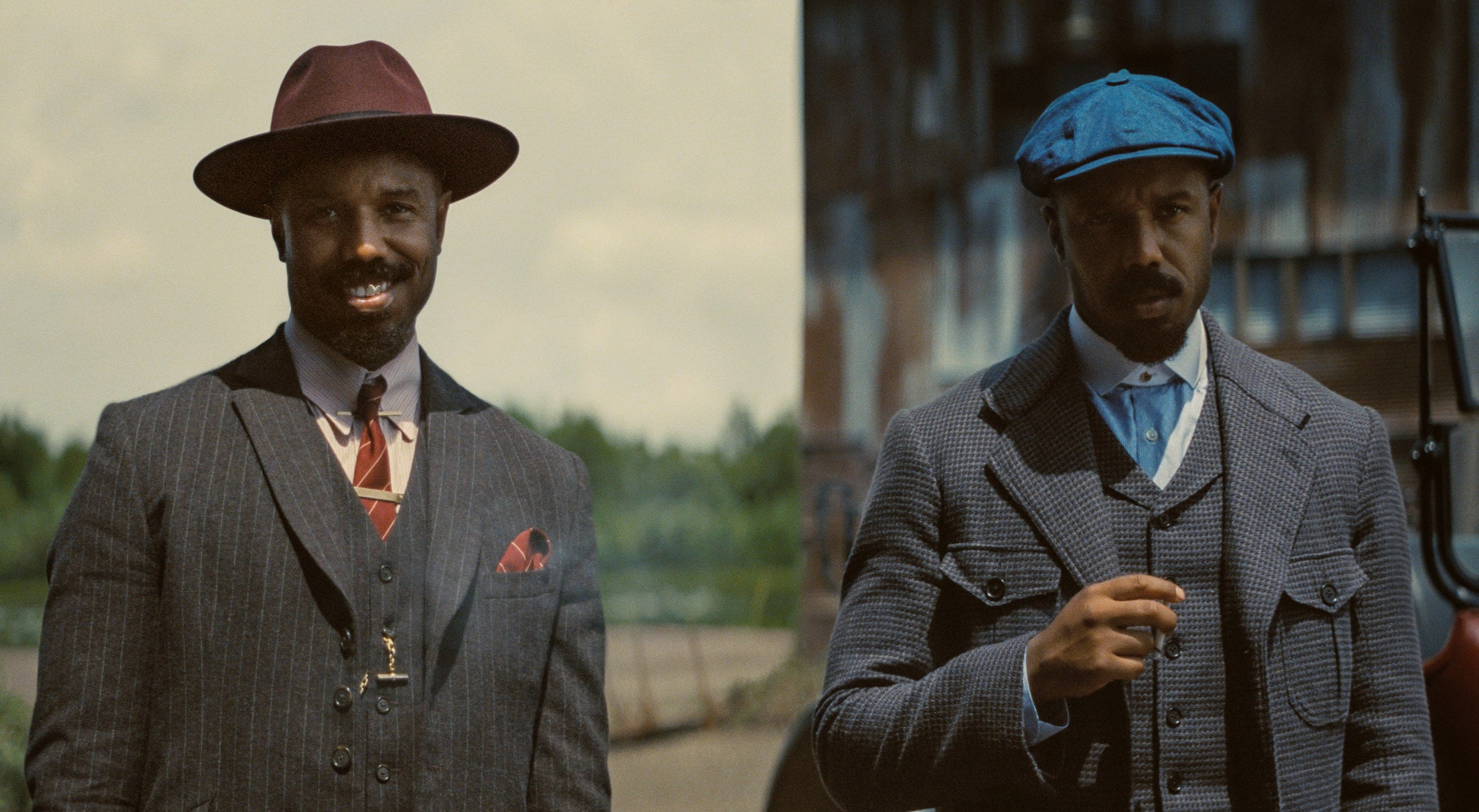
“I had all of these booking photos of mob guys, and they were crazy good for looking at wool and texture and fit and aging and proportion and all of that,” Carter tells me. “I was sharing a lot of the details of how people wore their clothes, and because I didn’t want to be that designer who made everybody perfect, I thought that this was an opportunity to be perfectly imperfect.”
Arkapaw sees Welty’s photographs as “a very Ryan reference to send, because it has a lot of heart in it, and a lot of emotion. That’s how he is, and that’s the kind of photographer that I am. To evoke emotion, you must infuse humanity into your pictures. You have to frame them with emotion and light them with emotion, and he appreciates all of that.”

Red, White & Blue
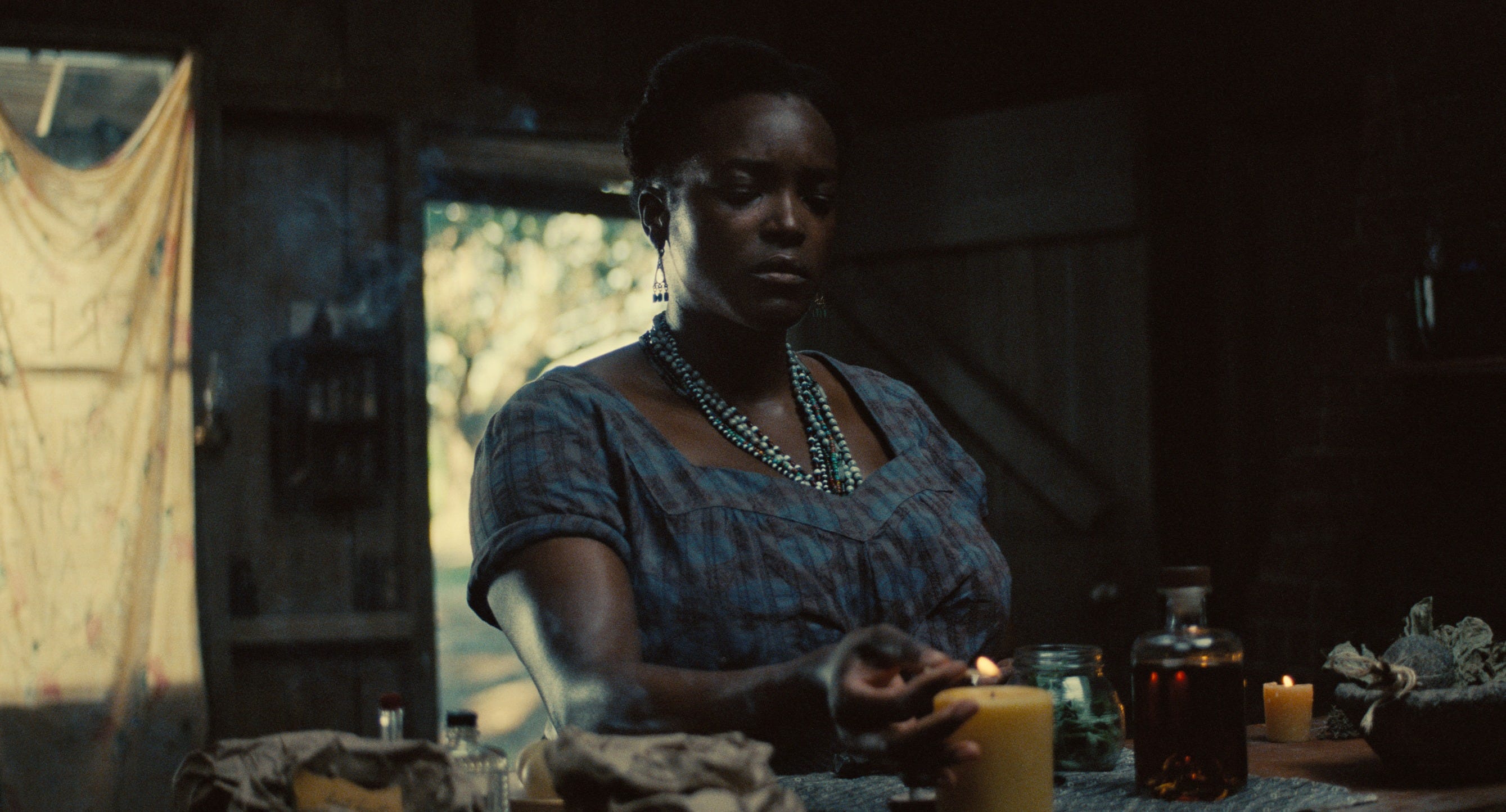
Each of the three key spaces that Beachler built for the film has a corresponding primary color. The small church where young Sammy (Miles Caton) has grown up with his preacher father is starkly white. The shack where Smoke’s estranged wife, Annie (Wunmi Mosaku), practices ancient medicine is tinged with the protective color known in the South as haint blue. And the juke joint is suffused with dark red tones in both its set and lighting.
The fact that Sinners is literally built around red, white and blue is, of course, no accident. “This is an American story,” Beachler says. Carter, who also used Norman Rockwell paintings as references, “leaned heavily into red, white and blue” in her designs, from Smoke and Stack’s subtly contrasting red and blue suits to the slight variations in blue tones for Annie’s two costumes. Arkapaw, meanwhile, had the job of ensuring that color storytelling was transferred onto the 70mm film stock.
“Ruth and Hannah are my closest collaborators as far as trying to elevate their work,” Arkapaw says. “All the hard work and the detail and the texture and color that they spend time researching — I want to make sure that shines. You want to have that trust that it’s all going to be cohesive and work together.”

A Journey Through Time
The best evidence in Sinners of how different departments work together — maybe the best evidence in any film, ever — is the time-traveling musical sequence at the film’s center (watch it above). As Arkapaw’s fluid camera swoops through the space carefully constructed by Beachler’s team, Carter’s costumes capture past, present and future — literally as the sequence breaks into magical realism, moving from centuries before the events of the film all the way into the 1980s and 1990s. It’s all unified by musical traditions that span centuries. As anyone who has seen Sinners can attest, it’s an astonishing scene, both elaborate and seemingly effortless.
I asked Beachler, Carter and Arkapaw all where exactly they were when this sequence was filmed, in an effort to get insight into how their work happens once the cameras are rolling. The answer for all three was, more or less, right outside the camera’s frame.
“Some of us have to be on set because we had to switch stuff out,” says Beachler, whose production design team was as carefully choreographed as the dancers we see onscreen. “As the camera is coming, we have to pull this away and put in that. Ryan was really clear — you’ve got three seconds before we turn and see you.”
Carter sourced rigorously historically accurate pieces for the scene, like a tracksuit actually worn by LL Cool J for the 1980s breakdancers. But there were also acts of imagination, such as the “mystical” headdress worn by one dancer, which represents all the cultures of the scene mashed together. To make sure everyone knew why they were wearing what they were wearing in that scene, Carter says, “I am everywhere. I can’t sit in video village. I’m talking about what the costume represents and what the headpiece represents. I’m very much involved both with principals and with background to make sure that it’s representing what we have been trying to do with the scene. It’s not a casual thing. I’m a hands-on designer. People have asked me multiple times from the start, ‘Why?’ And I’m like, ‘Why not?’”
Arkapaw was quite literally front and center the entire time, operating the camera for every single shot of Sinners. “It’s the perfect place to be to manage all your departments and to light from camera,” she says. “It’s exactly the type of filmmaking Ryan and I like to do. He likes me being very close to him in that camera, rather than being far off in a tent or something. My eye is always there.”

The Collaboration Continues
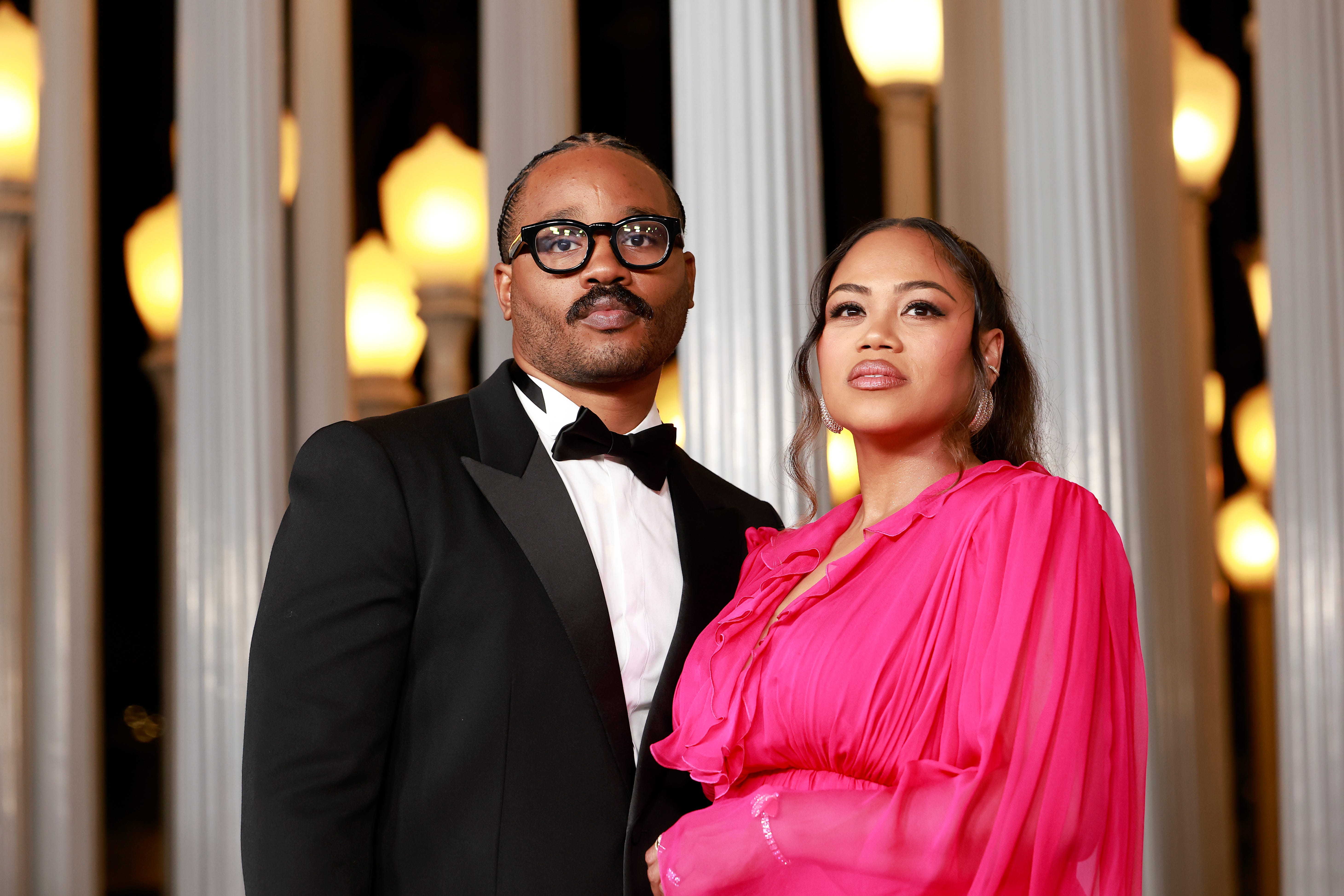
Coogler has plans to make a third Black Panther movie, and though there’s no confirmation of who else may work on it with him, it’s hard to imagine his collaboration with Beachler, Carter and Arkapaw ending any time soon.
“Ryan is very much the catalyst, the go-to leader, the visionary,” says Carter, who ought to know, as a visionary herself. “His genius led the Black Panther films, and his genius led Sinners.”
“Ruth, Hannah, and I really do care for him and his family,” adds Arkapaw, who credits producer Zinzi Coogler, Ryan’s wife, for much of the production’s success. “You’ve got like-minded people, not only great technicians and creatives, but just people that care about humanity. You can’t make a film like this or film like a Wakanda if you don’t care about the people that work on it and have respect for them. Ryan, I think, just leads by example.”
Beachler has known Coogler the longest, since they were planning out Fruitvale Station in a tiny two-room production office, and says she still finds moments to tease her old friend on set. But the base of mutual respect they built back in the early 2010s still unites them.
Back then, she told him, “I really want to work with someone who will always challenge me and someone who I can challenge without feeling like, well, that’s my boss. I can’t say anything.” Beachler calls that her “wish fulfillment” as an artist, and something she’s found on all of their projects together since.
“It’s never changed,” she adds. “He trusts me enough to know my heart and soul are there to give him the best of everything.”
