


Before I get into what I thought of The Wizard of Oz at Sphere in Las Vegas, I wanted to explain what I, a refined and highfalutin gentleman of the cinema, was doing at The Wizard of Oz at Sphere in Las Vegas.
And the answer is: I was doing the work everyone who cares about the survival of the cinema should be doing — looking for every possible way to bring the experience and the legacy of moviegoing to new audiences.
Since I do care about cinema, I look at its current state clearly — not through hazy psychedelic glasses. What I see is a medium where its survival is… I won’t say in doubt yet, but it’s an open question.
At any point during my lifetime, if you’d asked me: “Richard, will film as a major commercial art form be around in 10 years?” — I would have considered the question preposterous. It wouldn’t have been a question any more than you’d ask, “Will we still have peanut butter in 10 years?” or, more to the point, “Will we still have elections in 10 years?”
I’m not going to go into the reasons (quick roll call: changing ways of consuming entertainment, feckless studios, inert exhibitors, etc., etc.) or point fingers here. But let’s just say, we’ve got a lot of people who seem determined to make a challenging situation worse.
Given that! There is no higher priority for those who love film and want to keep it alive, not just as a museum piece, but as a vital, evolving, and dynamic part of the cultural conversation, than to think about how to bring people into the story of cinema.
So when I heard a year or so ago that the biggest, newest, most eye-catching attraction in Las Vegas planned to make The Wizard of Oz a cornerstone of its business, I was intrigued and excited.
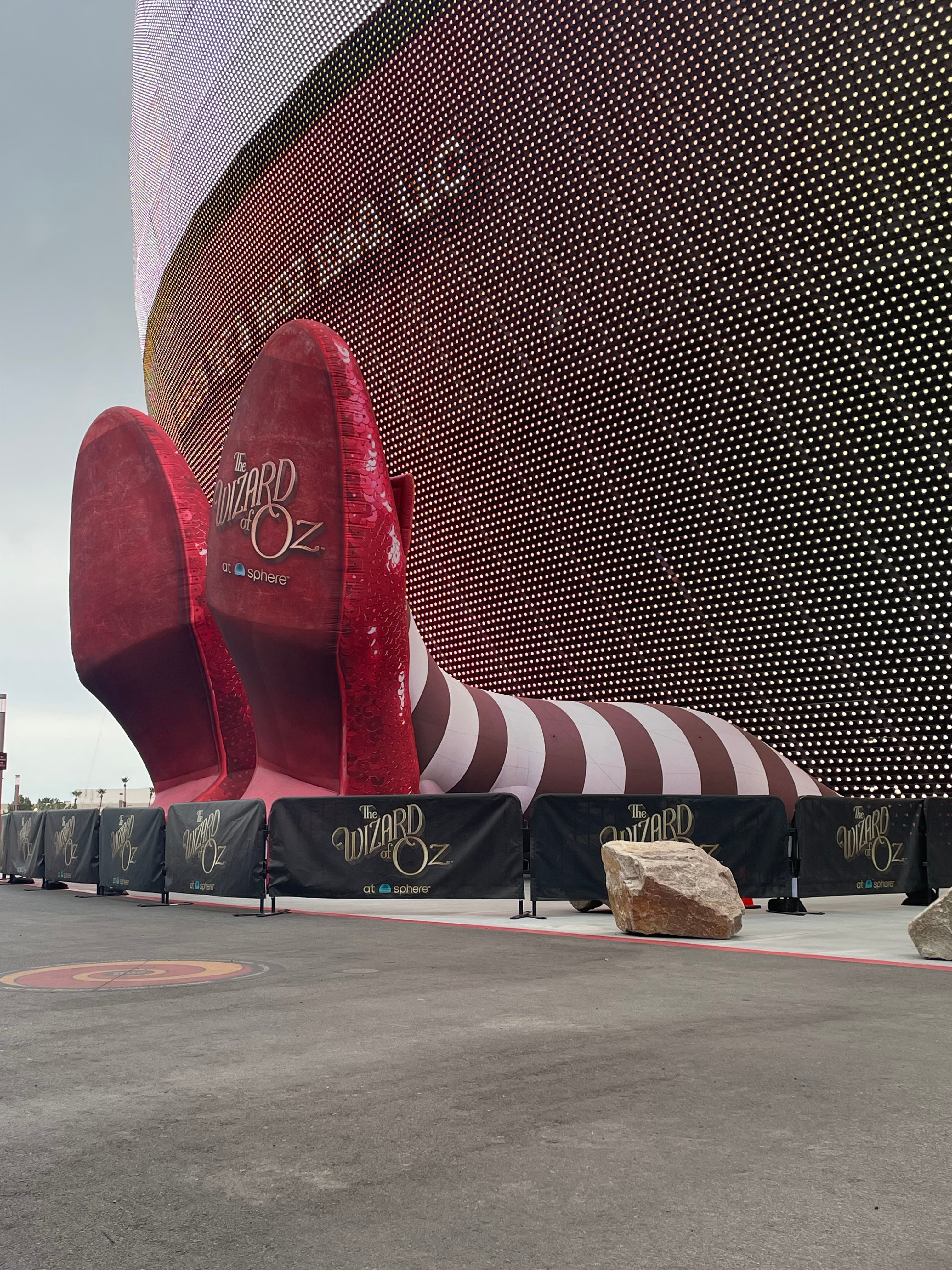
Arriving in Las Vegas, there were signs of Wizard fever everywhere
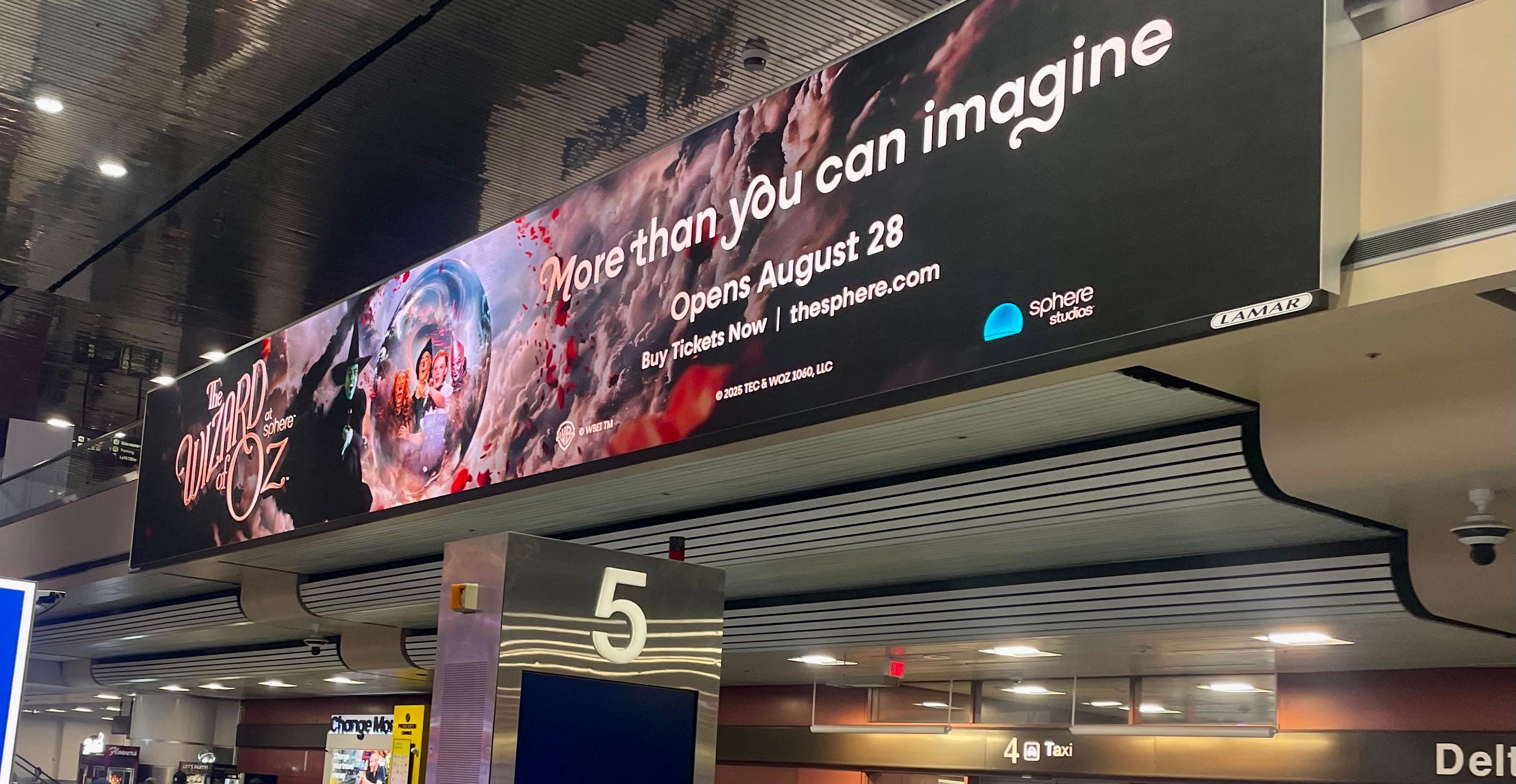
At my hotel, tourists lined up to pose with a Wizard display:
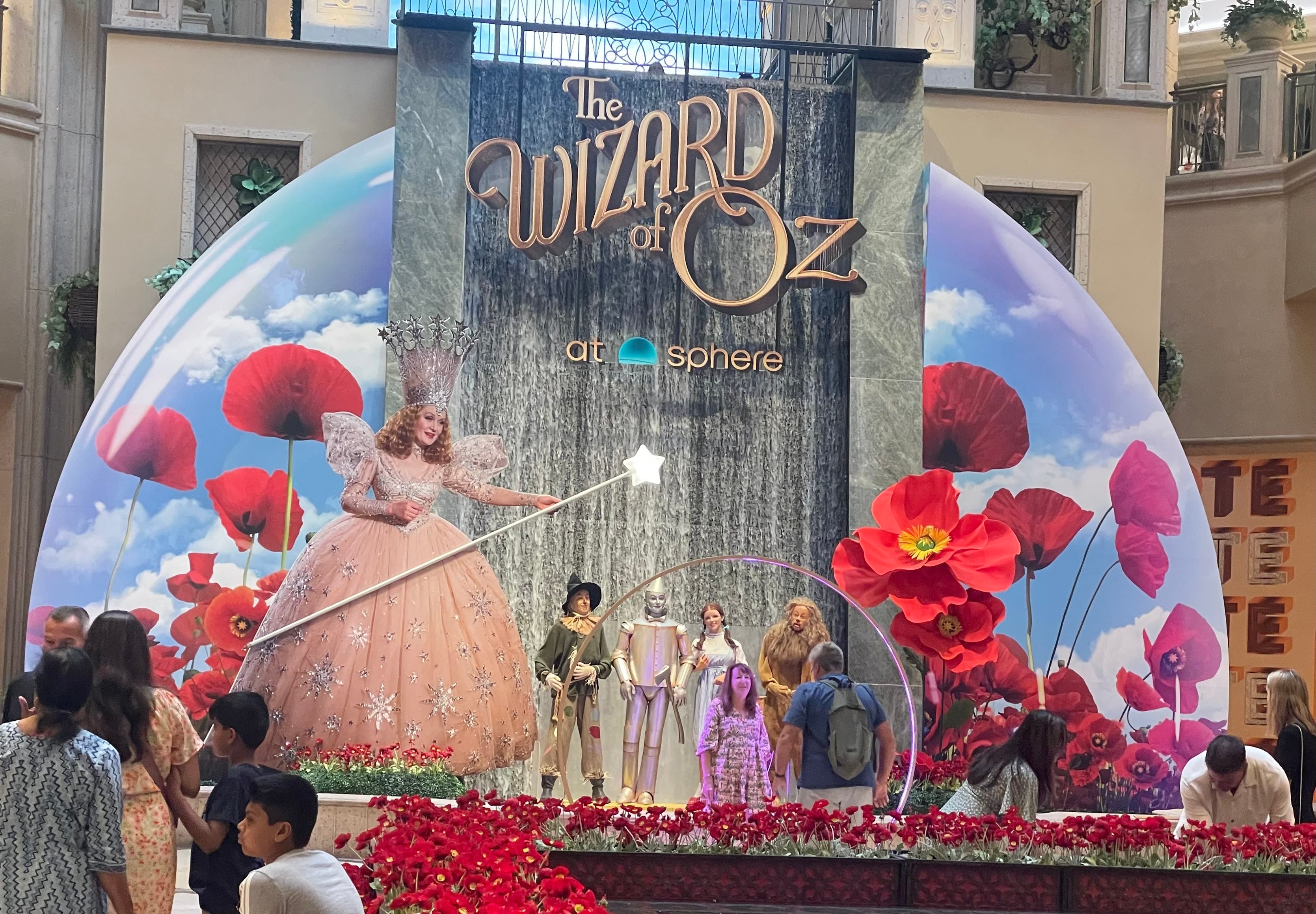
And making my way to the Sphere itself, the most sought-after landmark on the Vegas skyline, Dorothy-fever:
And I enjoyed this touch:
The Wizard of Oz is probably the most referenced and evoked film in all film history, so it can feel a little like national wallpaper, but if you get past that, something is thrilling about a nearly 90-year-old film being the center of attention here at America’s bacchanal.
Inside the Sphere lobby — actually just “Sphere lobby”; oddly, there is no definite article required as it’s just “Sphere” — is something like a futuristic spaceport, but on Thursday night, it was a little bit Kansas, and a little Emerald City.
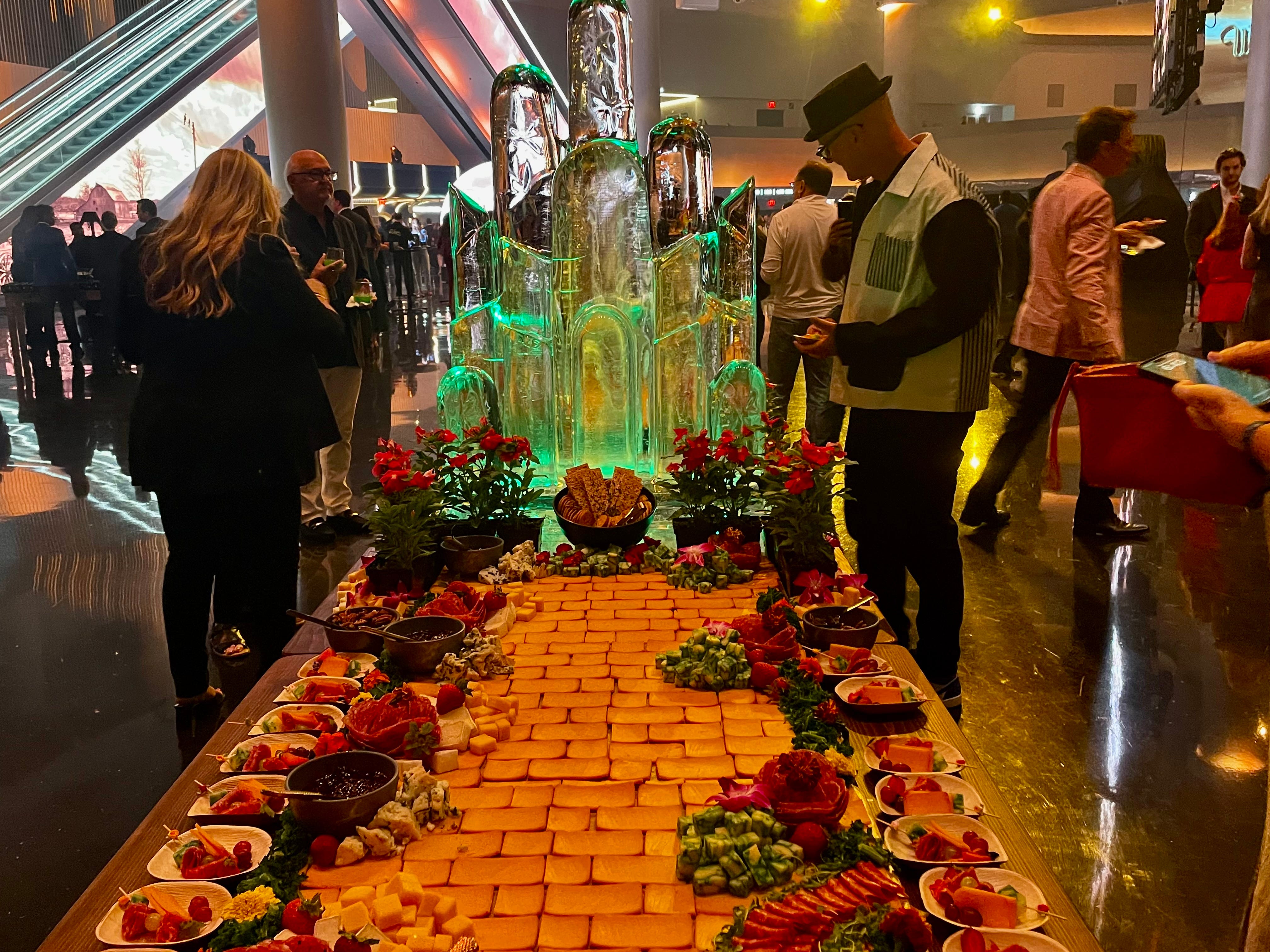
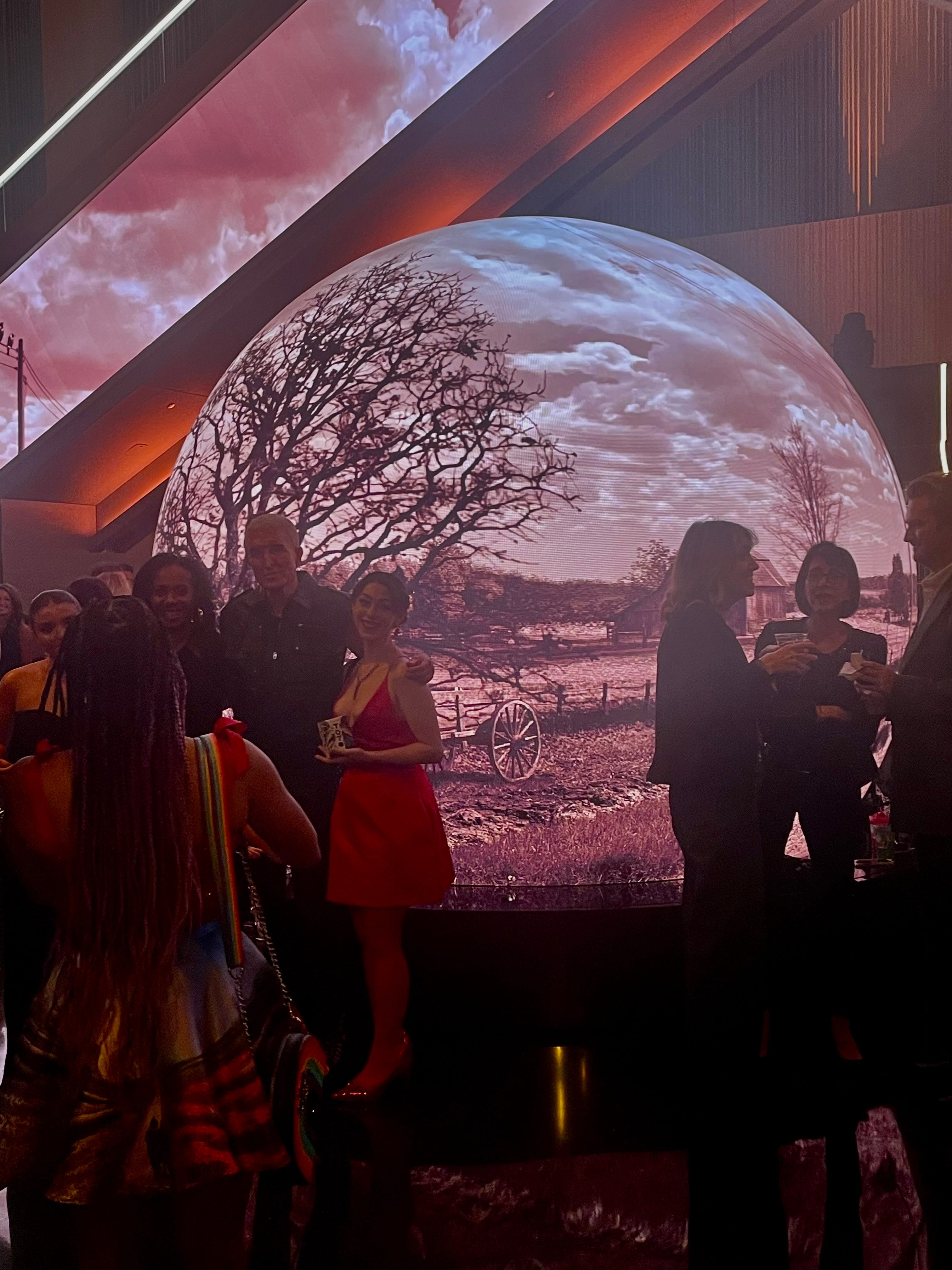
So getting finally past the preamble, what was it like?
It was f-ing amazing.

Off to See The Wizard
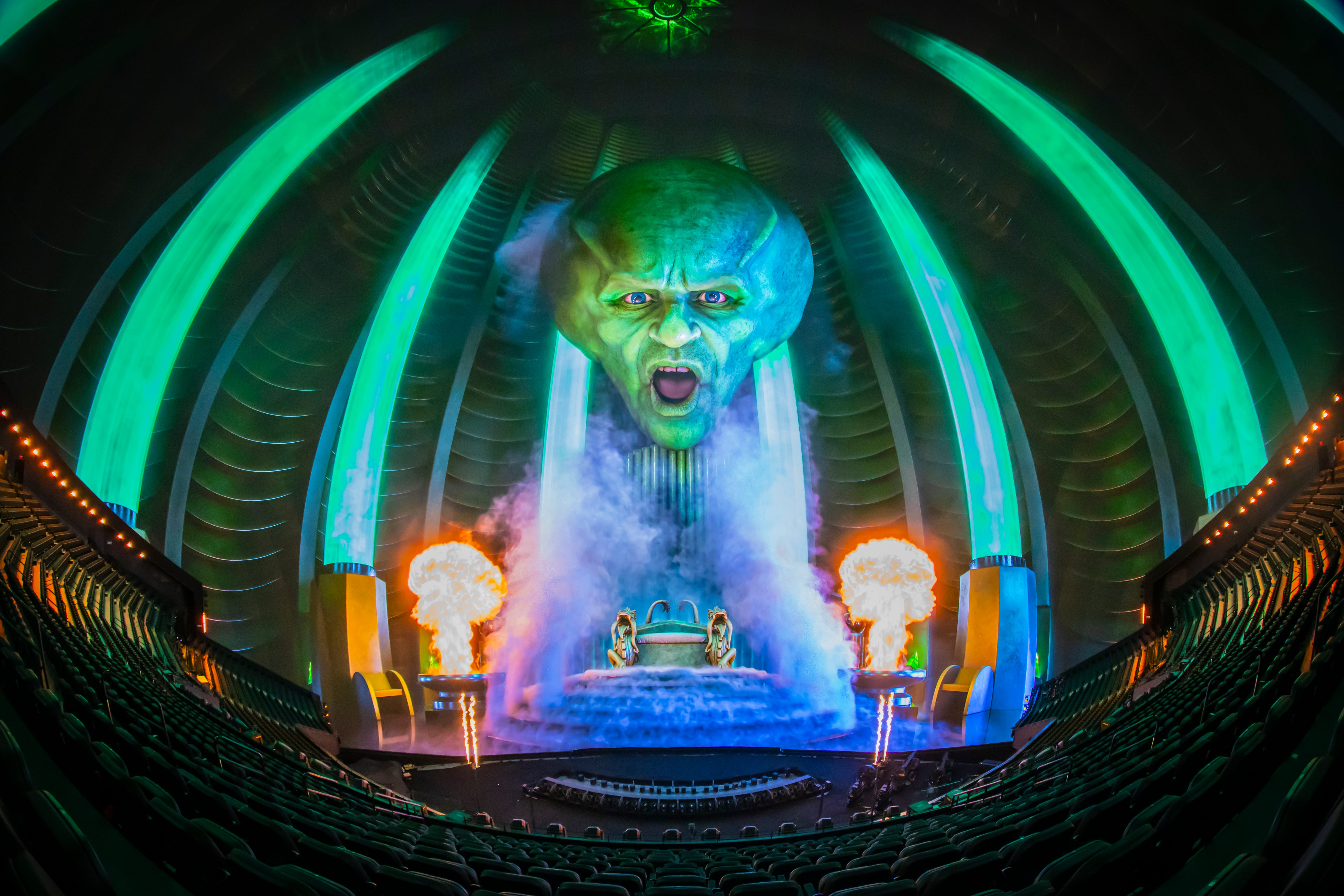
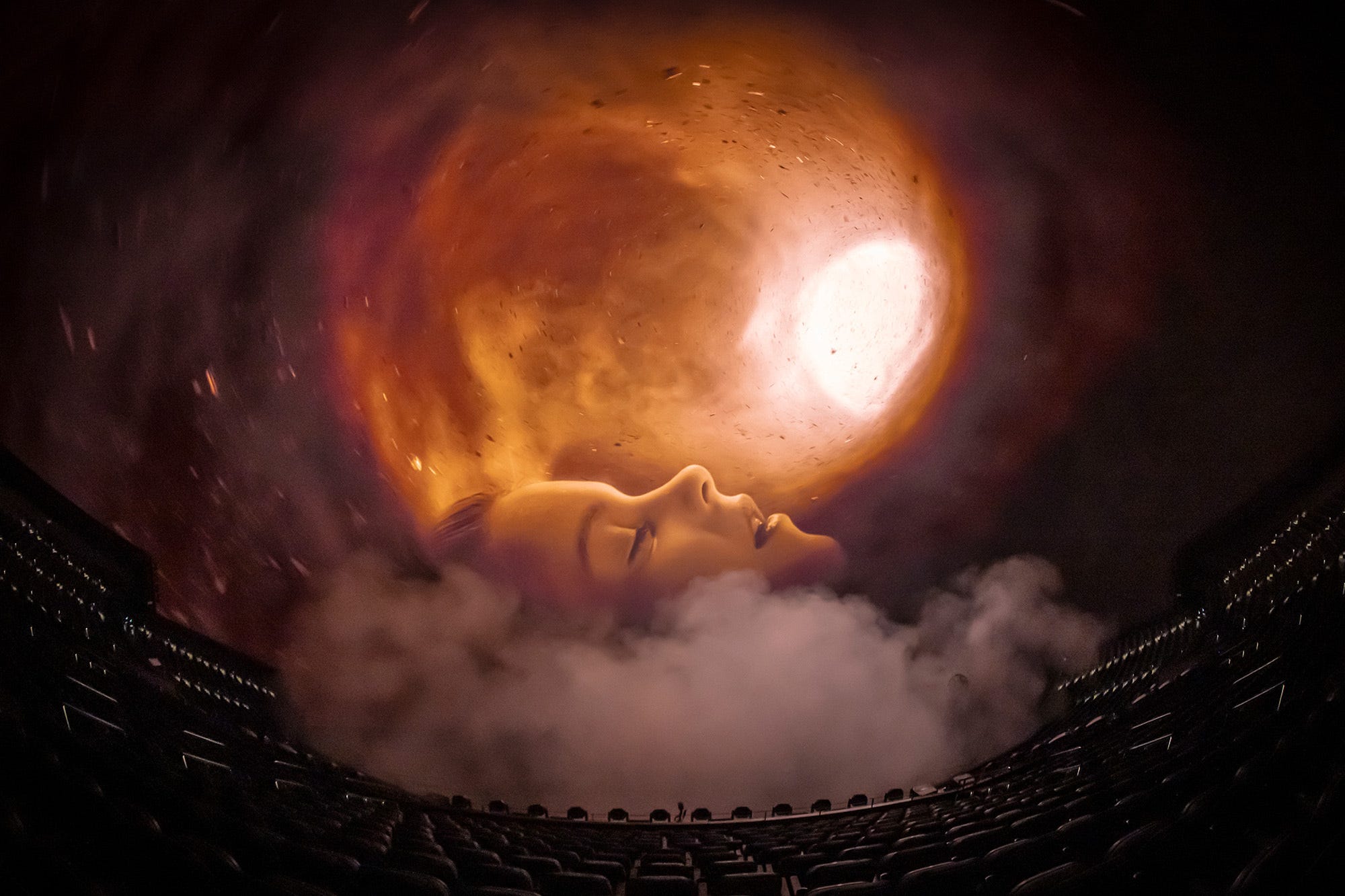
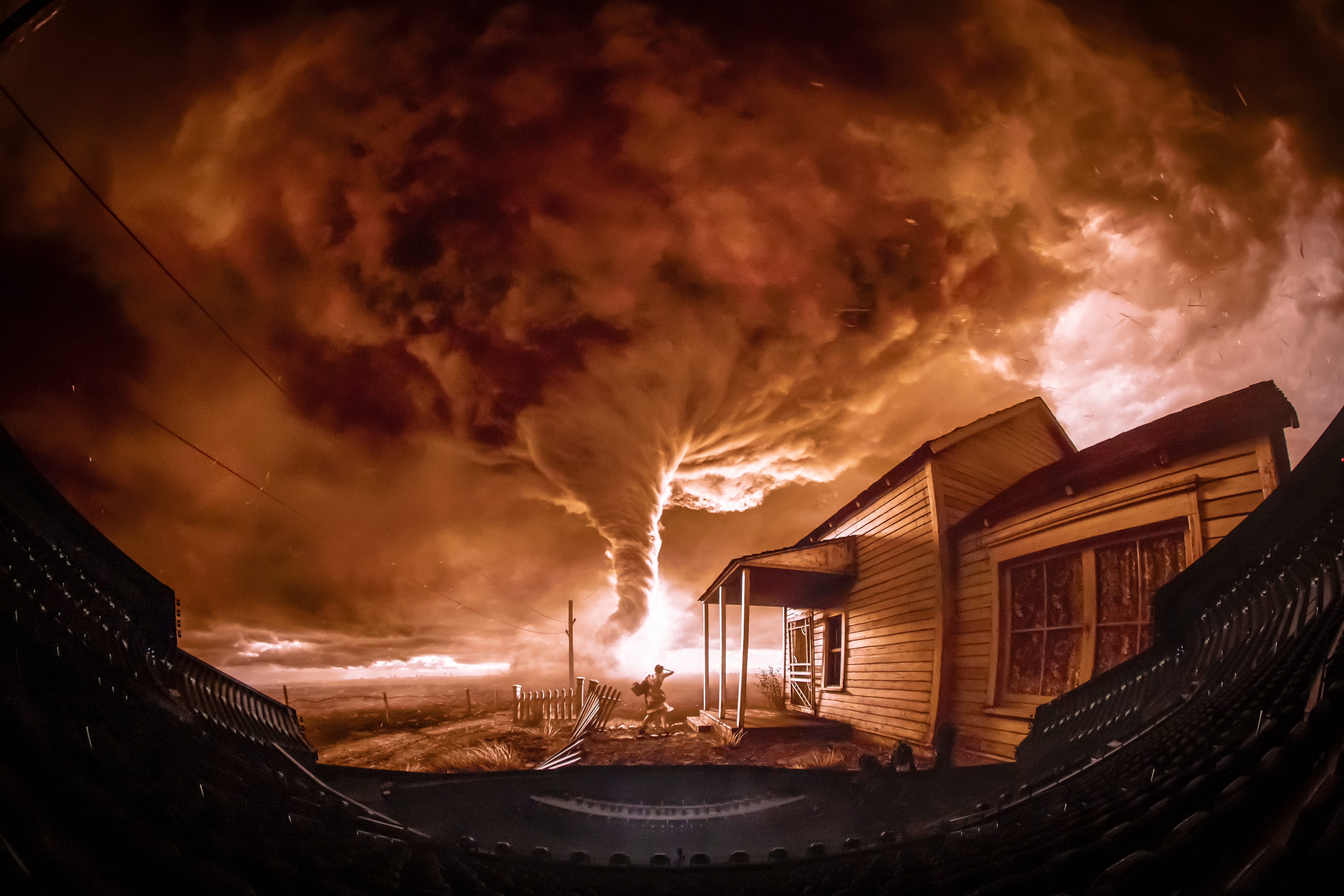
There has never been a more immersive theatre setting than Sphere.
From the earliest days of cinema, filmmakers and exhibitors have sought to make the screen experience as immersive as possible, utilizing giant screens and effects ranging from buzzing chairs to 3D, and then “4D” (smells), which they continue to refine today.
But this is a theater that comes as close as we’ve gotten to putting you inside the film, with the film all around you.
I’ve seen the Darren Aronofsky nature documentary, Postcard from Earth, which plays there most afternoons, and the effect is insanely immersive, with audiences jumping in fear as elephants charge towards the screen. But I wondered how it would work with a 90-year-old film.
Well, on one level, you have this giant screen wrapping around you, augmented by the sorts of effects and gimmicks that William Castle, the film shenanigan legend who in the late 1950s and 1960s tried everything from putting buzzers on seats to goose audiences to floating skeletons over the crowd at a film’s climax, would have been proud to consider. Soap bubbles fall to herald the arrival of Glinda, monkeys soar above the crowd, fire shoots out from cannons — it’s a whole thing.
But the most spectacular enhanced effect — the tornado — features strobe lights, rumbling seats and flying leaves blown by gigantic wind machines. It is pretty amazingly effective and terrifying. I don’t imagine that many people who see The Wizard of Oz these days find the tornado actually scary, but the audience here absolutely did.
One does spend much of the film gaping at the scenery on a giant scale — you can see ants marching up and down a tree in the forest sequence — and marveling as the witches’ castle towers above you.
But the other half of the experience is really about what is central to the film itself. As much as the tornado took the audience’s breath away, the sequence that really caused the crowd to gasp was when Dorothy sang “Over the Rainbow.”
At the core of The Wizard of Oz, the reason why it’s still so beloved today are two elements: Judy Garland’s performance and the music. And both of these, projected and heard in giant Sphere-o-Vision, are breathtaking in a visceral way that grabs the audience by the throat. Judy’s instant starmaking turn as the wistful farmgirl is so potent it survives as strong as ever, nearly a century later. A nuclear bomb couldn’t touch a hair on that performance, and as shown in Sphere, it’s like she is grabbing the controls and taking command of the room. Young Judy Garland can fill a Sphere, and she and those classic songs absolutely do.

Beyond the Yellow Brick Road
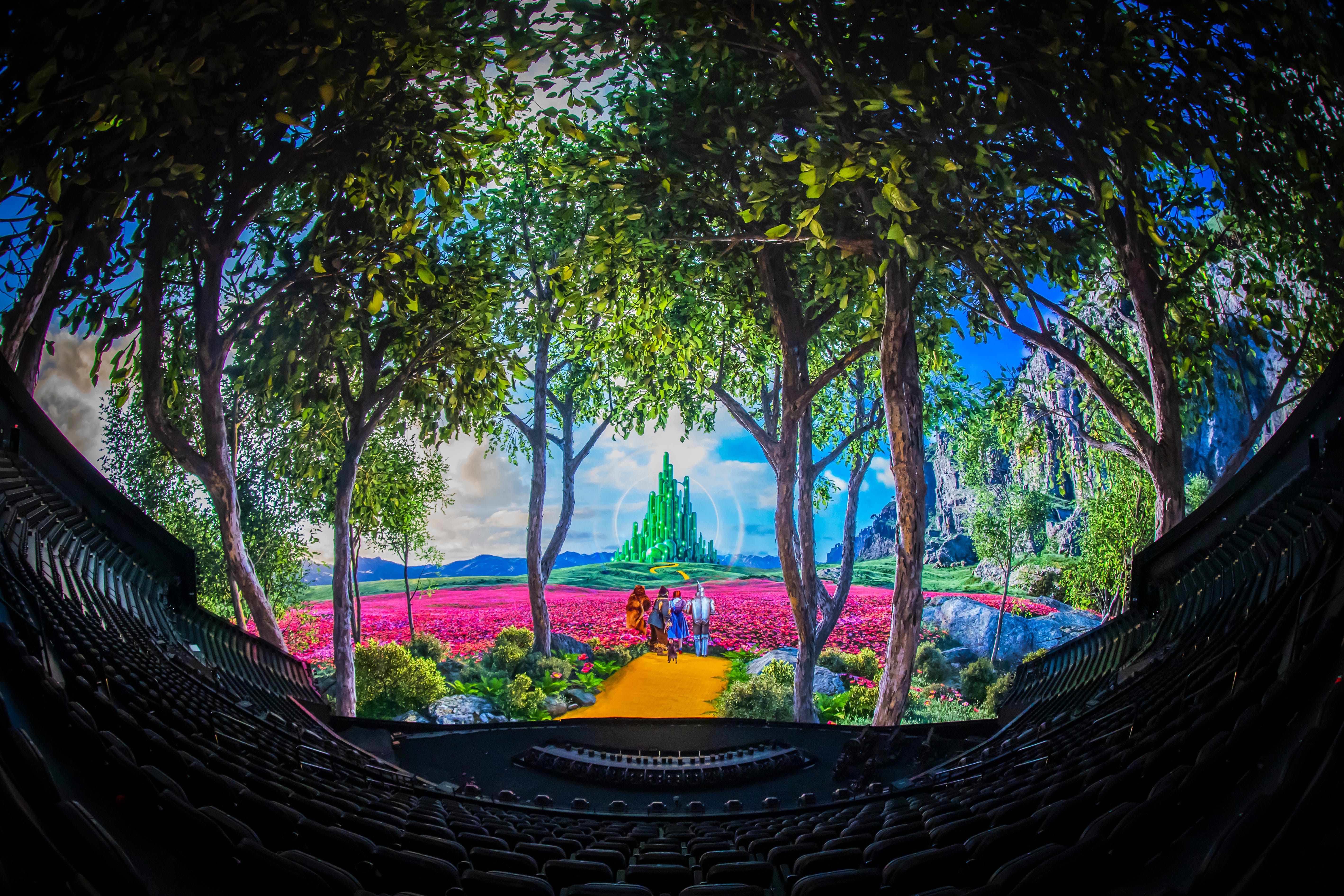
Beyond this, the basic elements of the film were brought out in a way that I can’t imagine any screening has in a long, long time. The Wizard (Frank Morgan), appearing as a floating disembodied oblong head, was actually terrifying, not comical. As was the castle that the Wicked Witch (Margaret Hamilton) calls home. The vibrant sense of this enchanted dreamland was overwhelming.
Were there uncanny valley moments, or sequences when the enhancements it took to stretch the film out so large seemed to extend it to the breaking point? Yes, a few places felt that way, but fewer than I would have thought, given the age of this film, and how peculiar its effects looked in the first place. (I looked for the reported David Zaslav cameo but didn’t catch it. If it was there, I didn’t see it, but there are a lot of extras in this film.)
However, I have to say, to the film purists making a ruckus here, I think your objections are silly and wrong-headed.
Related:

You have to look at this as an event, an experience with The Wizard of Oz that reaches out to a whole world of people who are not part of the film preservation community, and will give them an unforgettable experience with this film. Is this how it was initially meant to be seen? It was originally meant to be seen in giant movie houses, on a bill with newsreels, cartoons and B-pictures, where people came and went willy-nilly in the middle.
Unfortunately, very few of the probably billions of people who have seen The Wizard of Oz over the years saw it that way. On its original release, Oz was only a so-so performer for MGM, earning around $3 million and resulting in a reported loss of around $1 million for the studio. The movie only became a monument when it was broadcast on television starting in 1956, when it was primarily shown in the box format of television at the time, with the sides clipped off to fit the square screen.
For the past decades, Instagrammers have been flocking to these Van Gogh and Frida Kahlo “experiences” where their paintings are taken apart and reassembled as immersive villages one can wander amidst. I have a strong feeling they might have used computers to pull those things off. And I haven’t heard anyone make a peep about the violence being done to Vincent’s or Frida’s vision, who surely never signed off on their paintings becoming the backdrop for Instagram happenings.
No, people have not objected. Further, they have said, what a great way to bring young people into the work of these artists, which it was.
If you want to really get into preserving the experience of classic film, consider this: From the late ’90s until today, I’ve had to endure at film events the spectacle of millennials snickering at anachronisms in the movies, guffawing at the emotional extremes of classic melodramas. If we were really going to preserve cinema, I would strongly argue that anyone born between 1981 and 1996 should be banned from film screenings.
But I accept that exhibition is a living art.

There’s No Place Like Home
Here in Las Vegas, The Wizard of Oz at Sphere will become a destination for tens of thousands to hundreds of thousands of tourist families visiting America’s fun capital. I’ve done some research, and by my calculation, 0.00000000000 percent of the tourists who come to see this here will ever have stepped foot in a revival movie screening. If it weren’t for this, it’s not like visitors to Sin City would be hitting up a Gasper Noe festival in the Arts District. They would be guzzling margaritas by the yard over at Jimmy Buffett land, or getting half-price body piercings in a strip mall.
Instead, they are going to have an experience based on a 90-year-old film that they are going to be hugely moved by, will remember and will tell friends about.
Will that make them more likely to watch or even see old movies? Or even new ones? Well, it’s hard to say, but I don’t think it will make them less likely.
For those who want to see The Wizard of Oz the way it has always been, Sphere doesn’t alter that, and the original film will continue to be shown at festivals, revival houses, poolside screenings and on TV, just as it has forever.
Like so many enthusiast communities, the goal is purity over numbers. To paraphrase Ninotchka, next year we will have fewer but better moviegoers.
That’s wonderful, but if you love this medium so much, maybe stop and take notice that we’re in a bit of a crisis at the moment. I dare say, it could potentially be an existential crisis. This is a moment when anyone who brings the story of cinema to new audiences should be greeted like Lafayette coming to aid the Continental Army at its darkest hour.
The Wizard of Oz at Sphere is an incredible experience that will bring classic cinema to more people who aren’t part of this world than anything else. That’s something to celebrate, not sneer at.
Thank you for your comments and perspective. Everyone who worked the production has deep respect and love for the original. We hope everyone enjoys
Thanks, Richard - excited to check it out! This is an example of a GOOD use of AI in Hollywood. It's how they adapted formats for the incredible canvas that lets viewers step "inside" the film.
It also underscores the need for exceptional content to begin with, if you want to create truly remarkable experiences.