

The WGA Files & the $80,000 Business Card
I peek inside the disclosures; plus: the new new Colbert mess



Welcome to the Jamboree, my weekly takes on the industry’s passing parade.

Before I get into what I found inside the public disclosure filings from the WGA this week — and there are doozies — let’s first talk about another train wreck.
It was an easy choice for this week’s Hollywood Profile in Courage award, with Stephen Colbert calling out the demand — er, “provided legal guidance” — from the honchos at CBS that he not only kill his interview with Texas Democratic Senate candidate James Talarico, but also not talk about their strong suggestion that he cancel the planned broadcast.
The idea that CBS lawyers would recommend to a man they have already fired — with little to lose at this point other than his self-respect — that he should not talk about something like this is so idiotic that I’d be tempted to say, “Well, that couldn’t possibly be true.” Too bad the company has already done 20 similar things in the past few months — from spiking the CECOT story on 60 Minutes to… whatever the hell is going on with the CBS Evening News.
The attempted flex on Colbert also didn’t work. The Talarico interview — now posted on YouTube — has millions of views and more attention than it would have if it had just… happened without interference from above.
Colbert’s description of the entire thing is a good, solid lesson to Hollywood in how everyone should be responding to the demands — er, “options for how the equal time for other candidates could be fulfilled” — in this era.
And maybe if we’d all responded this way to the Rise of the Weasels from the first, they would have backed down long ago (see: The Kimmel Affair).
But here we are, and thank you to Colbert for demonstrating how it’s done.

It’s also an easy pick for this week’s Hollywood Spin Award, as seen in Deadline, passing along what was dictated to them as the totally normal, nothing to see here, we don’t understand why everyone is making such a big deal about this, explanation for the Talarico cancellation.
Deadline explained:
In January, Carr issued guidance that highlighted that Congress put “protections in place to ensure equal access to broadcast station facilities for legally qualified candidates.”
Those last three words are key: Talarico, who is running for the U.S. Senate in Texas, is a “legally qualified candidate,” facing Jasmine Crockett and Ahmad Hassan in the Democratic primary, which will be held March 3.
Ossoff, however, isn’t a “legally qualified candidate” — yet. While the former documentary filmmaker, who was first elected to the seat in 2021, has announced he is running for reelection, the qualifying period for the primaries in Georgia doesn’t kick in until the start of March.
Oh, well, of course. That makes perfect sense.
CBS and Paramount certainly seem to be bending over backwards to scrupulously adhere to every millimeter of every possible interpretation of every regulation.
Especially when it comes to things that Donald Trump might not like.
Or should I say, only when it comes to things Donald Trump wouldn’t like. Because I haven’t seen many examples of such ruthlessly rigorous observance when the outcome falls the other way.
That’s the thing here. There’s always a perfectly good, reasonable explanation of why this has nothing to do with the bigger picture.
But when every time those little things all bend in one direction, it’s hard not to feel like maybe there’s something bigger involved here — like the giant merger deal consuming the focus of the owners.
To look at it even more darkly, however, all the outrage and bluster over this — including everything you just read written by me — could be exactly what the company wants at this moment, provoking a very loud reminder to this administration of why you want to have your friends with their hands on the wheel of media.


WGA Card Sharks
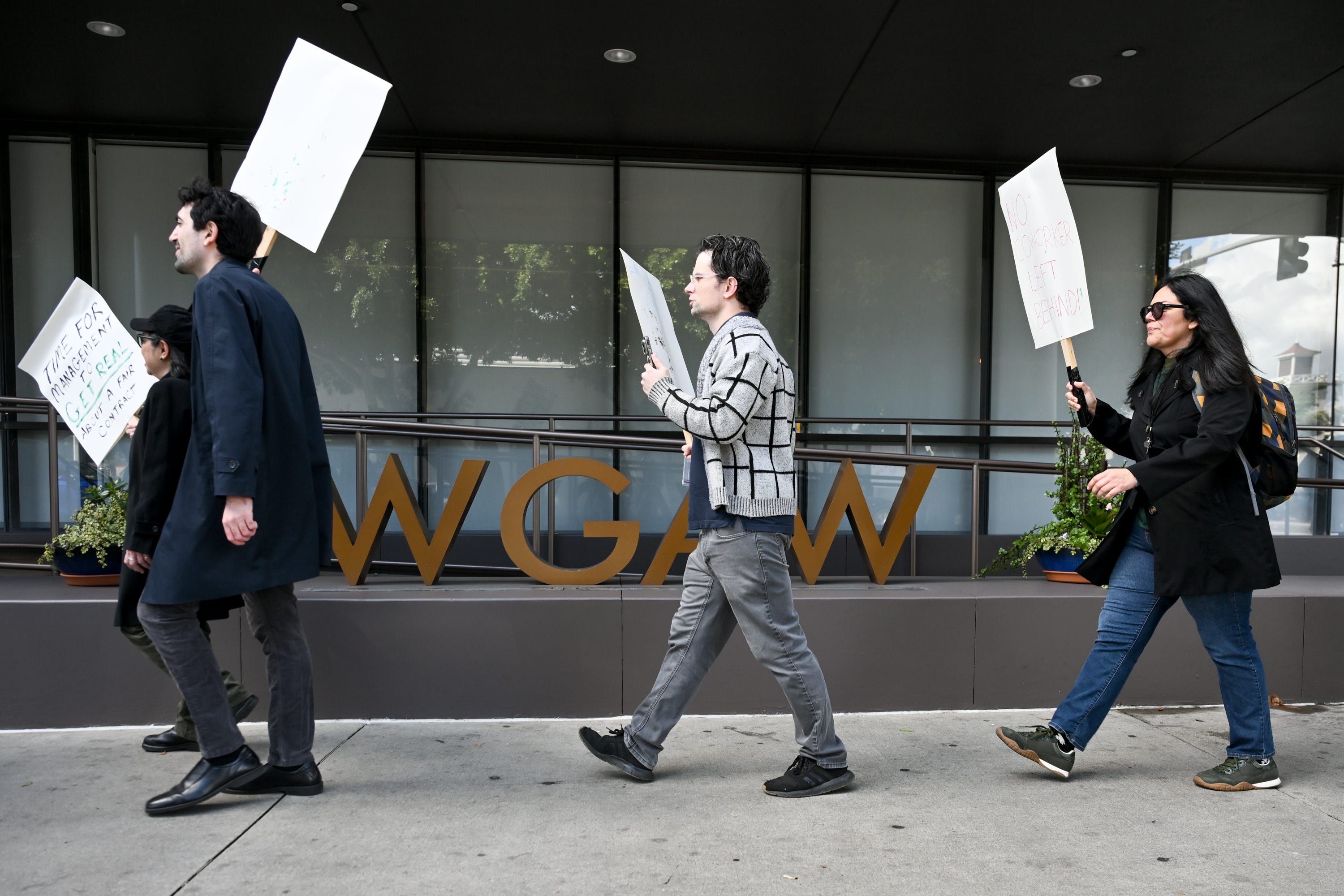
I heard from a few writer friends who were annoyed that this public disclosure filing by the Writers Guild included the names and amounts of loans individuals had applied for seeking relief during the strike.
Unfortunately, that disclosure is required of labor unions, so I’m told.
While perusing last year's quarterly report, I found a couple of other things that caught my eye. The first was the final — I believe — $182,648 paid to David Young, the former WGA West executive director and the guild’s chief negotiator…