

The Golden Globes Still Give The Ick
Plus: Movie theaters lobby Congress to act against WBD sale


Welcome to the Jamboree, my weekly takes on the industry’s passing parade.

Why not let it go?
Some dumb, corrupt company wants to jump into an already totally corrupted field and corrupt it a little more? What’s so bad about that?
Well, below, I’ll get to the very serious “Why The Globes Matter (Or Don’t),” but to start off, let’s just call it a general feeling of ick. When a completely gross, obscene homunculus crawls into town for its annual visit, leeching blood off a patient who doesn’t have a lot of blood to spare, taking 10 seconds to call out — homunculus! — just seems worth our time, lest people think everyone’s okay with that sort of thing.
I mean, it’s kind of crazy that we have to keep going over this, but the corruption remains so… glaring, that it’s still significantly in the terrain of, “How can this actually be happening?” So just to make sure we’re not just imagining this, here’s your quick bullet-pointed watch guide to what we affectionately call Hollywood’s Greatest Annual Golden Embarrassment.

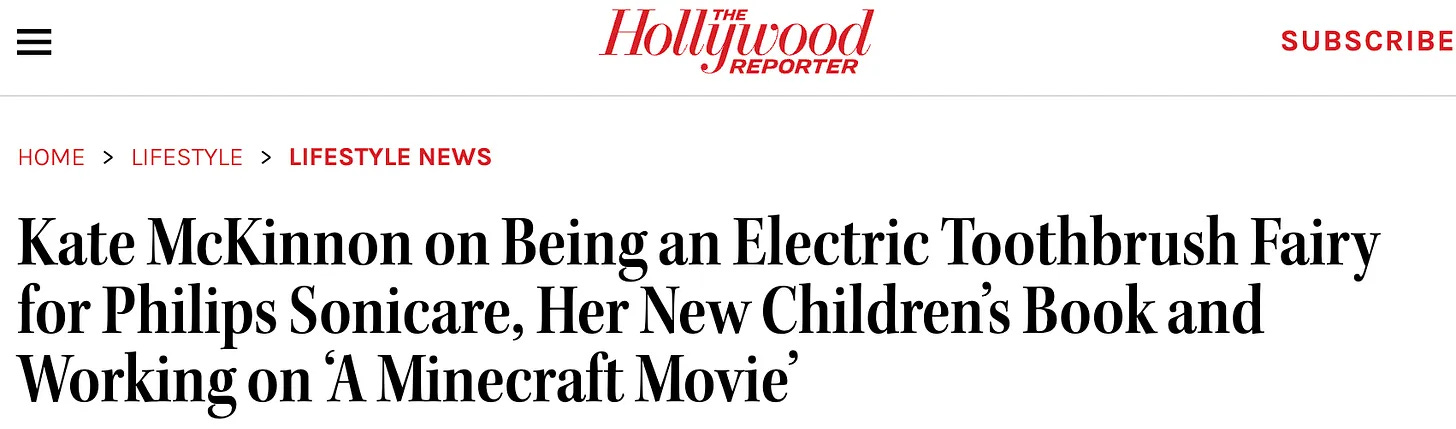
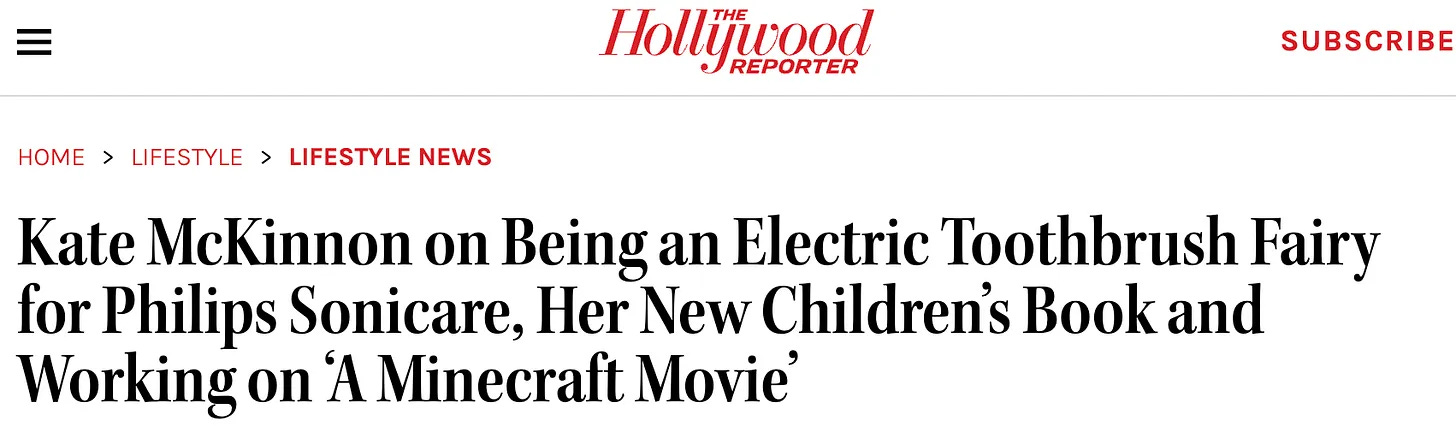
Prior to getting involved with the Globes, Penske Media acquired The Hollywood Reporter, Deadline, Variety and IndieWire — creating a monopoly on what had been a diverse mix of independent reporting bodies covering the entertainment industry.
Since that consolidation, coverage across these publications has become noticeably less adversarial and less probing, increasingly optimized for scale and traffic and affiliate links rather than accountability — a shift that matters when the same company later finds itself owning the very institution those outlets are meant to scrutinize.
After the Golden Globes became a distressed asset following a boycott by publicists, Todd Boehly, owner of Dick Clark Productions, swooped in like a vulture capitalist, offering himself as a savior who would restore trust and integrity to the show and awards process. He took control of the Hollywood Foreign Press Association — a charity — and converted it into a for-profit business. In return, the HFPA members were promised, among other things, a salary for their participation.
Almost immediately after that, Penske Media joined in, forming Penske Media Eldridge (PME), a joint venture between Penske Media and Boehly’s Eldridge Industries, and the owner of Golden Globes producer Dick Clark Productions. Penske Media’s involvement had not been revealed during the negotiation.
However, that transaction was contingent upon approval of the deal by the California Attorney General’s Office, which oversees transactions involving state-chartered charitable organizations, such as the HFPA, which had operated as a nonprofit. The AG, Rob Bonta, still has not sanctioned the deal and has given no indication of when approval might be forthcoming. The Attorney General’s office has repeatedly declined to answer any questions about its process or findings. I previously reviewed the knotted history of this deal and the AG’s reassessment here.
Soon after the first show run by the joint venture, the largely elderly members who handed over their group in return for promised salaries were summarily fired.
Penske Media now owns the Golden Globes — the No. 2 awards show in a sector that is the company’s central revenue driver — and all the legacy journalistic institutions dedicated to covering it. (This would be like the Academy owning publications that cover the Academy, for studios to buy ads from for their Oscar contenders.)
The new owners appointed new voting members, most of whom are unknown to the industry, chosen in a process that is completely opaque. Through this membership process, which offers zero transparency, they de facto control the voting for the Golden Globe awards.
Penske Media not only controls the coverage of the Golden Globes, but also solicits advertising and sponsorship from the films and shows competing for the awards. FYC advertising constitutes the primary revenue stream for trade publications.
So just to recap and underline: Penske Media controls the awards, the coverage of the awards and seeks to earn money from the people competing for the awards. It’s a perfect circle of not only conflict of interest but the appearance of an extortion racket. (Other publications from The Ankler to the New York Times accept FYC ads. The crucial distinction is that we do not own the show we are covering. Nor do we control its voting or voters.)
They proceed to squeeze more out of the Globe contestants, such as a very special Variety dinner series, a very dignified dinner that Penske Media was offering to throw for nominees for a price, with Globe voters in attendance. (It was later canceled after I reported on it.)

This, however, isn’t enough. After taking control of the awards, the new owners scrambled to find a new broadcast home for the show, ending up at CBS, which pays them a reported $10 million or less for the rights, down from $60 million prior to the boycott.
Keeping the show on the air, even at a loss, however, allows them to proceed with the perfect circle described above.
Eager to recoup any funds and benefit from their investment, the new owners embarked on a series of seemingly desperate attempts to scrape dubious value out of the Globes brand. These include a “Golden Globes International Icon of the Year” award, presented in the yachting hub of Bodrum, Turkey, and a “Golden Globes Tribute Event” in Cairo paying homage to “icons of Arab cinema.”
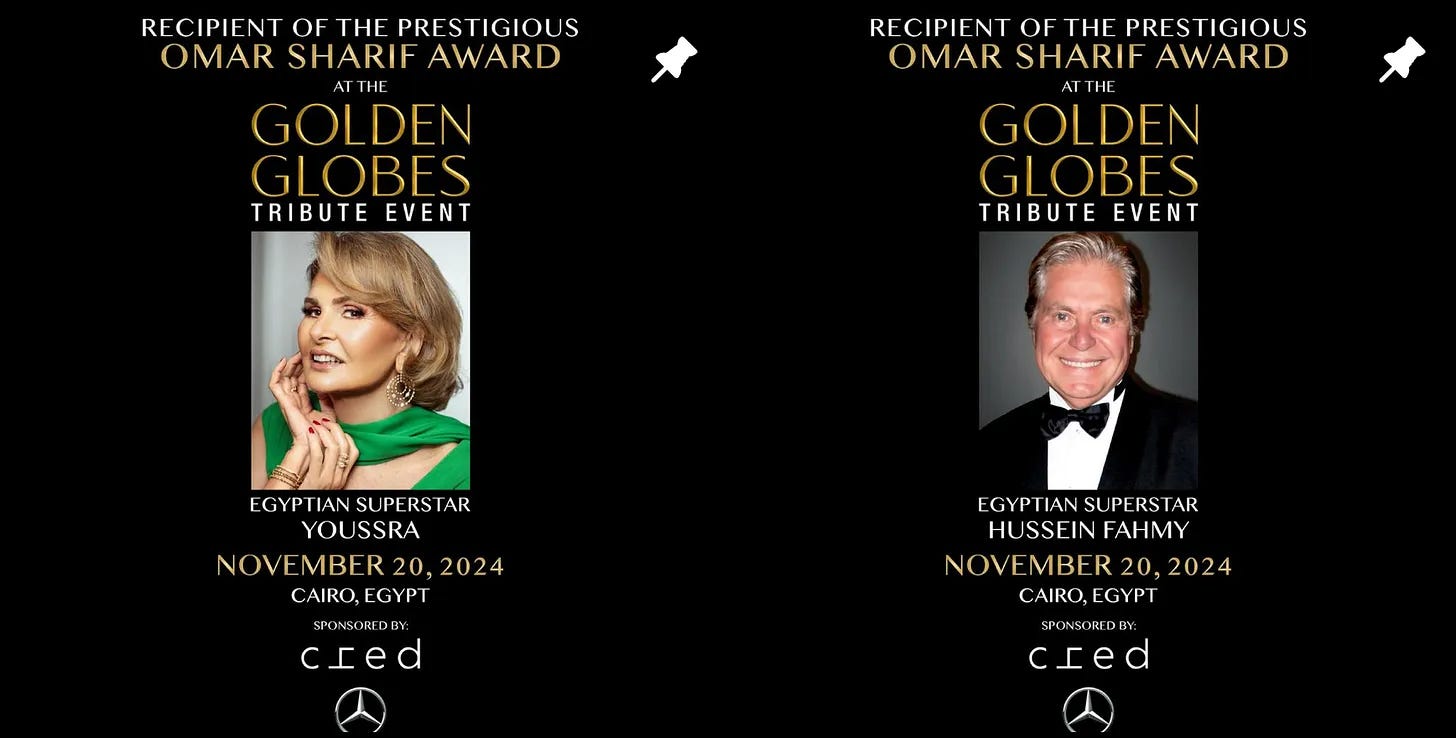
The process by which the honorees of these awards were selected was never explained. (Again, I use the analogy here of the Academy, who painstakingly follow a detailed submission and voting process that every studio and streamer abides by.)
In the past, whatever the vast drawbacks of the old group, at least you knew who they were — you saw them everywhere, and how they came to their decisions. Now… who the hell knows anything?
The Penske Media publications, which generally give blanket team coverage to every fluctuation in the catering plans for the show, write a combined zero words about the Bodrum and Cairo events, before or after.
This year, they added a podcasting award, for which they charged an entry fee to would-be nominees (as well as offering them an advertising package in the Penske publications). Potential nominees were also required to submit their information to a metrics-measuring company, which would certify their eligibility. That company, Luminate, is also owned by… guess who?
The one great past differentiator of the Globes was that the show took itself less seriously, was more fun, more boozy and less stuffy than the Oscars. That has largely been done away with as it has been converted into another McAwards show — yet another generic cookie-cutter stop on the endless awards trail. To call it Pepsi to the Oscars’ Coke would be an insult to Pepsi and almost all sodas everywhere. Previously, I have crowned the Globes under Penske the RC Cola of awards.



If this is giving you Kennedy Center–under–Trump vibes, there’s a reason. In both cases, the goal isn’t cultural credibility — it’s control. Once the institution is captured, the meaning, standards and process become secondary.
We could go deeper, so much deeper, but this should give you enough to watch and enjoy the show for what it is.
No doubt host Nikki Glaser will tell some decent jokes. Some winners will act very moved and make tear-jerking speeches. The show might even chug along without any obvious production disaster.
None of that will change the fact that this event is a completely corrupted leech sucking the blood out of an industry that desperately needs every way to promote itself and get people excited about film and TV that it can get.
So enjoy the show!


Theatrical Strikes Back

Much of the industry, and almost all of the trade press, seems in a hurry to hand Warner Bros. over to Netflix and get this all done with already. Let the party begin!
Cinema United, however, representing movie theaters, isn’t quite ready to shrug it off yet.
In a very strong statement delivered to the House Judiciary Committee, at a hearing on digital consolidation, the group began: